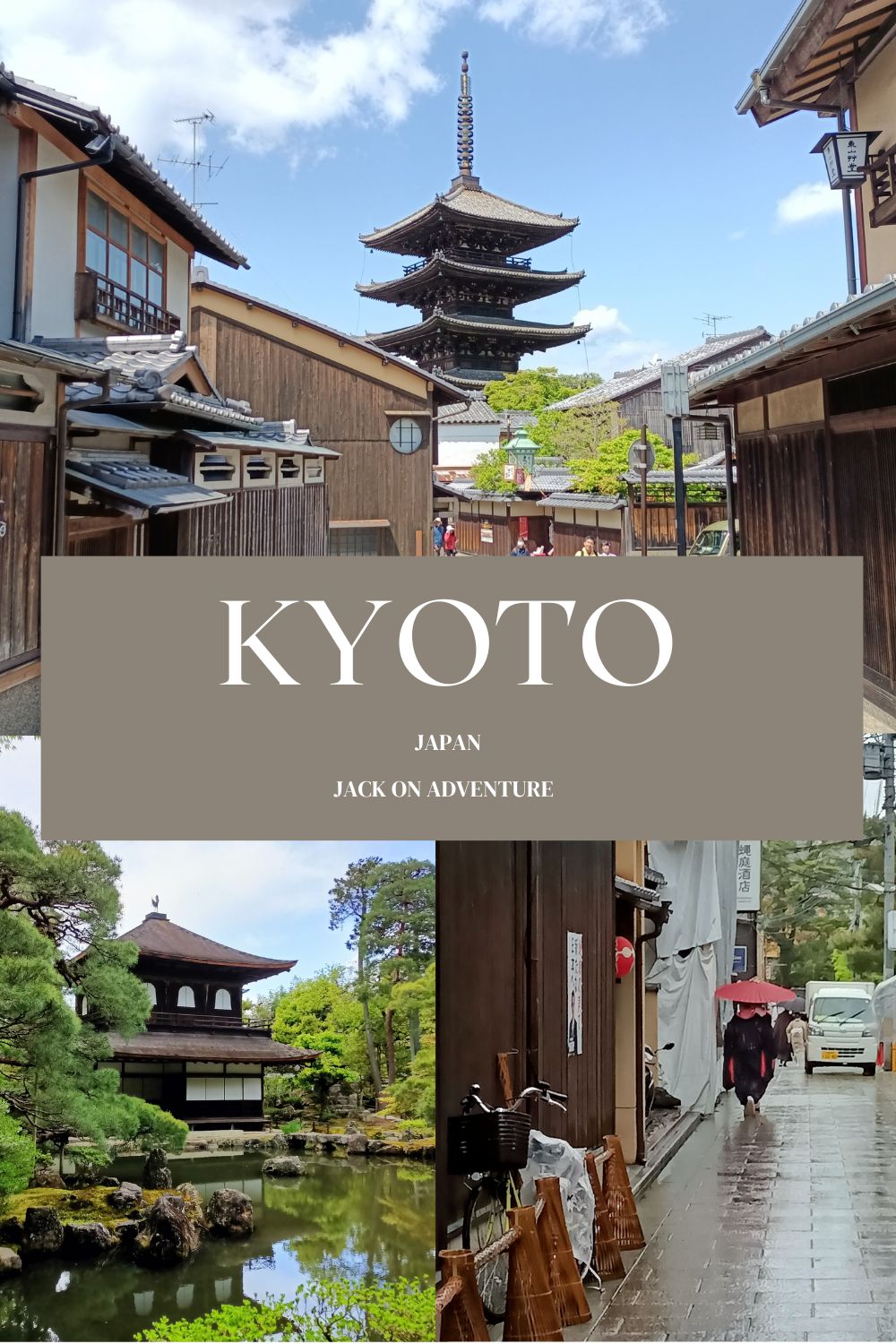
Kyoto is a historical city located in the Kansai region of the Western Japan on the island of Hanshu. It is one of the oldest and well preserved cities in the country, home to 17 UNESCO World Heritage Sites, 1,600 Buddhist temples, 400 Shinto shrines, imperial palaces, majestic gardens and traditional arts and crafts.
It comes with no surprise that the city was a former capital of Japan where the Emperors of Japan had ruled Kyoto from 794 to 1869. Although Kyoto has lost its political status since it relocated to Tokyo, the city is still considered the country’s cultural capital called Historic Monuments of Ancient Kyoto.
Today, this charming city still retains its century-old culture and customs. Local folks had blended in with old and new lifestyles by conserving the historical landmarks and natural scenery while serving their accustomed cuisines and the use of modern technology.
Best Time to Visit
Honestly, there has never been a better time to visit Kyoto. It depends on what scenery you want to see from each season. Spring between mid-March and early April is the most favorite season with cherry trees blooming around the old historic sites and beautiful gardens. The weather is pretty cool and makes walking very enjoyable.
If you want to experience Kyoto’s big festivals, summer between May to July is the time to travel to Kyoto. Major festivals like Gion Masturi will be held in July in the heart of the city.
Autumn in Japan is almost as popular as spring and the season is from mid-November to early December. Maple leaves will turn orange-red during the fall foliage. Winter in Kyoto generally starts from December to mid-March with temperatures range -4 to 7 °C and expected fewer crowds, but enjoy gorgeous snow-covered landscapes around Kyoto.
Getting There
From Osaka
The historic city of Kyoto does not have an airport and the closest city with airports is either Itami Airport and Kansai International Airport in Osaka. From Kansai International Airport (Airport Code: KIX), you can first take JR Haruka Airport Express to Shin-Osaka Station. If you arrive at Itami Airport (Airport Code: ITM), you can take Osaka Monorail and Hankyu Takarazuka Line train to get to Osaka Umeda Station.
You can take a budget and direct JR Kyoto Line train from either Osaka Umeda Station (28 minutes, 560 yen) or Shin-Osaka Station (23 minutes, 560 yen) to Kyoto Station. Tickets can be purchased at the ticketing machine or office without any reservation.
You can also take the high-speed Shinkansen train from Shin-Osaka Station in just 12 minutes for 1,420 yen to Kyoto Station, but it’s only recommended to use Japan Rail Pass (JR Pass) only if you previously used the pass. It’s not worth using a JR Pass just for a short-distance ride.
From other parts of Japan
Traveling to Kyoto by Shinkansen train is always your best choice if you come from other cities like Tokyo, Nagoya and Hiroshima. The Shinkansen train, also known as Japan’s bullet train has different types- Nozomi, Kodomo and Hikari.
Nozomi train is the fastest because it makes fewer stops compared to other trains. I have taken the Nozomi-type from Tokyo to Kyoto in just 2 hours and 15 minutes over a distance of 515 km. The bullet train is punctual and clean with comfortable seats that I really love the train ride experience. Nozomi train tickets can be bought from Klook (third party agent) and is perfect for travelers who plan to use Shinkansen train only once throughout their Japan trip. The Tokaido-Sanyo Line also connects Kyoto to Nagoya in 34 minutes, Osaka in 13 minutes and Hiroshima in 1 hour 40 minutes.
Hikari and Kodomi types are semi-fast trains that run slightly slowly because they make extra stops at some stations and cities. They are still relatively fast and usually take an extra 15-30 minutes to reach their final destination. The train fare is cheaper than the Nozomi type and you can use the JR Pass for only both of these trains. The pass is valid for 7, 14 or 21 days and choose to ride in the ordinary car (second class) or green car (first class) with reserved or non-reserved seats. Hikari Shinkansen also travels on the Tokaido-Sanyo Line which takes 2 hours 40 minutes to Tokyo, 34 minutes to Nagoya and 13 minutes to Osaka.
Travel tips: Reserve your ticket and baggage storage space at the train station during your free time in Japan. Seats can be full during New Year, the Golden Week, local festive seasons and Christmas season. If you fail to do so during the peak times, you might end up standing throughout the entire journey. I have written a guide on Shinkansen train and get you covered on which train line to take to some of the popular destinations in Japan.
Getting Around
The best way to explore this ancient Kyoto city is by foot. Wandering around the historic buildings gives the feel of stepping into the old past as you slowly soak into the rich culture and admire the century-old architecture buildings. Most of the historic sites are within walking distance from one another and one can just take the local bus or train once in the morning before embark the journey of exploration.
Kyoto has the most impressive transportation network that easily takes you anywhere within the city. There is the Karasama and Tozai Subway Line connecting from the Kyoto Station. They come very frequently and can reach many historic sites and markets. You can also take Keihan Main Line train and travel around the east side of Kyoto including Fushimi Inari Shrine and Ginkakuji Temple.
The Kyoto City Bus is another user-friendly transport and you can take the buses to many tourist attractions. These buses usually depart from Kyoto Station and the buses come very regularly. The bus terminal in Kyoto Station provides bus schedules and guides to help you navigate easily to your destination.
The Subway & Bus One-Day Pass comes in handy if you are going to use public transport more than 4 times a day. The pass can be bought at Kyoto City Bus & Subway Information Center in Kyoto Station and subway station for 1,100 yen for adults and 550 yen for children.
The Best Activities for 3 Days in Kyoto
Kyoto is one of my favorite destinations in Japan. This old city is packed with thousands of stunning temples and Shinto shrines, magnificent palaces, wonderful Japanese-style gardens, tea houses, mountains and picturesque neighborhoods.
For those history buffs visiting Kyoto, I recommend staying 6 nights here to spend 3 days in Kyoto and take 2 day trips to the gorgeous Arishayama town and the ancient Nara city.
Explore this peaceful Tō-ji Temple
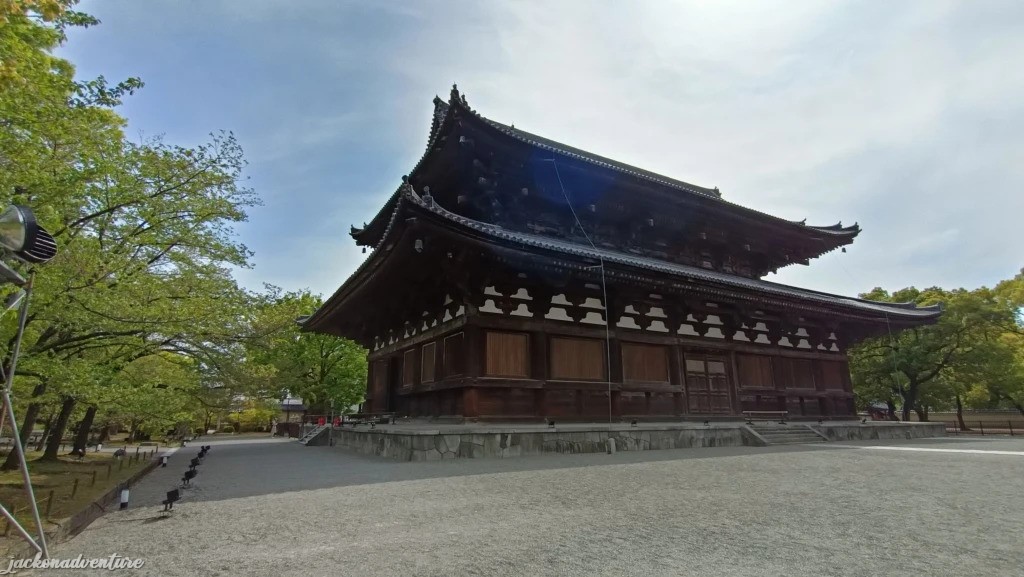
Tō-ji Temple (東寺) is one of the two huge guardian temples built when the capital of Japan was moved from Nara to Kyoto in 794. Its name literally means “East Temple” and has survived until today while the “West Temple” no longer exists. Both temples are on the east and west sides of the Imperial City of Heiankyo’s main entrance- the former name of Kyoto.
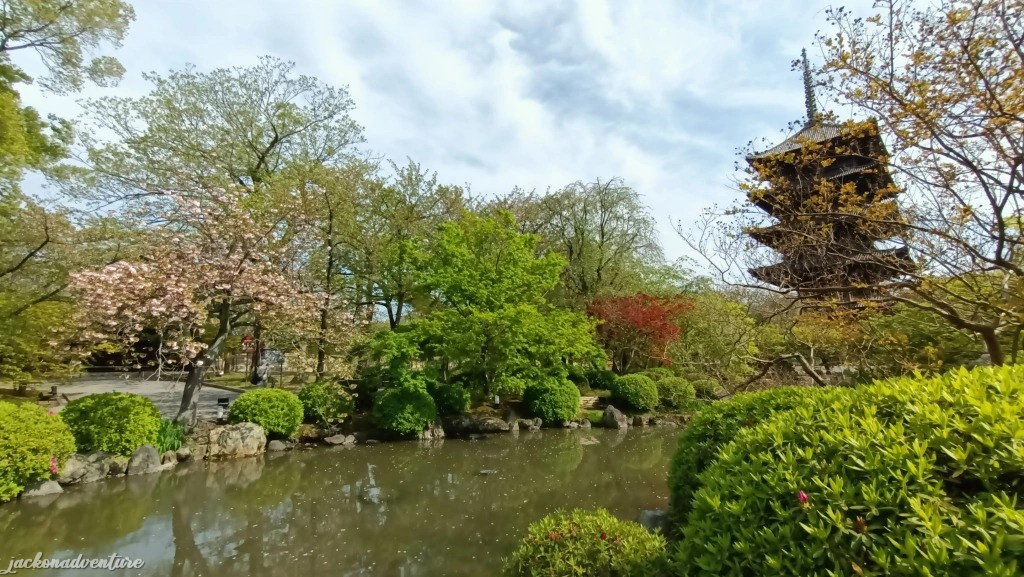
The Kondo Hall is the temple’s main hall and largest structure that keeps Tō-ji’s main object of worship, a wooden statue of the Yakushi Buddha and his two attendants (Nikko and Gakko Bodhisattvas). The lecture hall- Kodo Hall houses the statue of Dainichi Buddha with several Buddhas, bodhisattvas and the fearful guardian kings surrounding it. The temple is also home to the tallest wooden pagoda in Japan, standing at 57 m near a beautiful Hyotan Pond.
Location: 1 Kujocho, Minami Ward
Getting There: Take a 15-minute walk southwest of Kyoto Station to Tō-ji Temple. You can also take the Kintetsu Kyoto Line from Kyoto Station to Tō-ji Station and take a 5-minute walk to the temple.
Opening Hours: March 20 to September 19: Daily from 8.30 am to 5 pm/ September 20 to March 19: Daily from 8.30 am to 4 pm
Entrance Fee: 500 yen (800 yen during special openings of the pagoda)
Stroll around the lovely Kyoto Gyoen National Garden

One of the best places to relax in the city center is Kyoto Gyoen National Garden. Nestled in Kyoto Imperial Palace compound, the garden is filled with trails, lush grass fields and seasonal flowers such as wisterias, plums and lilies. From late March to early April, cherry trees will fully bloom and transform this garden into a magical heaven.
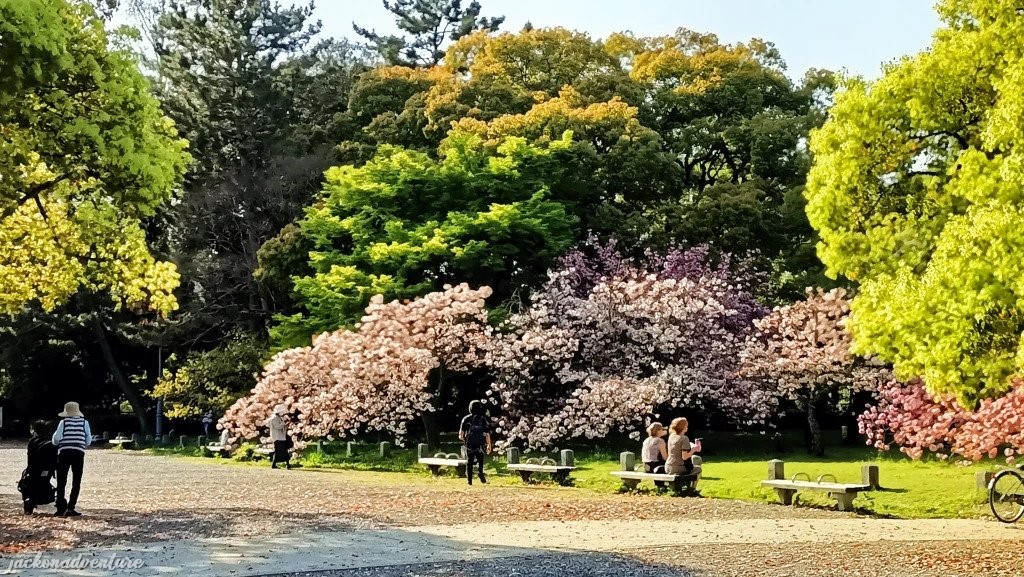
With so many shady trees around, you can just sit back, relax and let the rest of the day go by. Locals love to picnic on the green lawn, take a bench break, jog or cycle around the garden.
Location: 3 Kyotogyoen, Kamigyo Ward
Getting There: Take the Karasuma Subway Line to Marutamachi Station
Opening Hours: Tuesday to Sunday unless there is any Imperial Court functions
Entrance Fee: Free
Admire the exquisite Golden Pavilion

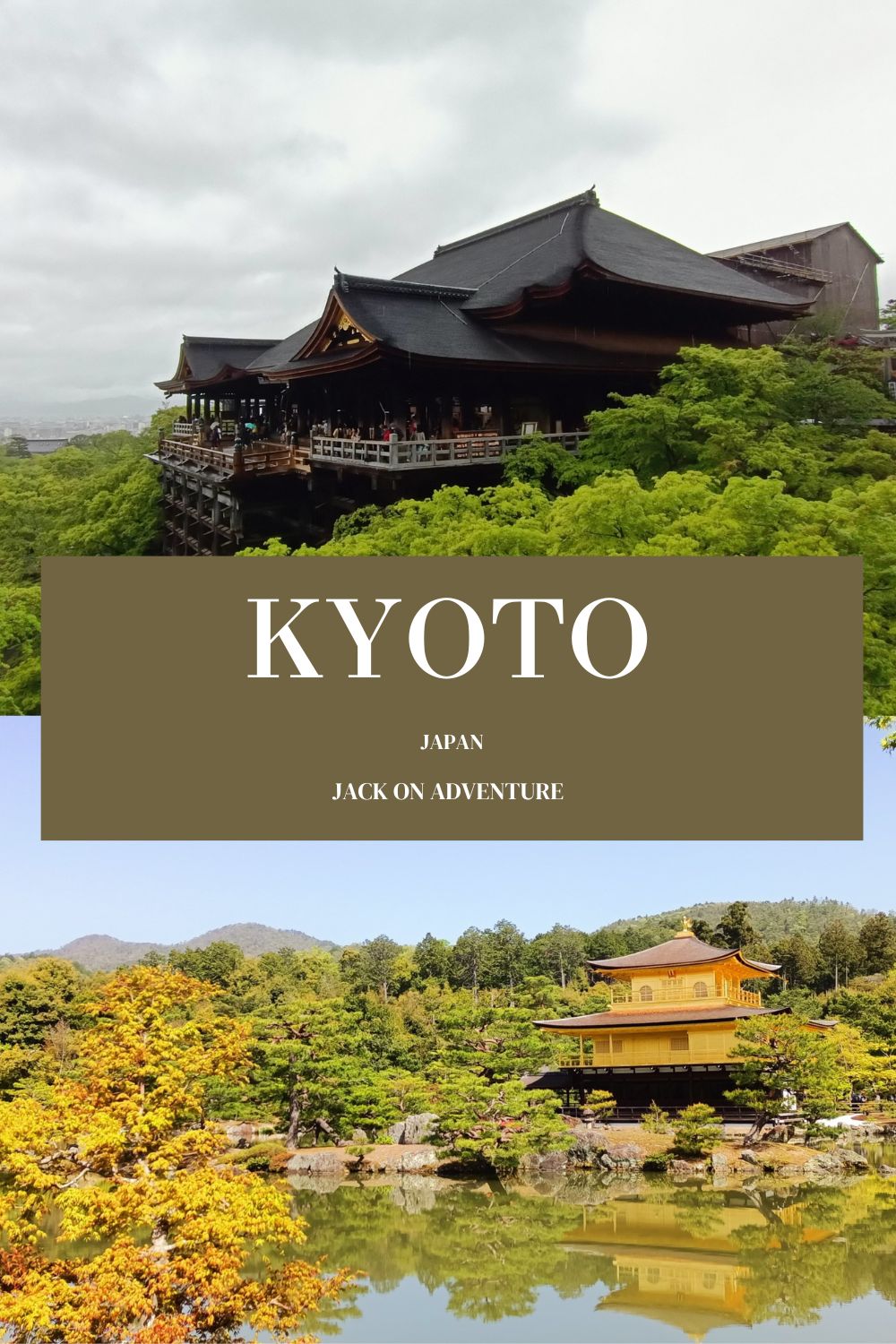
Kinkakuji (金閣寺) is home to the famous Zen temple called the Golden Pavilion. As part of Kyoto’s collective UNESCO World Heritage Site, this stunning temple takes its name from the gold leaf covering the top two floors of the building.
Formerly known as Rokuon-ji, the temple was a retirement villa of Ashikaga Yoshimitsu, the third Shogun of Ashikaga Shogunate. He built the Kitayama Palace centering around the golden stupa, “Kinkaku”. The palace was the center of politics and culture to welcome the Emperor of Japan and trading partners from China.
After his death, the villa was converted to a Zen temple according to his will. The current version dates back to 1955 after it was burned down and restored several times including during the Onin War and a fire set by a crazy monk in 1950.
Location: 1 Kinkakujicho, Kita Ward
Getting There: Take Kyoto City Bus No. 101 or 205 (from Kyoto Station) to Kinkakujimichi bus stop
Opening Hours: Daily from 9 am to 5 pm
Entrance Fee: 500 yen
Mesmerizing the garden of Ryoanji Temple
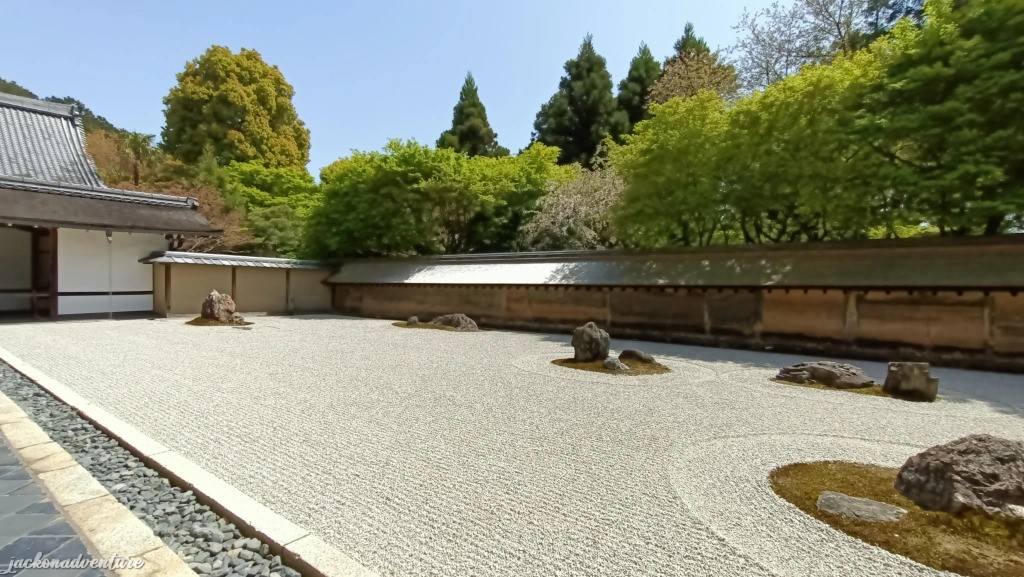
Built in 1410, Ryoanji Temple (龍安寺) is another UNESCO World Heritage Site and a former aristocratic villa during the Heian Period. It was originally a country house of the Tokudaiji Clan and was later converted into a Zen temple in 1450. Presently, it has a mausoleum that houses the remains of seven emperors throughout the history of Japan.
The temple is well known for its rock garden but remains a mystery with the meaning and date of the reconstruction. Sit back and look at its formation in search for the meaning and interpretation of the rock garden.
More interestingly, there are 15 rocks laid out in groups on patches of moss. No matter which vantage point is viewed, it is certain that at least one of the rocks is always hidden from your eyes. Try it for yourself and see.
Location: 13 Ryoanji Goryonoshitacho, Ukyo Ward
Opening Hours: March to November: Daily from 8 am to 5 pm/ December to February: Daily from 8.30 am to 4.30 pm
Entrance Fee: 500 yen
Soak into the history of Nijo Castle
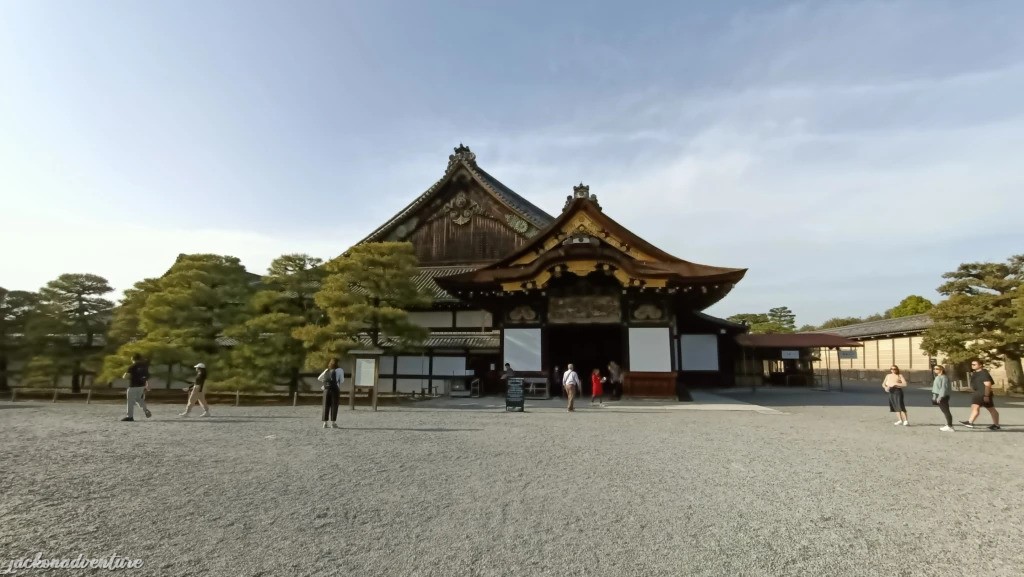
Constructed in 1603, Nijo Castle (二条城) was formerly Kyoto residence of Tokugawa Ieyasu, the first shogun of the Edo Period. Explore the palace buildings and discover its 400 years of history as they are the perfect surviving shoin-zukuri architectural example of the feudal era. It is designated as one of the Historic Monuments of Ancient Kyoto.
After the Tokugawa Shogunate fell in 1867, the castle was used as an imperial palace for a short period before opening to the public as a historic site. The palace is divided into three sections: the Honmaru, Ninomaru and the gardens.
The Ninomaru Palace is a must-visit site where it served as the shogun’s residence and office during his visit to Kyoto. You can admire the impressive wall paintings that illustrate the four seasons in Japan, flora and fauna as well as carved transoms between the rooms while walking through six connected buildings within the palace.
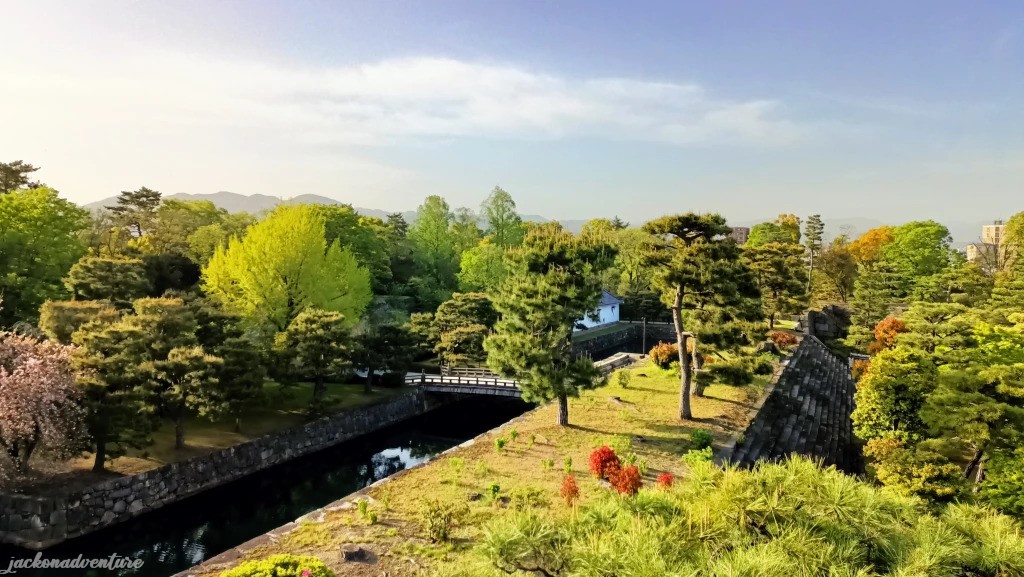
Ninomaru Garden is a traditional Japanese landscape garden with a large pond, ornament stones and manicured pine trees. Although the Honmaru Palace opens occasionally, you can still wander around its Honmaru gardens and view the palace grounds from the stone foundation of the former castle keep.
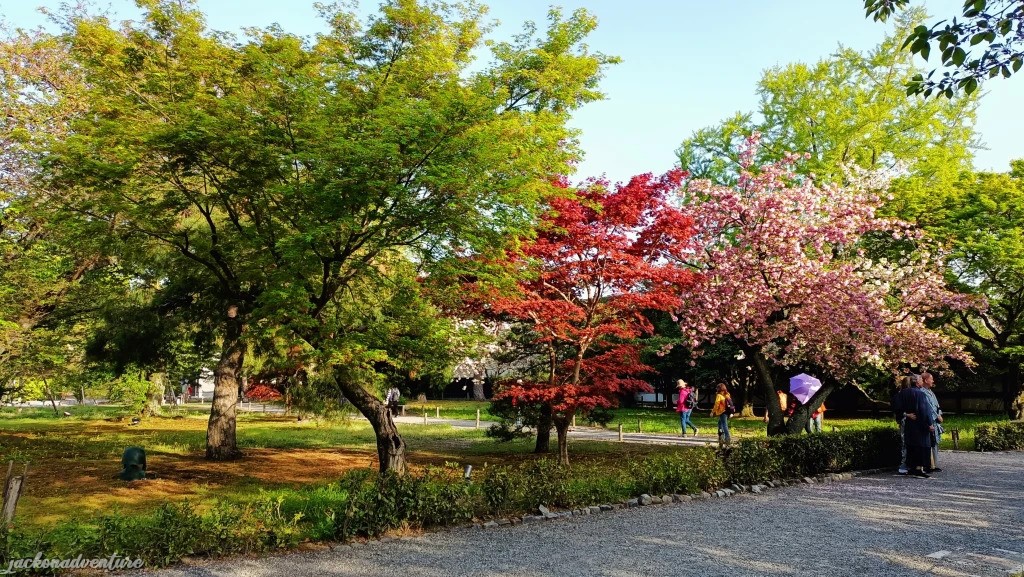
If you’re in luck, you can catch the blooming of nearly 400 varieties of cherry trees that can last from late March until the entire month of April. There is also a half-Japanese and half-Western style Seiryuen Garden planted with maple, ginkgo, plum and many more at the northern side of the castle.
Location: 541 Nijojocho, Nakagyo Ward
Getting There: Take the Tozai Subway Line to Nijojo-mae Station. You can also take Kyoto City Bus No. 9, 50 or 101 from Kyoto Station.
Opening Hours: Daily from 8.45 am to 5 pm (Ninomaru Palace closes at 4.10 pm)
Entrance Fee: 800 yen (extra 500 yen for Ninomaru Palace)
Be amazed with the busy Kyoto Station

Kyoto Station is not just any ordinary train station for commuters to travel around Japan. The station has been home to many restaurants, food stalls, and some large retail and department stores and is a star attraction on its own.
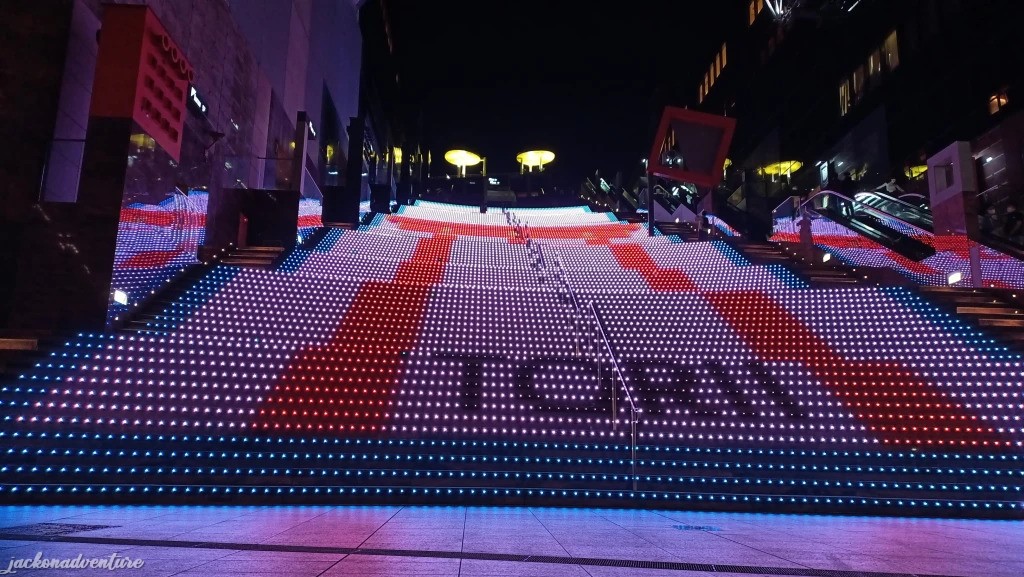
Head up to the Grand Stairs on the 4th floor of the train station as Kyoto welcomes you with a striking illumination of light shows at night that bring the most sophisticated technology and the rich traditional history of Kyoto together. This Grand Stairs Graphic Illumination Plus stretches 125 steps and uses more than 15,000 LED lights to create an incredible themed musical performance and light displays worth remembering.
Travel Tips: The light show starts from 5 pm to 10 pm, but the best time to watch the light show is when the sky is dark.
Kyoto Skywalk and Observation Deck

After watching the illumination show, continue making your way to the Skywalk on the 10th floor of Kyoto Station. This glass walkway leads you through a tunnel of lights and see the beautiful night view of Kyoto city without any obstruction.
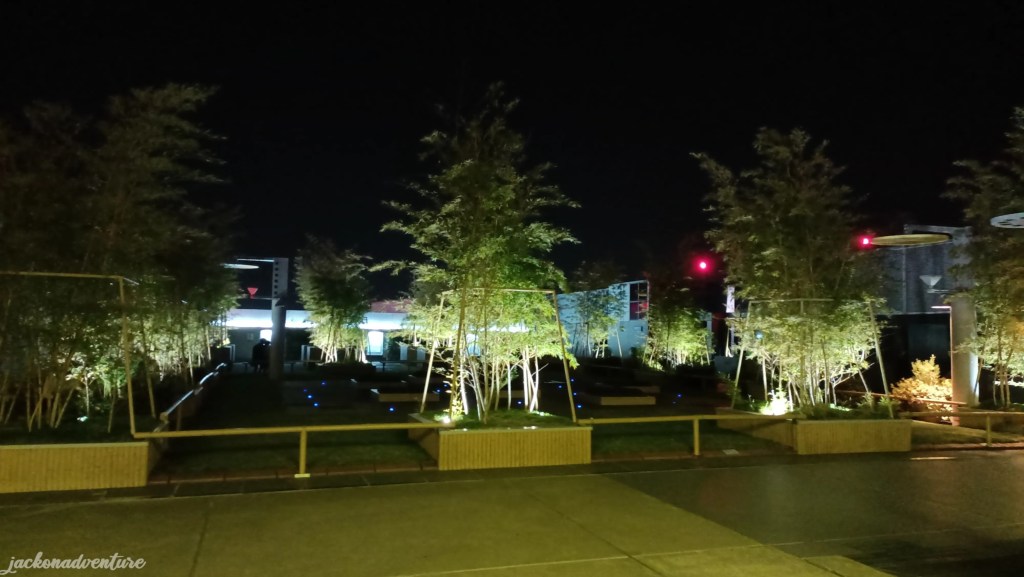
The city view from the top of Kyoto Station might be one of the best spots and probably as equally remarkable as the scene from Kyoto Tower. You can witness the chaos of the train station from the open-air observation deck as passengers rushing through the night hour and Shinkansen trains depart from the station. There are several benches at the deck to relax and enjoy the cool air breeze.
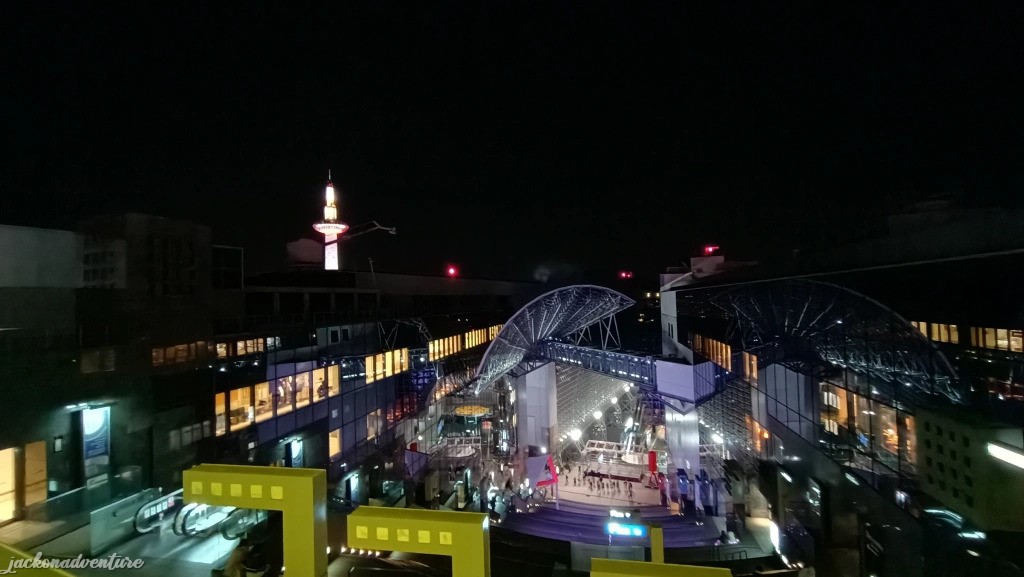
The opening hours of the Skywalk and observation deck are daily from 10 am to 10 pm without any entrance fees. So, I saved some money to enjoy the spectacular view and ended up spending on a delicious meal at the ramen restaurant.
Dine in at Kyoto Station’s ramen restaurant
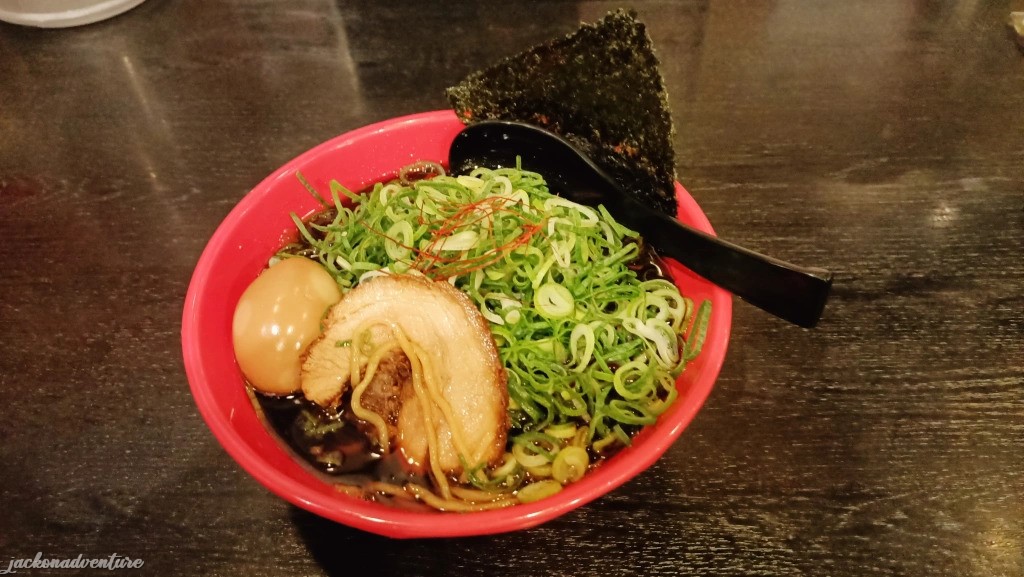
Crave yourself with some flavorful ramen at one of the best ramen restaurants in Kyoto Station. The entire 10th floor is lined with almost a dozen ramen restaurants that specialize in serving ramen with different tastes, cooking styles and ingredients.
Not sure what type of ramen to have? ‘Fraid not? There are many real-sized replicate food on display outside the restaurants to help you choose what to eat. It is pretty common to see such ‘fake food’ at the glass window of restaurants in Japan to help people especially foreigners to pick their meal. It’s pretty useful for someone who doesn’t or speak a little Japanese.
If ramen isn’t your thing, there are other restaurants serving sushi, sashimi and bento at the 11th of Kyoto Station too. So, there is never lack of food choices.
Marvel the impressive Kiyomizu-reda

Tucked at the site of Otawa Waterfall, Kiyomizu-dera (清水寺) was founded in 778 AD and its name literally means “Pure Water Temple”. It has been designated as a UNESCO World Heritage Site.
This Buddhist temple is renowned for the famous main hall built on a steep mountain cliff without any nails. It gets me fascinated of how the huge structure can be built back in the old days. Inside the temple houses a small statue of the eleven-faced, thousand-armed Kannon. The wooden terrace provides splendid views of Kyoto and the mountain’s surroundings. It is also one of the best spots to catch the cherry blossom and autumn leaves.
Take some time to explore the temple grounds. The Jishu shrine is dedicated to the deity of love and matchmaking. The Otowa Waterfall at the base of the main hall is divided into three separate streams representing longevity, success at school and a fortunate love life. You can enjoy these benefits by drinking from the streams using a cup attached to a long pole. However, it is considered greedy to drink from all three streams.
Location: 1 Chome-294 Kiyomizu, Higashiyama Ward
Getting There: Take Kyoto City Bus No. 100 or 206 (from Kyoto Station) to Kiyomizu-michi bus stop and walk 20 minutes to Kiyomizu-dera. You can also take the Keihan Main Line train to Gojo Station and walk 25 minutes to the temple.
Opening Hours: Daily from 6 am to 6 pm
Entrance Fee: 400 yen
Roam around Kodai-ji Temple
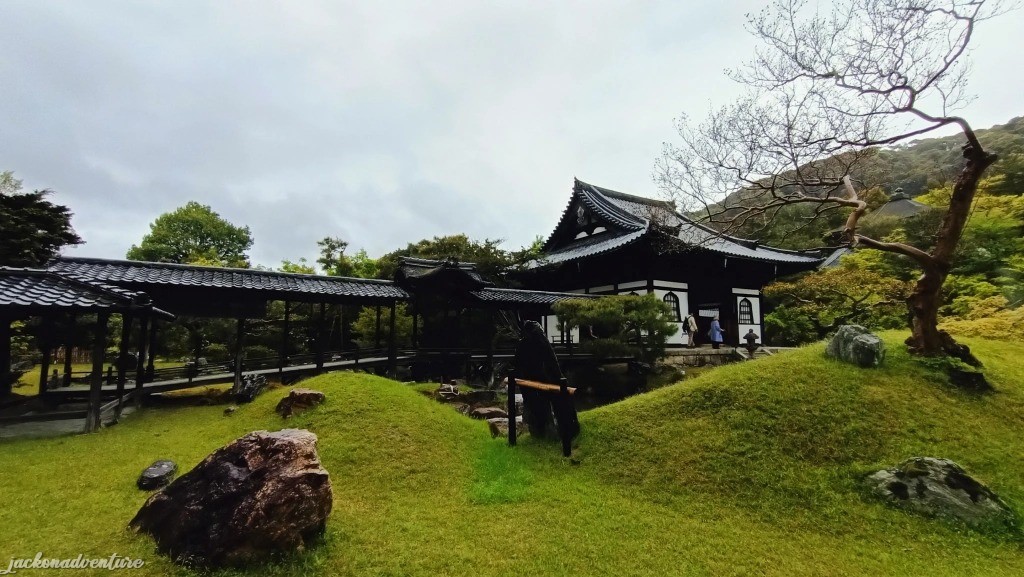
Kodai-ji Temple ( 高台寺) was established in 1606 by the noblewoman Kita-no-Mandokoro (Nene) in memory of her late husband, Toyotomi Hideyoshi. Nene was also enshrined here when she passed away at the age of 76 in 1624. The wooden images of them can be found in the memorial hall.
The main hall was originally decorated in lacquer and gold but was rebuilt in a modest style after it burned down in 1912. The building is surrounded by an impressive rock garden and a tsukiyama-style garden that is designed with a pond, man-made hills, decorative rocks and beautiful pine and maple trees.
Location: 526, Shimogawara-cho, Kodai-ji, Higashiyama-ku
Getting There: Take Kyoto City Bus No. 100 or 206 (from Kyoto Station) to Higashiyama Yasui bus stop and take a 10-minute walk to the temple
Opening Hours: Daily from 9 am to 5.30 pm
Entrance Fee: 600 yen for Kodai-ji and Sho Museum/ 900 yen for a combine ticket with Entokuin Temple
Visit Ryōzen-Kannon

Just a stone’s throw away from Kodai-ji Temple, Ryozen Kannon (霊山観音) is a war memorial dedicated to the Japanese who has sacrificed their lives in the Pacific War and for the establishment of a peaceful Japan. The statue of the 24-meter Bodhisativa Avalokitesvara (Kwannon) was erected in 1955 by the late Hirosuke Ishikawa. An incense is given to visitors to pay respect at the temple.
Location: 526-2 Shimokawaracho, Higashiyama Ward
Opening Hours: Daily from 8.40 am to 4 pm
Entrance Fee: 300 yen
Enjoy a Zen time at Entoku-in Temple
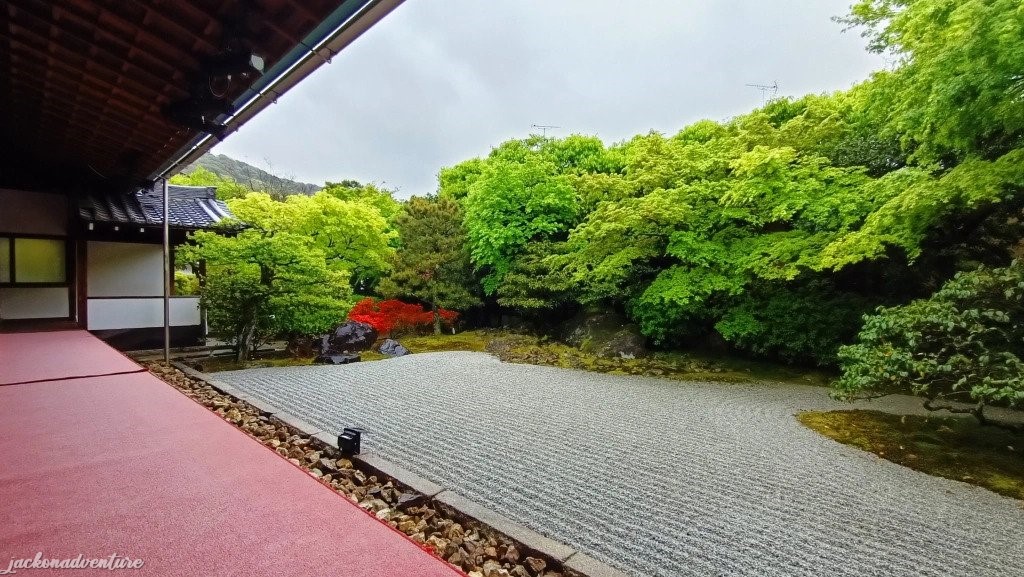
This small Entokuin Temple (圓徳院) is a sub-temple of Kodai-ji Temple and has been a part of Fushimi Castle. The temple was built by Nene to mourn her husband and she spent her last years here.
Sit down to enjoy the peace and quiet while admire the beauty of the North Garden created during Momoyama period. You can explore inside the temple and view the impressive sliding door drawn by a famous painter Hasegawa Tohaku 400 years ago.
Location: 530 Shimokawara-cho, Kodai-ji, Higashiyama-ku
Getting There: Take Kyoto City Bus No. 100 or 206 (from Kyoto Station) to Higashiyama Yasui bus stop and take a 10-minute walk to the temple
Opening Hours: Daily from 10 am to 5.30 pm
Entrance Fee: 500 yen (900 yen for combine ticket with Kodaiji Temple)
Marvel the arts in Kennen-ji Temple
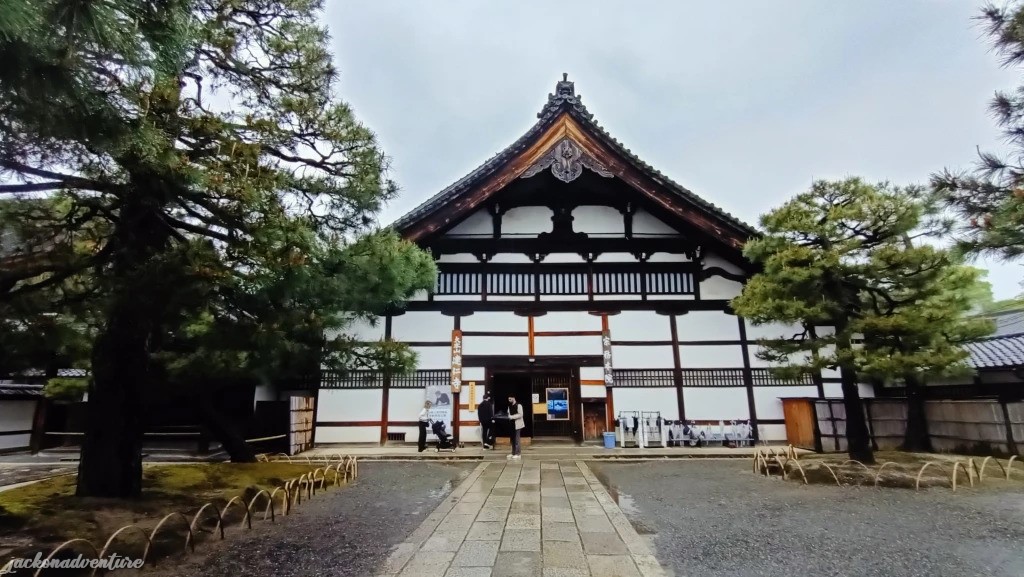
Built in 1202, Kennin-ji Temple (建仁寺) is the oldest temple and served as one of the head temples of the Rinzai Sect of Japanese Buddhism in Kyoto. The temple was founded by the priest, Yousai who introduced Zen Buddhism and tea cultivation after completing his study trip in China.
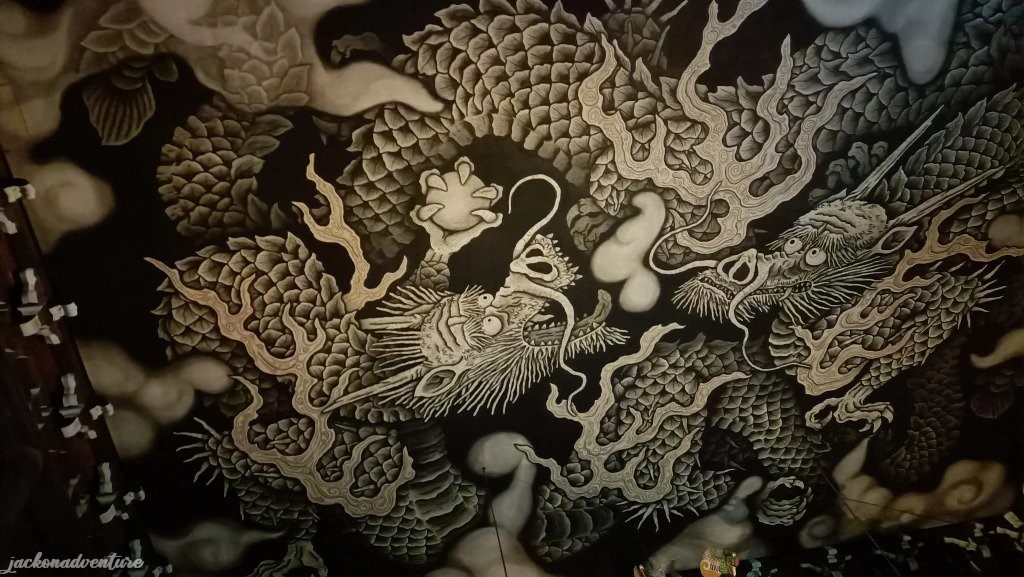
One of the most fascinating paintings in Kennen-ji Temple is the twin golden dragons painted on the ceiling of the Dharma Hall as well as the images of dragons painted on the interior sliding doors and a gilded folding screen adorned with the wind and thunder gods.
Location: 584 Yamatooji Yojo-sagaru Komatsucho, Higashiyama-ku
Getting There: Take Keihan Main Line train to Gion Shijo Station and walk 20 minutes to the temple
Opening Hours: Daily from 10 am to 5 pm
Entrance Fee: 600 yen
Wander along the pretty Gion street
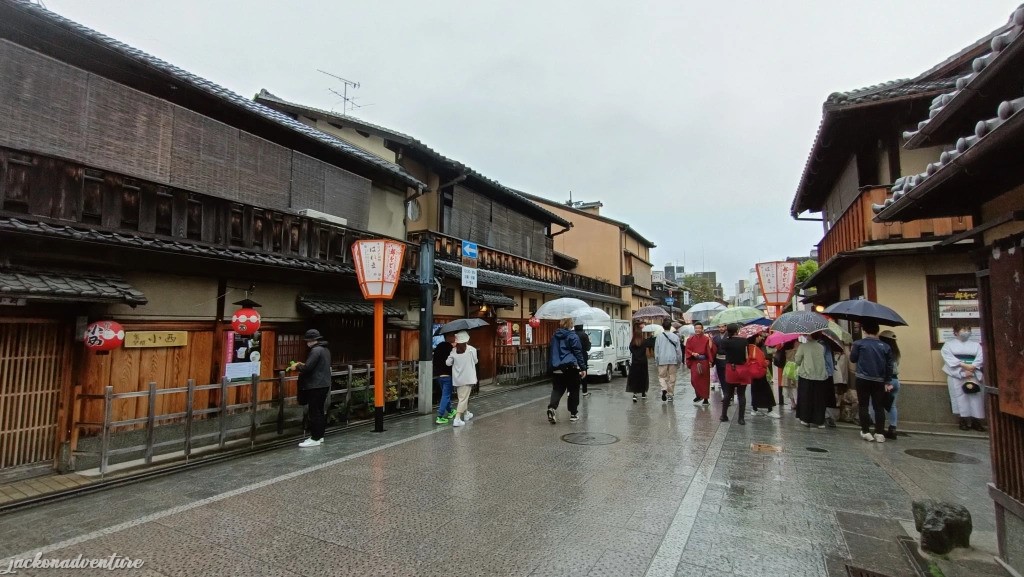
Gion is absolutely one of prettiest neighborhoods in Kyoto, filled with picturesque canals, enchanting streets and traditional wooden machiya townhouses. It is a great place to slow down the pace after a long discovery of this ancient Kyoto city.
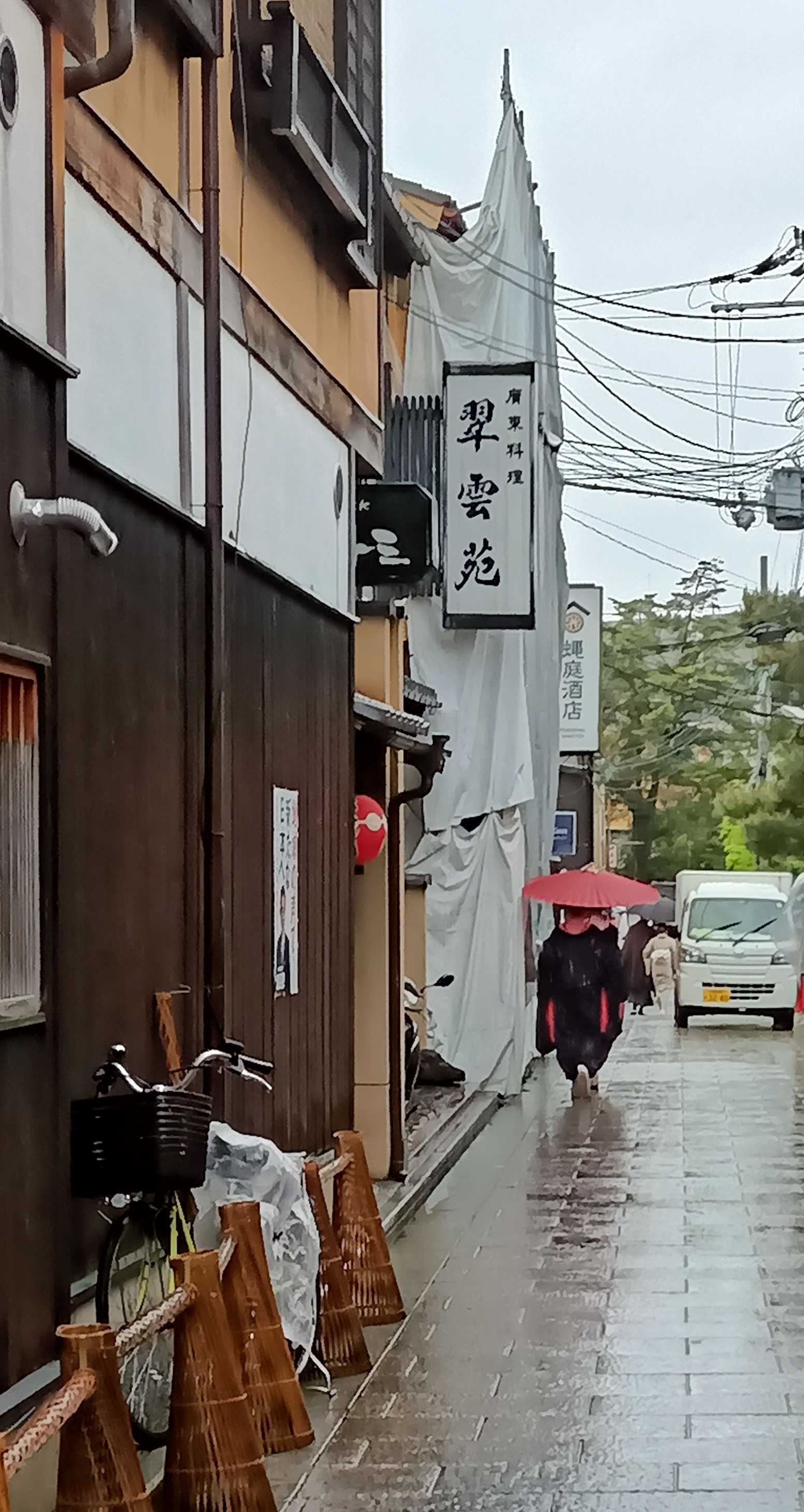

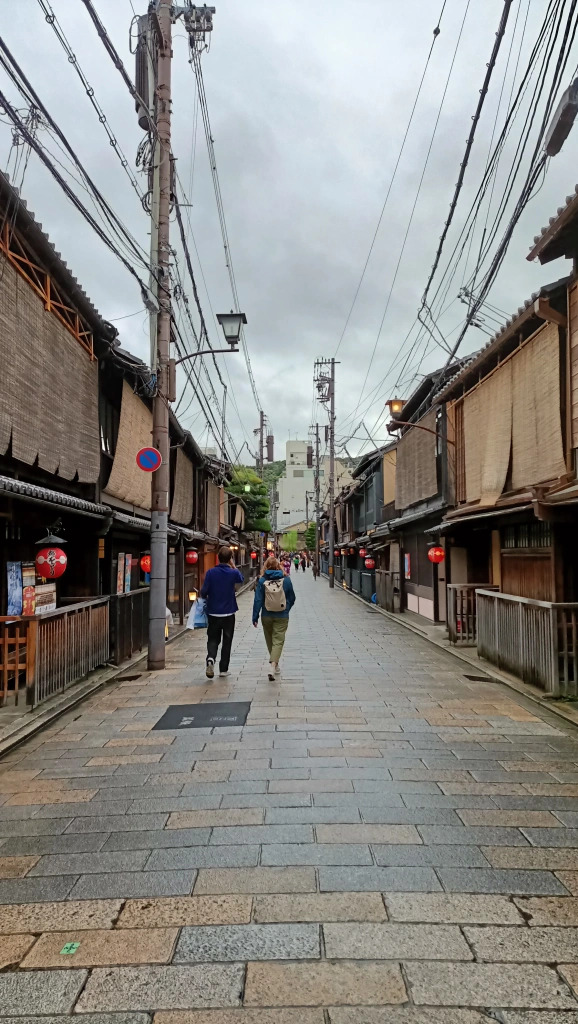
This historic street is lined with ochayas (traditional-style tea houses), small local shops and exclusive restaurants. You might catch a glimpse of geishas (geiko or maiko) walking along Shirakawa Area and Hanami-koji Street as they run their errands and make their way for an appointment to onchaya in the evenings.
Discover the beautiful Fushimi Inari Shrine

Founded in 711, Fushimi Inari Shrine (伏見稲荷大社) is dedicated to Inari, the Shinto god of rice and is famed for its thousands of vermilion torii gates leading through a network of trails behind its main buildings.
Be sure to start early to take the trails through 10,000 red-arched torii gates and the dense forest to the sacred Mt Inari which lies at 233 meters above sea level. You can find the donors’ names and dates inscribed on the back of each gate. Fox statues can be seen scattered around the shrine compound as they are believed to be Inari’s messengers.
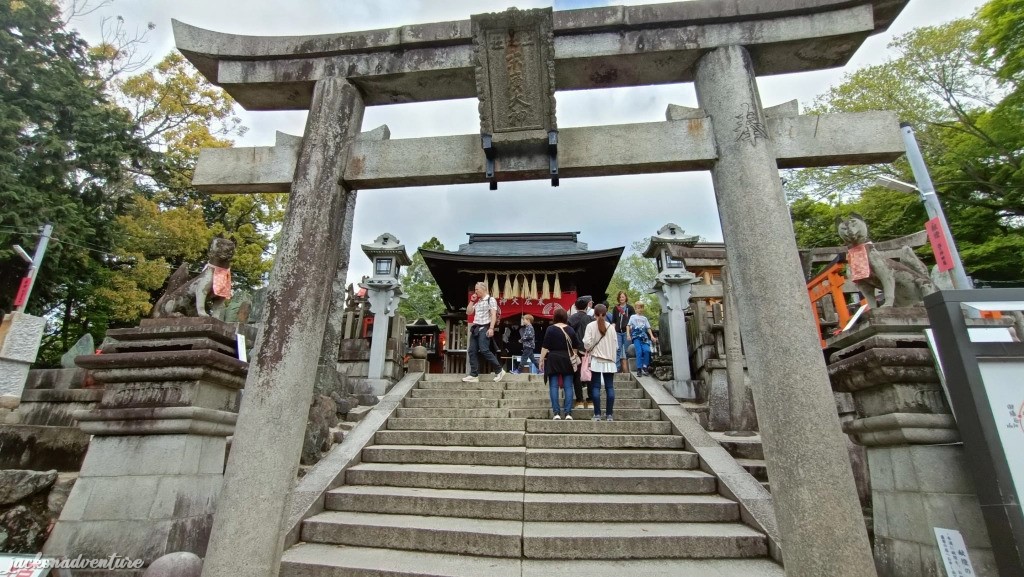
A pleasant hike over 12,000 concrete steps to the summit and back usually takes 2-3 hours, but why not spend a few good hours to slowly explore the shrine ground and admire the breathtaking views of Kyoto city along the way to the summit. There are a few cafés throughout the shrine ground selling souvenirs, ice cream, Inari Sushi and Kitsune Udon- Fox Udon. The fried tofu inside these dishes are said to be the fox’s favorite food.
Location: 68 Fukakusa Yabunouchicho, Fushimi Ward
Getting There: Take Keihan Main Line train to Fushimi Inari Station and walk 10 minutes to the shrine. If you have a JR Pass, take the JR Nara Line train from Kyoto Station to JR Inari Station.
Opening Hours: 24 hours
Entrance Fee: Free
Visit the gorgeous Ginkakuji Temple
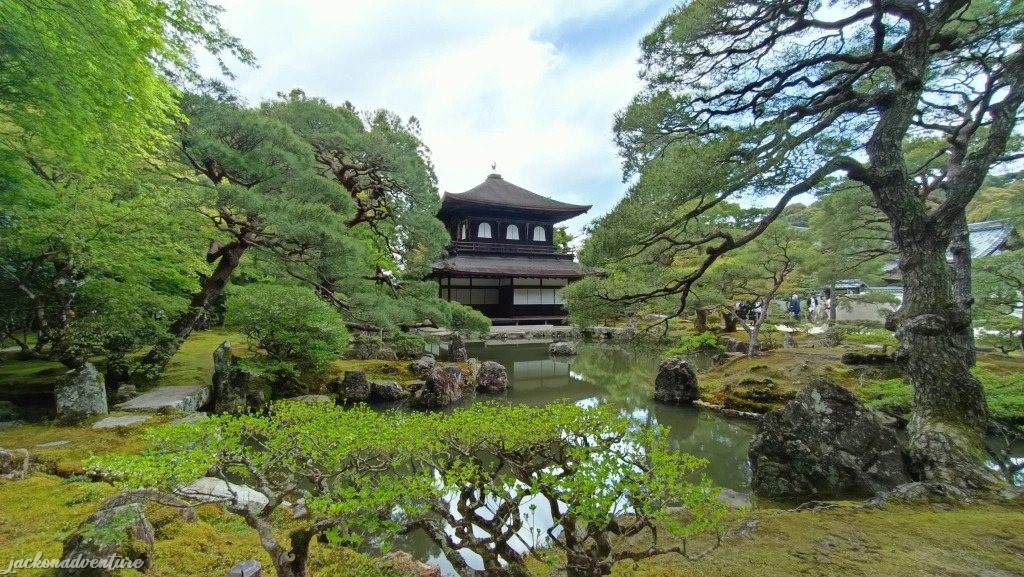
Sits at the eastern mountain of Kyoto, Ginkakuji (東山慈照寺) was built in 1482 by Ashikaga Yoshimasa, the 8th shogun of Muromachi era as his retirement villa. Known as Higashiyama Sanso, he was inspired by the Golden Pavilion constructed by his grandfather Ashikaga Yoshimitsu. It is explained that the moonlight reflecting on the building’s dark exterior gives it a silvery appearance.
Ginkakuji became the center of Higashiyama Culture that gave rise to many aesthetic ideals that influenced traditional Japanese culture ever since. The villa was converted to a temple after he passed away and renamed Jisho-ji. It was listed as a UNESCO World Heritage site in 1994.
As you enter the temple ground, the Silver Pavilion just lies close to the entrance gate with the Kinkyo Pond facing on the western side of the pavilion. The temple also consists of 6 temple buildings, a wonderful moss garden and a unique dry sand garden. The hill behind the temple offers amazing views of the temple compound and Kyoto city.
Location: 2 Ginkakujicho, Sakyo Ward
Getting There: Take a 35-minute bus No. 5, 17 or 100 to the temple from Kyoto Station for 230 yen. You can also take Keihan Main Line train to Demachiyanagi Station and take bus No. 17 or 203 to Ginkakuji-mae bus stop and walk to the temple.
Opening Hours: March to November: Daily from 8.30 am to 5 pm/ December to February: Daily from 9 am to 4.30 pm
Entrance Fee: 500 yen
Stroll along Philosopher Path
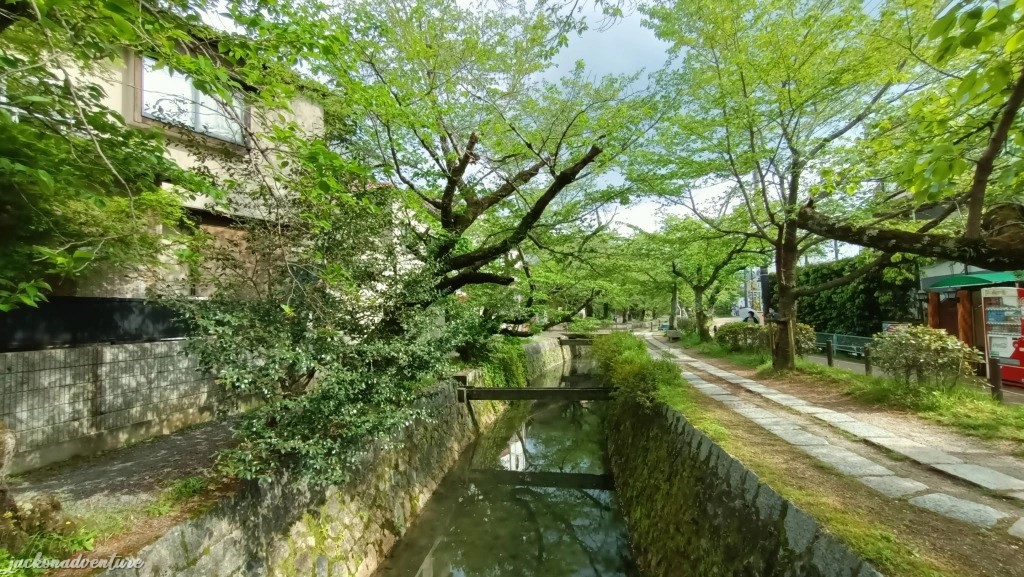
Take a pleasant walk along the Philosopher’s Path (哲学の道) from Ginkakuji to the neighborhood of Nanzen-ji. The 2-kilometer-long path follows a canal lined by hundreds of cherry trees.
Philosopher Path was named due to one of Japan’s most famous philosophers, Nishida Kitaro who was said to practice meditation while taking this route on his daily commute to Kyoto University.
Amble along the enchanted Nanzen-ji
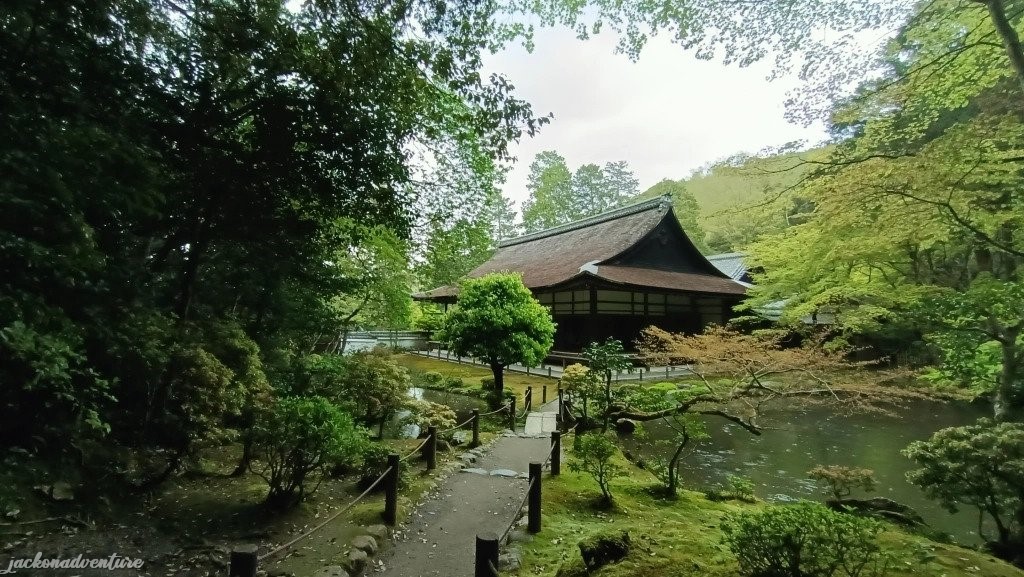
Originally built in the mid-13th century, Nanzenji Temple (南禅寺) is home to several sub-temples with both old and new architectural styles. Emperor Kameyama built his retirement villa on the present site and later converted it into a Zen temple. The buildings were all destroyed during the civil wars during the 14th-16th centuries, but slowly restored thereafter.
Among the sub-temples I have visited is this peaceful Nanzenin Temple hidden behind the aqueduct on the former site of Emperor Kameyama’s original retirement villa. The temple has a mausoleum of the emperor, a temple hall and a lush garden surrounding a pond.
Other sub-temples in Nanzen-ji are the 15th-century Konchi-in Temple and the 18th-century Tenjuan Temple.
Address: Nanzenji Fukuchicho, Sakyo Ward
Getting There: Take the Tozai Subway Line to Keage Station
Opening Hours: Daily from 8.40 am to 5 pm
Entrance Fee: 400 yen (Hojo: 600 yen, Konchi-in Temple: 400 yen and Tenjuan Temple: 500 yen)
Take picturesque of Nanzen-ji’s aqueduct
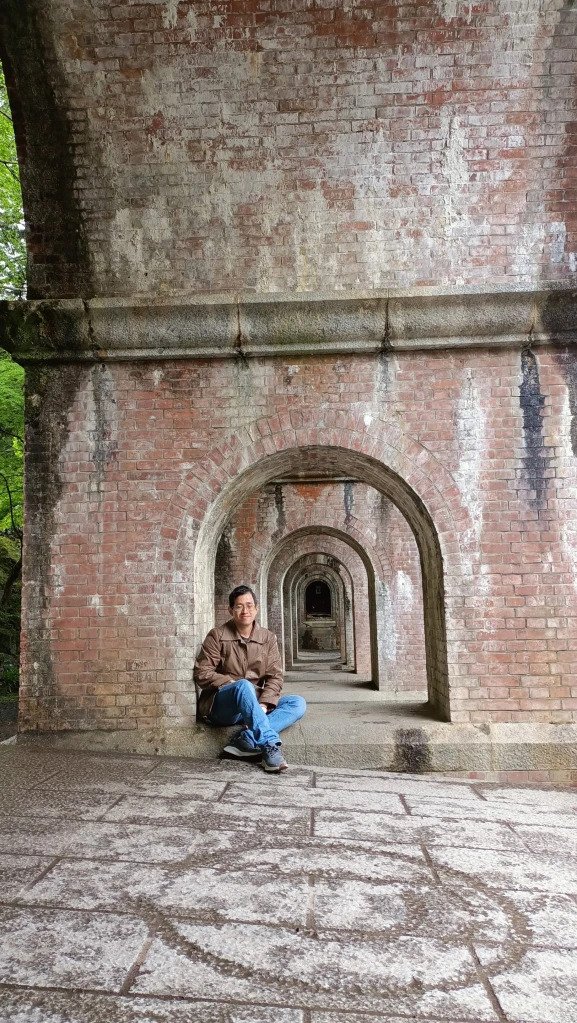
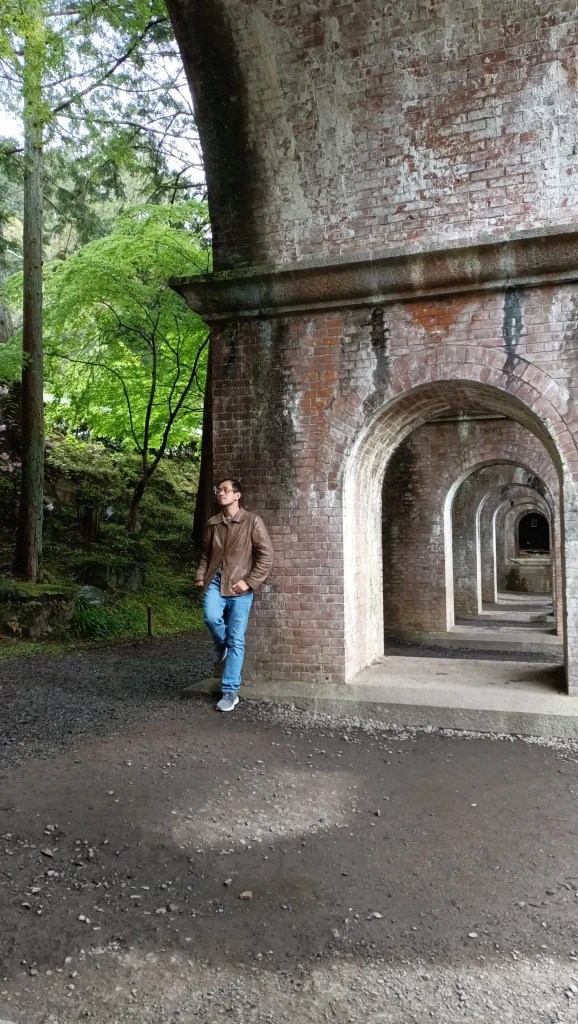
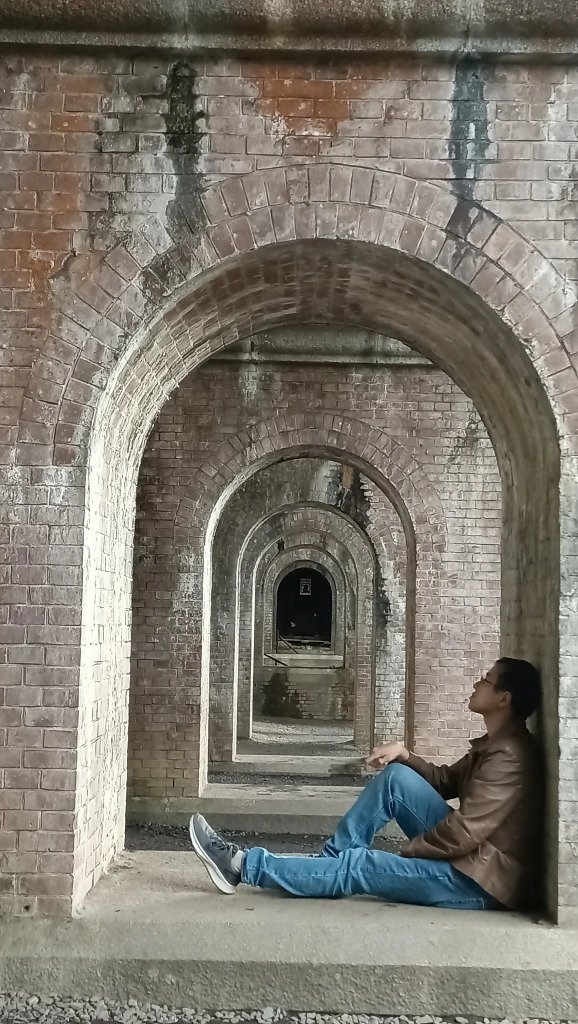
A pretty odd sight of a large brick aqueduct located just outside the Nanzenin Temple was constructed during the Meiji Period. It was part of a canal system used to carry water and goods between Kyoto and Lake Biwa in a nearby Shiga Prefecture.
The aqueduct is one of my favorite photography spots, perfect for Instagramable shots. It is surrounded by greenery and cool atmosphere in the evening.
Browse through Pontocho Alley

Pontocho (先斗町) is packed with restaurants on a narrow strech from Shijo-dori to Sanjo-dori. There is a broad range of dining choices from affordable yakitori to traditional and modern Japanese cuisine as well as highly exclusive establishments.
The restaurants facing Kamogawa River will build temporary platforms over the flowing water to allow dining out in the open space between May and September. You can enjoy the cooling effects of the flowing river and the lively summer atmosphere.
Travel Tips: Business hours for restaurants and bars along Pontocho are usually open from 5 pm to 11 pm. Some do open during lunch hours and offer English menus.
Travel back in time at Sanneizaka and Nineizaka
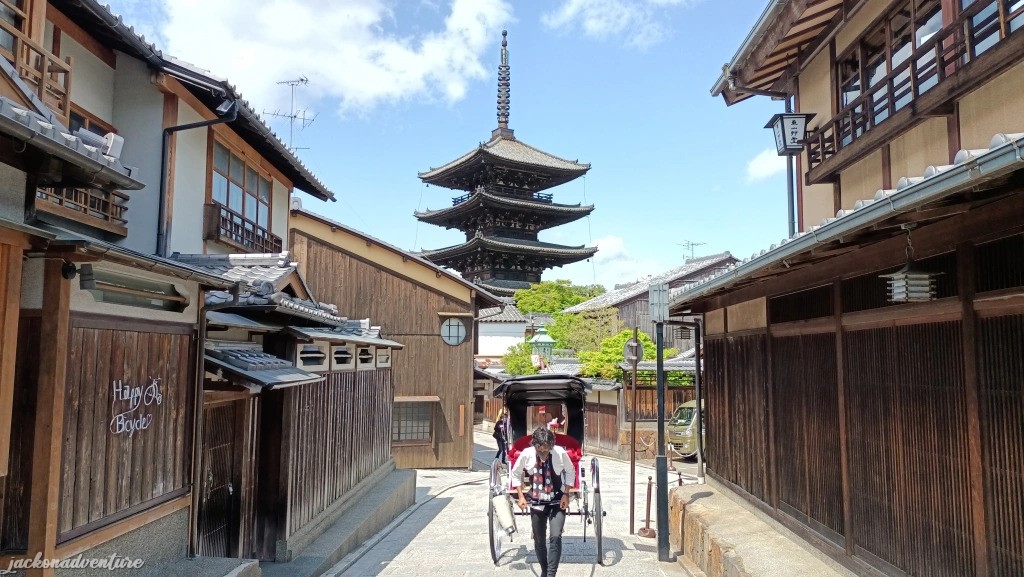
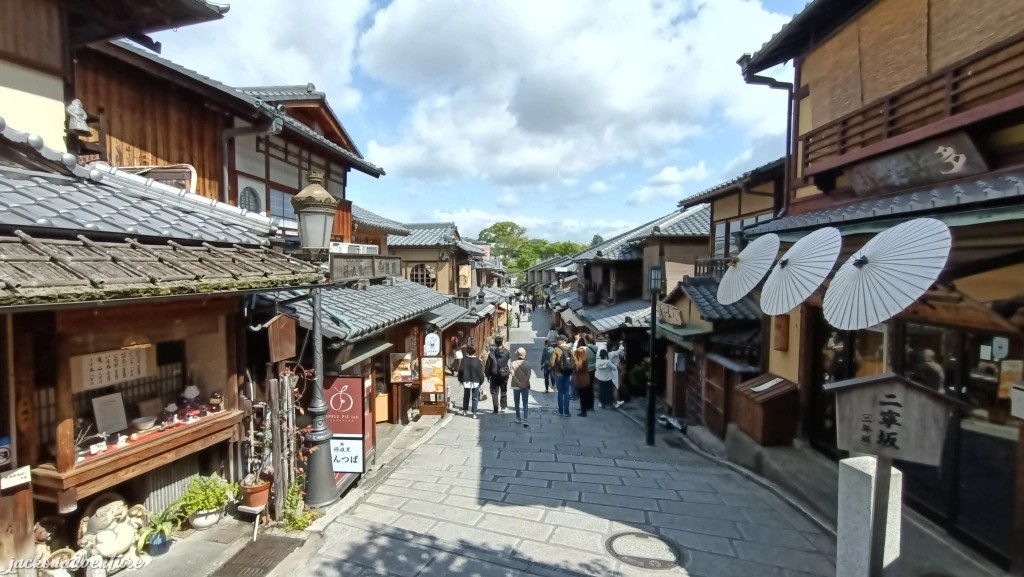
Walking along the old cobblestone streets of Sannenzaka and Ninenzaka that gives a feel of traveling back into the past. These ancient narrow streets preserve the atmosphere of the Taisha era reflecting the history and culture of that period. It is lined with Japanese-style old buildings, souvenir stores, tea houses and restaurants.
The most notable landmark here is Hokanji Temple which was founded by Prince Shotoku in 592. The temple is not open to the public, but the view of the five-story pagoda from near and afar is magnificent.
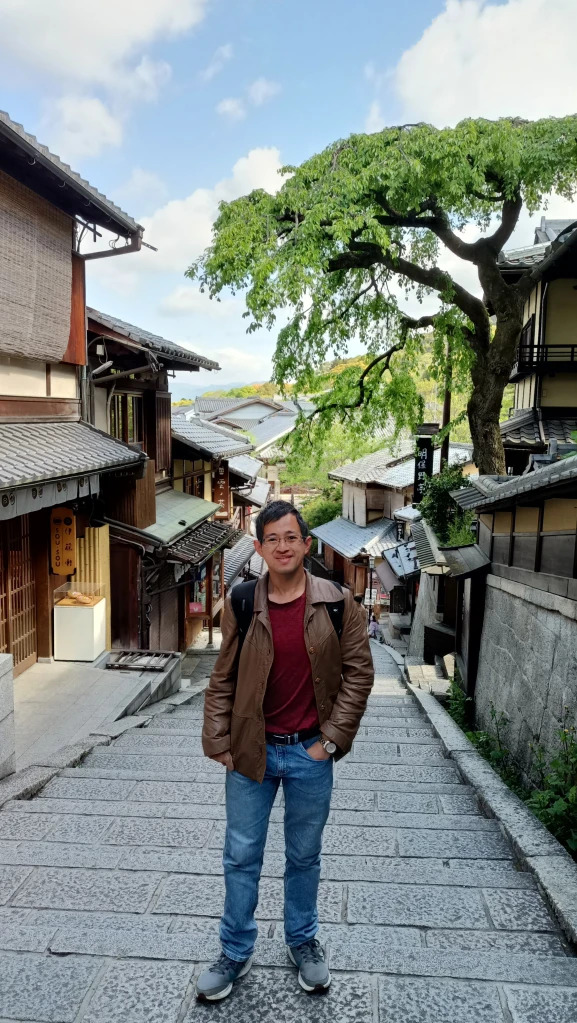
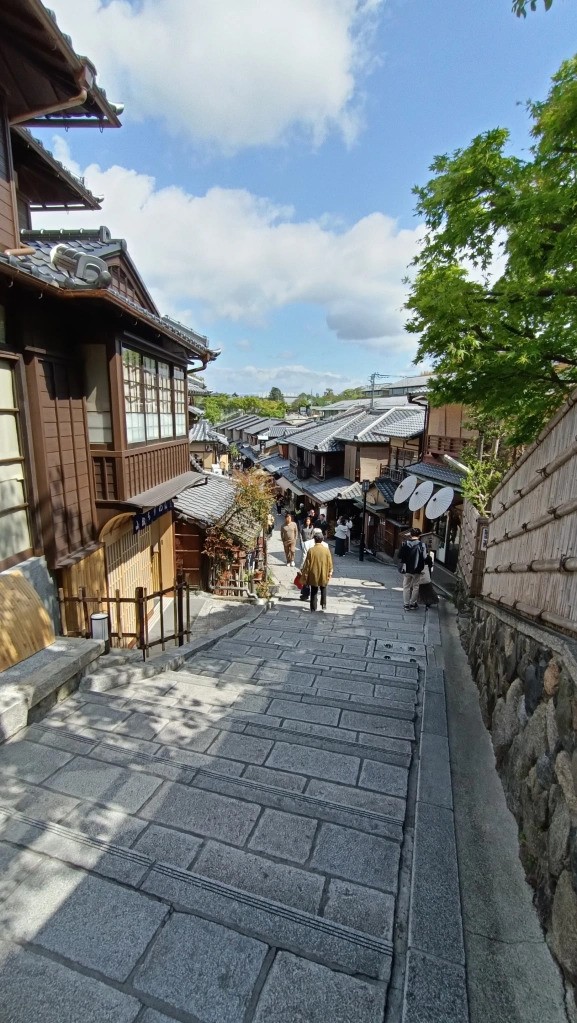
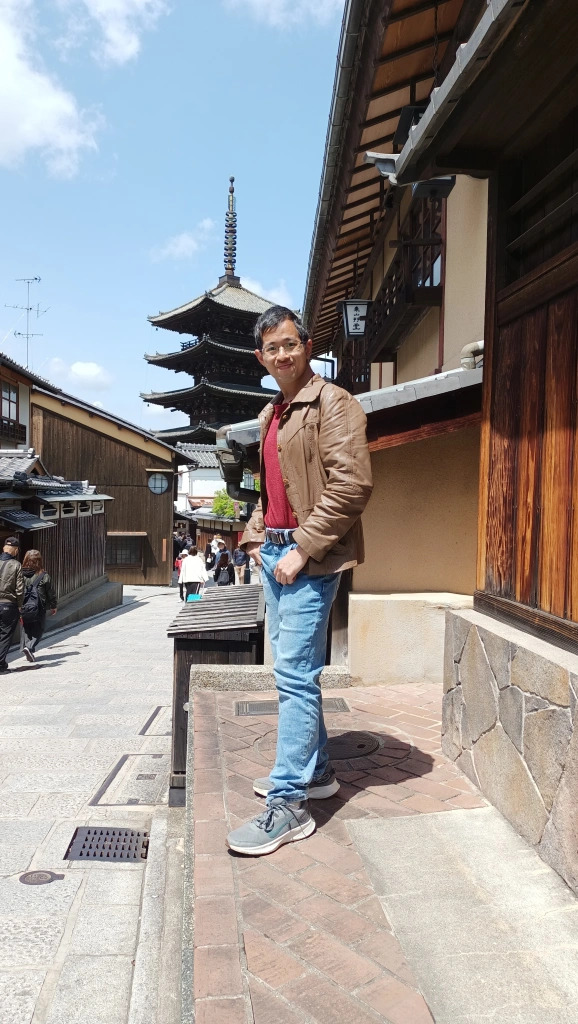
Nene, Hideyoshi Toyotomi’s wife would climb the hill to Kiyomizu Temple to pay for the safe birth of a healthy child. Sannenzaka- “Three-year hill” and Ninenzaka-“Two-year hill” got their names from the Japanese word for childbirth and Nene’s name. The third street nearby was named Ichinenzaka-“One-year hill”.
According to legend, if you stumble and fall on Ninenzaka, you will die within two years. A mishap on Sannenzaka is said to cause death within 3 years. So, beware and watch out for the steps.
Have breakfast at the unique Starbuck

The Starbucks Kyoto Ninenzaka Yasaka Chaya is built in the sukiya style in a traditional Japanese house that’s over 100 years old. Once you step into the store, you get a sense of being inside a classic teahouse with the smell of coffee aroma. The shop retains its original design and has a beautiful moss garden beyond the glass window at the back of the bar counter.
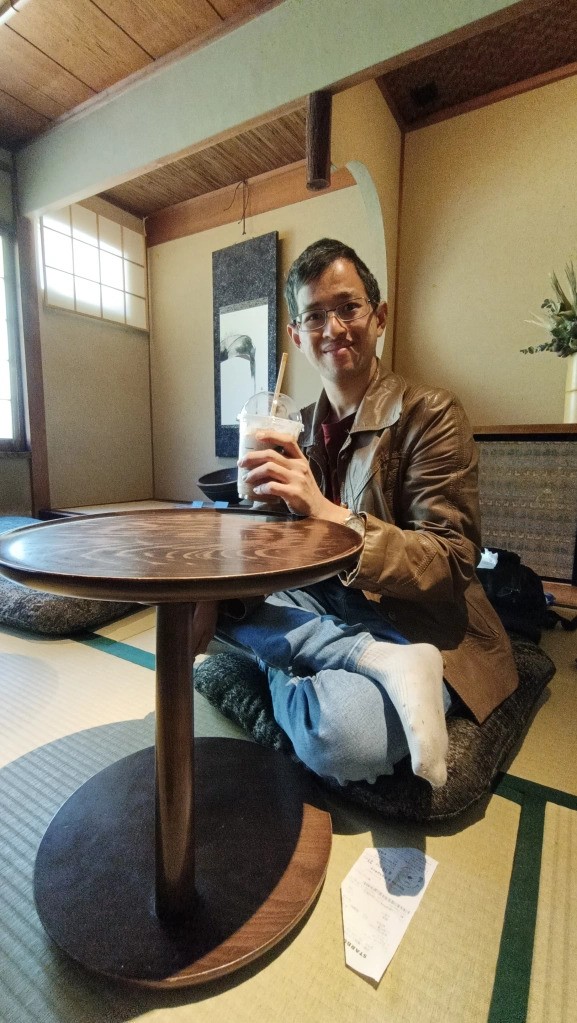
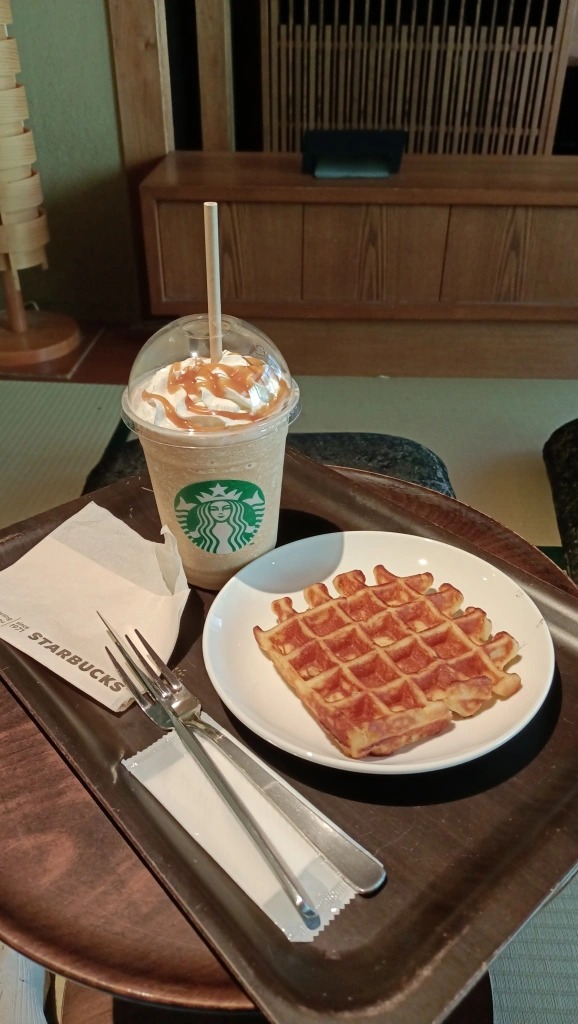

With some extra free time, enjoy breakfast and indulge with a cup of Starbucks drink while relaxing in a tatami room on the second floor (if you’re lucky). There are also table seats and sofas upstairs with a cozy atmosphere.
Location: 349, Masuyacho Higashiyama-ku
Opening Hours: Daily from 8 am to 8 pm
Explore the lovely Yasaka Shrine
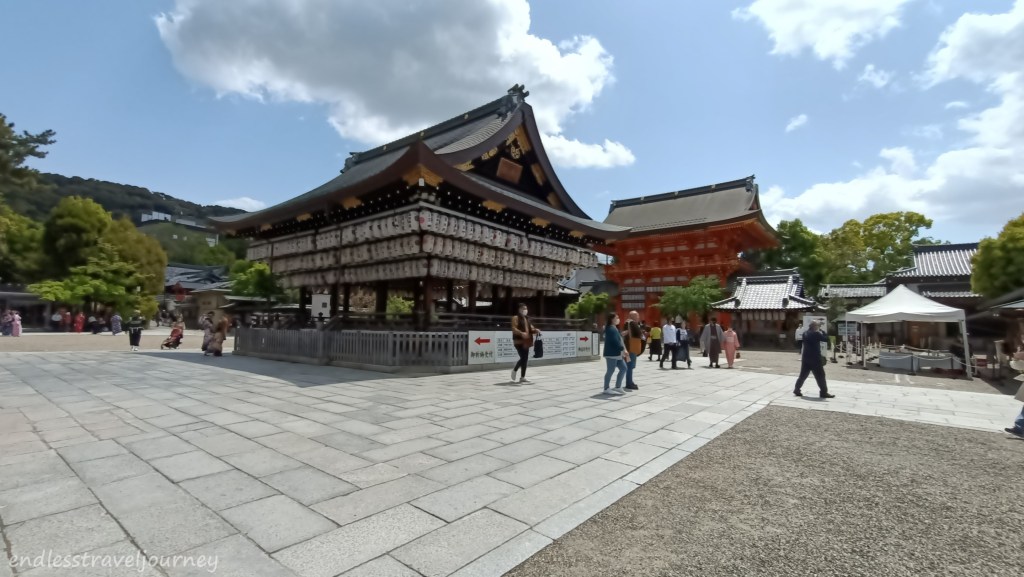
Established in 656 A.D., Yasaka Shrine (八坂神社) is among the most popular shrines situated in Gion district. The most eye-catching site is the dance stage in front of the main hall which is decorated with hundreds of lanterns. Those lanterns will get lit up beautifully in the evenings.
There is also a smaller shrine, popular with maiko and geiko in the water. It is said that the water will make you more beautiful and can write your beauty wishes on the ema wooden plaques.
This Shinto shrine is well-known for its summer festival, Gion Matsuri which is held every July. This most celebrated event in Japan dates back more than 1,000 years. Hundreds of residents dressed up in costumes and portable shrines were seen transported across the river.
Location: 625 Gionmachi Kitagawa, Higashiyama Ward
Getting There: Take the Karasuma Subway Line to Shijo Station and walk 20 minutes to Yasaka Shrine. You can also take Keihan Main Line to Gion-Shijo Station.
Opening Hours: 24 hours
Entrance Fee: Free
Sample fresh produce at Nishiki Market

Nishiki Market (錦市場) is a must-visit market for every foodie lover who comes to Kyoto. Known as “Kyoto’s Kitchen”, it is a long shopping street lined with more than 100 shops and restaurants that sell fresh seafood, fresh produce, ready-made food, tea and mochi to name a few as well as kitchen knives and cookware.
This fresh market dates back several centuries ago when the first shop started around 1310 and later became a fish wholesale district. Soon, a variety of stores moved in here and transformed into a retail market. Today, the shop owners are run by the same families who have passed down for many generations.
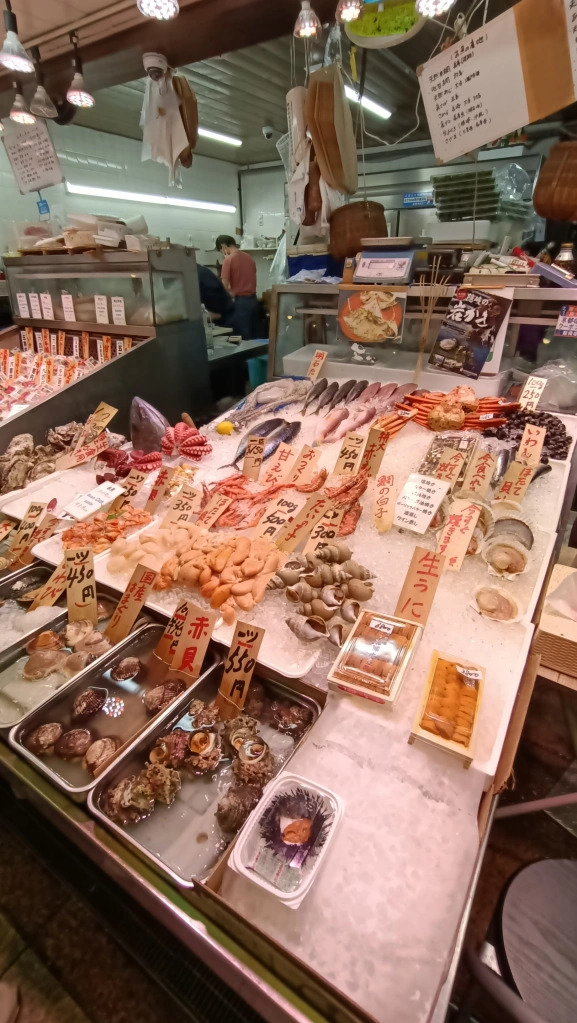
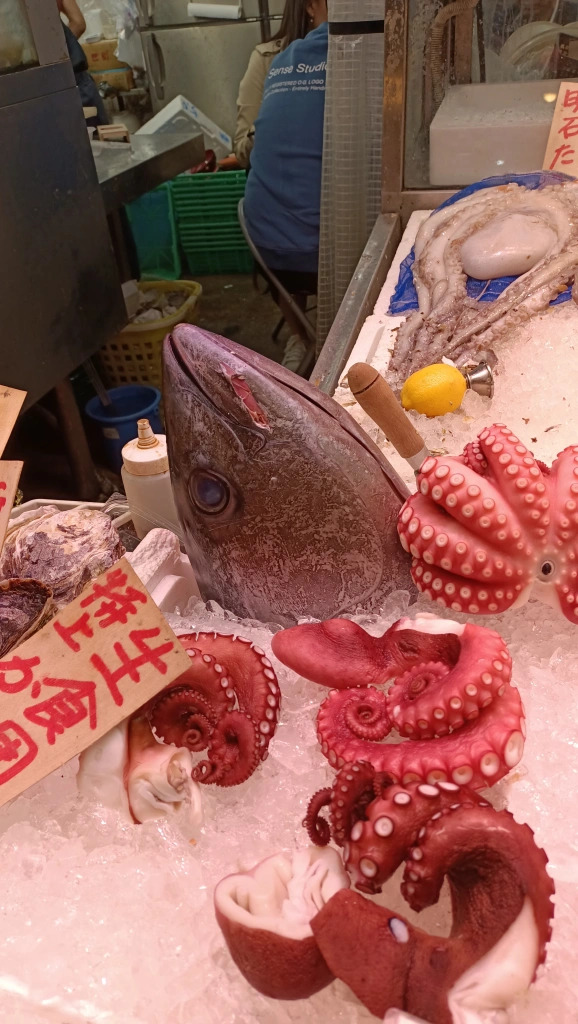
Some of the food have to try are Tako Tamago (octopus with a boiled quail egg stuffed into the head), fresh oyster, wagyu beef, mochi, cheap 100 yen Japanese wine and of course- Sashimi or sushi.
Travel Tips: These stores are open at various hours but usually 10 am to 6 pm. Remember to refrain from eating and walking as it is considered bad manners.
Going Elsewhere in Japan?
If you like to travel to other parts of Japan, here are some ideas of cities and towns worth visiting with the best things to do. There are also stories about my experience on the Shinkansen train ride and WWOOFing in Japan.
- Tokyo in 2024
- Tokyo in 2023
- Kamakura
- Nagoya
- Nagano
- Takayama
- Gujo
- Ise
- Kumano Kodo
- Okayama
- Hiroshima
- Miyajima
- Mt Fuji
- Arishayama
- Nara
- Osaka
- Shinkansen Train
- WWOOFing in Japan
Like It? Pin This Article.


 Jack on Adventure
Leave a comment