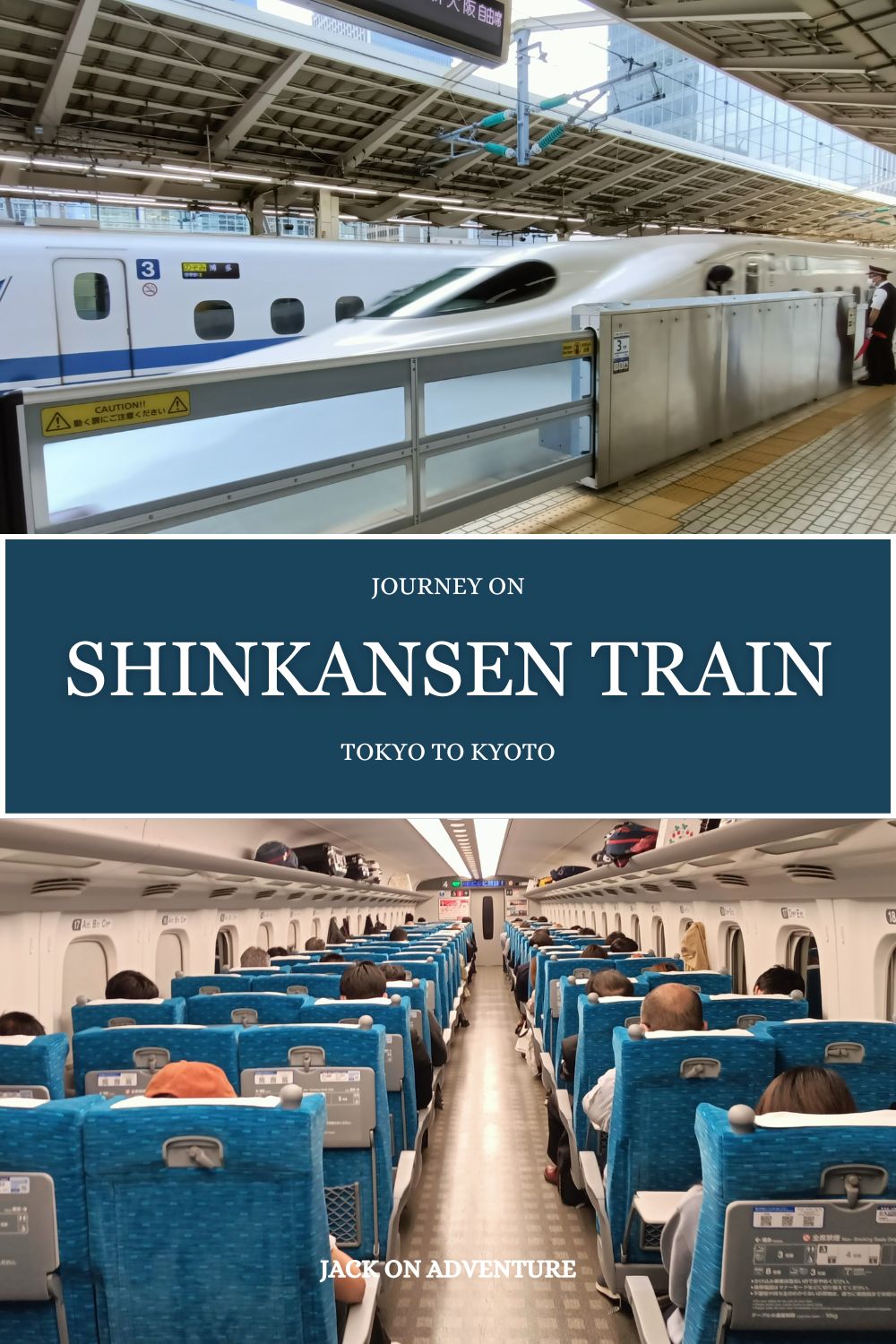
Japan is arguably one of the most beautiful country in the world. After spending more than 2 weeks, I would see why this country has been beloved by many travelers. “The Land of the Rising Sun” as many people called, is rich with fascinating history, amazing culture, brilliant ancient and modern architecture, stunning natural landscapes and delightful food.
Traveling around Japan gives me a wide perspective from different parts of the country. There are so many things to see and experience, starting from the modern skyscrapers of Tokyo to the breathtaking views of Mt Fuji followed by the historical Kyoto and the vibrant Osaka city.
Truthfully speaking, this trip is just the tip of the iceberg. There is so much more to discover in Japan.

Nevertheless, my adventure to Japan has been fruitful and taught me a lot about the country. Riding on the Shinkansen is one of the must-do experiences when traveling between two cities.
Shinkansen is a high-speed bullet train that can connect passengers from distant regions. I traveled from Tokyo to Kyoto by Tokaido Shinkansen and gives the feel of being transported back to the past.
The Shinkansen Lines
Before I share my wonderful riding experience, there are a few things to know before choosing which line to take in Japan. They can travel up to 320 km/h to connect major cities throughout Japan.
Yup, that’s right!!!
There are different Shinkansen lines run by JR company that connect from Tokyo to other cities in Japan. Below are the list of some popular cities covered by each Shinkansen line:
- JR Central– Tokaido Shinkansen (Tokyo, Yokohama, Nagoya, Kyoto, Osaka)
- JR West– Sanyo Shinanken (Osaka, Kobe, Himeji, Okayama, Fukuyama, Hiroshima, Hakata)
- JR East– Joetsu Shinkansen (Tokyo, Omiya, Takasaki, Nagaoka, Niigata)
- JR West and East– Hokuriku Shinkansen (Tokyo, Takasaki, Nagano, Iiyama, Toyama, Kanazawa)
- JR Kyushu– Kyushu Shinkansen (Hakata, Kumamoto, Kagoshima)
- Yamagata Shinkansen (Tokyo, Fukushima, Yamagata, Shinjo)
- JR East– Tohoku Shinkansen (Tokyo, Sendai, Morioka, Aomori)
- Akita Shinkansen (Morioka, Tazawako, Akita)
- JR Hokkaido– Hokkaido Shinkansen (Tokyo, Sendai, Aomori, Hakodate)
Before Arriving at Japan

As the days approached to a new exciting adventure, I bought my Shinkansen ticket online via Klook. The company is a third-party agent that’s quite reputable for selling entry tickets to attractions, hotels, tours and transportation mainly in Asia and several European countries.
There are three types of Shinkansen train that run on JR Central (JR Tokai)- Nozomi, Hikari and Kodama. ‘Nozomi’ train is the fastest and the fare is usually the most expensive. However, it’s worthwhile taking ‘Nozomi’ train if you are buying a single journey which is ideal and cheaper than a 7-day JR Pass (I will explain more about JR Pass later).
In this case, I’m just taking the bullet train once in my entire Japan trip from Tokyo to Kyoto. The train tickets are actually sold at the same rate regardless of which type of train in Klook. So, I take the opportunity to ride the fastest train.
The ticket will be deliver to the address in the hotel or Airbnb in Japan and you can provide the delivery address after making the payment. It will shipped out 3-4 working days before the check-in date of your accommodation and the status of delivery is available at the Japanese Pos Office’s website. You can collect the mail at the hotel’s front desk or Airbnb host upon arrival.
Hours Before Departure
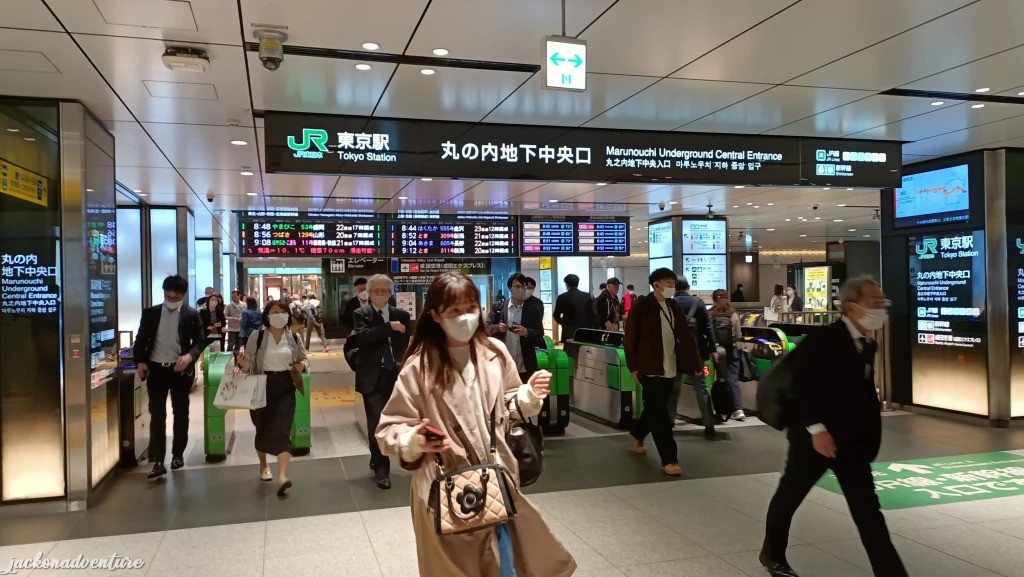
Just 2 hours before the train departs, I arrive at this massive Tokyo Station near the Imperial Palace. The station is packed with travelers and commuters who take the JR train to work and school. Just like Shinjuku Station, Tokyo Station is tunneled with many exits, signages, restaurants and gift shops.
Thankfully, I get some help from a ticketing officer. They do speak basic English and able to guide the direction to the departing area. There are also signages written in Japanese and English to point out the way to the train platform. I still get a little confused because there are too many stairways and entry points.
But at last, it takes me around 20 minutes to find my boarding platform.
Grab A Meal at Ekiben Shop
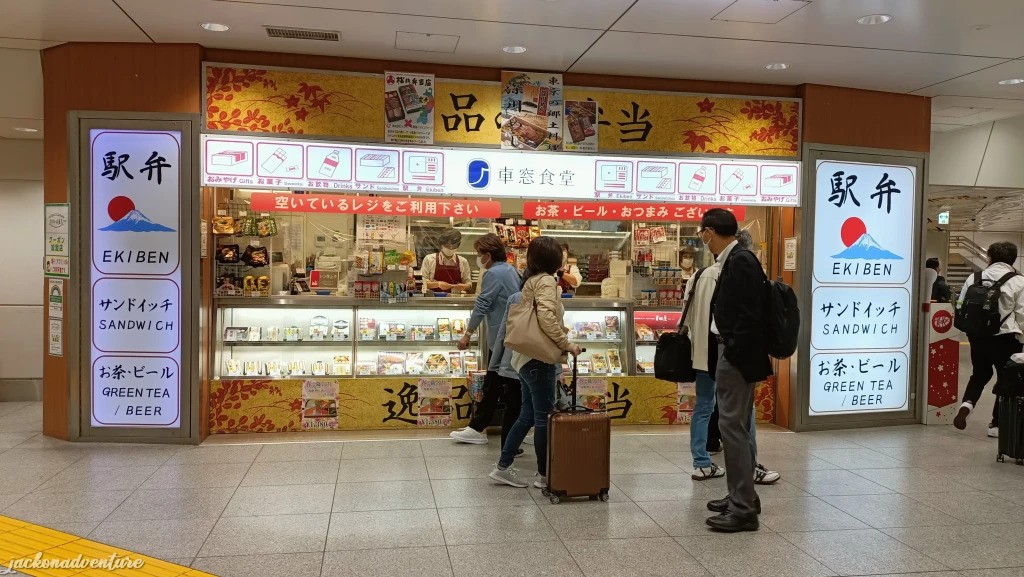
Ekiben shops are everywhere in Tokyo Station!!
Wondering if eating is allowed on the Shinkansen train. The answer is “YES”. Knowing that one of Japanese etiquette is to avoid eating while walking around the street, eating on board the train is a different thing.
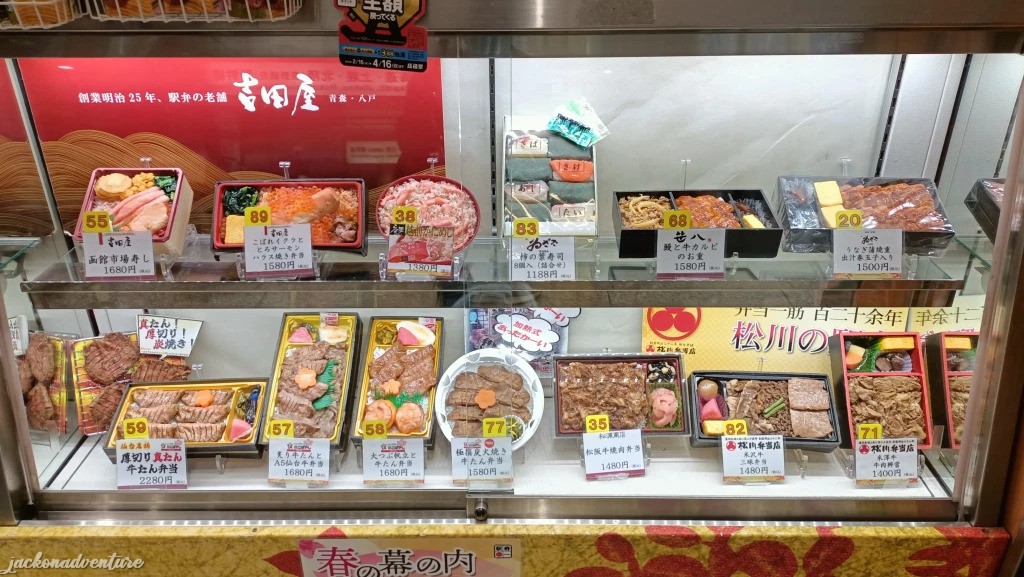
These ekiben shops can be found throughout major stations in Japan. They sell bento boxes (packed lunch), sushi, sandwiches, drinks and even sake! The food is well prepared, packed in a box and ready to eat right away onboard the Shinkansen.
You won’t find any difficulty choosing what to eat because the shop displays the food replica with prices. They are so affordable with bento boxes selling from 1,000 yen to 2500 yen (big one).
At the Boarding Platform

Before boarding the Shinkansen, be sure to check the departure time and train number carefully. There are trains leaving the station every few minutes and they are very punctual. You don’t to miss or get on the wrong train. The time schedule is shown in Japanese and English as well.
Riding on ‘Nozomi’ Shinkansen
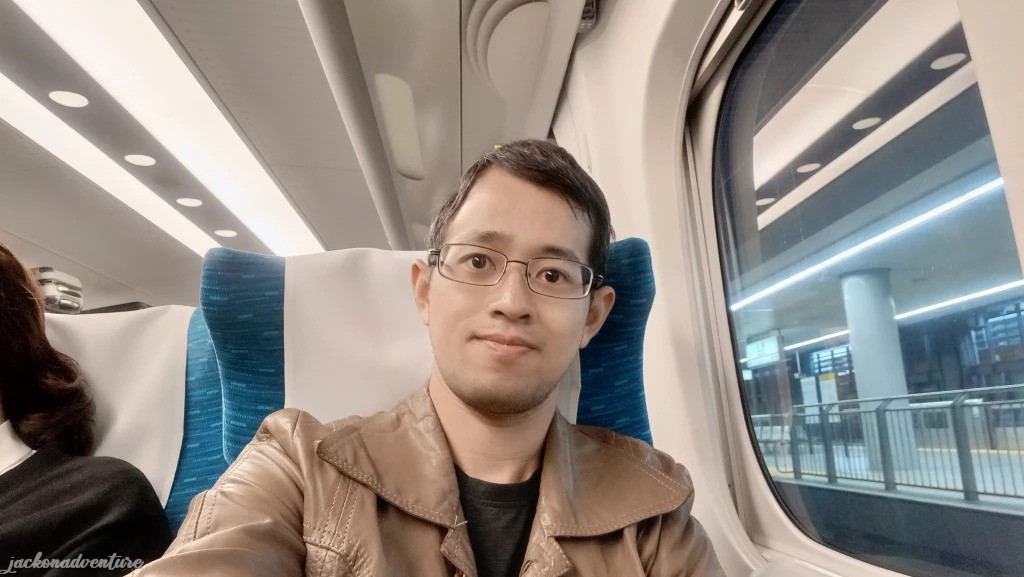
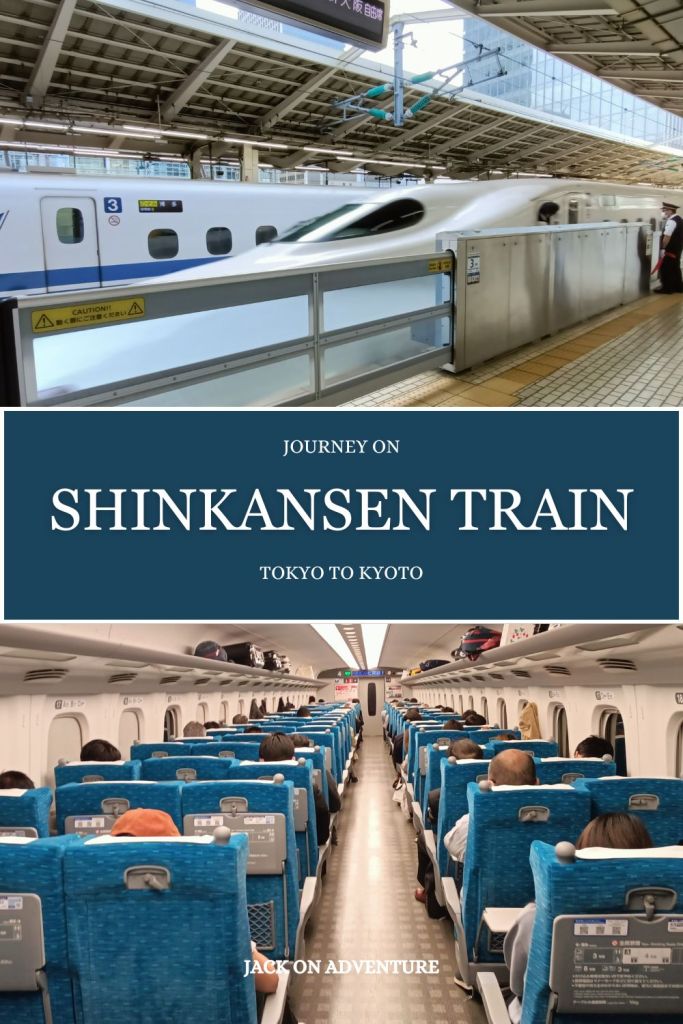
I am now on board the ‘Nozomi’ Shinkansen train from Tokyo Station bound for Kyoto. Nozomi is the fastest train compared to ‘Hikari’ and ‘Kodama’ train because it makes fewer stops. The distance between the two cities is about 550 km, taking only 2 hours and 10 minutes (‘Hikari’ train- 2 hours 40 minutes and ‘Kodama’ train- 3 hours and 40 minutes).
The train is clean, thanks to the staff who clean and sanitize the train before allowing passengers to get on board. The seat is spacious and comfortable and you can recline it if want to rest or take a short nap.
Catch a glimpse of Mount Fuji
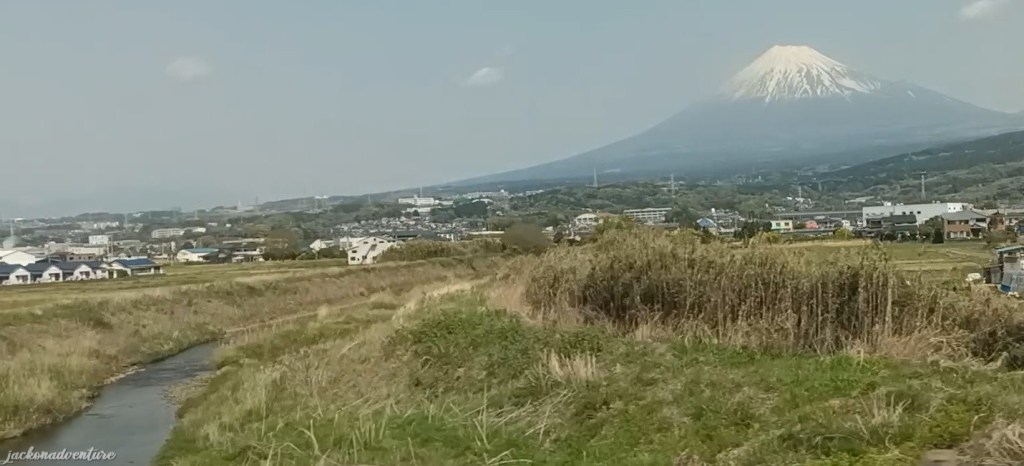
When taking the Tokaido or Sanyo Shinkansen, there’s a great chance to enjoy the magnificent view of Mount Fuji on a clear sunny day.
The Tokaido Shinkansen has 5 seats in a row. There are a row of 3 seats (label A, B and C) and a row of 2 seats (label D and E).
So if you’re traveling from Tokyo to Nagoya, Kyoto or Osaka, the window seat with Mt Fuji view is at seat “E” (Seat “D” if you’re taking a green carriage before there are only 4 seats in a row). And if you’re traveling vice versa, then you should pick seat “A” to enjoy the spectacular Mt Fuji scenery.
It takes about 45 minutes from Tokyo Station or 38 minutes from Shinagawa Station before the train passes Mishima Station in Shizouka prefecture to come across the stunning view of the sacred mountain.
If you can’t get the window seat, head to the front or back of the carriage to look out from the exit door of the train. But make sure not to block the staff or passengers’ way when they are moving around.
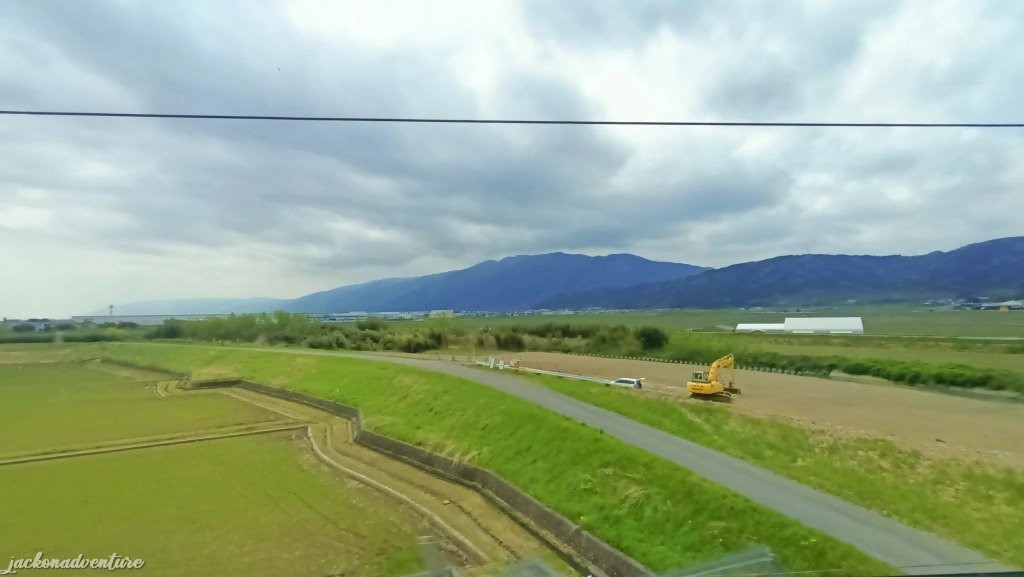
Remember to grab your camera ready because you only have around 4 minutes to catch this stunning Mt Fuji view. You can enjoy the scenery of the countryside, small towns and farmlands.
Enjoy a Delicious Bento
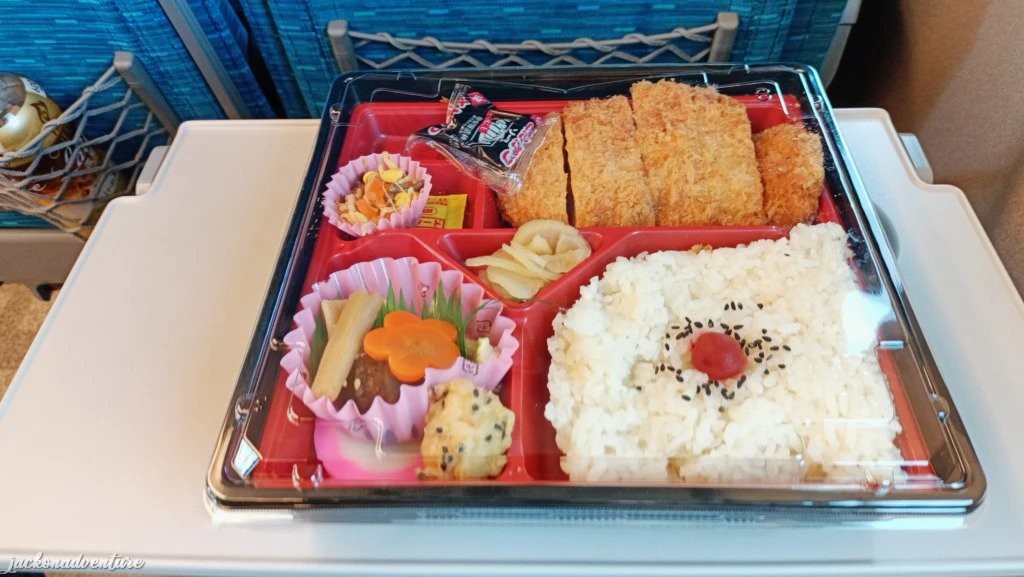
After watching the beautiful nature view, it’s time to fill up my tummy with a yummy chicken katsu bento that bought earlier at the train station. There is a fold-out tray to put the food and drink just like in an airplane. The rice portion is pretty big and the chicken is very crispy. It also comes with some garlic and some vegetable dishes.
Take a Tour inside Shinkansen Train
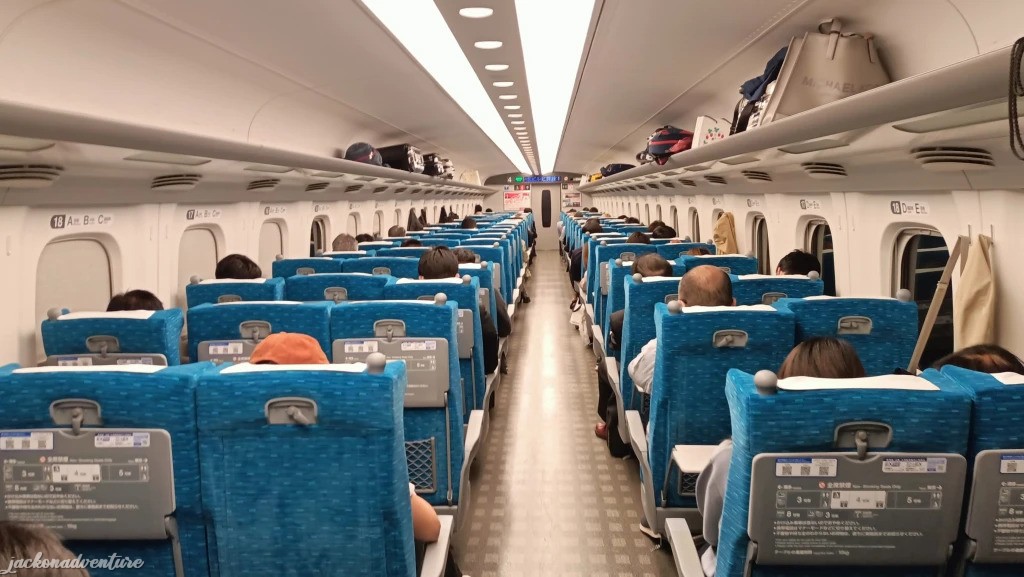
This is how it looks like in the ordinary car of Shinkansen train. Each row has 5 seats with 3 seats on the left and 2 seats on the right side of the carriage.
The overhead luggage compartment allows you to store a large backpacker, a laptop bag or small suitcase. The size of the bag needs to be less than 160 cm on three sides.
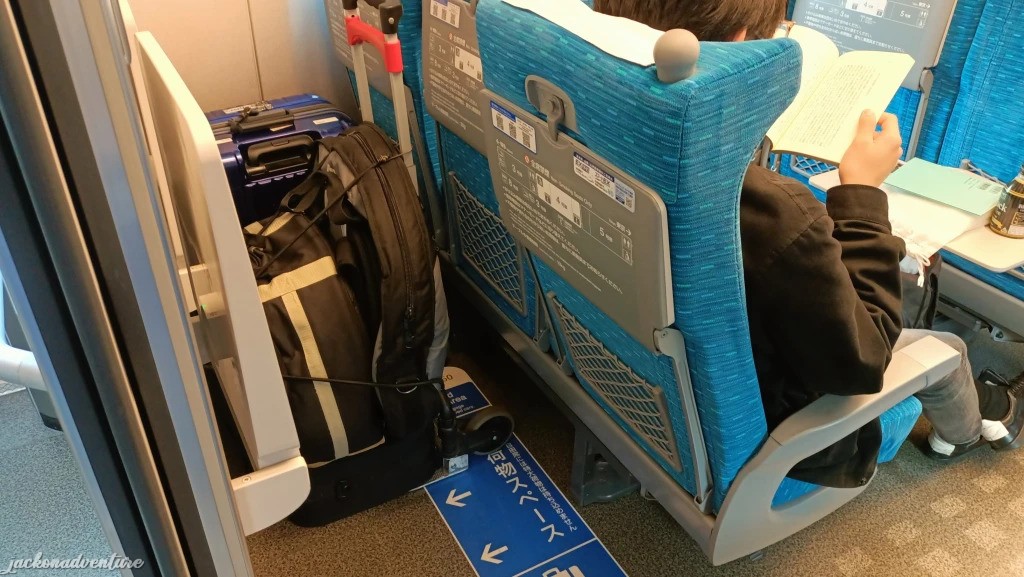
There is a storage area at the back of the train carriage to store “oversized baggage” over 160 cm. The NEW RULE now requires passengers to make reservations for a designated seat if traveling on Tokaido, Sanyo or Kyushu Shinkansen with a piece of luggage measuring more than 160 cm. Reservations for these designated seats can be made at “Midori no Madoguchi” at all major train stations.
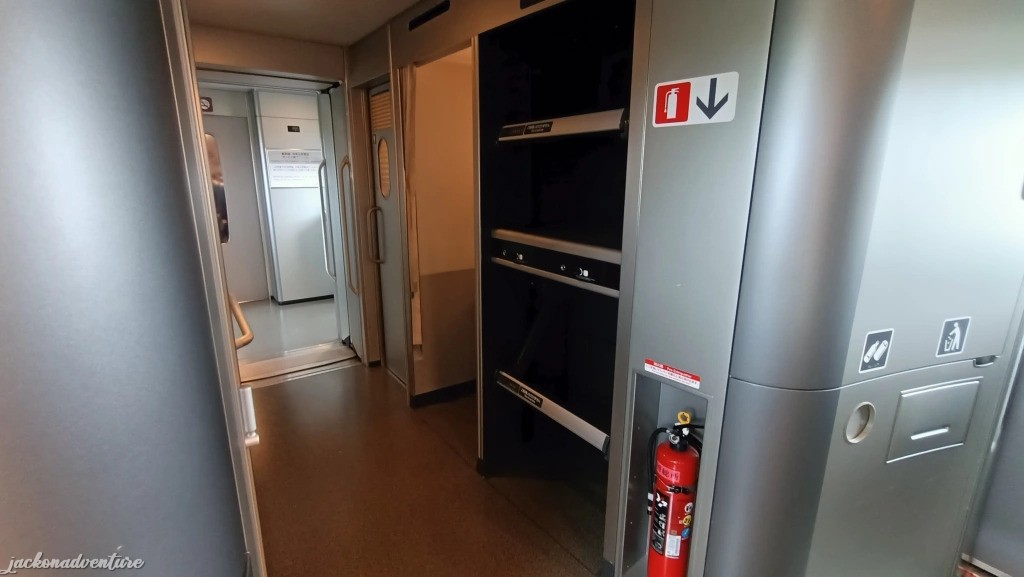
Travel tips: A great way to travel hassle-free is to get Sagawa and Ta-Q-Bin to deliver baggage within cities throughout Japan. It saves you the trouble of carrying them if you are going on a side trip or taking the Shinkansen train. The delivery service can be found at major train stations and convenience stores in the country.
I had my 70-litre size backpack delivered at Sagawa head office in Shinjuku Expressway Bus Terminal building from Tokyo to Kyoto. Before going to Kyoto, I spend a night in Mt Fuji and another night in Tokyo but decided to just carry a smaller backpack with some clothes to change for the next 2 days. My backpack arrived to the guesthouse in Kyoto the next working day.
The service is so efficient that it arrived before my check-in date. Thankfully my host from the guesthouse allows me to store the backpack for a night. The delivery fee is affordable as well, costing only 2,200 yen. The price usually starts from 2,000 yen and the charges depend on the destination, size and weight.
The Japanese-style toilet is very clean too. The electric bidet seat is heated and uses vortex spray just like those in the shopping malls and hotels.

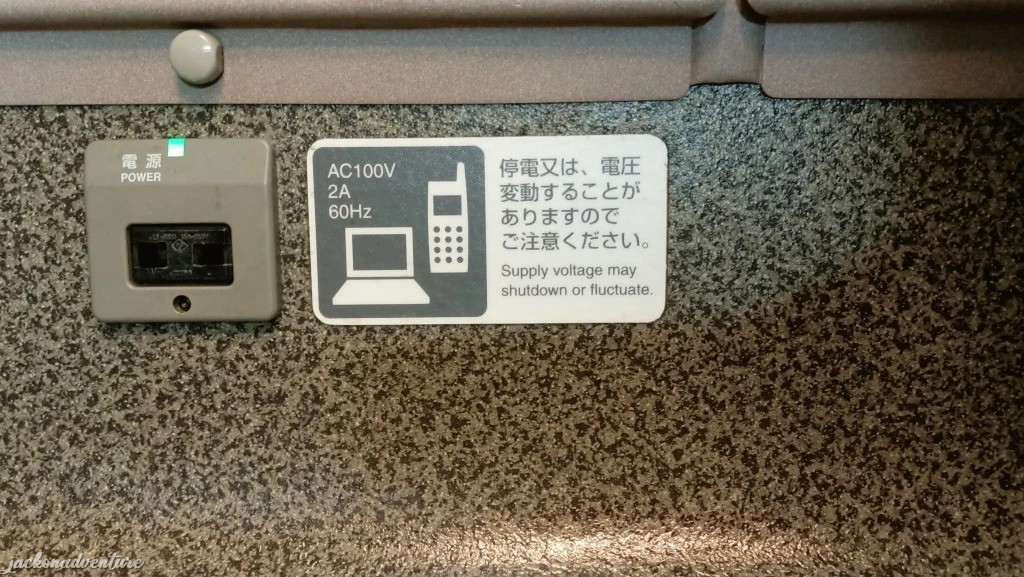
Getting a Japan Rail Pass
The most cost-saving way to get around Japan is with a JR Pass. If you are using the JR Pass, you are entitled to get unlimited rides on JR public transport including the Shinkansen bullet train, JR local trains, JR Bus, JR Ferry, monorails and airport transfer. The Whole JR Pass gives access to all Shinkansen Lines with unlimited travel for 7, 14 or 21 consecutive days.
The JR Pass can only be used to catch the “Hikari” and “Kodama” train and won’t be covered for “Nozomi” train. When collecting the pass, you can choose a reserved or non-reserved seating area. It is highly recommended to reserve a seat especially during peak hours or festival seasons like Golden Week and cherry blossom season.
Seat reservations can be made in advance at JR Ticketing Office (Midori no Madoguch-– みどりの窓口) with an average fee of 530 yen. JR Pass passengers can also board the non-reserved seats, but it is subject to availability.
BAD NEWS: If the non-reserved seats are full, you’ll end up standing for the entire journey. This often happens during the peak season and the ride will be very unpleasant if you need to travel from Tokyo to Kyoto or Osaka for more than 2 hours.
Travel Tips
- Get to the train station at least 2 hours before departure. Stations like Shinjuku Station and Tokyo Station are huge and takes some time to find the boarding platform.
- Reserve a seat once the ticket or JR Pass is collected to avoid standing or enjoy the best scenic view throughout the journey especially during peak season.
Going Elsewhere in Japan?
If you like to travel to other parts of Japan, here are some ideas of cities and towns worth discovering with the best things to do and my experience on WWOOFing in Japan.
- Tokyo in 2024
- Tokyo in 2023
- Kamakura
- Nagoya
- Nagano
- Takayama
- Gujo
- Ise
- Kumano Kodo
- Okayama
- Hiroshima
- Myajima
- Mt Fuji
- Kyoto
- Arishayama
- Nara
- Osaka
- WWOOFing in Japan
Like It? Pin This Article.

 Jack on Adventure
Leave a comment