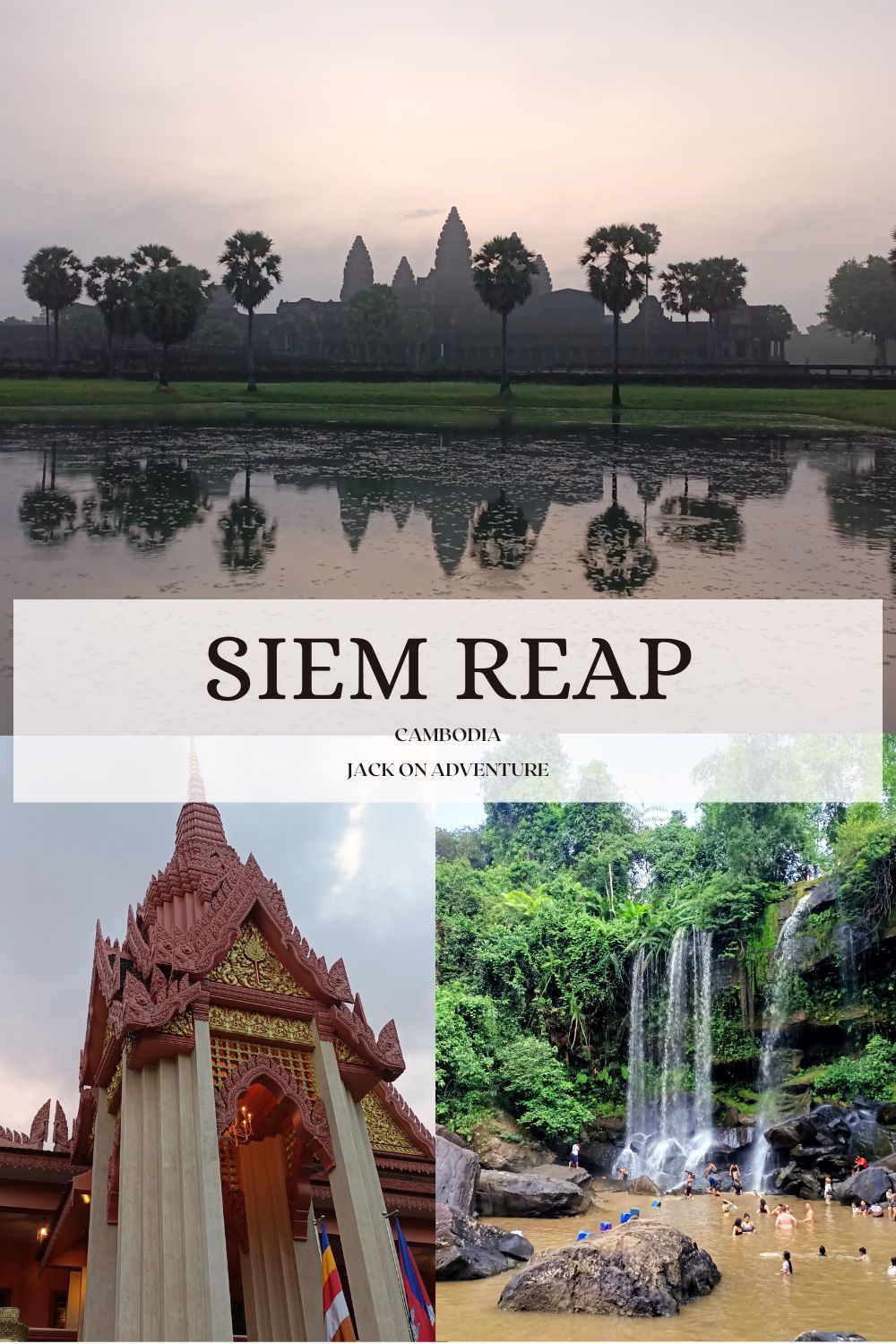
The gateway to the temples of Angkor, Siem Reap is home to many stunning ancient temple ruins of the mighty Khmer Empire. Thanks to the charming Angkor Wat and other surrounding temples, the city has been put on the world map and became a famous tourist magnet. Millions of visitors come to get their eyes on these well-preserved sites each year.
There are many other reasons to spend a few days in the beautiful city. This lively town is packed with impressive colonial buildings, museums, traditional markets and cultural performances. One can savor some of Khmer’s authentic cuisines while enjoying the bustling nightlife with like-minded travelers.
Those nature lovers can also venture into the mountain range of Phnom Kulen once home to the birthplace of the ancient Khmer Empire and a pilgrimage site for Hindu and Buddhist followers. It’s here where you can picture one of the most glorious times of the past and admire the natural beauty afar from the heart of Siem Reap.
Best Time to Visit
Siem Reap only has dry and wet season. The best time to travel is from November to March when the weather is cold and dry. The humidity can be unbearable between April and June as the temperature can hit 45-50°C. It usually expects rainy days from June to August and flooding often occurs in Siem Reap.
Having said that, rain often comes in small and short bursts that don’t usually last long. If your travel dates are not flexible, don’t sweat it. You still can enjoy Siem Reap just as much as during the recommended period. I was here in early May when the rainy season just began. It only rains on the second day in the evening and on the third day in the morning, but still get a fair amount of time to visit all the places in Siem Reap.
Getting There
By Plane
Most visitors will take a direct flight to Siem Reap’s newest Angkor International Airport (Airport Code: SAI). There are many direct flights within the Asean region, Shanghai and Seoul.
The airport is located 18km from Siam Reap and the cheapest way to reach the town is by Airport Shuttle Bus. When you get out of the arrival hall, walk to the Tourist Service Center on the left-hand side and buy the bus ticket. The fare is US$8 one-way and US$15 return trip and takes 45-60 minutes to reach the town. The driver will drop you at the bus stop next to the Angkor Duty Free shop and you can take a tuk-tuk for just US$1 to your hotel.
The Tourist Service Center also offers driver-for-hire services with a sedan for US$35 or a minivan for US$45. Other alternatives are using an e-hailing service with Grab or PassApp (a Cambodia-version of Uber).
By Bus
There are modern air-conditioned buses or vans to take to Siem Reap run by different companies from other towns in Cambodia or neighboring countries. You can search for public transportation options with 12Go Asia.
Getting Around
Siem Reap is very easy to explore by foot as it is a small town. Tuk tuks are commonly used to commute and you can find them everywhere. They can fit up to 4 passengers and usually cost up to US$2 a ride around the main town.
You can also take Grab or Combodia’s very own PassApp (an e-hailing service like Uber). They are often used by tourists and locals, and the fares are really cheap. The full price of the journey is displayed on your app before you book, so you don’t need to bargain for the fare. This will avoid getting scammed for paying unreasonable prices.
The easiest way to see Angkor Wat, Phrom Kulen National Park or Kampong Phluk Floating Village is by joining a small group tour. All the attractions are scattered throughout Siem Reap. Experienced guides and drivers can help to navigate and guide you on the trails and explain the history and culture behind them. These tours can be arranged through your hotel or booked online.
The Best Activities for 4 days in Siem Reap
Siem Reap is one of the most fascinating places on the planet. With many impressive temples, beautiful natural landscapes, lively markets and delicious Khmer cuisines, you can spend 3-4 days exploring the town and its outskirts. If time is not restrained, you can split into 2 days to visit the most popular 8 Angkor temples.
Visit Angkor National Museum
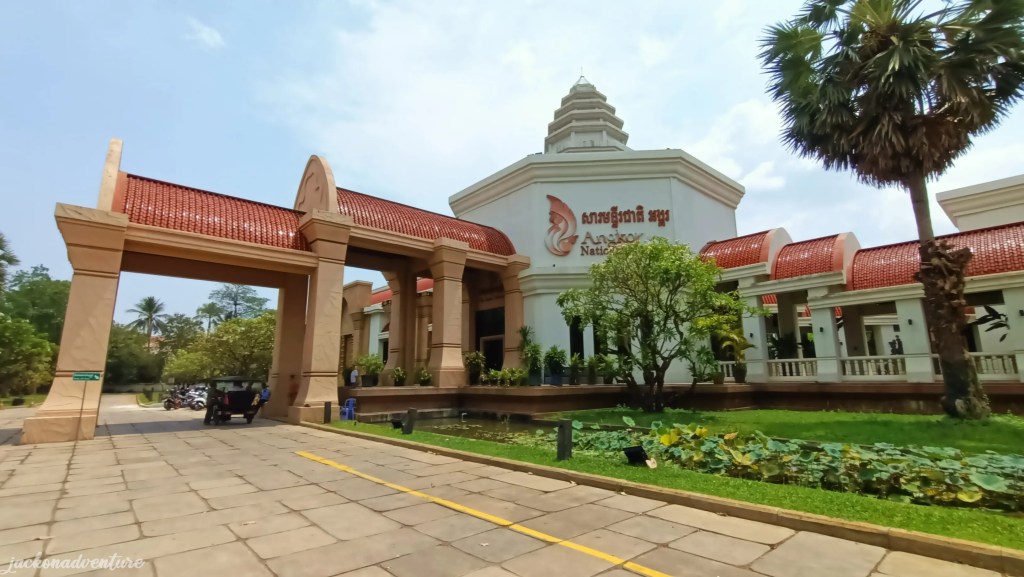
Before you go to the grand Angkor tour, I recommend visiting the Angkor National Museum to learn some history of Cambodia and the Khmer Empire.
Spend at least 2 hours walking through the corridors and halls of this 2-story modern museum to learn the fascinating Cambodia’s history, the Khmer civilization, their belief, religion and great kings. It houses many ancient artifacts, beautiful photos, videos and interactive exhibits.
You can rent an audio guide to make the tour more interesting as it gives a solid understanding of the history behind these ancient ruins of Angkor. After the self-guided tour at the museum, I was able to truly appreciate the temples of Angkor and know what to look out for during the tour.
Location: 968 Vithei Preah Sihanouk Ave, Krong Siem Reap
Opening Hours: Daily from 8.30 am to 6 pm
Entrance Fee: US$12 (additional US$5 for audio guide)
Browse through Made-in-Cambodia Market
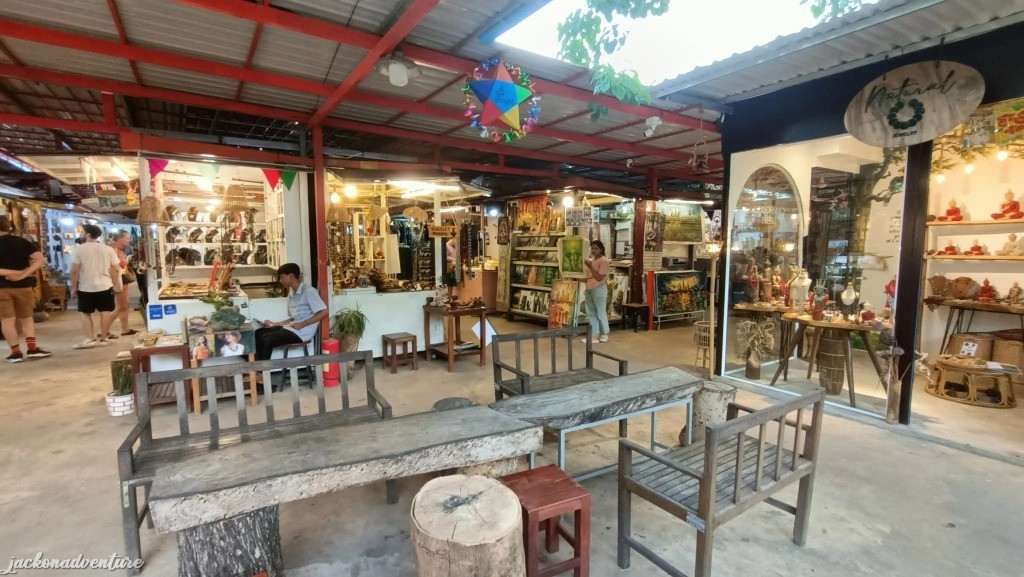
Located at King’s Road, Made-in-Cambodia Market gives a pleasant shopping experience with a village feel. Everything sold in this market is made by the locals as it focuses on creating jobs and support for the Khmer people.
You can find handicrafts, jewelry, silk, bags, paintings, souvenirs, sandstone displays, gin and other beverages. This is perhaps the only place where I get to browse and shop at a leisure pace. The people here are more friendly and take the time to look through their stores without urging to buy their items.


Location: Oum Khun St, Krong Siem Reap
Opening Hours: Daily from 12 pm to 9 pm
Stroll around Wat Preah Prom Rath Temple
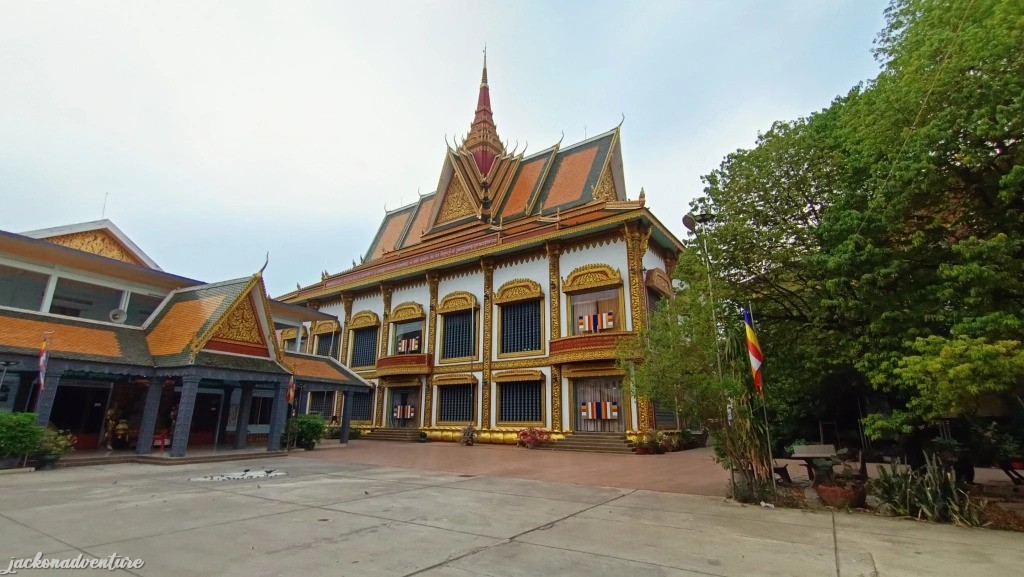
Located in the heart of the town, Wat Preah Prom Rath Temple is one of the oldest temples in Siem Reap filled with rich culture and history. Its name translates as “The Temple of the Sacred Garland Monk” a tribute to a monk named Preah Prom Rath who traveled to Siem Reap on a garland of flowers after a shipwreck.
Dated back to the 16th century, this Buddhist monastery was built with a blend of Khmer and Thai architectural styles. The main vihara (prayer hall) is adorned with intricate carvings and Buddha statues. As you step into the main hall, you get the scent of the heavy incense and the sound of monks chanting in the background. Inside displays a large Reclining Buddha that represents the last moments of Gautama Buddha before entering Parinirvana, the final nirvana after death. It symbolizes tranquility and full detachment from the material world.
Location: Opposite Temple Coffee & Bakery, Pokambor Ave, Krong Siem Reap
Opening Hours: Daily from 8 am to 6 pm
Entrance Fee: Free
Have a night out at Pub Street

When it comes to Siem Reap nightlife, there is no place I rather be than the famous Pub Street.
Be greeted by the large “Pub Street” sign, this most happening street shines with an array of brightly lit decorations, live music and hips of fun. From dusk, this stretch of road from Banana Leaf Restaurant and Red Piano Restaurant is sealed off to traffic so tourists can safely hop from one bar to the next.
The bars and restaurants offer numerous happy hours with ridiculously cheap draft beers for 50 cents and cocktails for US$1.50. There are plenty of cheap eats where you can try lots of Khmer food as well as international cuisines. The food from The Phlok Restaurant was delicious where I have the Fish Amok and stirred-fry tofu for an affordable price.
Location Street 08, Krong Siem Reap, Cambodia
Marvel the magnificent Angkor

The real adventure of Siem Reap begins with a tour around the Angkor temples.
Angkor Archeological Site or Angkor in short, is a must-visit destination once in your lifetime. They are collectively listed as a UNESCO World Heritage Site. Angkor Wat always comes to everyone’s mind, but there are other stunning temples worth visiting including Bayon Temple, Bantrey Srei Temple, Pre Rup Temple and Angkor Thom.
Angkor was the capital city of the Khmer Empire that flourished from the 9th-15th centuries. The Khmer Hindu monarch Jayavarman II declared himself a “god-king” and the Angkorian period lasted until 1351 after falling under the Ayutthayan control. Its population plummeted and the temples fell into ruins.
Many temples were restored in the 20th century and they are open for visitors to explore the ruins. Walking through the corridors and stairways makes you feel like transported into the past as you can picture how its people lived during ancient times.
Want to know more about Angkor temples? Click here on my post on some popular temples I have visited around the archeological site.
Roam around Wat Damnak
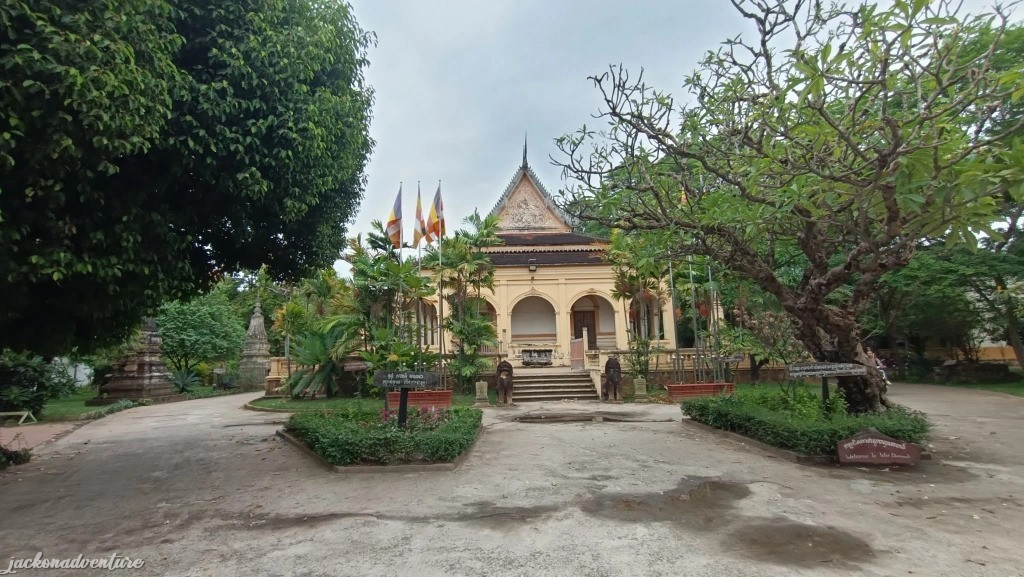
Nestled in the center of Siem Reap, Wat Damnak is the largest Buddhist pagoda and a teaching monastery. It was a former royal residence of King Sisowath (1904-1927) and served as a Khmer Rouge military depot from 1975 to 1979 before converting into a place of worship. The monastery has a primary school, 2 charities and a sewing academy for young women.
You can stroll around the temple grounds to experience the daily life of its resident monks, and teachers and schoolchildren having their outdoor activities in the evening. Visit the bright pink library called the Center for Khmer Studies if you’ve extra time which has thousands of books, journalsmaps, guidebooks and daily national newspapers.
Location: Wat Bo Road, Siem Reap
Opening Hours: Daily from 8 am to 5.30 pm
Entrance Fee: Free
Admire the artworks at Siem Reap Art Center Night Market

Siem Reap Art Center Night Market is pretty unique where you can find many brilliant artworks painted by local artists. These eye-catching paintings include the famous Angkor Wat, the floating village, Buddha status and Cambodian wilderness.
It is fun to see something different once in a while after going to two markets around the town. I got bored at times watching every shop vendor selling exactly the stuff such as clothes, bags and souvenirs.
Location: 17000 Hospital St, Krong Siem Reap, Cambodia
Opening Hours: Monday to Saturday from 4 pm to 11 pm
Explore Phnom Kulen National Park
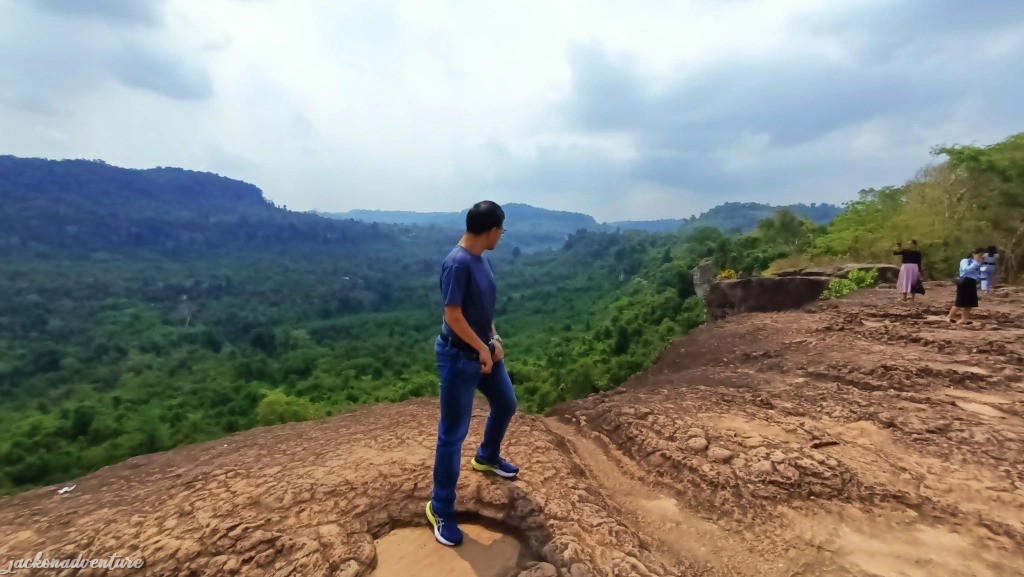
Spans over 37,375 hectares of protected forest, Phnom Kulen National Park is home to about 40 rock shelters once occupied by hermits, dozens of prehistoric sites with rock paintings and Angkorian temples. Its name means the Mountain of Lychees and was an important ancient quarry. This forested site was a well-planned ancient urban city with the construction of reservoirs, dykes with spillway channels, ponds, plots, platforms and earthen mounds
The park was known as Mahendraparvata– the mountain of Great Indra and King Jayavaman II proclaimed himself as Chakravartin– God King of Kings after he declared independence from Java in 802 AD. This is the birthplace of the Khmer Empire with the ancient city expanded to an approximate size of modern Phnom Penh. Legend has it that the Buddha stepped foot on the mountain when the entire country was flooded.
Angkor Wat and Bang Meala were built with sandstones and volcanic stones quarried from Mount Kulen. Each stone weighing up to 1.5 tons was transported by elephants to Angkor Wat located about 35km away and 10km to Bang Meala.
Entrance Fee: US$20 (including entries to Kulen Waterfall and The Valley of 1000 Lingas)
Take a glance of The Valley of 1000 Lingas
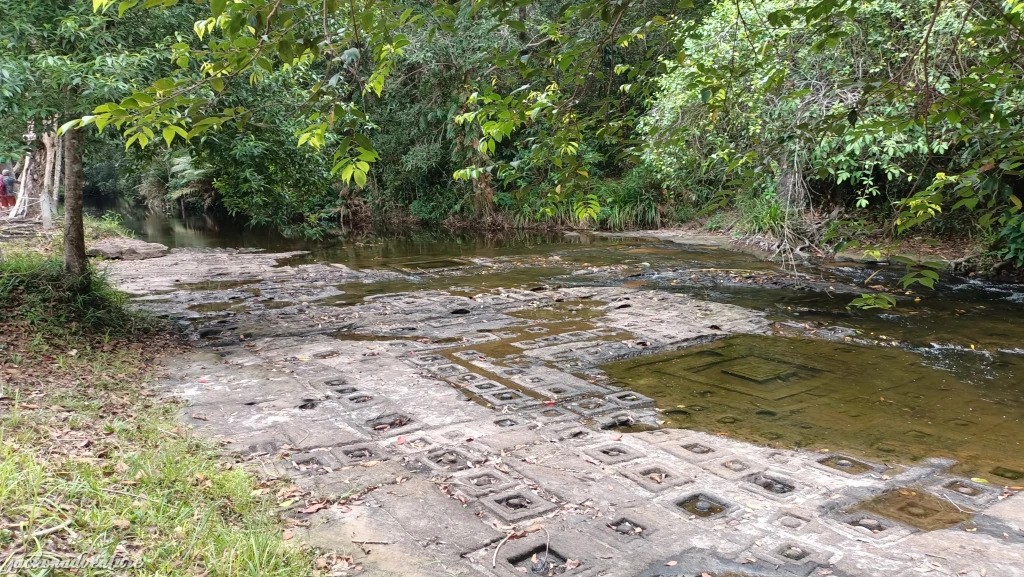
Deep within Phnom Kulen, The Valley of 1000 Lingas or Kbal Spean consists of a series of lingams carved out of sandstones of the river bed. The area was first discovered by French archeologist Jean Boulbet in 1969 when he was brought here by a hermit.
The sculptures were carved by hermits who lived here between the 11th and 12th centuries under the reign of King Suryavarman I and King Udayadityavarman II. Different Hindu mythological motifs are found including the depiction of Shiva, Vishnu, Brahma, Lakshmi, Rama, Haruman and other animals.
You can find other inscriptions and sculptures when the water level descends. One of the sculptures depicts Lord Vishnu lying on a serpent in a reclining pose on the ocean of milk in meditation, the lotus flower emerging from his navel that bears god Brahma, the creator. It is believed that the water flowing through the sacred lingam to Siem Reap River will bless Angkor.
Climb Wat Preah Ang Thom
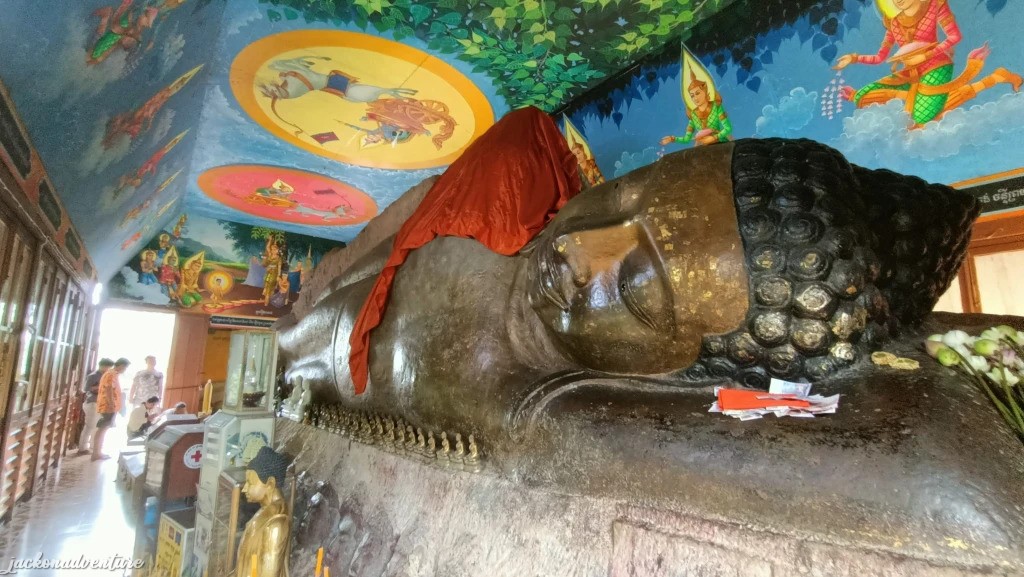
Tucked at the top of Preah Ang Thom, the temple houses the largest reclining Buddha in Cambodia, measuring 8m tall and 17m long. It was carved into the top of a large sandstone boulder and is believed to have been dated between the 12th and 16th centuries.
Take the steep stairways up to view the masterpiece and candles placed all around the Buddha as an offering. The top of the pagoda has breathtaking panoramic views of the mountain range and the deep Cambodian jungle.
Have a picnic near Kulen Waterfall
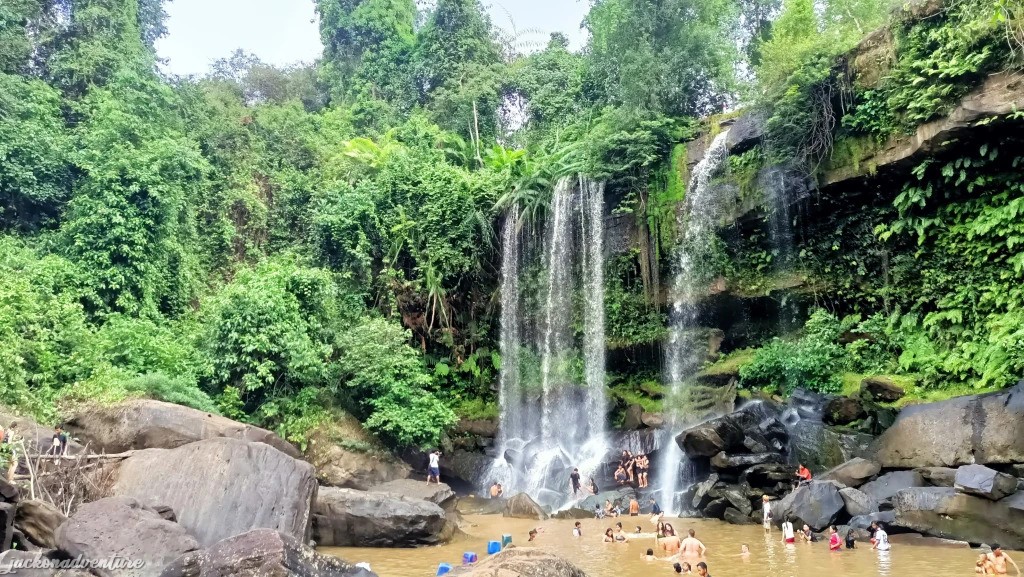
After a long walk at Kulen National Park, it’s time to give the tired legs a break. Fortunately, as part of my small group tour, we have a perfect spot under a hut to have a picnic while enjoying the view of Kulen Waterfall. My guide prepares a delicious Khmer chicken with jasmine rice and fresh fruits.
Many local families come to the waterfall to take a swim and cool off their bodies from the scorching sun which has hit up to 42°C for the past week. I have a fair share of fun watching the beautiful waterfall, although the water usually flows at its fullest during the rainy season between May and November.
Venture through the ruins of Bang Mealea
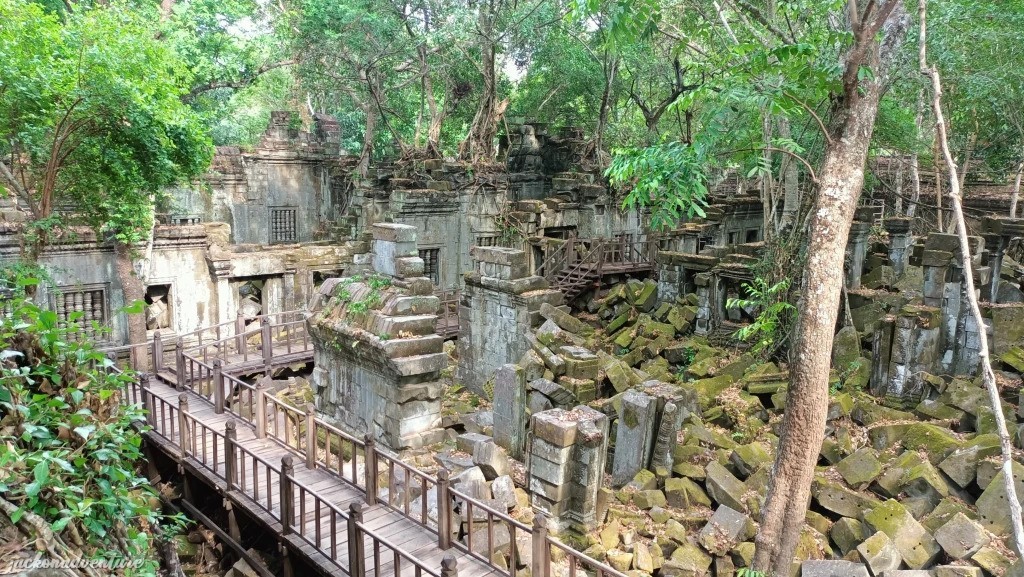
Beng Mealea known as “Temple of Lotus Pond” is an unrestored temple located 40km away from the main Angkor temples. The history of the temple remains unfold with little discovery has been done so far. It is only presumed to be built in the early 12th century based on its identical architectural style to Angkor Wat.
This Hindu temple was built with sandstone quarried from Phrom Kulen and has some carvings that depict Buddhist motifs. The site is like a maze with many dead ends and narrow paths, So, be careful not to get lost.
Entrance Fee: US$37 (free if you have a valid Angkor pass. Remember to buy a 3-day or 7-day pass)
Visit Kampong Phluk Floating Village
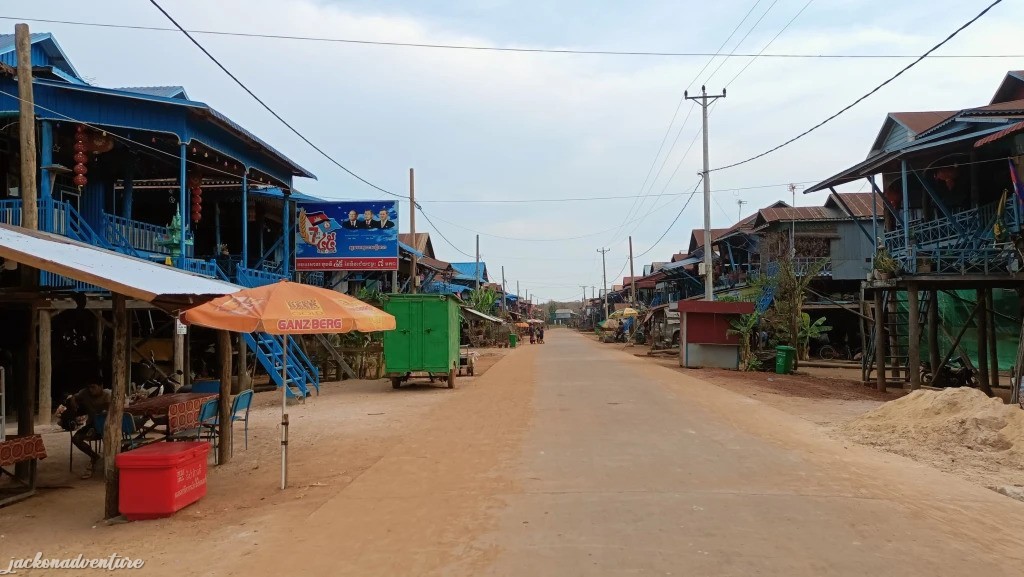
Kampong Phluk is one of three floating villages lie deep in the countryside of Prasat Bakong district. The village is home to about 3,000 people who live on a stretch of stilted houses set about 9m above the water level of Tonle Sap Lake.
The name of this charming village translates as ‘Harbor of the Tusks’, one of the fish breeds found in the river. Most residents here work as fishermen who catch fish and shrimp from the lake. This is an amazing way to watch the locals go about their daily activities. My visit here also gives me a glimpse of a wedding ceremony held in a traditional Khmer style.
During the rainy season, the water will rise close to the same level as the house entrance. Their vehicles and livestock will be kept in the higher level of the houses. The residents have to commute by boat to work or school. Children were taught how to swim at a very young age to help them to survive the flooding.
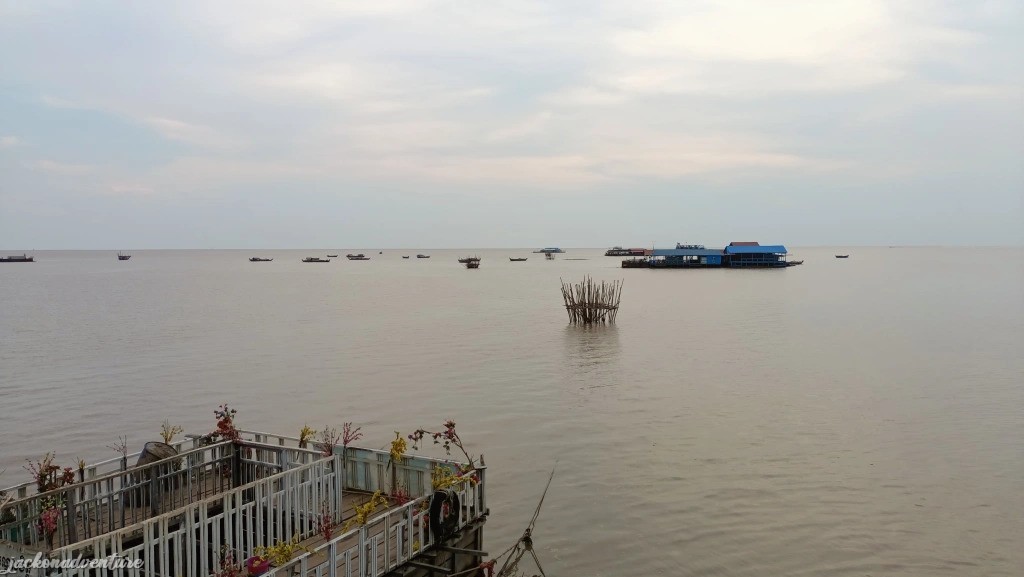
We take a boat from the village to Tonle Sap Lake, the largest freshwater lake in Southeast Asia. It is a UNESCO Biosphere Reserve due to its unique biodiversity which is home to different bird species and 149 fish species including 11 endangered fishes. Fishermen go to the lake during the night to make their catch when the fish usually swim near the water’s surface.
Later, we board a mid-sized vessel to watch the fabulous view of Tonle Sap Lake. There are boats randomly around the lake with some transporting goods and their daily catch to the village. The friendly locals offer delicious fried cuttlefish meatballs as a treat, freshly cooked when we arrive.
Entrance Fee: November to April: US$20/ May to October: US$15
Wander around Wat Bo Pagoda

Wat Bo Pagoda is one of the oldest known Buddhist temples in Siem Reap that dates back to the 18th century. The best time to visit the temple is around 4.30 pm to 6 pm when you’ll often hear the monk chanting. A small school is located within the temple compound along with the living quarters for the monks, beautiful gardens and some sitting benches to sit and view the splendid pagoda.
Although it is a Buddhist temple, you’ll see some wall paintings depicting the famous Hindu love story of Shita and Rama. Shinta is the most beautiful woman of that time and Rama is the strongest man in the world. These paintings may have dated back to the 19th century but they remain in good condition.
Location: 0092 Street 22, Krong Siem Reap
Opening Hours: Daily from 6 am to 6 pm
Entrance Fee: Free
Go for a fish spa treatment
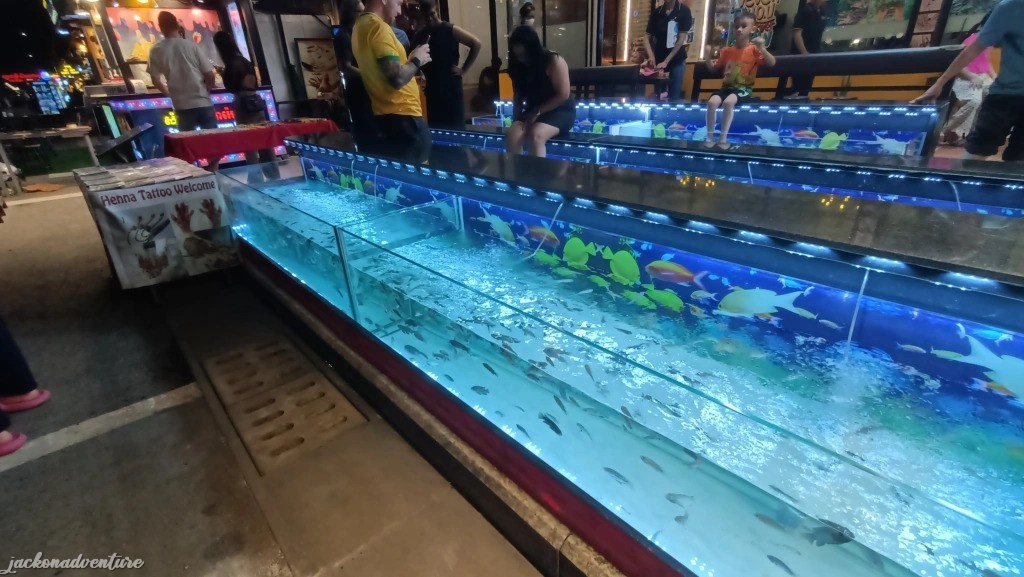
Give your feet a treat at a fish spa after a long day of walking in Siem Reap. The fish spas can be found everywhere in town and you don’t need to book in advance. The treatment usually costs as little as US$3.
Be prepared to be tickled as you dip your feet into the fish-filled water as these tiny fishes nibble the dead skin off your feet.
Morning stroll at Siem Reap Old Market
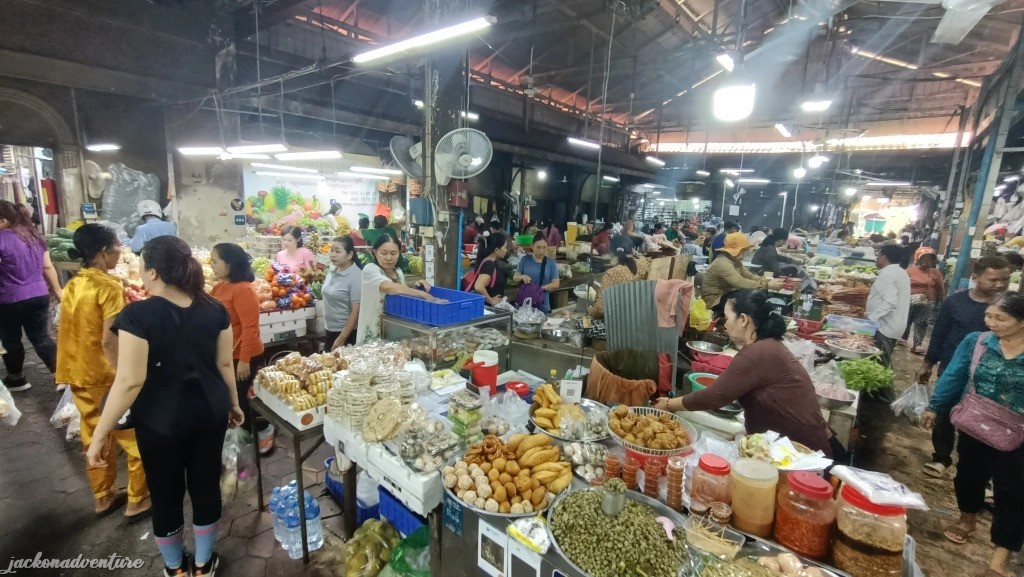
The Siem Reap Old Market, locally called Psar Chas, is my favorite market in Siem Reap. It is a great way to experience the local lifestyle in this oldest Khmer market.
The wet section of the Old Market near the central food court sells live seafood in the fish tanks, fresh vegetables and butchered poultry atop ice trays. Vendors at the dry section sell tropical fruits, household appliances and pre-packaged snacks.
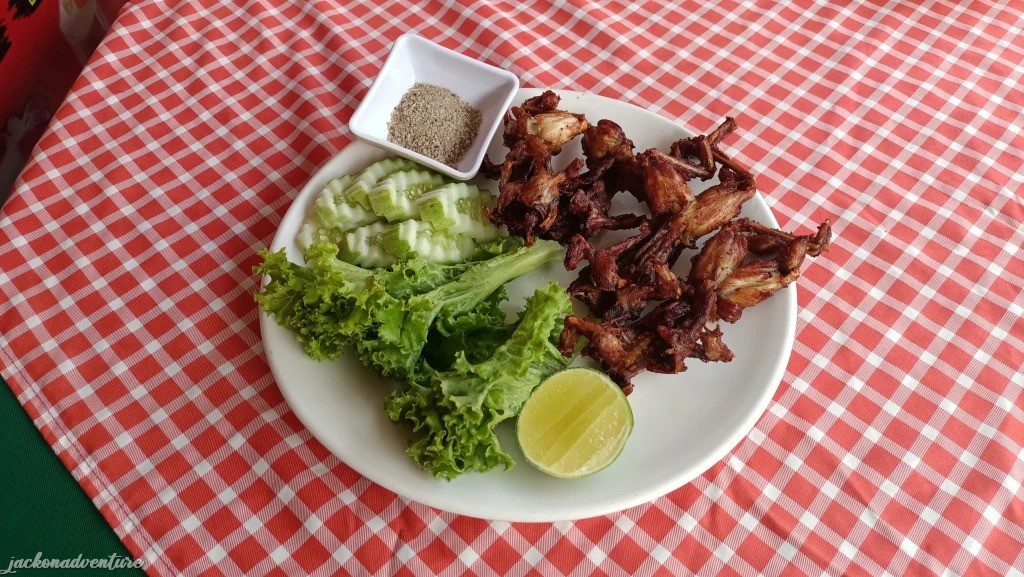
The market offers you the chance to sample some Cambodian food such as Khmer noodles, soup, rice dishes, baguettes, spiced frogs and pork sausages at an affordable price. If you’re here for breakfast, try their traditional bai sach chrouk comprised of juicy pork slices, scrambled eggs and broken rice.
You can also shop for inexpensive souvenirs such as antiques, silks, T-shirts, jewelry and shoes. Remember to bargain between 50-75% lower than the price they’re asking for as most items are highly inflated for tourists.
Location 2 Thnou St, Siem Reap
Opening Hours: Daily from 7 am to 8 pm
Like It? Pin This Article.

 Jack on Adventure
Leave a comment