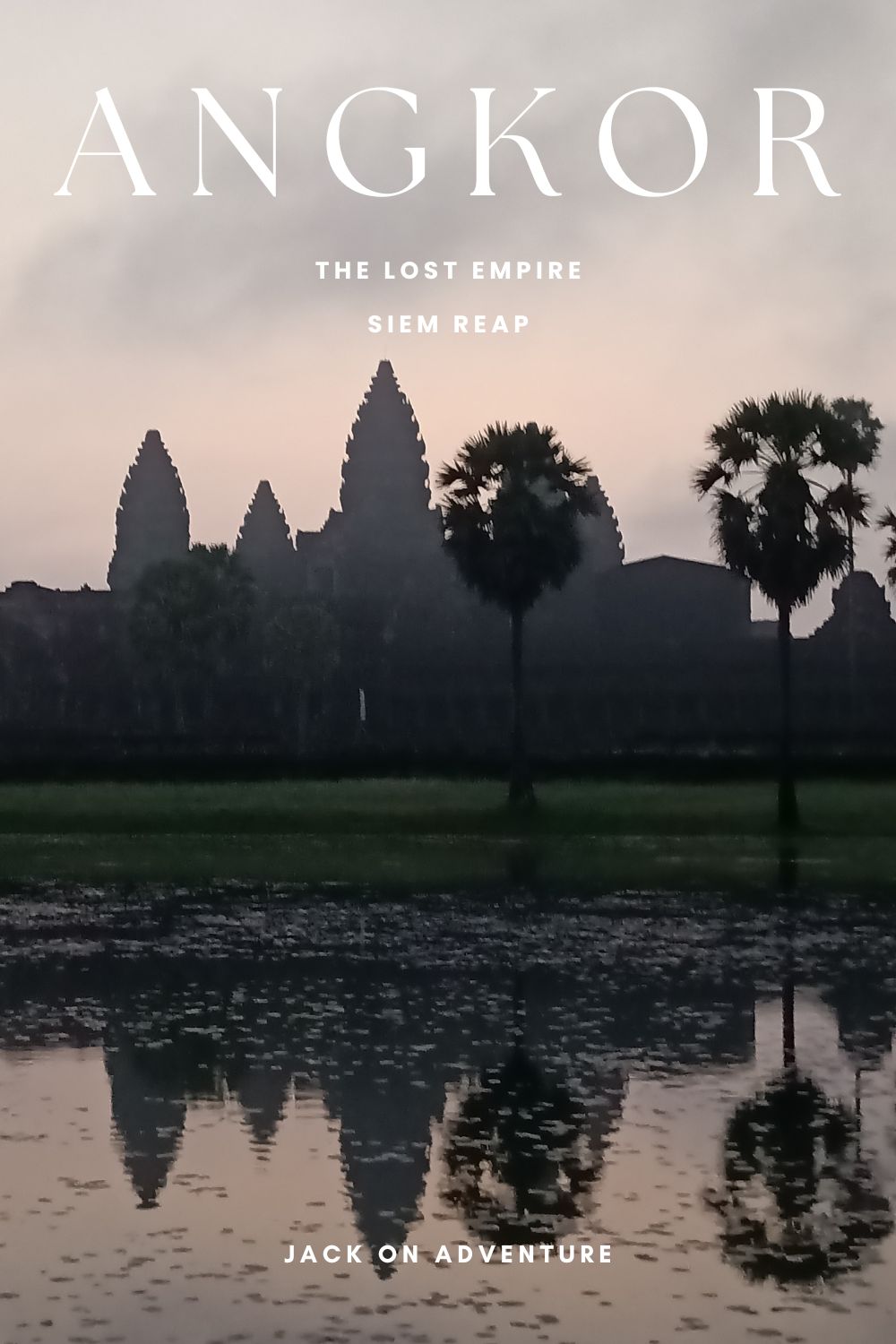
The Angkor temples are the world’s biggest religious monument and the most famous tourist destination in Cambodia. Discovering Angkor will be the number one activity on the Siem Reap itinerary for every traveler’s bucket list.
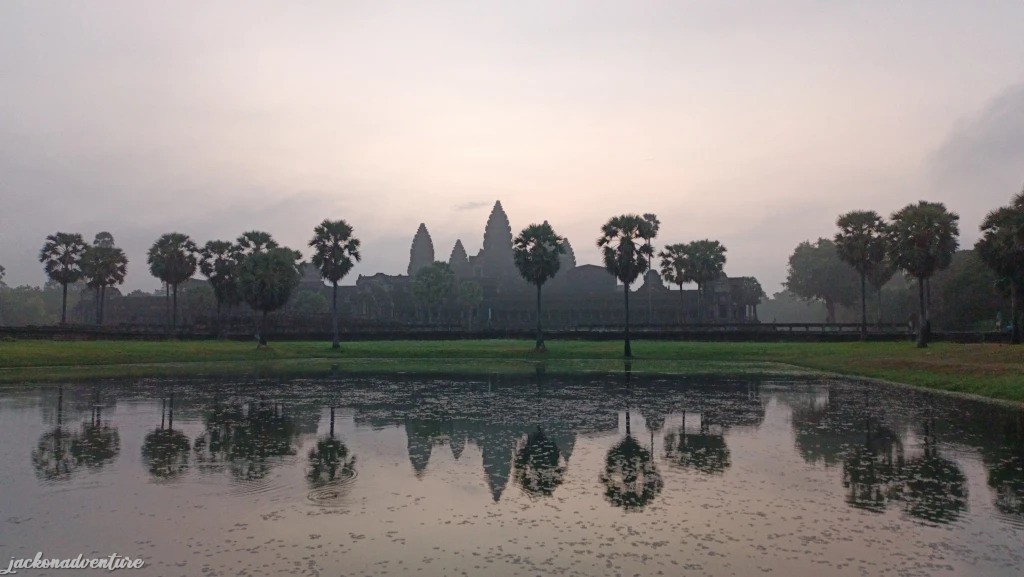
These ancient ruins used to be the capital city of the Khmer Empire which prospered from the 9th to 15th centuries. Listed as a UNESCO World Heritage Site, this magnificent Angkor is the soul of the Cambodian people which they are proud of.
You have to see the temples to believe it! Angkor complex stretches over 400 km2 and has 72 main temples. The old city houses the most popular Cambodian attraction called Angkor Wat. Of course, it is impossible to visit all of them in just one day. It’s best to spend one day visiting the famous landmarks around Angkor Wat, and other temples at the Outer Ring if you have an extra day.
Brief History

For centuries, Angkor was the center of the great Khmer Kingdom from the 9th-15th century. The Khmer prince Jayavarman II declared independence of Chenla from Shailendra kings in 781. He proclaimed himself as a chakravartin, Lord of the Universe and took on the title devaraja- God King. His successors would continue to use these titles to uphold their power and authority as absolute rulers ordained by the gods. His ascension marks the beginning of the Khmer Empire and has dominated much of mainland Southeast Asia for hundreds of years.
The mega-city continued to thrive under the reign of his successors with great temples and hydrological systems built within the Khmer cities and temple complexes. Yasovarman I shifted the capital city from Hariharalaya to the northwest and founded a new city called Yasodharapura, now famously known as Angkor.
The kingdom of Angkor became an empire of political, spiritual and cultural power. The city was connected to the old capital with a causeway by building a large reservoir called the Eastern Baray, taking 6 years with around 3,000 laborers to complete. It became one of the most populated cities in the world at that time with over 1 million people living here.
The Khmer civilization continued to expand through centuries with many Hindu and Buddhist temples built around Angkor Wat. Angkor remained prosperous for at least 200 years after Jayavarman’s death. The power and vitality of the kingdom slowly waned until it finally been captured and sacked during the invasion of Thai troops.
That is until all the residents left, the structures started to decay and turned into ruins. The jungle swallowed the city and Angkor was lost for many centuries. There are a few theories on why the mighty kingdom has been abandoned. The most probable cause was the intense monsoon rains, followed by a prolonged drought that forced the people to move elsewhere.
Best Time to Visit
Siem Reap only has dry and wet season. The best time to travel is from November to March when the weather is cool and dry. The humidity can be unbearable between April and June as the temperature can hit 45-50°C. It usually expects rainy days from June to August and flooding often occurs in Siem Reap.
Having said that, rain often comes in small and short bursts that don’t usually last long. If your travel dates are not flexible, don’t sweat it. You still can visit the Angkor temples during the off-peak season. I was here in early May when the rainy season just began. It only rains on the second day in the evening and on the third day in the morning, but managed to visit all the sites with my guided tour.
Getting There
Angkor temples are located 6km north of Siem Reap city. The temple grounds are pretty massive so walking around them is not really practical.
There are a few ways to get around the archeological park either by private tuk-tuk (around $15-20 per day), rent a private car, hire a taxi driver ($20-35 per day), or joining a small group tour in an air-conditioned minibus that includes a licensed guide, a driver and plenty of ice cold drinking water provided.
I joined the 2-Day Small Group Temple Sunrise tour with Journey Cambodia, which takes me to Angkor Wat and other popular main temples. The guide pick me up around 8 am for the first day and 4.30 am on the second day to watch the stunning sunrise over Angkor Wat. I was very glad to take this amazing tour as the guide shared the temples’ history and spot for the best picturesque of Angkor sites.
Angkor Wat
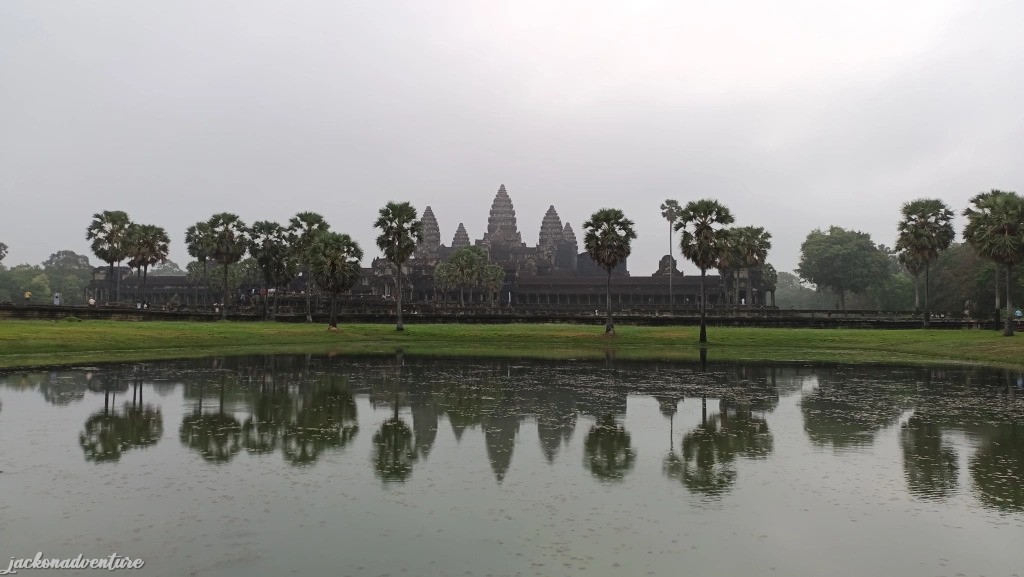
Everyone travels to Siem Reap for one good reason: to explore the magnificent Angkor Wat, a dreamy bucket list destination and the largest religious structure on the planet. Wake up as early as 4 am and come mesmerized the stunning sunrise from the lake. You can spend around 2 hours to explore the temple complex.
Angkor Wat is a UNESCO World Heritage Site and a Wonder of the World. This Hindu-Buddhist temple is the most famous and impressive of all temples in Angkor. It was built with sandstones using about 300,000 workers between 1113 and 1150 AD to serve as a monument to a powerful king, Suryavarman II. These sandstones were quarried from Mount Kulen located 35km away and transported by elephants to Angkor Wat.
The temple is designed to represent Mount Meru and is dedicated to the Hindu god Vishnu. It is beautifully carved with scenes from the Indian epic, the Ramayana and Suryanaman’s life. It also displays the god of the underworld Yama sending people to heaven or hell.
It is situated to the west rather than the east which believed that Suryavarman intended to serve as his funerary temple. The center of the four towers is shaped like a lotus flower and the structure of the temple is very ornate with intricate carvings of thousands of female dancers.

The Khmer Empire was restored by Jayavarman VII after the sacking of the Chams when he established a new capital at Angkor Thom in 1177. He converted it into a Buddhist temple by the end of the 12th century as the king’s wife Indratevi encouraged him because she was a devout Mahayana Buddhist.
Ta Phrom Temple

Ta Prohm Temple, also known as Rajavihara was built in Bayon style in the late 12th century by King Jayavarman VII. It is a Mahayana Buddhist monastery and a university. The temple was dedicated to Jayavarman VII’s mother. It was home to 12,500 people including 18 high priests, 2700 officials, 615 dancers and other villagers working to provide services and supplies. It also housed many riches such as gold, pearls and silks.


After Ta Prohm was abandoned, the concrete ruins were covered with jungle with gigantic roots of the banyan trees intertwined. The grounds have remained mostly unrestored and its main relics have been lost over the years. It is easy to get lost with plenty of paths leading into the thick forest that surrounds the temple. It is a perfect location to take some wonderful photos.
Today, it is a UNESCO World Heritage Site and was even used as a filming location for the 2001 film Lara Croft: Tomb Raider.
Prasat Ta Keo
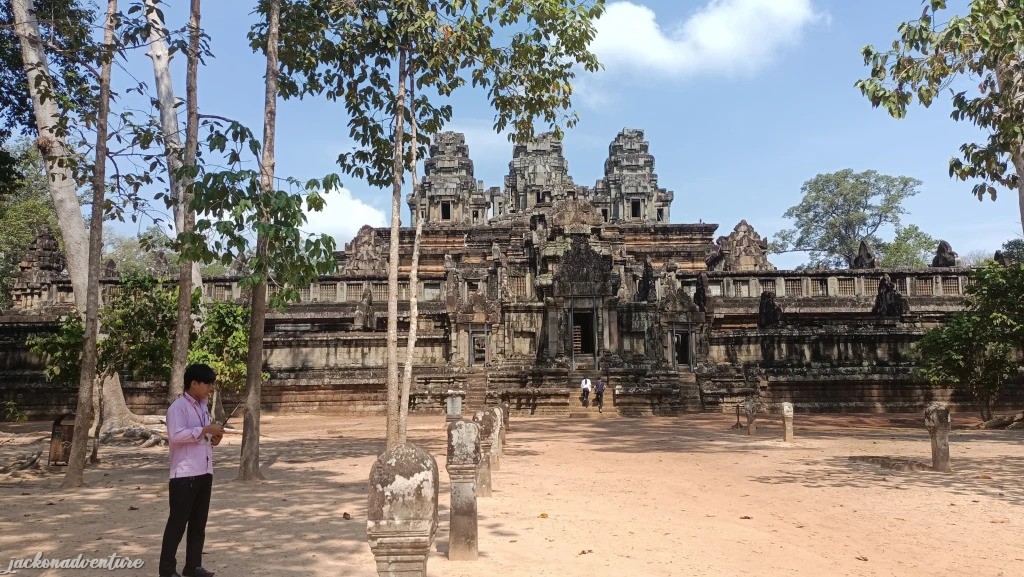
Prasat Ta Keo is a temple mountain built entirely of sandstone. It was the state temple of Jayavarman V with construction began when he was aged 17 in 975. The project was halted when the lightning strike hit the unfinished building as they believed it was an evil omen.
There are five sanctuary towers built on the uppermost level of the five-tier pyramid consisting of overlapping terraces surrounded by moats, as a symbolic depiction of Mount Meru. You wouldn’t see many carvings in the temple because the works were never complete.
Terrace of the Elephant
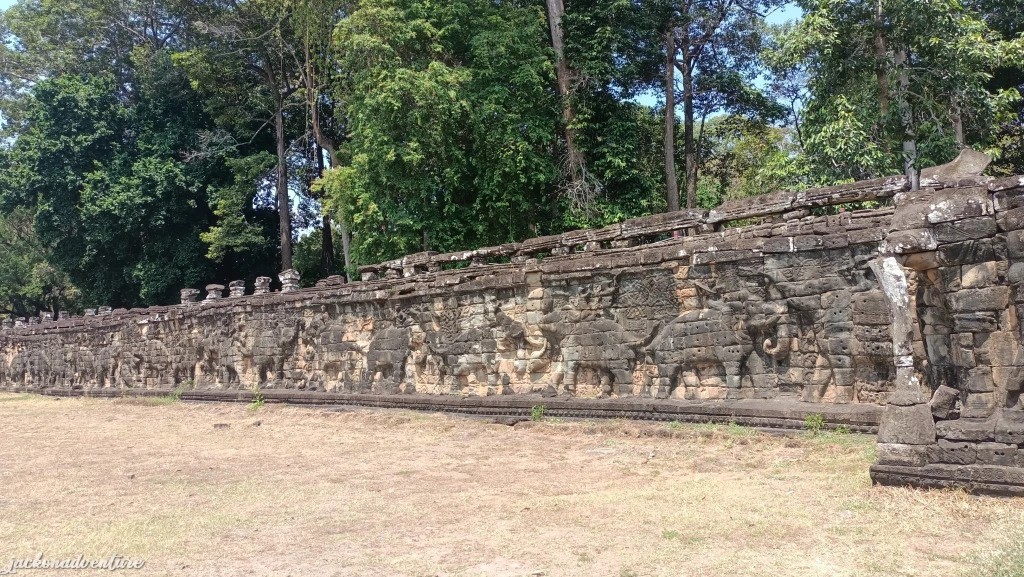
The 350m Terrace of the Elephant is part of the walled city of Angkor Thom complex. It portrayed King Jayavarman VII’s victorious returning army with the famous parade of elephants complete with their Khmer mahouts. The king used this huge reviewing stand for public ceremonies and a base for the king’s grand audience hall.
Today, most of the original structure has long disappeared and what remains are the foundation platforms of the complex. You will find a life-sized garuda and lions from the middle section of the retaining wall toward the end of the other side of the terrace.
Bayon Temple
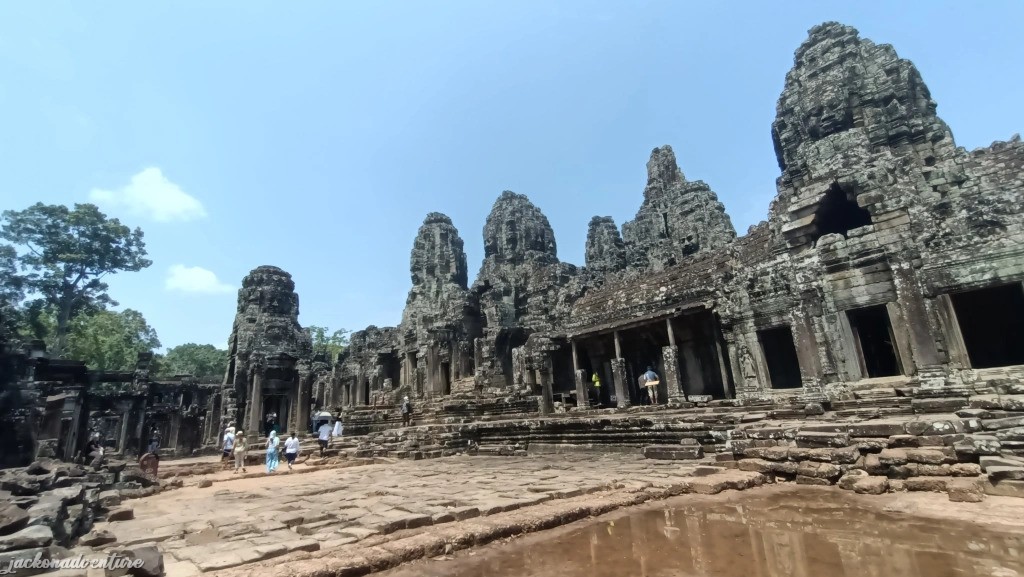
Built 100 years after Angkor Wat, Bayon Temple is a smaller but unique temple complex decorated with many giant stone carved faces. It is the state temple of King Jayavarman VII located at the center of Angkor Thom to worship Buddhist deities. Bayon’s original name is called Jayagiri which means “Victory Mountain”.


The most distinctive feature is the 216 stone faces across 54 towers- all identical with the same smile and closed eyes. The faces depict Jayavarman VII himself, which is common for a king to portray himself as a god-king. Some locals believed the temple was built for Brahma since the god has four faces on each side. You can roam through the outer gallery to admire a series of bas-reliefs depicting the historic events and scenes from the daily life of Angkorian Khmer.
Pre Rup Temple

Located south of the large East Mebon, Pre Rup was the state temple of King Rajendravarman II built in 961 AD. Constructed with sandstone, laterite and brick, the temple represents the five mountain peaks of the sacred mountain Mount Meru, the center of the universe in Hindu mythology. The five prangs were dedicated to Shiva (the central tower and one of the surrounding towers), Uma, Vishnu, Parvati and Lakshmi.
The most impressive feature of the temple is the three large towers on either side of the Eastern entrance leading to the main entrance of the temple. The central tower contains a sanctuary room with lintels. You will find paintings of Indra riding the elephant Airavata, Vishnu on Garuda, a large mythological bird and other depictions.


There are three tiered pyramids in the inner enclosure with 12 small sanctuaries around the structure. It used to contain a linga that represents Shiva on the second level. The stairway going up the five prangs is guarded by lion statues on both sides. The largest prang at the middle of the upper platform has a sanctuary room where the most important linga was enshrined with two Buddha images
Banteay Srei Temple
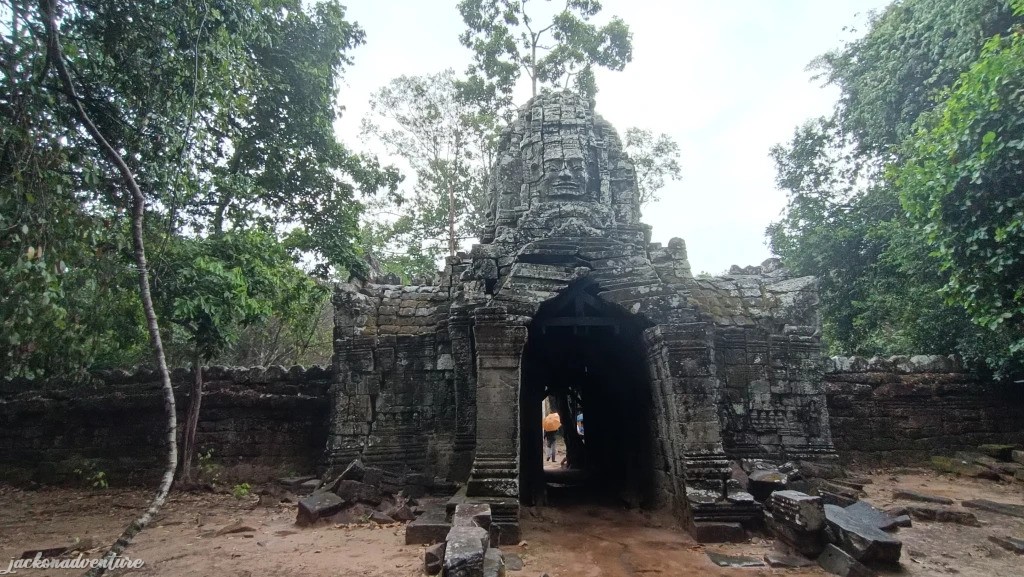
Banteay Srei Temple was built in 967 AD with red sandstone to be dedicated to the Hindu gods Shiva and Parvati. Originally called Tribhuvanamahesvara, Banteay Srei means “citadel of the women” or “citadel of beauty”. People speculate that the temple got its many nicknames- “The Pink Temple”, “The Lady Temple” and “The Tiny Temple” due to its pink color limestone and decorative carvings of many female deities that grace its walls.
Unlike any temples around Angkor, Banteay Srei is attributed to Yajnavaraha, a courtier and King’s counselor. He is the grandson of King Harshavarman who worked as a scholar and philanthropist who helped those who suffered from illness, injustice and property. His pupil was the future King Jayavarman V.
The temple was expanded and remained in use until the 14th century.
You can spend an hour or two walking around the temple to discover impressive and detailed cravings which mostly depict mystical animals, protectors and Hindu gods and goddesses.
Neak Pean
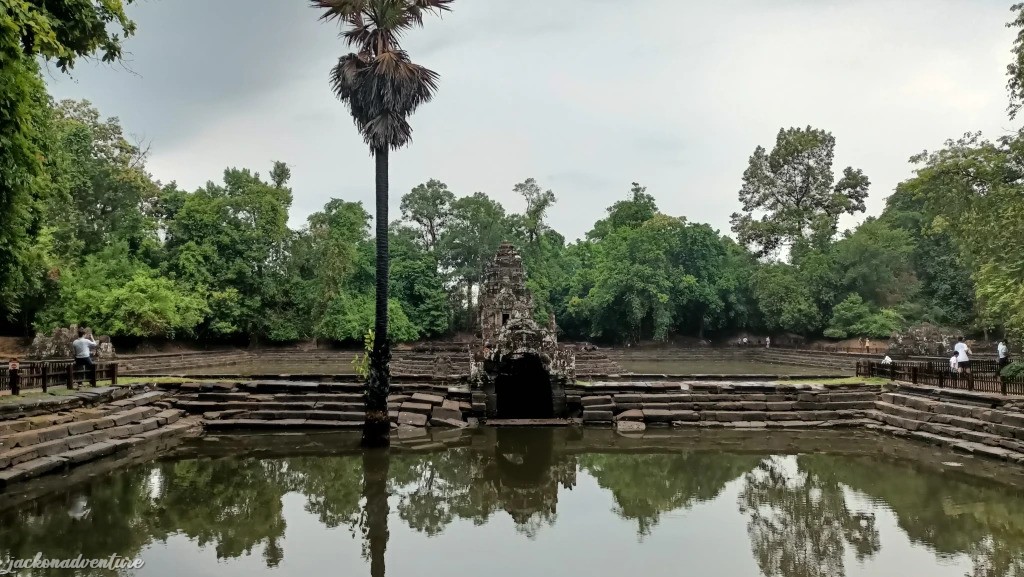
Neak Pean, “the entwined snakes” is a small Buddhist temple located on a man-made island in Jayatataka Baray. The sandstone sanctuary was built by King Jayavarman VII in the mid-12th century for medical purposes and is encircled by two Naga snakes who guard the East entrance of the temple.
The central pond represents the famed Lake Anavatapta in India that features in Buddhist cosmology and the source of all water. Four connected pools represent Water, Earth, Fire and Wind. The four chapels were used by pilgrims to wash away their sins using the cleansing waters. Each chapel has a stone gargoyle in a different shape, namely the head of a King, an elephant, a bull and a horse.
When walking towards the East entrance, you will see a statue of the flying horse Balaha depicts a story from one of Jataka tales. A group of merchants were shipwrecked on Singhala island by a violent storm. The island was inhabited by demons who took the form of attractive young women and welcomed them. The ship captain later discovered their true nature and had to escape while they still had the chance. One day, the flying Balaha appeared on Singhala to rescue the stranded sailors as they clung to the horse’s manes and tail to flee.
Preah Khan
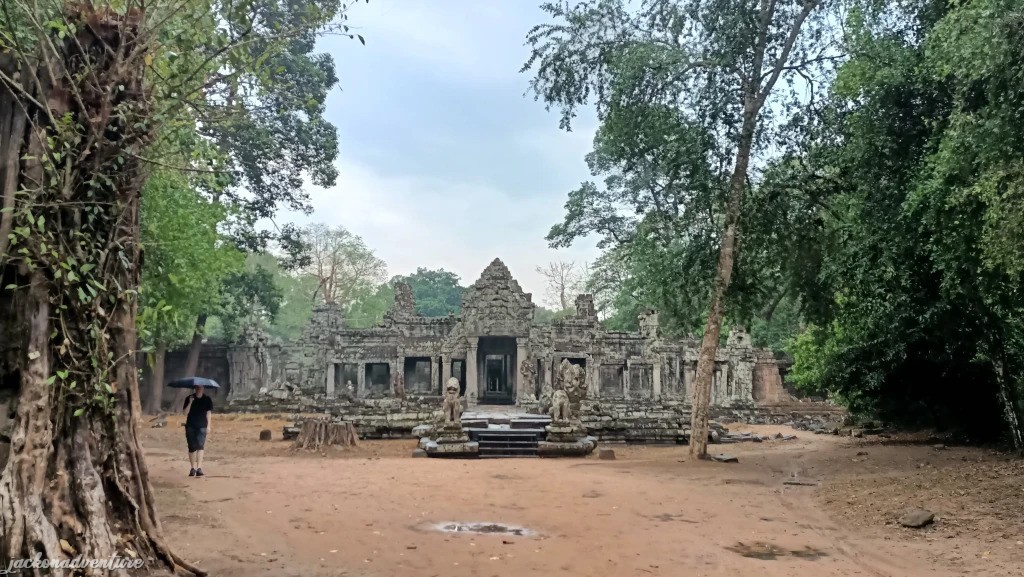
Situated north of Angkor Thom, Preah Khan was built in the 12th century under the reign of King Jayavarman VII to honor his father, King Dharanindravarman II. The name translates to “Holy Sword” in Khmer where the temple was built on the site of his battle victory against the invading Chams forces in 1191, the kingdom now known as Vietnam.
The temple was once a royal city that served as a monastery and a Buddhist university. It was a residence of Jayavarman VII when Angkor Thom was still under construction. There are hundreds of wooden buildings for 1,000 dancers, 1,000 teachers, monks, students and workers inside its outer enclosure wall while the smaller enclosure contains the principal religious temple likely only accessed by royalty and their gurus.

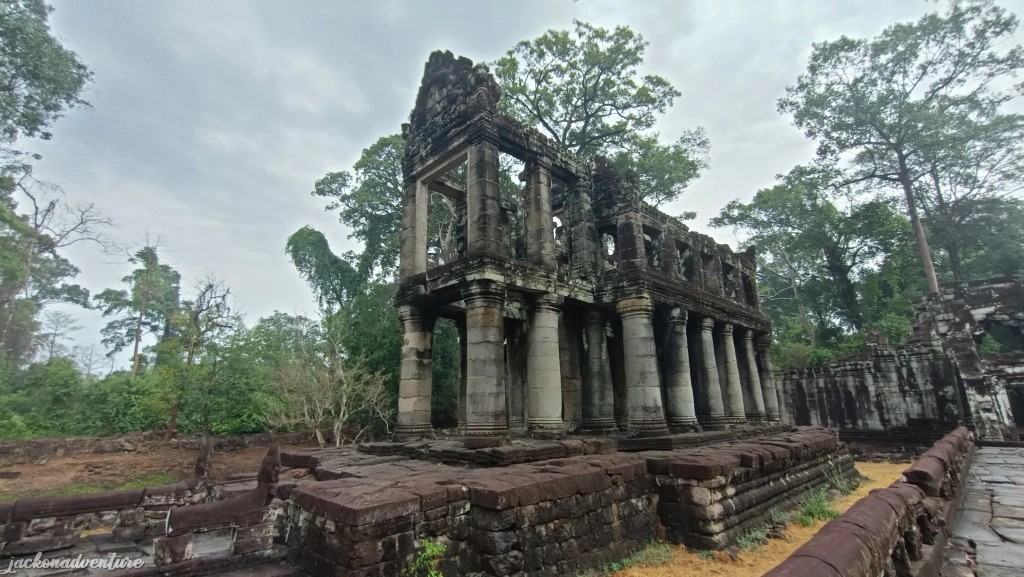
Due to it being left to nature, you’ll see plenty of trees growing around the ruins, making it a very nice location to take photos. Many Buddha statues were destroyed and defaced in the late resurgence of Hinduism in the Khmer Empire. There are extraordinary bridges and 72 garudas lining the perimeter of the outer wall. Many treasures were once kept here including gold, silver, gems and pearls.
Angkor Pass
Before you go to the Angkor temple complex, you need to have an Angkor Pass to access the archeological site. You can buy the pass from their official website or official ticket centers which open every day from 5 am to 5.30 pm.
You can buy a 1-day pass for USD37, 3-day pass for USD62 or 7-day pass for USD72. The 3-day pass is valid for 10 non-consecutive days from the date of purchase and 7-day pass for 1 calendar month from the date of purchase. You can enter Bang Meala for free if you have a 3-day or 7-day pass
The tour guide will make a stop at the ticketing office for anyone who hasn’t bought a pass. You can pay with either cash or credit card. Admission passes are not transferable as the pass owner’s name and photo are printed on the ticket.
If you purchase your ticket after 4.30 pm for the next day, you are allowed to use it that evening to watch the sunset – bonus!
The passes need to be shown before you enter each temple, so make sure you do not lose it! Security officers will also randomly check at some checkpoints around Angkor sites.
Opening hours
The main park of Angkor opens between 5 am and 6 pm, so you can get there early to catch the sunrise at Angkor Wat or watch the sunset at other temples. The rest of the temples are not open until around 7.30 am and close at 5.30 pm.
Tour guides will usually pick up their visitors around 4 am to go to Angkor Wat. It will be very crowded during the peak season between November to April. Fortunately, I visited the temple in early May when the off-peak season just started. It is not as crowded as expected and able to enjoy the view of the temple in front of the lake.
Dress Code
It is important to know that the Buddhist temples are religious sites where monks still come here to worship. it is compulsory to dress modestly and wear clothes that cover the shoulders and knees. The officers will not let you in if you wear sleeveless shirt, skirt or shorts.
Be sure to wear some comfortable footwear, preferably sports shoes because a lot of the temple grounds are uneven or in poor condition and require lots of stair-climbing. Do not forget to bring a hat and put on sunblock as the weather can be really hot and humid in Siem Reap during the day,
My Siem Reap Adventure
Planning a trip to Siem Reap? Here’s my 5-day and 4-night trip to the ancient city where I will share the wonderful things to see, eat and do around the city.
Like It? Pin This Article.

 Jack on Adventure
Leave a comment