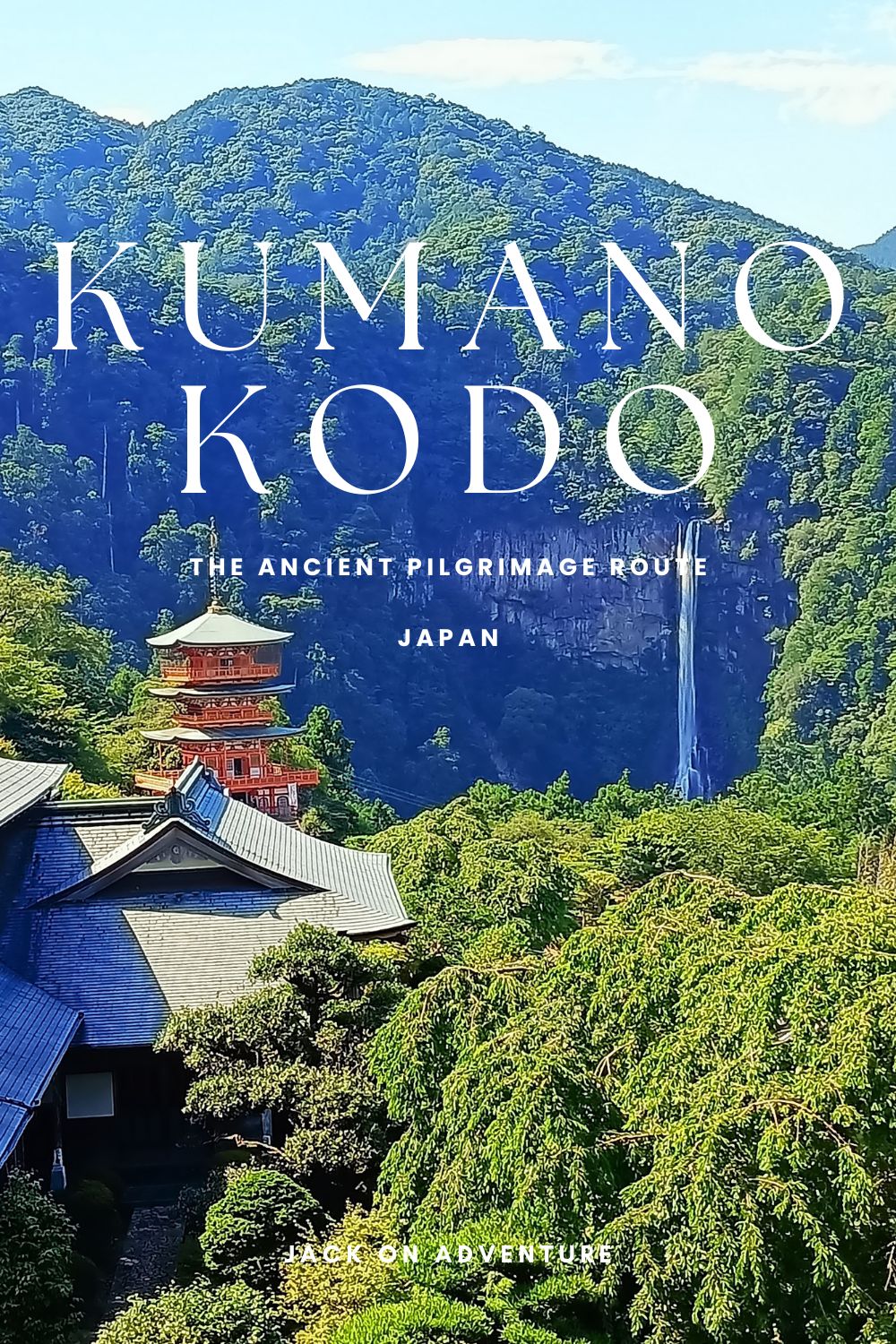
One of the best places to go hiking in Japan is the Kumano Kodo trail. The destination is a historic pilgrimage trail literally off the beaten path and has been trekked for thousands of years.
Located about 100 kilometers south of Osaka city on Japan Peninsula, the Kumano Kodo is an isolated sacred site of healing and salvation with a network of the holiest pilgrimage routes in Japan. The routes used to be only reserved for emperors and samurais more than 1,000 years ago. Today, people from different walks have made this journey to seek enlightenment and peace.
These routes had great spiritual meaning since they connected the three famed Kamuno shrines known as the Kumano Sanzan: Kumano Hongu Taisha, Kumano Nachi Taisha and Kumano Hayatama Taisha. Pilgrims walk through towering cedar forests around lush forest mountains and rural villages before making their way to these shrines.
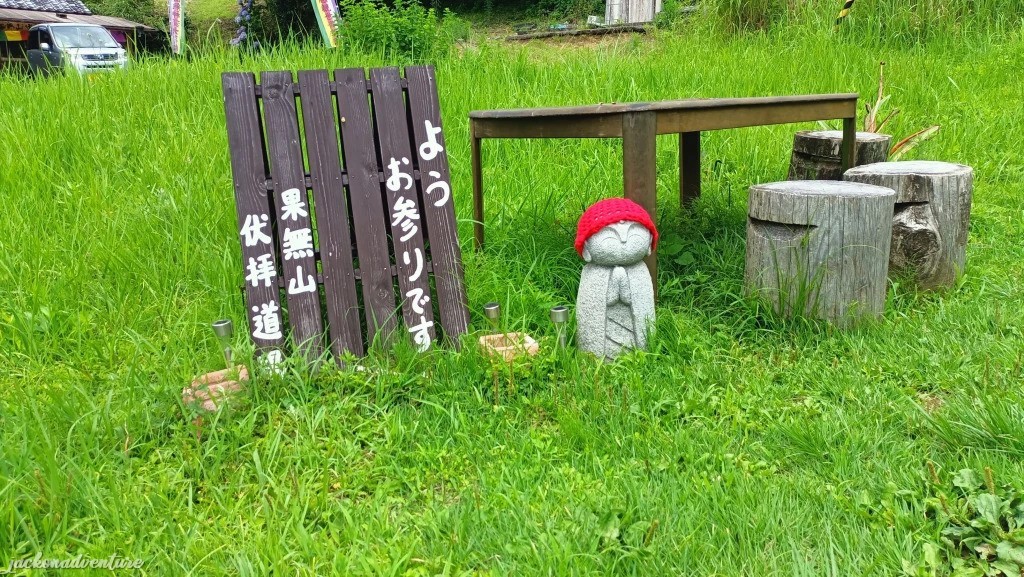
The three sacred sites (Kumano Sanzan, Koyasan and Yoshino) and their connecting pilgrimage routes were registered on UNESCO’s Heritage List in 2004 as the “Sacred Sites and Pilgrimage Routes in the Kii Mountain Range.” It is one of the only two pilgrimage paths to receive this coveted title together, with Spain’s Camino de Santiago (The Way of St. James).
Best Time to Visit
The good news is that you can hike the Kumano Kodo trails any time of the year. The weather in Wakayama tends to be pretty mild due to its geographical location.
Spring and autumn have the most comfortable temperatures to go hiking here. There are beautiful cherry blossoms in spring and fall foliage in autumn. Having said, these are the most popular seasons of the year and expect many hikers along the trail.
In the summer, the weather tends to get very hot and humid. The hike can sometimes be uncomfortable and rain will also highly occur. So, be prepared for the unexpected. On the bright side, the cedar forest will be green during this season.
When it comes to winter, the temperature can get cold and it is possible to see snow. There will be fewer hikers than in other seasons of the year.
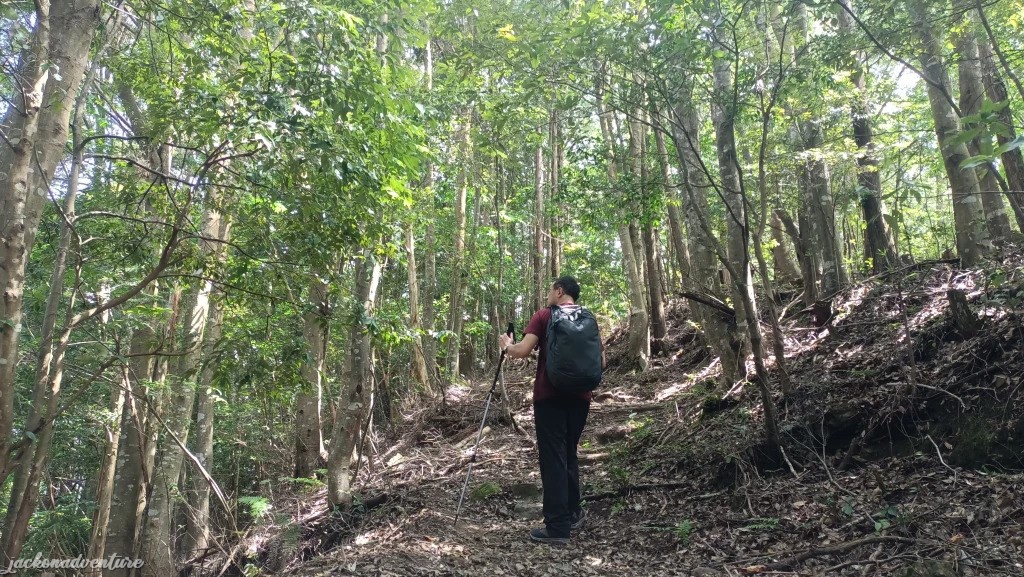
I had a great, wait…….. AWESOME hike with amazing weather along the trail in August. I am counting on the weather after an overnight rain that ended in the morning. There was fog when I take the bus from Kii-Tanabe to Takijiri and the sun slowly appeared from the clouds when I start the hike. It wasn’t as humid as expected and didn’t encounter any rainfall later for the next 4 days. Every minute of the hike was enjoyable and serene as it led through the lush forest.
Regardless of the season, always be prepared for rain as the weather in the mountain ranges can change quickly throughout the day. Also, planning for the hike is crucial because the area tends to get dark faster. Some parts of the trail do not have transportation, food and water supplies and toilets.
Getting There
From Osaka
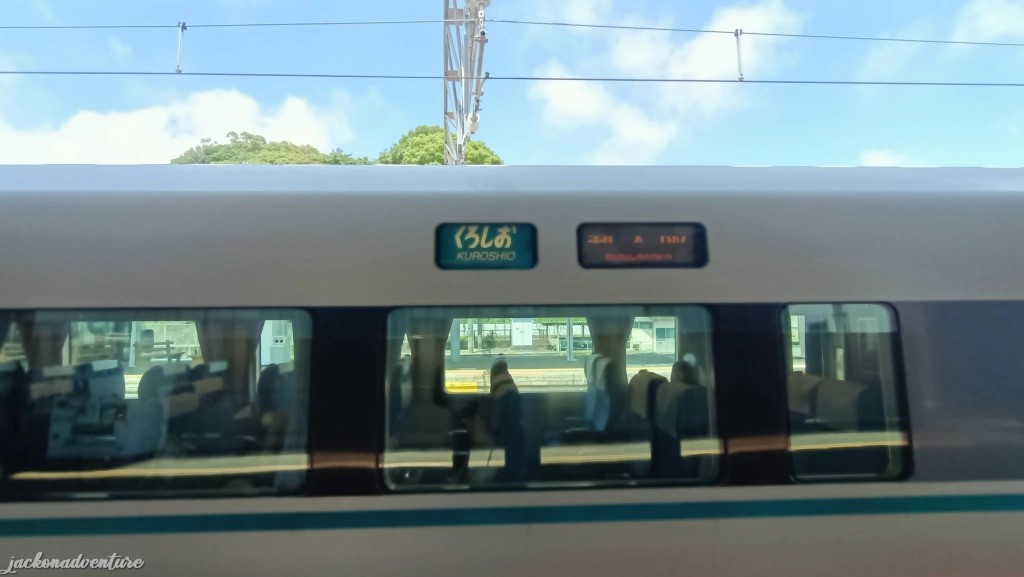
Osaka is one of the closest cities to Tanabe town- the gateway to the ancient pilgrimage route. The Kuroshio train to Kii-Tanabe Station departs from Shin-Osaka Station at Platform 11 and takes 2 hours with a fare of 4,750 yen. If you’re flying from overseas like me, there are local trains from the airport to the city and you can stop at Tennoji Station to transfer to Kuroshio train from Platform 15. The train from Tennoji Station takes 1 hour 45 minutes. 16 trains are operating on this route every day as it passes through many small towns and the scenic views of the coastal line.
Travel tip: Choose a seat on the right side of the train to enjoy the scenic views of the small towns and the Pacific Ocean on the way to Kii-Tanabe Station.
From Tokyo
Coming from Tokyo will take extra time to reach Tanabe. First, take the Shinkansen train from Tokyo Station to Shin Osaka Station with a journey time of 2.5 hours. Then, transfer to Kuroshio train at Platform 11 to Kii-Tanabe Station.
Getting Around
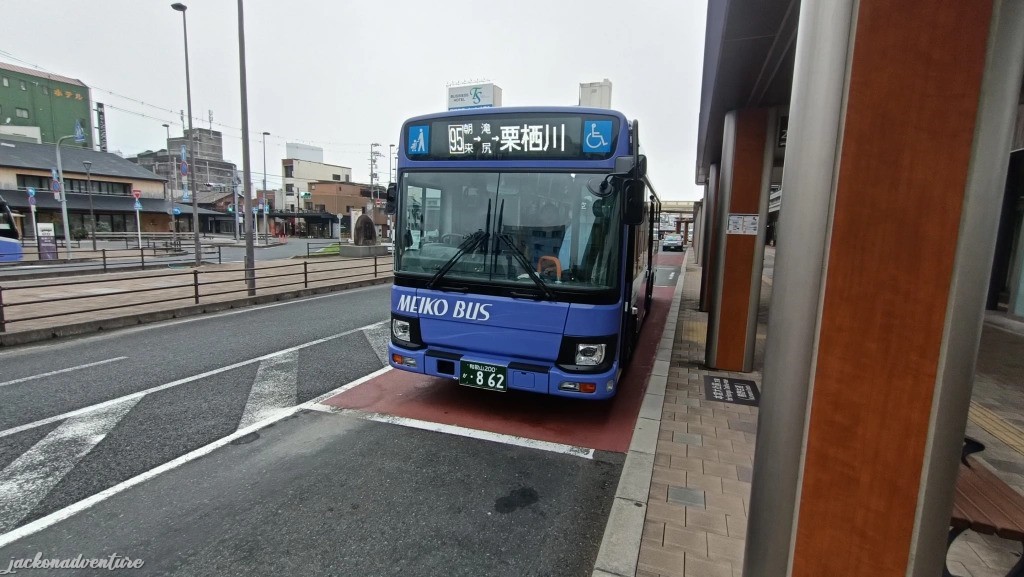
Before starting on the hike of the Kumano Kodo trail, take the local Meiko Bus No 95 from the bus station just outside Kii-Tanabe Station and Tourist Information Center. The bus takes around 40 minutes to reach the starting point at Takijiri-oji and costs 170 yen.
There are other buses to take hikers and visitors to various starting points and the three main shrines. Kumano Travel website provides well-detailed bus information to help plan the journey ahead.
What to Expected for Kumano Kodo Trail?
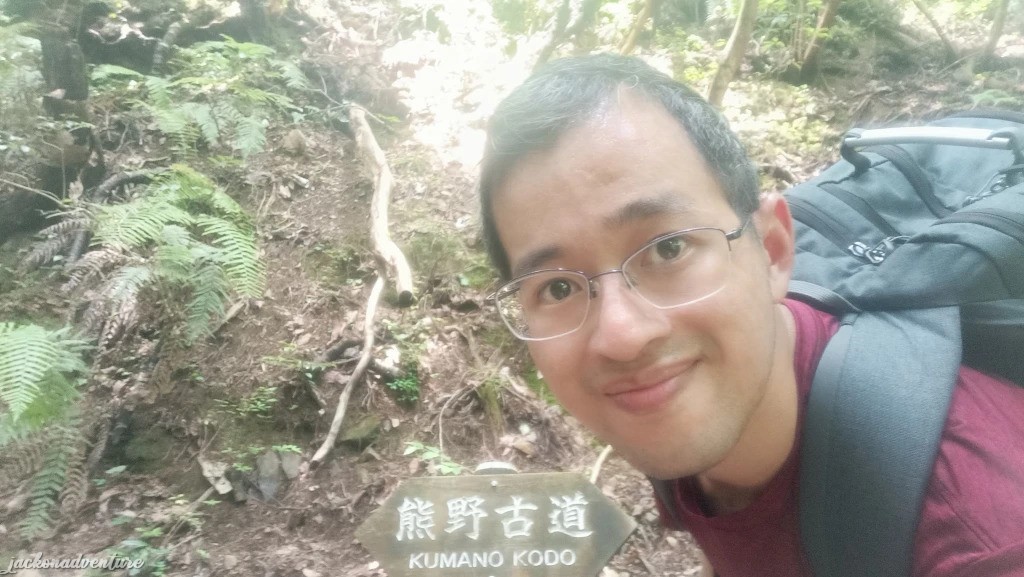
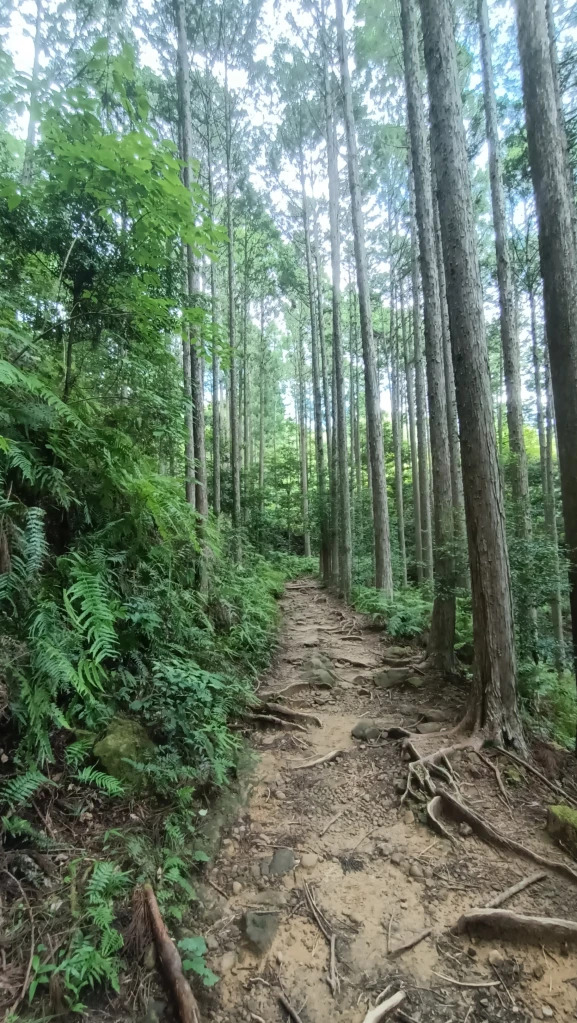
The paths on the Kumano Kodo are well-maintained and are well marked with signs in Japanese and English. When hiking along the Kumano Kodo, there are trail markers every 500 meters that signal where you are and how far you have walked. They even warn if you take the wrong route with the “NOT Kumano Kodo” signal in bold letter.
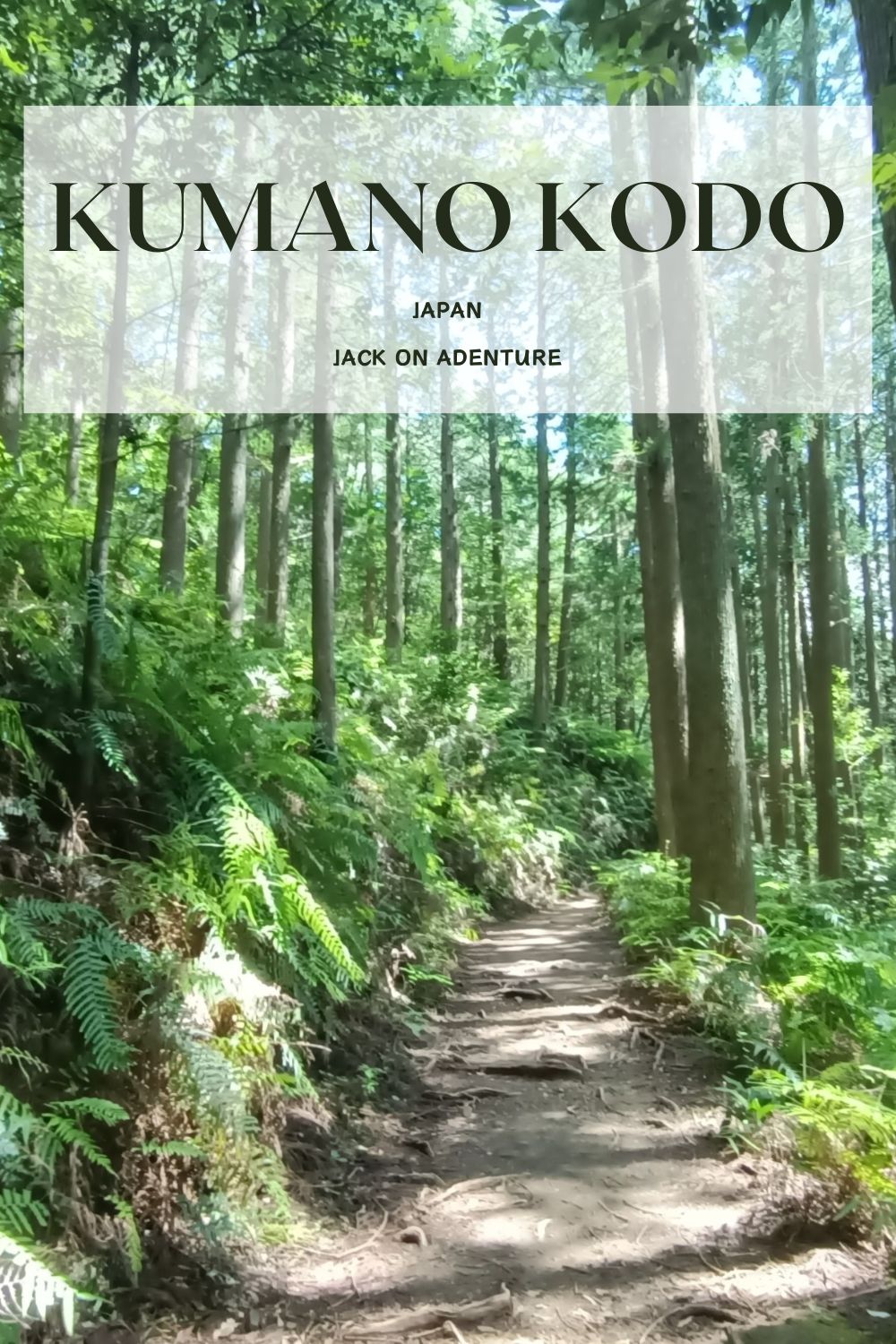
These wonderful trails lead their way through the mountainous region and take hikers through deep forests of lofty cedar trees and small shrines (“oji” in Japanese) meant to protect pilgrims.
What amazed me more was passing through terraced fields and small villages that have been unchanged for decades. With some luck, some lookout points have magnificent picture-perfect views with oceans of clouds blanketing the valley over a dense forest that seems to expand to the horizon.
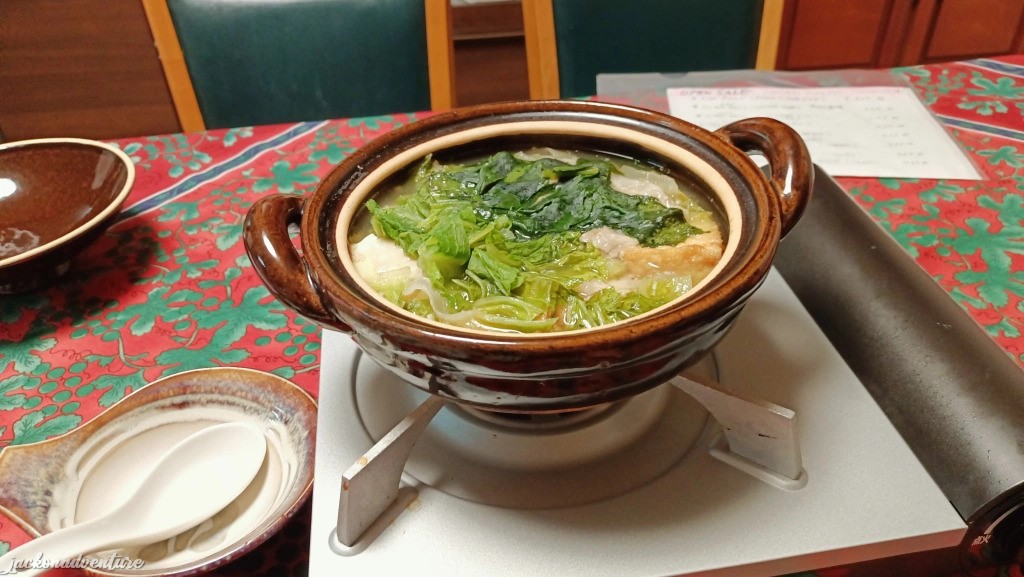
Another best part of the hiking experience is staying at small family-operated inns or ryokans in rural or small towns with less than 500 inhabitants. You can enjoy the calm atmosphere in the mountainous region and get fresh air in the morning. The hosts prepare nutritious dinner and breakfast using fresh local ingredients. For most accommodations, they also provide bento in a lunch box to keep you going on the hike.
Watch my travel vlog to get the feel of the entire Kumano Kodo hiking experience with some travel tips to help you plan this wonderful trip.
Kumano Kodo Routes
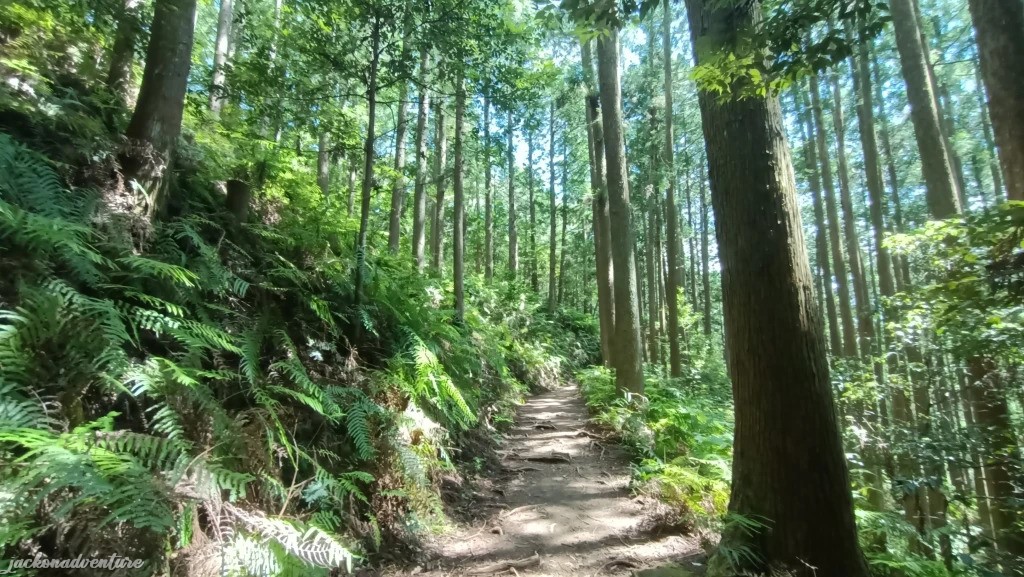
The Kumano Kodo is a network of trails and most people will choose a route best suited to their pace. There is no set route you need to take to complete the hike. Therefore, it’s difficult to tell how long the Kumano Kodo is since people take different routes and itineraries.
Plus, hikers like me will cover only certain sections and later choose to take a bus. So, the distance measured varies depending on how far you’ll actually walk.
Nakahechi Route: The Imperial Route
Nakahechi is the most popular route taken by hikers and is known as the Imperial Route. The route spans across the Kii Peninsula at 65 kilometers. Most people take between 4-5 days to finish the hike and the trail is pretty moderate.
Travelers start their hike on the “main route” from Takijiri-oji in the west, to Hongu in the center and all the way to Nachi at the east of Kii Peninsula. Variations include a short detour through Waraji-toge pass to Hosshinmon-oji, Hongu and Yunomine Onsen and continue to Nachi Taisha.
Historically, this sacred route was used by pilgrims over 1,000 years ago including emperors and samurais. They will visit the three main shrines of the Kamuno Sanzan, which are the three cornerstones of the Nakahechi route.
Iseji Route: The Eastern Route to Kumano
Pilgrims visiting the Ise-Jingu Shrine would hike to the Kumano trails spanning 180 kilometers of seaside walks, bamboo forests and mountain passes. Most of the route is well-paved with stone, giving hikers one of the most distinctive experiences.
This route can be further divided into 3 sections: North, Central and South. The southern section splits at Hana-no-Iwaya and the path takes you either west to Hongu or south to Nachi. The eastern route is doable but would take around 2 weeks to complete. Most hikers only cover a short section on day trips or overnight hikes for 2-5 days.
Kohechi Route: The Mountainous Route
Kohechi Route starts from Koyasan in the north and connects to Hongu in the center of Kii Peninsula. This route is 65 kilometers in total and is considered the hardest of all routes because you need to tackle 4 mountain passes with over 1,000 meters of elevation. This route usually takes 4 days to complete and should not be undertaken by anyone without proper preparation or with health conditions.
Ohechi Route
Ohechi Route is probably the most unique route of the Kumano Kodo which takes you along the southern coast of the Kii Peninsula with nice panoramic views of the Pacific Ocean. Historically, the coastal route was much longer, connecting the seaside town of Tanabe with Nachi Taisha. However, the modern recommended route starts at Kii-Tonda and ends at Mirozu Station. This is because a large section of the route from Mirozu to Nachi has been constructed with high highways.
Hiking the entire modern route takes 3 days but you can hike sections of this trail as day hikes. This is the least popular of the Kumano Kodo routes, so you may be fortunate enough to have the trail all to yourself.
Pre-Start: Tanabe
Before embarking on this awesome adventure, I visit the Tanabe City Kumano Tourism Bureau to register for the “Dual Pilgrim” to collect stamps along the trail and get hips of information about Komodo Kodo trail, bus schedules, maps and hiking guidelines. It helps to self-organize the hike to avoid getting lost in the wood when traveling solo.
Day 1: Takijiri- Chikatsuya (13.3 kilometers)
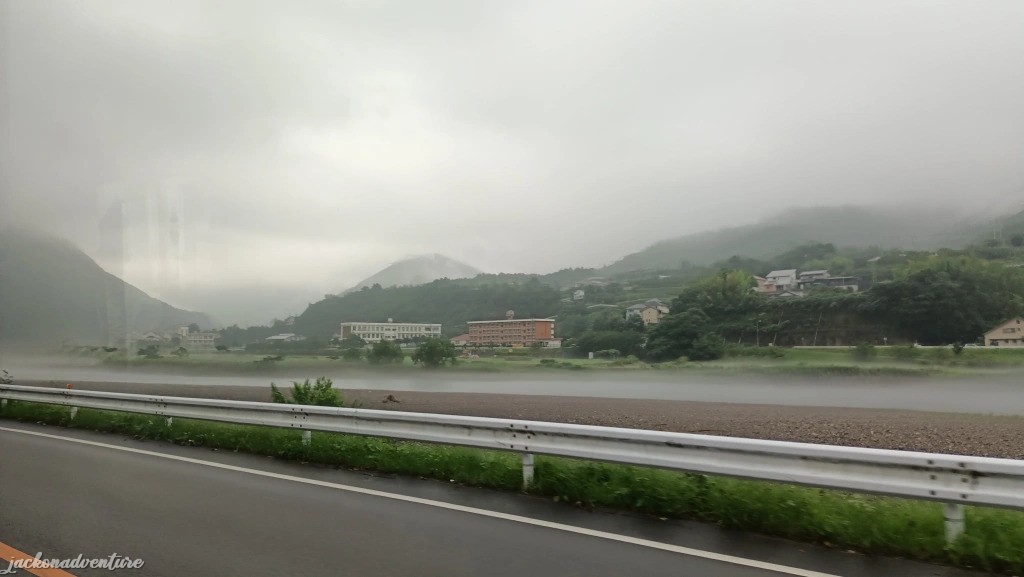
6.50 am: Before hiking on the famous Nakahechi route, I take the local Meiko Bus No. 95 from the bus station just outside Kii-Tanabe Station and Tourist Information Center. This 40-minute ride passes through small towns and gorgeous morning views of Tonda River and the mountainous forest.
It is filled with many folk tales and historical meaning from the two sacred rivers- the Iwata running north and south and the Ishiburi flowing from the east. It is often believed to be the gateway of both the mythological Land of the Gods and the Land of the Dead.
Takijiri-oji
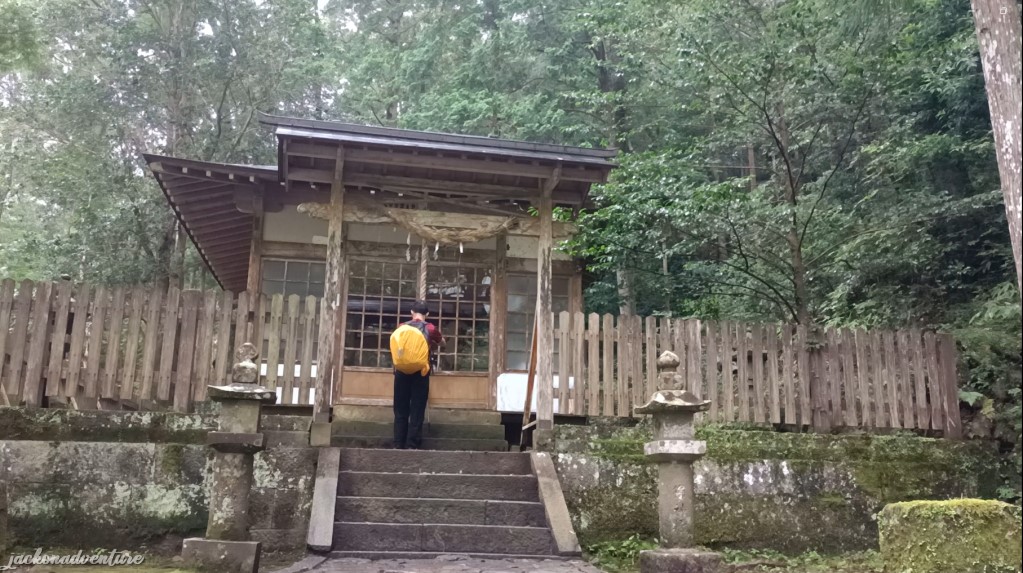
7.50 am: The bus driver alights at the Takijiri bus stop and walk across the bridge over Tonda River to the starting point of Takijiri-oji. One of the five major shrines, this Oji is the passage into the sacred mountains- the entrance to the abode of gods and Buddhist paradises of rebirth. The site was once surrounded by extensive halls, a bathhouse, lodging for pilgrims and residences for priests, priestesses and monks.
During the golden age of the imperial pilgrimages in the 12th and 13th centuries, cold-water ablution rites were practiced to purify body and spirit before worshipping. According to some traditions, one was associated with Sanzu-no-Kawa, a mythical river that separates the land of the living from the land of the dead.
The octagonal Kumano Kodo Kan Pilgrimage Center is near the shrine. Unfortunately, I didn’t have the chance to visit the center because it only opens at 9 am. They provide information on the UNESCO World Heritage sacred sites and pilgrimage routes in the area and support pilgrims and hikers.
Tainai Kuguri- Test of Faith
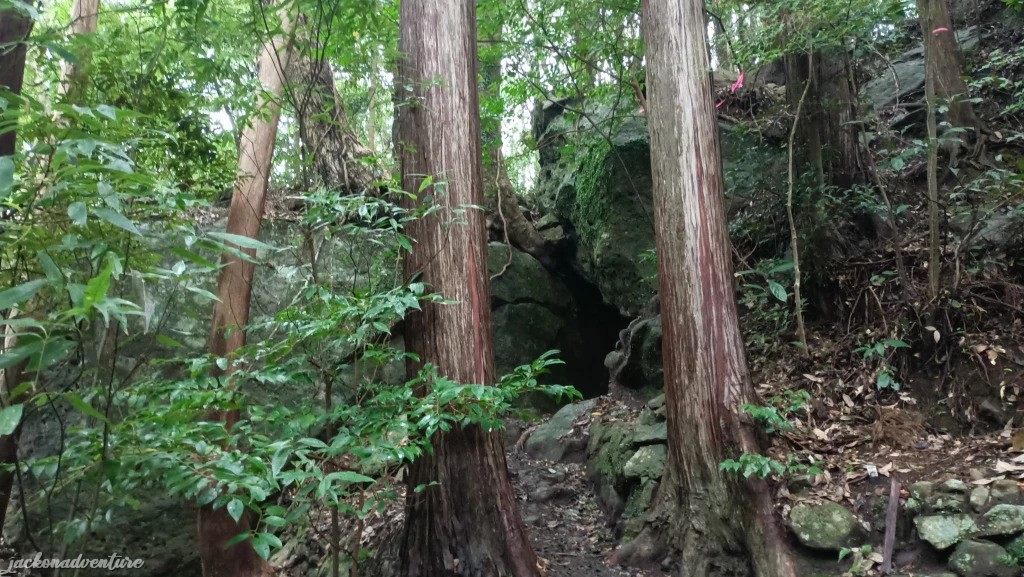
8.25 am: Going up at the start of the trail is not an easy mission and I have been struggling to make my way for the first 4 kilometers. The path is pretty steep with an elevation of 400 meters and is overgrown with roots on the stone steps into the forest. Along the way, I stumble upon Tainai Kuguri (Test of Faith) which literally means passing through the womb. Locals descend to this cave to pray to a turtle-shaped monolith because superstition has it that women who squeeze through the cave will have smooth delivery.
The hole looks small, so I give it a “HARD” pass to avoid getting struck here.
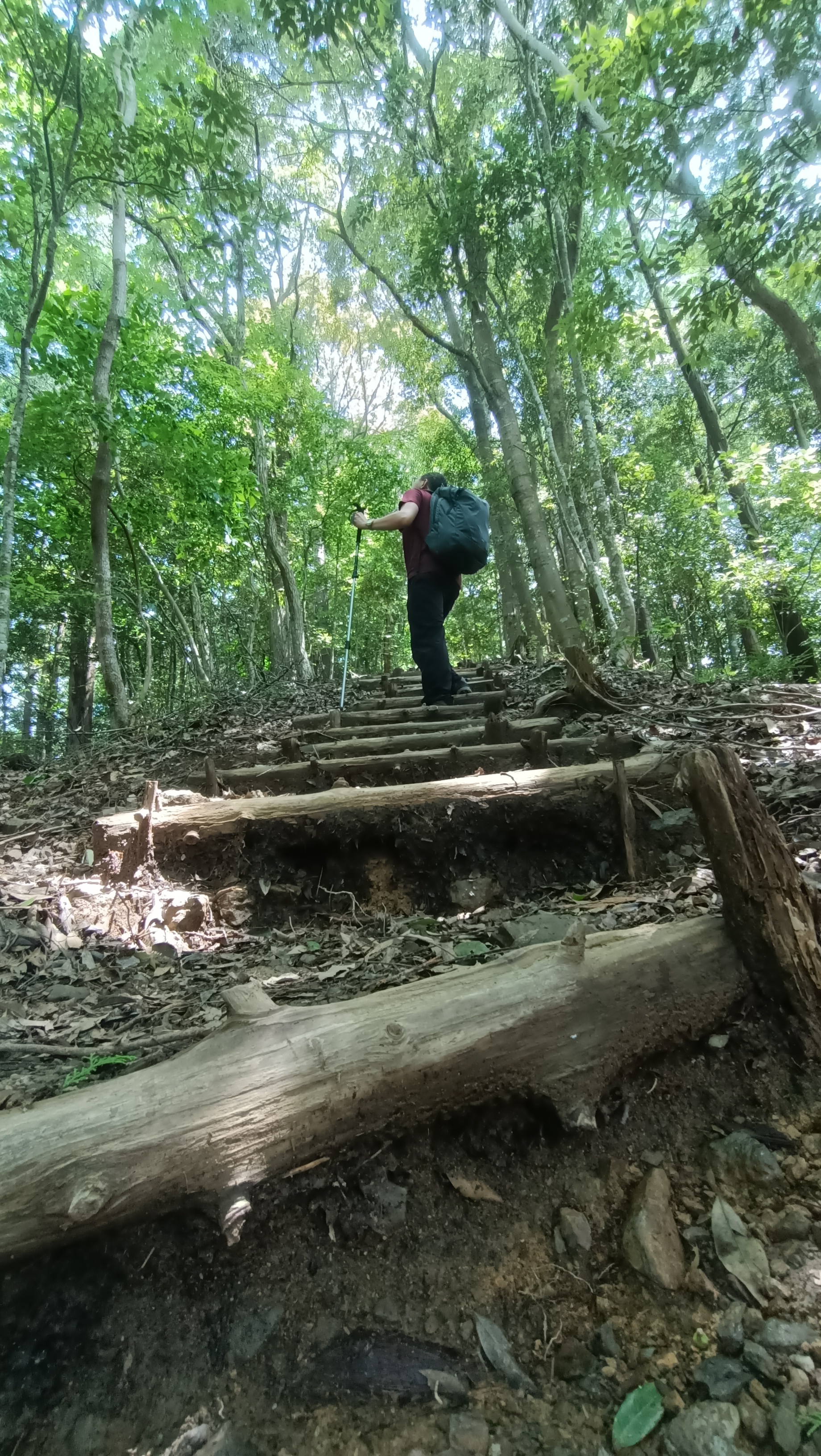
Takahara Kumano-jinja Shrine
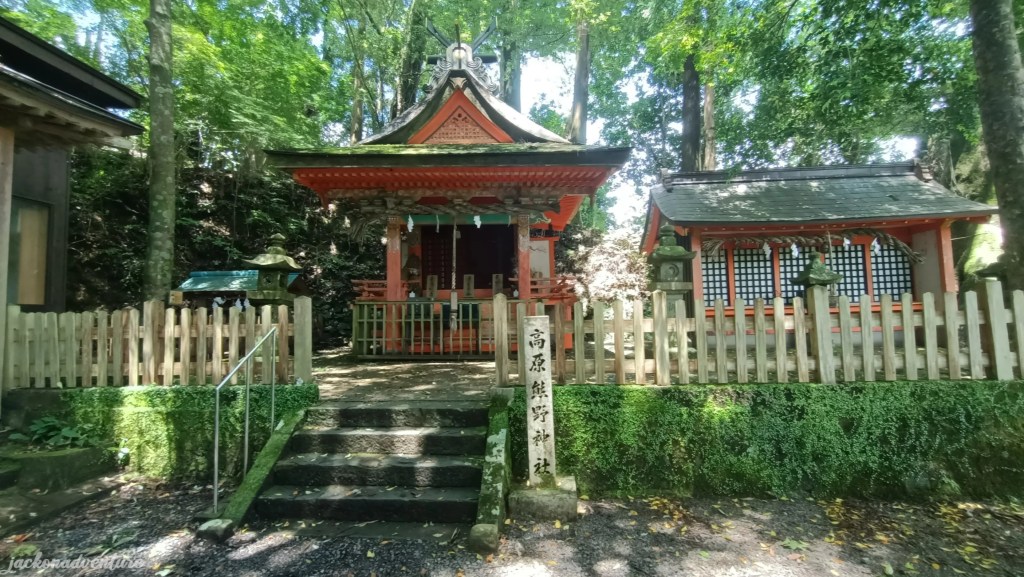
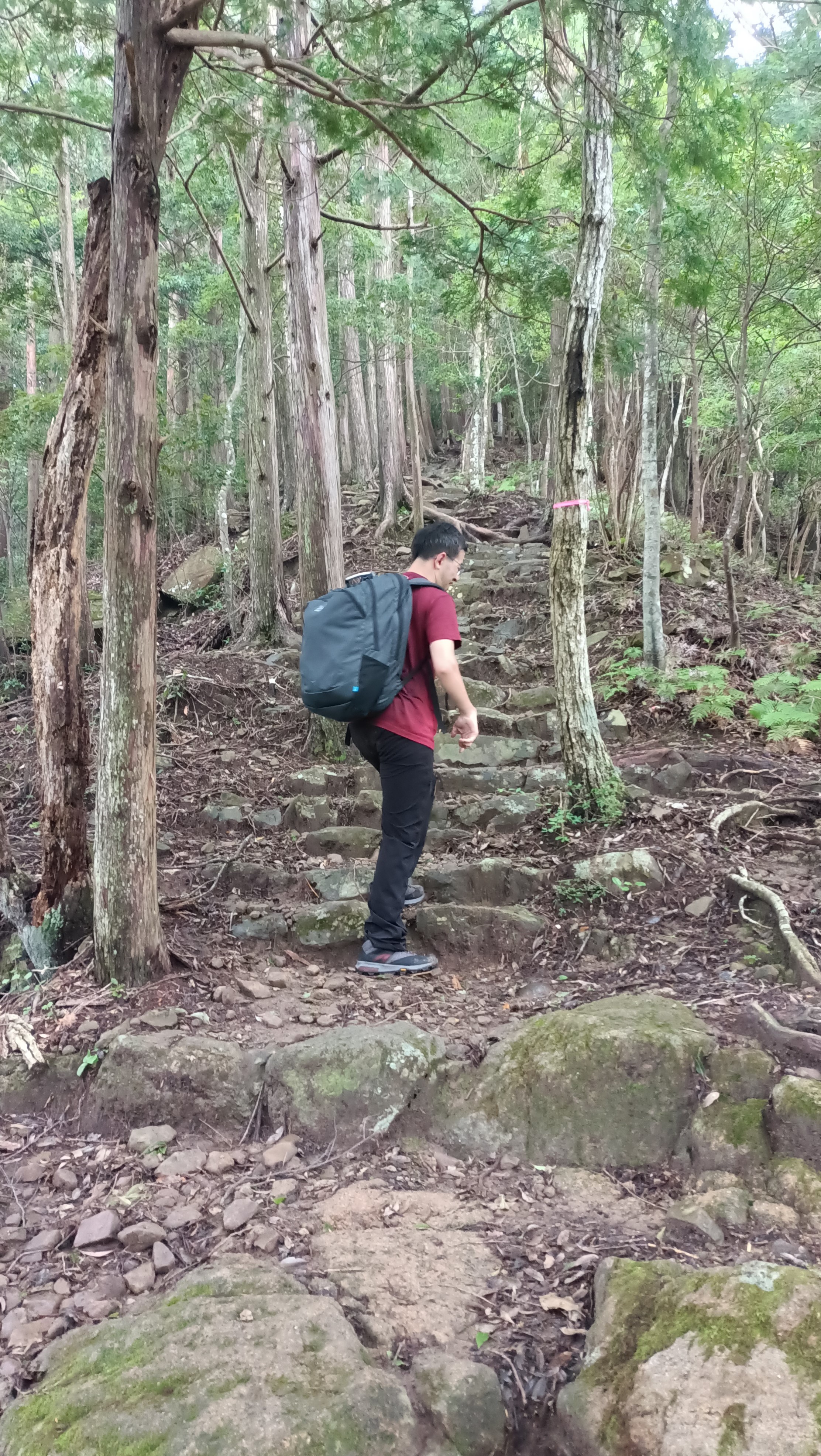
11.12 am: Takahara-jinja shrine (高原熊野神社) is one of the oldest buildings along this section of the Kumano Kodo pilgrimage route. Its deity was transferred here in 1403. The pavilion is easily recognizable with its Kasuga style by looking at its roof added to the gable end to cover the staircase leading to the shrine door. Be immersed by its enchanting forest surrounded by giant ancient camphor trees known as Kusunoki believed to be over 1,000 years old.
Takahara
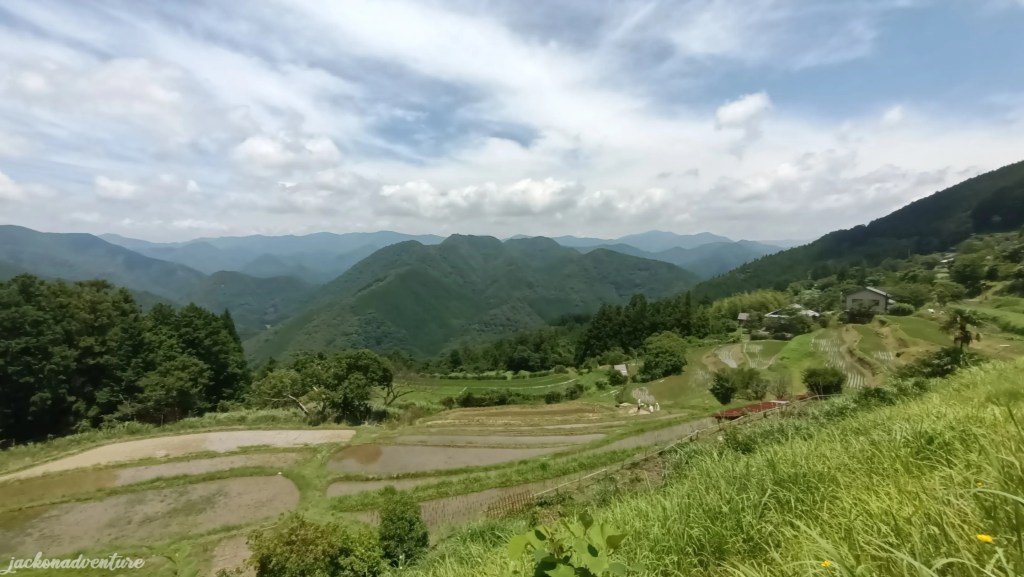
11.40 am: Takahara is a small ridge-top settlement with magnificent views of the Hatenashi mountain range. It is known as the Village in the Mist (Kiri-no-Sato) due to its scenic mountain vistas that are usually covered with mist. The valley below is occasionally filled with fog, creating a beautiful ocean of clouds.
There is a rest area to take a break after the first part of the challenging hike with vending machines and toilets. It’s a perfect spot to have lunch bought from 7-Eleven at Kii-Tanabe Station and replenish water while admiring the beautiful views of the mountains and watching the farmers working on the paddy fields.
Chikatsuyu Village
6.00 pm: After a long hike through the lush forest, the trail steeply descends to Highway #311 just past the trail marker No. 23. I take a break at Kumano Kodo Nakahechi Michi-no-Eki rest stop that sells snacks and drinks. There are also vending machines selling beverages.
With all the exhaustion and fatigue, I decided to hitchhike for the last 1.3 kilometers with the help of a young guy also heading to the same town. Thankfully, he willingly takes me to the ryokan at Yado G Chikatsuyu before sunset and greet by the host at the doorstep with a glass of water.
The host cooks a delightful Chanko-nabe which comes with chicken, beef, tofu, mushrooms and vegetables as well as ramen with eggplants, tofu and pickles as side dishes. The vegetables are fresh and planted by the local community themselves. The host and I have a great conversation throughout the night, sharing about our countries’ culture and history.
Day 2: Hosshinmon-oji- Yunomine Onsen
Hosshinmon-oji
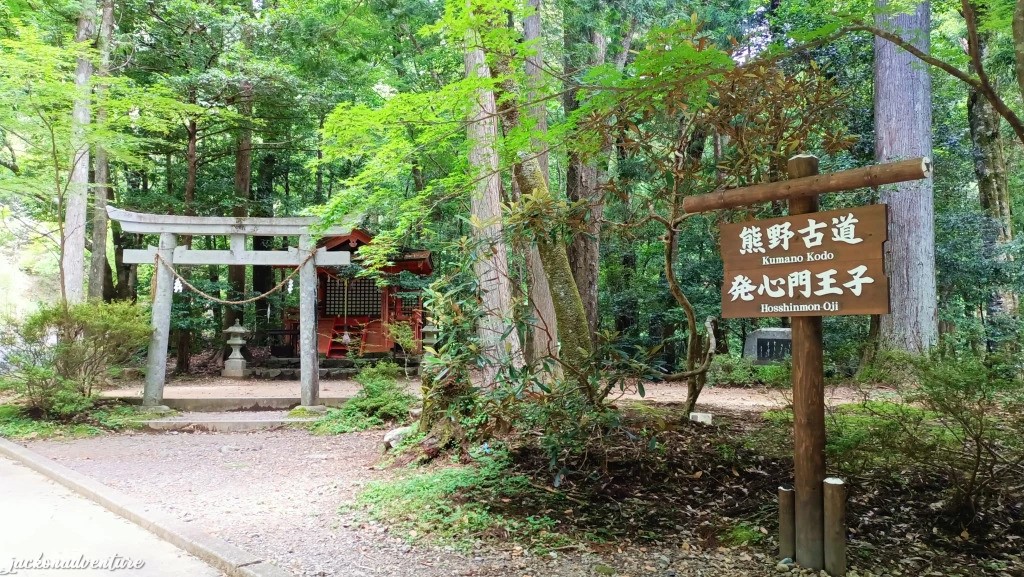
10.30 am: The second day of the hike starts from Hosshinmon-oji (発心門王子) which usually need to take Meiko Bus No.95 at 7.23 am from Chikatsuyu to the shrine. Instead, the host takes me to the starting point because I missed the bus for just a few minutes.
Known as the “Gate of the Awakening of the Aspiration to Enlightenment, Hosshinmon-oji is the outermost entrance to Kumano Hongu Taisha with a 7-kilometer leisure walk (Full Walk- 25 kilometers and Intermediate walk- 17 kilometers).


Fushiogami-oji
12.00 pm: The name “Fushiogami”, literally means kneeling down in prayer after catching the first glimpse of the Grand Shrine in the distant valley below
About 1,000 years ago, a famous female poet called Izumi Shikibu was on a pilgrimage and began to menstruate at the shrine. Purification is an important element in Japanese religion and blood is considered impure. Therefore, women who were menstruating were not allowed to worship. She was very upset about not being allowed to pay homage and composed a poem in her agony. That night, the Kumano deity appeared and replied to her by asking how the gods who mingle with the dust could suffer due to her monthly obstruction.
I take a break at a covered rest area and enjoy lunch prepared by the host from Chikatsuyu with the plum juice from the lady sold in the rest area.
Trail Marker #73
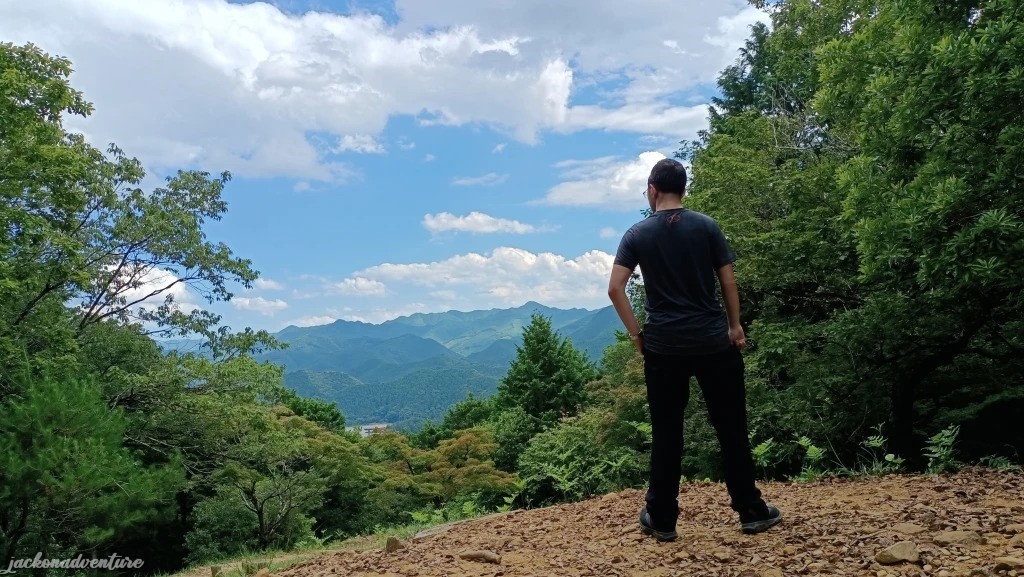
2.30 pm: As I descend toward Kumano Hongu Taisha in the thick forest, there is a short side trail climbing up to the viewpoint. The view here is spectacular as I get a glimpse of Oyunohara and the giant Torii gateway from a distance.
Kumano Hongu Taisha
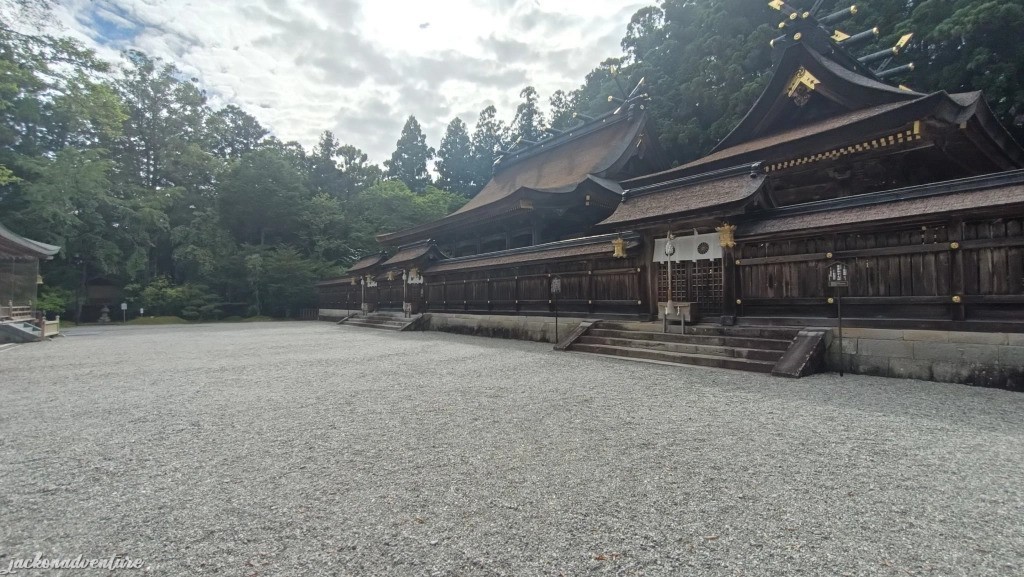
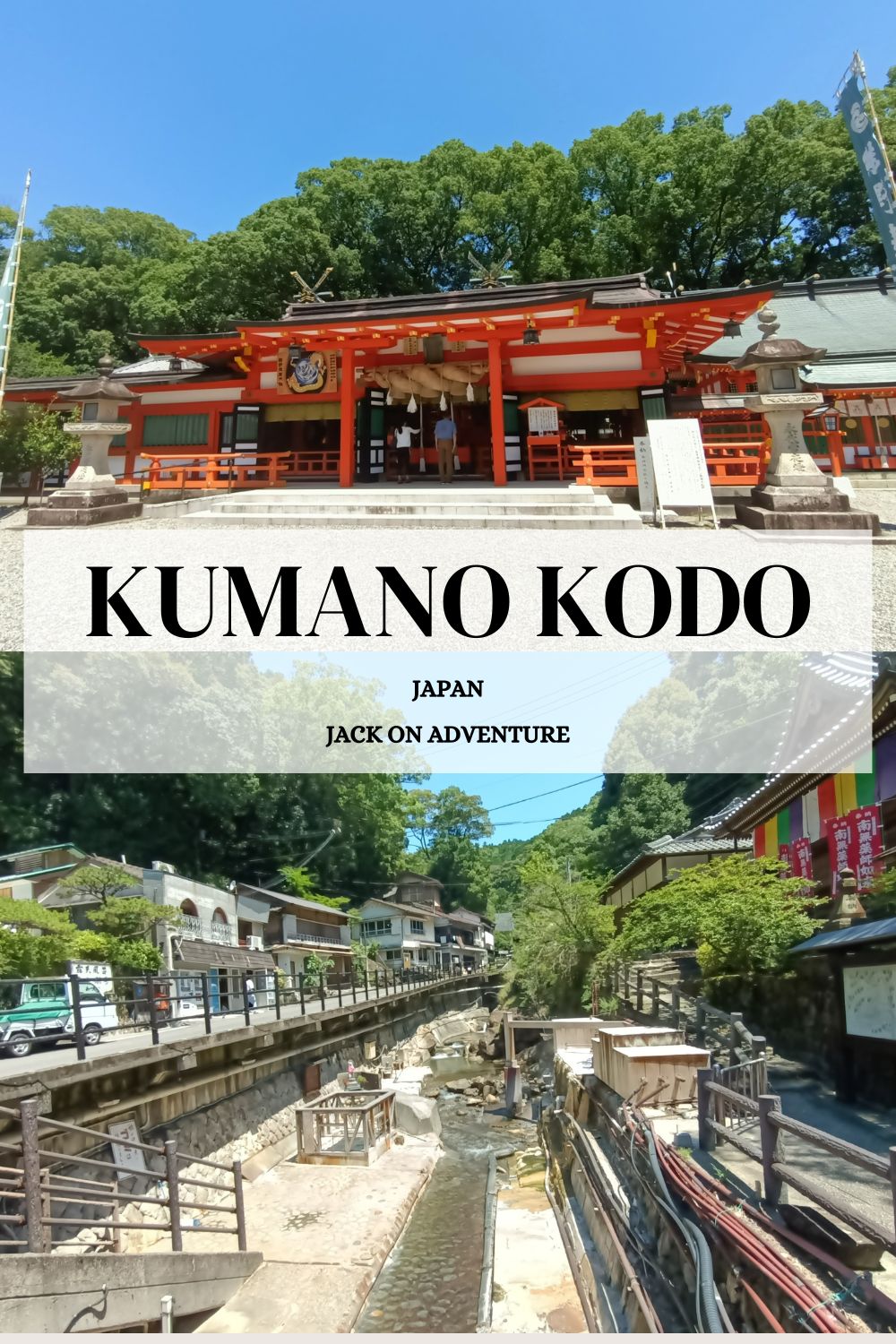
3.30 pm: As the heart of Kumano Kodo, Kumano Hongu Taisha (熊野本宮大社) is one of the three grand shrines of Kumano Sanzan and the head shrine of over 3,000 Kumano shrines around Japan. All the Kmano pilgrimage routes lead them to this mystical sandbank encompassed by mountains, the spiritual heart of Japan. This Shinto shrine is surrounded by ancient cedar and cypress trees. It is the center of the Kumano Kodo network of pilgrimage routes.
This shrine was originally located at Oyunohara, a delta at the confluence of the Kumano-gawa River and the Otonashi River. More than 900 years ago, a pilgrim wrote of a massive shrine grounds including the five main pavilions enshrining 12 deities at the riverbank. Over the centuries, the pavilions had braced through periodic fires and floodings but have always rebuilt to their original state.
In 1889, a tremendous flood destroyed a large portion of the shrine complex. The salvaged materials were used to rebuild the pavilion at the present location about 500 meters northwest of the former shrine grounds.
Oyunohara
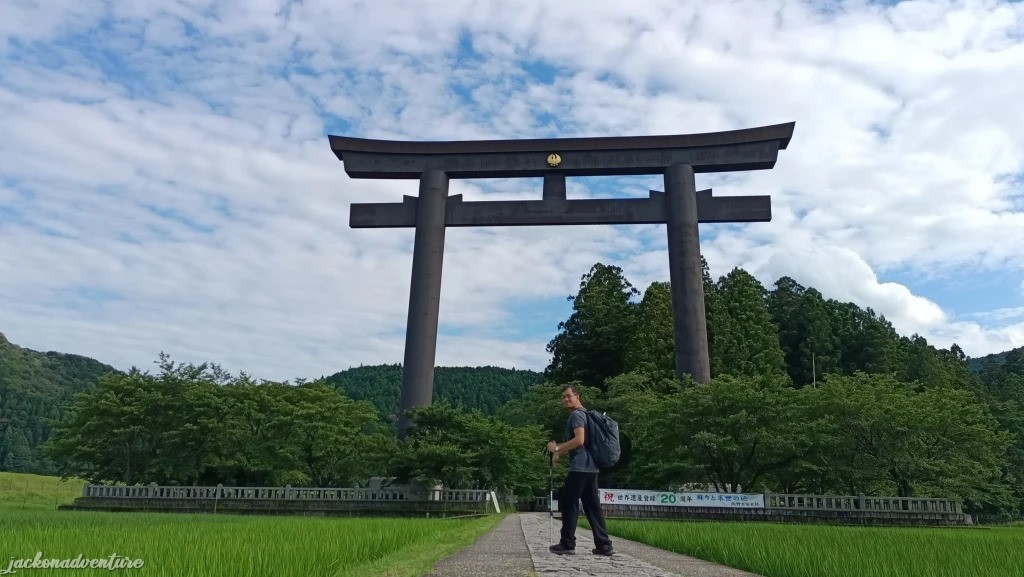
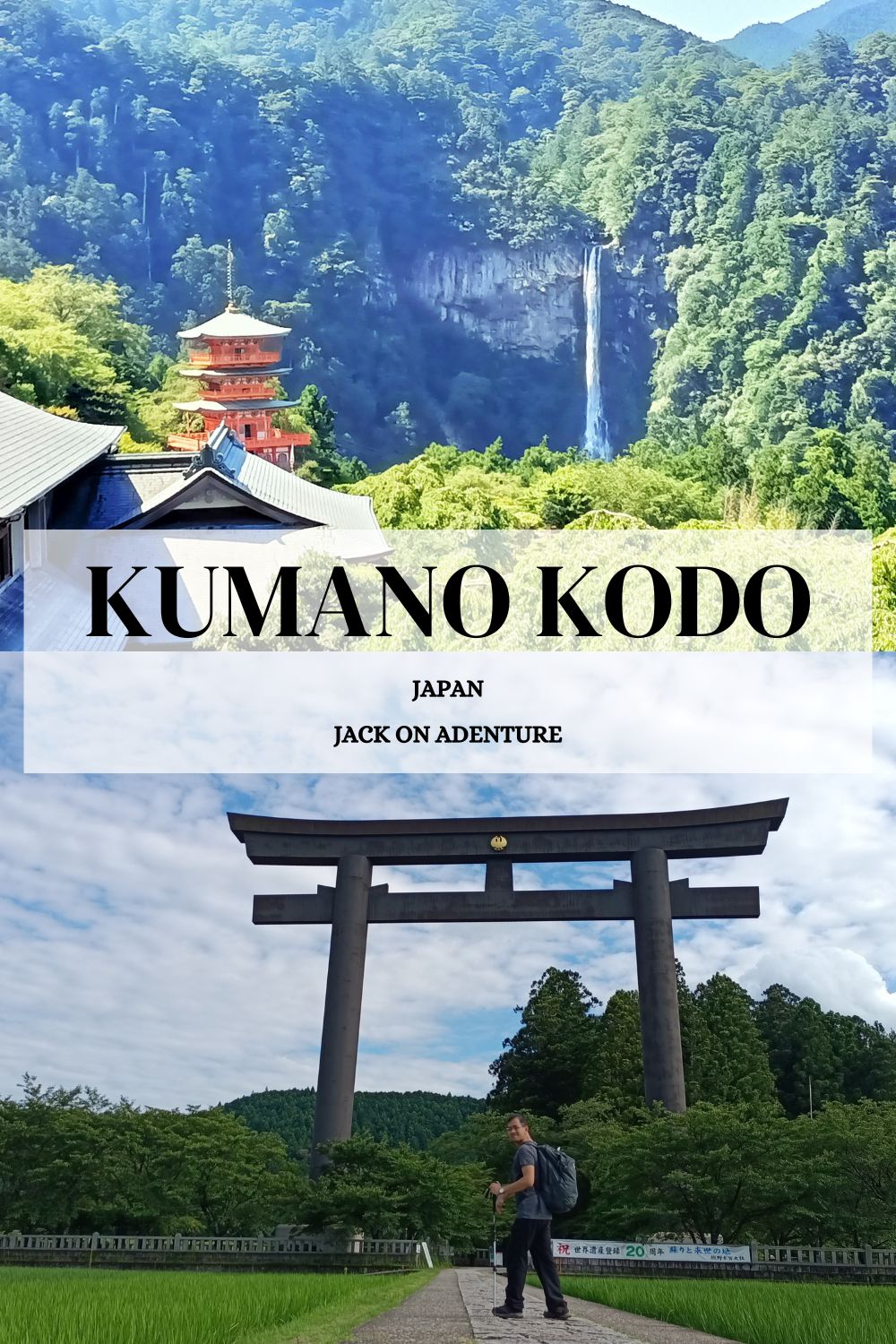
4.15 pm: Across the shrine and passing through a small alley behind the shops lead to the magnificent torii shrine gate. It is the largest Torii gate in the world at 33.9 meters tall and 42 meters wide. The Torii is named Otorii, O means “big.”
I feel so tiny as I walk closer to the entrance of Oyunohara into the gateway to the sacred area. It is so impressive how this 172 tons Otorii took 6 months to make and 6 months to assemble. The old structures of Hongu Taisha can still be found here.
Yunomine Onsen
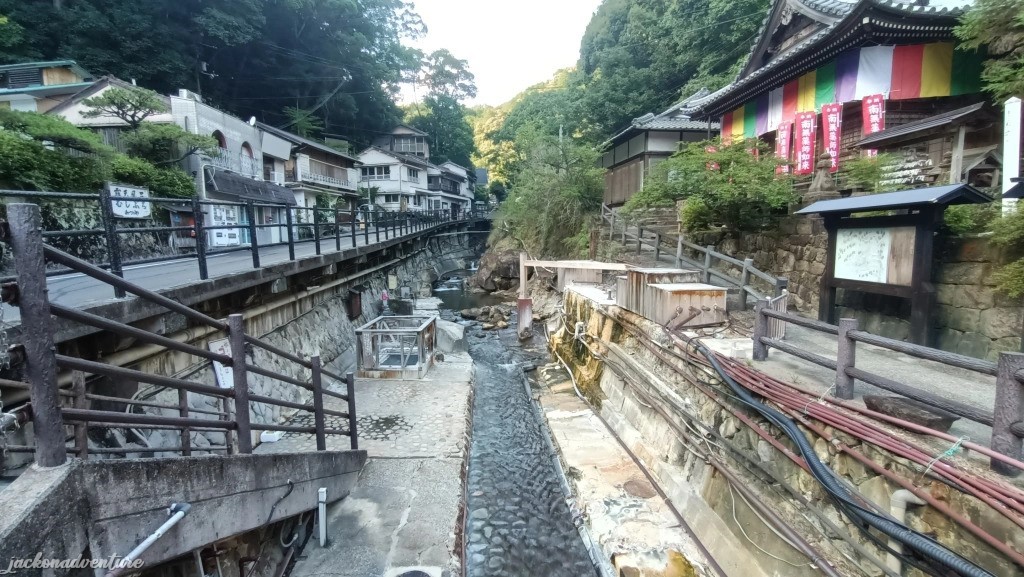
5.00 pm: Hopping on Bus No. 301, I arrive at the famous Yunomine Onsen, designated as a UNESCO World Heritage Site and check in at Minshuku Terutaya on the south side of the town. This ryokan has its own bath area which I can relax in after completing the 7-kilometer hike.
Tucked in a small valley deep in the heart of the Kumano’s sacred mountains, the onsen is believed to be the oldest hot spring in Japan and was discovered about 1,800 years ago. The waters here are said to change color 7 times each day.
It is an integral part of more than 1,000-year-old pilgrimage tradition where pilgrims perform hot water purification rituals in this piping-hot mineral water after their long journey. They made preparations to worship at Kumano Hongu Taisha.
Day 3: Yunomine Onsen- Hongu- Koguchi (By Bus)
Tokoji Temple
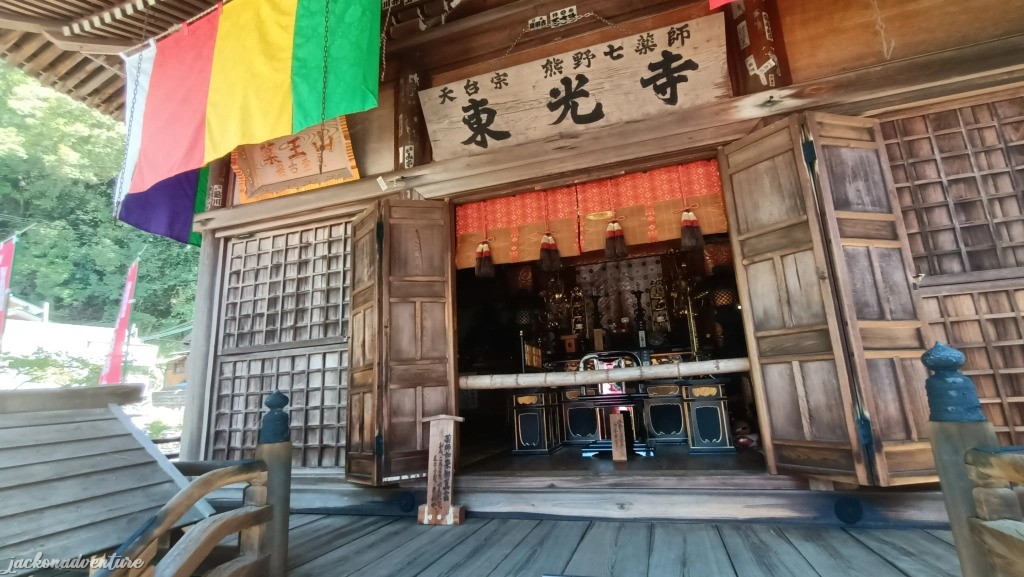
9.22 am: Located in the heart of Yunomine Onsen, Tokoji Temple (東光寺) is dedicated to Yakushi Nyorai, the medicine Buddha. The small shrine is revered by pilgrims for its healing qualities and experience both spiritual and physical healing. A seated statue of Yakushi Nyorai inside the temple is made of sedimentary deposits from the hot springs.
The town of Yunomine owes its name to the healing Buddha here. According to legend, the original hot waters that gave the town such prosperity gashed forth from the statue’s chest. “Yu” means hot water and “Mune” means chest,. Hence, it is called Yunomune and later modified the name into “Yunomine”
Tsuboyu
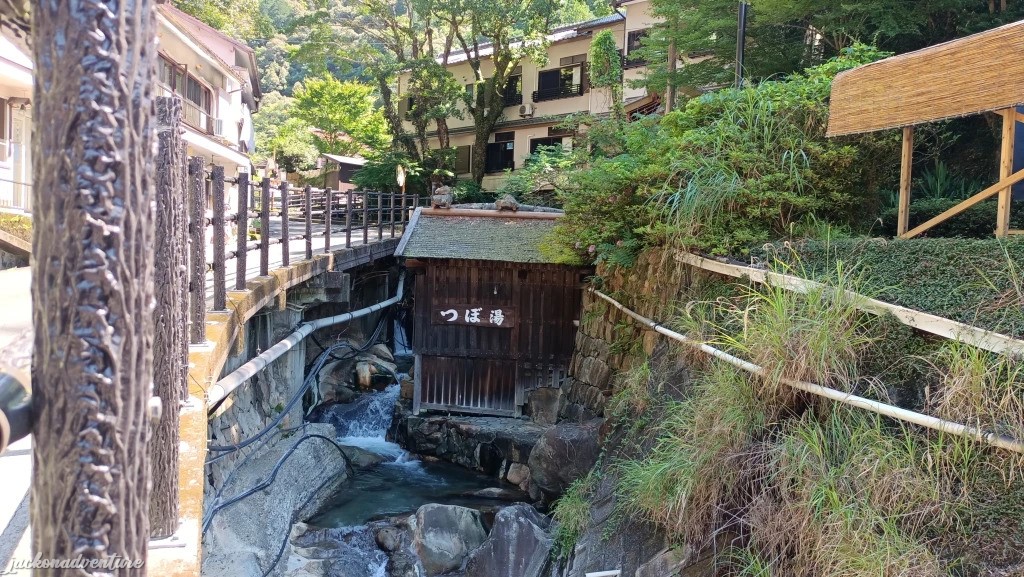
9.36 am: This small stone-lined Tsuboyu by the creek allows visitors to take private baths for up to 30 minutes. The onsen is one of the only hot springs registered as a UNESCO World Heritage.
The famous legend of “Oguri Hangan and Princess Terute” tells the story of Oguri who suffered from a terrible debilitating disease soaked in these waters and was revived.
Onsen Tamago
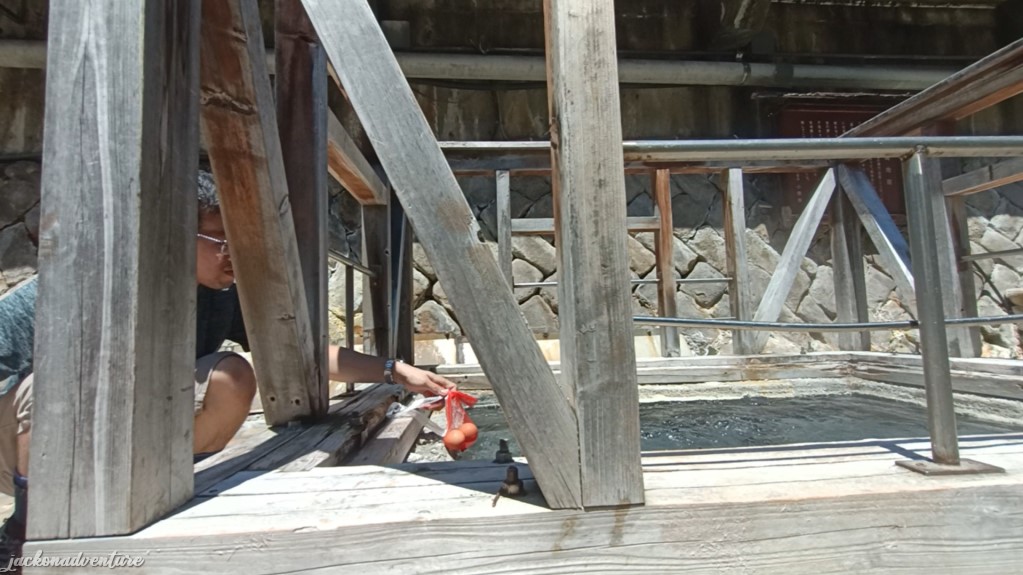
10.50 am: Enjoy a unique public hot spring cooking basin with some eggs at Yuzutsu in the center of Yunomine Onsen. These are called “Onsen Tamago” or “Hot Spring Eggs.” They are sold at nearby convenience stores and a cafe. It takes only 13 minutes to cook the full-boiled egg in the 90°C water. Once it is done, bring it to the tap next to the basin to rinse with water to easily remove the eggshell.
Kumano Hongu Heritage Center
2.00 pm: After lunch, I return to Hongu to visit the Kumano Hongu Heritage Center and register for the “Dual Pilgrim”, which requires to complete the Kumano Kodo and the Way of St. James. The friendly staff assists me to sign up after I provide the credentials by showing the stamps collected from small wooden stands along the trail for the past 2 days.
The two exhibits in the center introduce the Kumano Hongu area, the sacred sites and the pilgrimage routes found throughout the Kii mountain range. There are also videos showcasing the history, culture and major local festivals in Kumano Kodo.
Koguchi
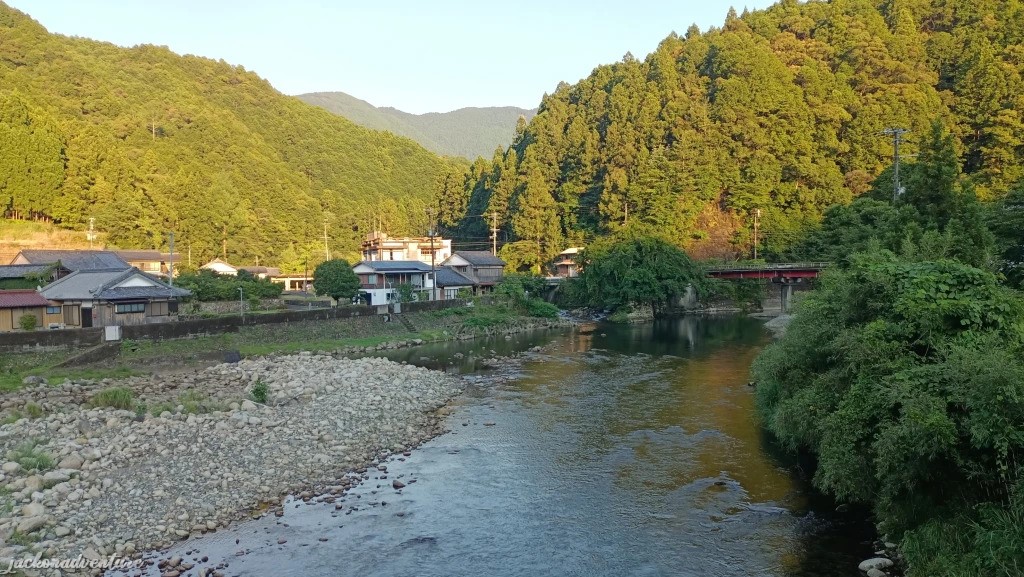
7.00 pm: Nestled along the beautiful Akagi-gawa River, this small mountain village of Koguchi is my stopover before continuing my journey to Kumano Nachi Taisha. Hikers on the Kogumotori-goe and Ogumotori-goe routes usually stay here for a night.
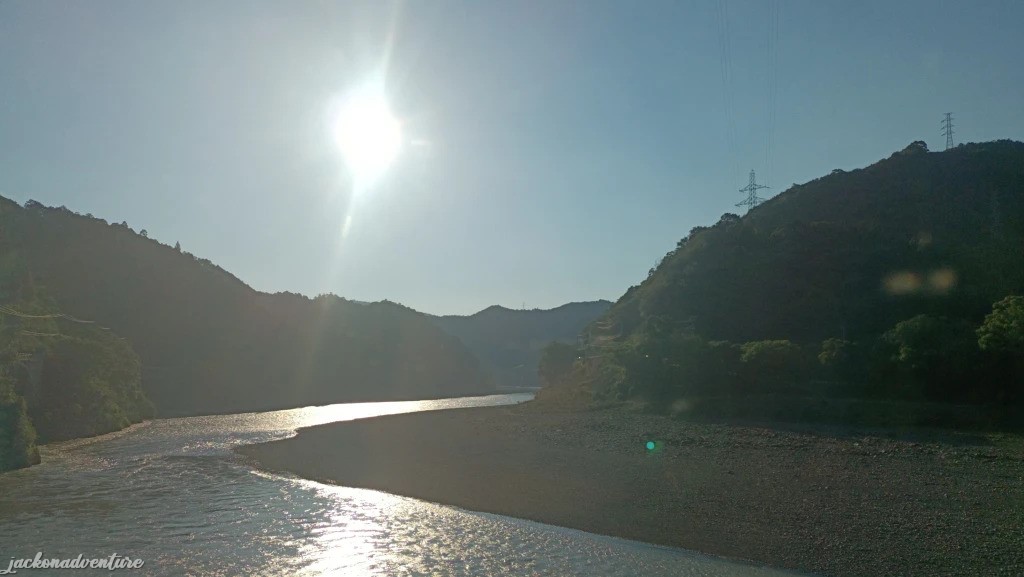
I take the last Bus No.51 from Kumano Hongu Taisha to Kammaru and transfer to Koguchi town on Bus No.63. The 1.5-hour journey takes me through the stunning views of mountain ranges, Kumano River and Akagi-gawa River.
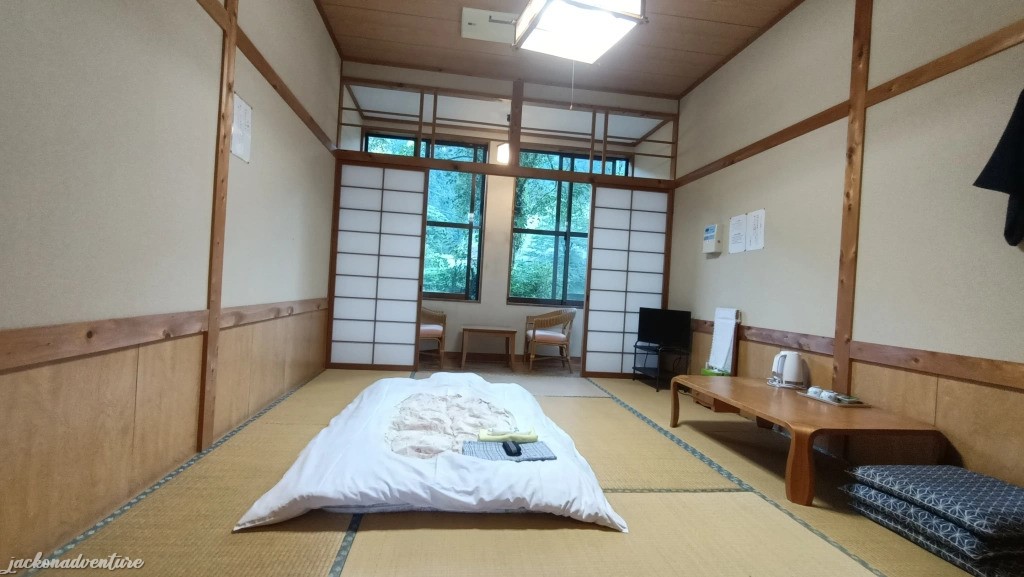
I stay at Koguchi Shizen-no-Ie which was renovated from an old junior high school into a lodge. There are many private small rooms with shared bathrooms, toilets and a dining area which previously used as a canteen. Behind the compound is a big river and shrine and the room is very cozy with a peaceful atmosphere.
Day 4: Koguchi- Nachisan- Katsuura (By Bus)
Kammaru
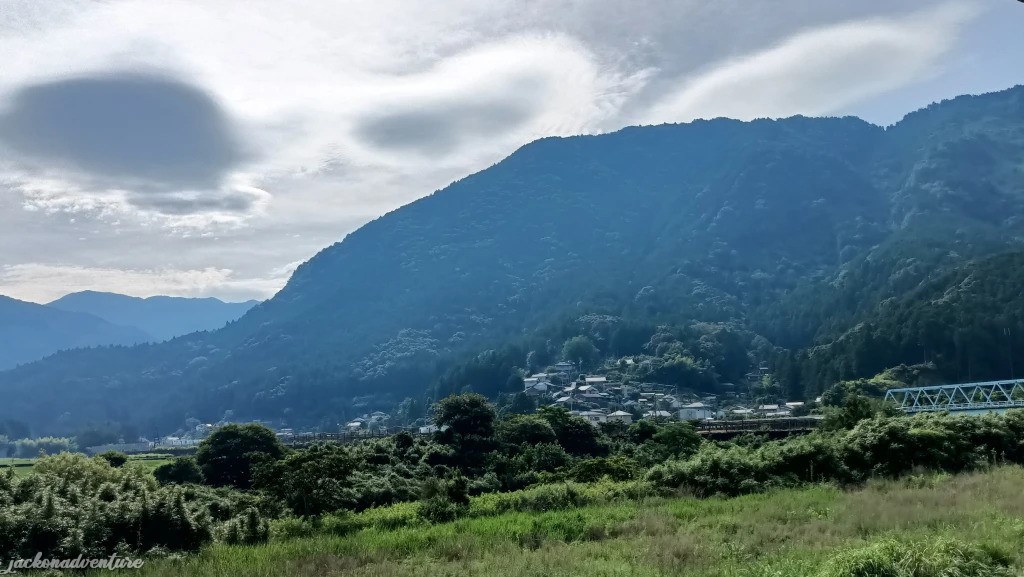
8.55 am: Before heading to Kumano Nachi Taisha, I take the last bus No. 63 from Koguchi back to Kammura and catch the next Bus No.53 to Shingu Station. The jaw-dropping views of Kammura truly take my breath away as I take a glance at the small town with a beautiful picturesque of the mountain range.
While heading to Shingu town, the bus passes through the Akagi-gawa River and Kumano-gawa. Some visitors travel to Kumano-gawa to take the traditional boat to experience the pilgrimage route by water. Historically, pilgrims will travel between Kumano Hongu Taisha and Hayatama Taisha by boat.
Kumano Nachi Taisha
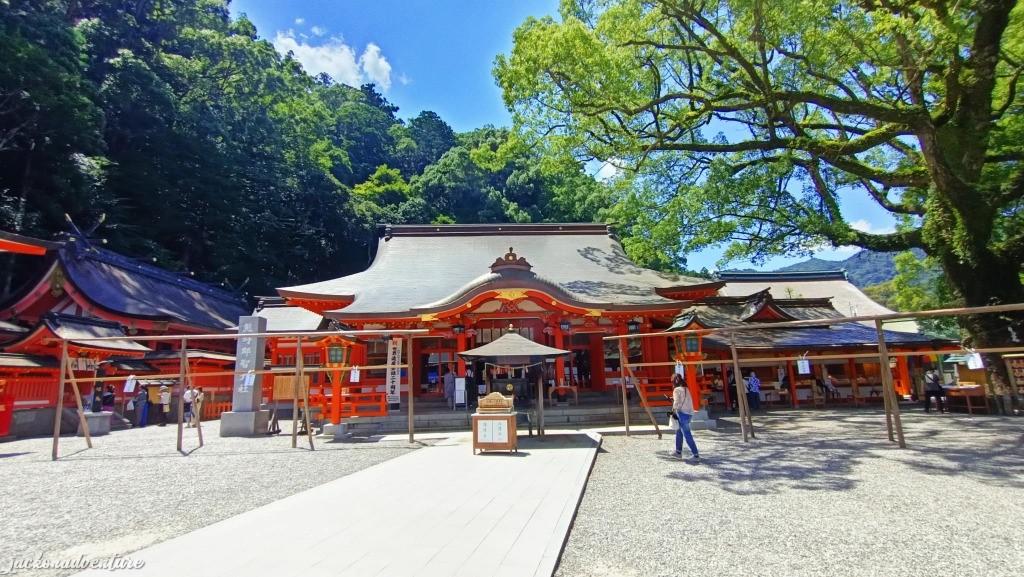
11.30 am: From Shingu Station, I take another Bus No. 15 from Shingu right outside Shingu Information Center to Nachi Station and transfer Bus No. 31 to Nachisan.
Tucked halfway up Nachi Mountain about 350 meters above sea level is the brilliant orange and white Kumano Nachi Taisha (熊野那智大社). This impressive Shinto shrine has its religious origins in the ancient nature worship of Nachi-no-Otaki and enshrines 12 deities of Kumano and the deity of Nachi.
A giant camphor tree spreading over the shrine’s roofs is regarded as sacred. I feel reborn by walking through the trunk of the old-growth tree to listen to its ancient breath. The tree is revered in Japan because of its longevity, giving it an eternal spiritual presence.
Seiganto-ji
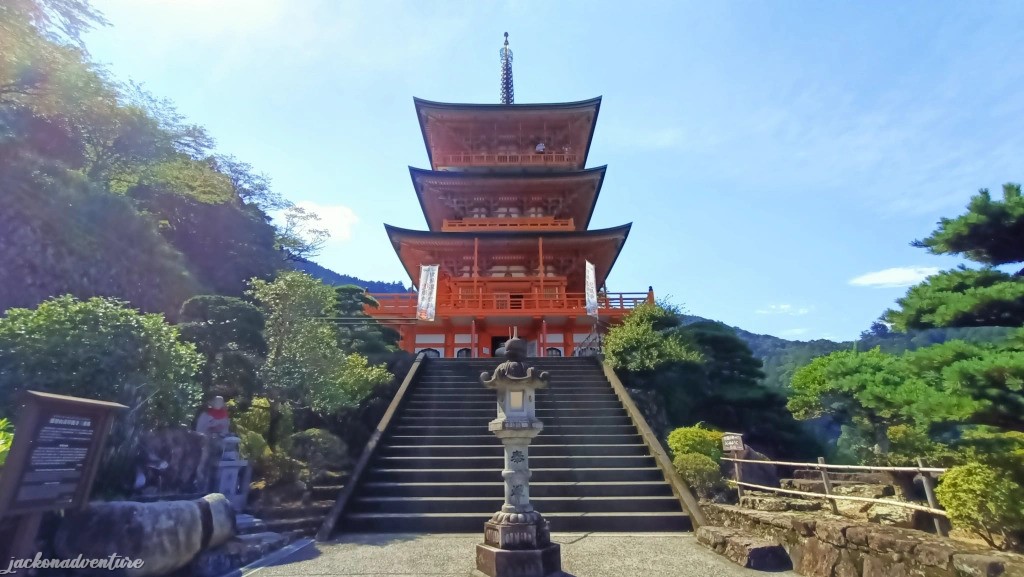
3.10 pm: This vermillion wooden Seiganto-ji is a perfect spot to admire the beauty of Nachi Falls. Get to the third level of the temple to watch the falls at a close distance. There is a 300 yen entrance fee to the pagoda.
Seiganto-ji is a Tendai Buddhist temple founded in the early 5th century. Legend tells the story of a Buddhist priest from India who drifted ashore and experienced a revelation of Kannon, the Buddhist deity of mercy. The temple is also the first sacred place of “Saigokujunrei”, or pilgrimage to 33 Kannon which began in 1161.
This three-story pagoda and Kumano Nachi Taisha were once joined together as a place of worship for Shintoism and Buddhist followers. The veneration of the Kumano shrines as holy sites of Shintoism predates Buddhism’s introduction to Japan in the mid-6th century. For a long time, they were under a single entity but were forced to separate the two religions in the 19th century during the Meiji era.
The two spiritual structures remain connected to represent harmony in the presence of nature and are dedicated to the powerful and striking wonders of the area.
Nachi Falls
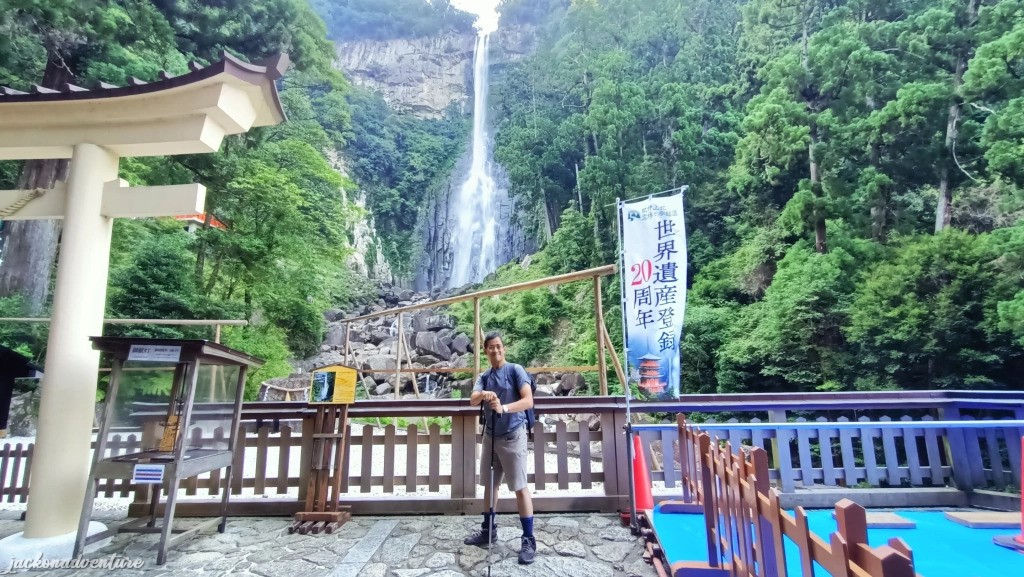
4.05 pm: Nachi Falls or Nachi-no-Otaki is one of my favourite destinations in Kumano Kodo. The fall is the tallest single-tiered waterfall in Japan with a height of 133 meters and 13 meters wide. The water source comes from the evergreen primeval forest. I walk to Hiro Jinja to get close and hear the roaring sound of Nachi Falls.
Take some time to marvel at the magnificent waterfall with the beauty of nature in the sanctuary of Kumano Nachi Taisha which has been protected since ancient times. The mountain monks who practice Shugendo used this ground for ascetic training, a mixed religion of foreign and indigenous beliefs.
By 6.00 pm, I arrive at MyKumano, a budget hostel near Katsuura Station. The staff speak fluent English, making the check-in process fast and easy. There is a Lawson store opposite the hostel and a few eateries that are still open during the night.
Day 5: Katsuura- Shingu (By Train and Bus)
Nachi-Katsuura

7.30 am: Located in the bay of Katsuura, Nachi-Katsuura is the largest tuna market in Japan at the fishing port. The fish market is a MUST-visit place to see the fishmongers and clientele in action after the end of the Kumano Kodo hike. I get to observe closely a less crowded market than the famous Tsukiji fish market in Tokyo which makes it a pleasant visit.
Every morning, freshly caught fish are tagged and lined up on the concrete floor in the market and put on auction at 7 am. The lively scenes start with buyers from Kyoto and Osaka and sellers inspecting the fish and placing the bids on them.
Travel tip: Walk up to the second floor of the fish market to catch a bird-eye view of the scene.
Katsuura Gyoko Nigiwai-Ichiba

Next to the fish market is Katsuura Gyoko Nigiwai-Ichiba with a few stores selling sashimi, other seafood and local specialties including maguro katsu. There is a vending machine to purchase the food and later bring the small ticket to the food stall to place the order. The seafood is fresh and affordable.
Kumano Hayatama Taisha
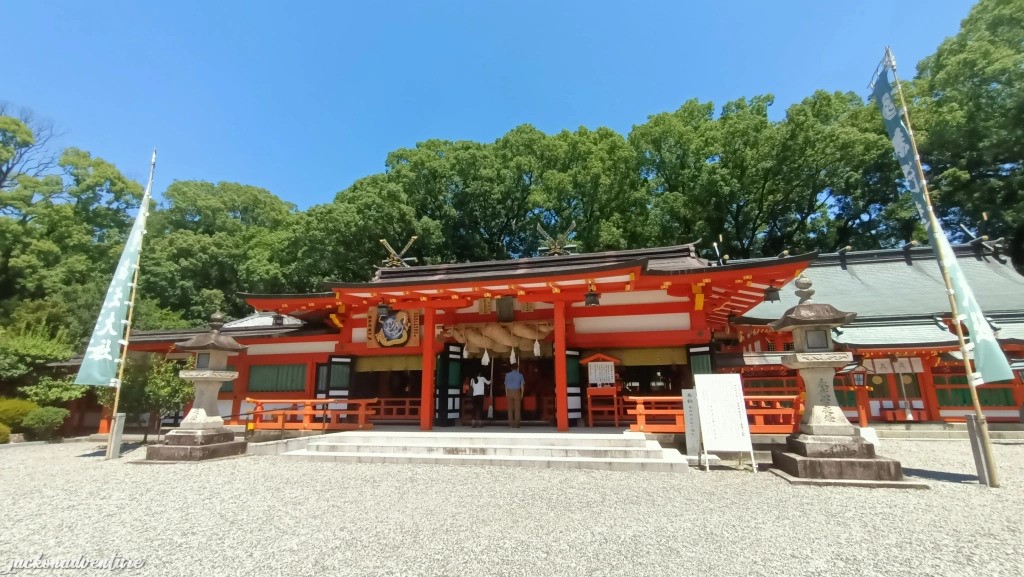
The last grand shrine to visit is Kumano Hayatama Taisha located at the mouth of Kumano-gawa River. The continuous flow of waters from the sacred heights of the Kii Mountains empty into the vastness of the Pacific Ocean.
In ancient times, the three kami (Kumano-Hayatama-no-omikami, Kumano-Musubi-no-omikami and Ketsumi-Miko-omikami) came down from heaven to the sacred rock called Gotobiki at Mt. Kamikura. This rock is the object of worship and the origin of Kumano faith. The ancestors of the local people built a new shrine at Shingu and moved the kami to enshrine at Hayatama Grand Shrine.
The locals have been praying with reverence and gratitude while offering blessings of nature to the kami. Ceremonies of purification continue to take place as these rituals are the most striking features of Shinto.
During the medieval period, successive emperors and nobles came to worship here. The 46th Emperor Koken offered a tablet that proclaimed: “Hayatama is the most sacred shrine in Japan.” A stone monument in the inner shrine honors these ancient emperors.
The ancient 800-year-old Nagi-no-Ki tree highlights the area’s deep tradition of nature worship.
How to Book Accommodation on the Kumano Kodo
So by now, you have most of the information on hiking the Komodo Kodo trail. You might wonder how to book your stay for the next few days along the trail.
Unlike any travel booking made in Japan or around the world, arranging accommodation here can only be done from Kumano Travel. It can be tricky and not as easy as booking through Agoda or Booking.com. Hikers who plan to stay in the inns or ryokans need to reserve their bookings with this local agency that is partially operated by the Wakayama Tourism Organization. Making these reservations with them will directly support the local community.
Most hosts do not use computers and the only way to reach them is through Kumano Travel. Once you pick the dates for the hike, you can visit their official website to make the reservation. Be patient as it will take a few days before they get back with the confirmation because some hosts usually take longer to respond.
These accommodations are limited with only 1-3 rooms. It is best to book a month in advance because they can fill up easily especially during the popular trekking months.
Travel Tips
- Don’t carry everything when hiking on the trail. Only carry the essential items throughout the hike including clothes, toiletries, snacks, water (preferably refillable water bottle), insect repellent, rain jacket, water-resistant bag cover, hiking pole, camera, battery pack, and first-aid kit. You can store the luggage in Miyoshiya Ryokan for just 500 yen a day. The ryokan is located less than 10 minutes walk from Kii-Tanabe Station.
- Book accommodation well in advance with Kumano Travel (not sponsored!) because the accommodations are LIMITED. These accommodations along the trail are mostly operated by individuals or families living in the local community. It will help to support the local travel agency and the community as a whole.
- Download maps because you may not have cell service all the time. You should also get the trail maps from Kumano Travel website or Google Map.
- Download the Japanese Language Pack on Google Translate. Many people living in the countryside do not speak English. Don’t worry though, this app comes in handy to communicate with the Japanese people.
Coming to Japan Real Soon?
If you like to travel to other parts of Japan, here are some ideas of cities and towns worth discovering with the best things to do. There are also stories about my experience on the Shinkansen train ride and WWOOFing in Japan.
- Tokyo in 2024
- Tokyo in 2023
- Kamakura
- Nagoya
- Nagano
- Takayama
- Gujo
- Ise
- Okayama
- Hiroshima
- Miyajima
- Mt Fuji
- Kyoto
- Arishayama
- Nara
- Osaka
- Shinkansen Train
- WWOOFing in Japan
Like It? Pin This Article.

 Jack on Adventure
Leave a comment