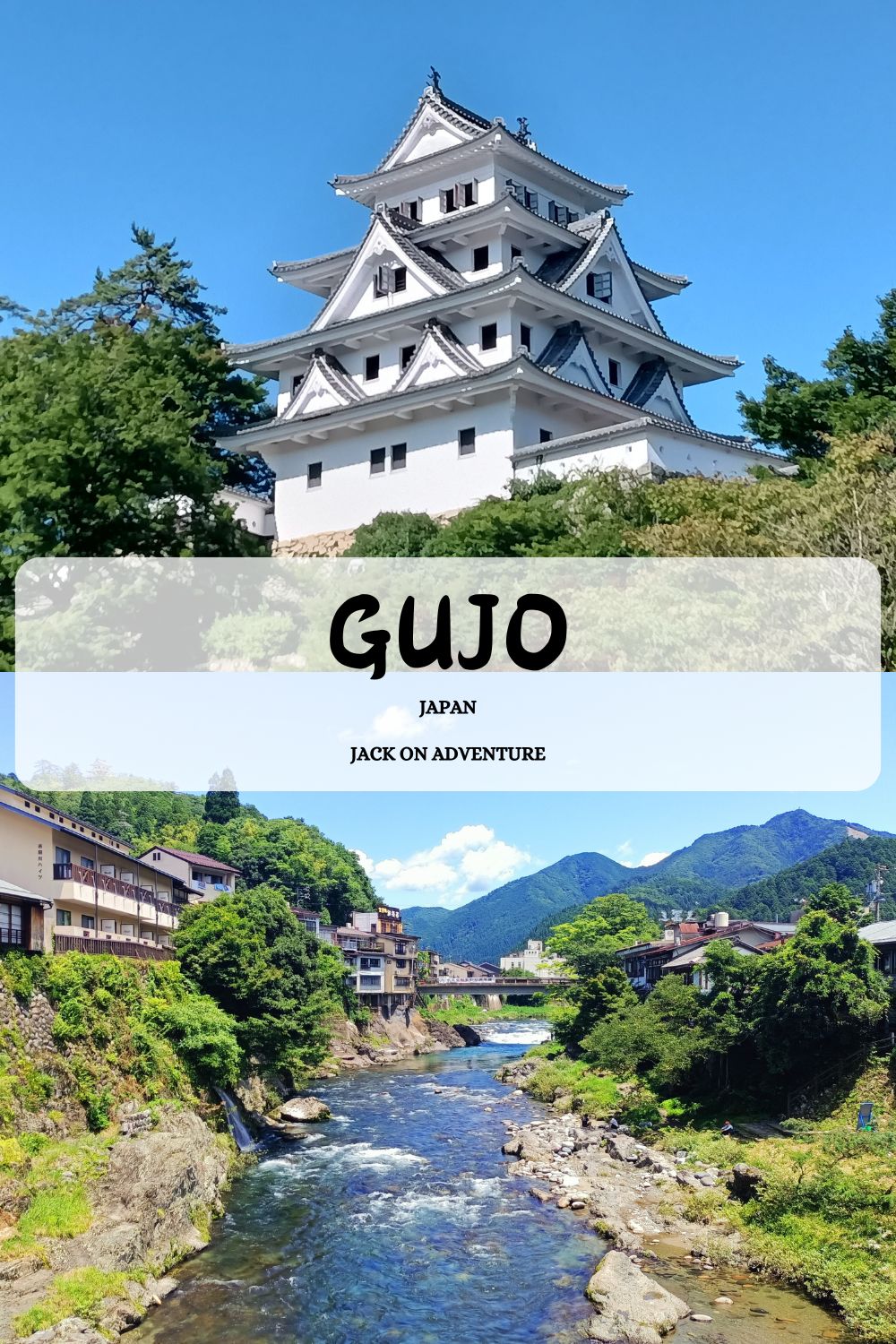
Nestled within the prefecture of Gifu, Gujo Hachiman (郡上市) is a charming riverside town that is just less than 2 hours away from Nagoya city. This rural town sits in the valley where three major fast-running rivers: Yoshida, Kodara and Nagara Rivers merged to form a natural moat around an area at the foot of a small mountain.
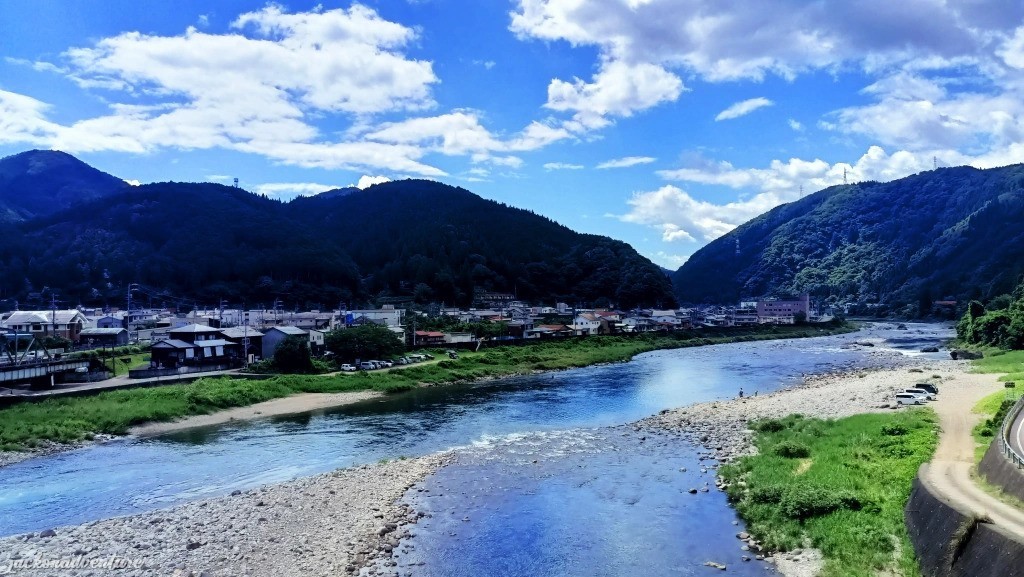
Known as the Water City thanks to its pristine waterways, fountains and canals, Gujo plays an important role in the life of the local community. The water rushing through these small waterways can be seen and heard while walking through the town as it serves as a reminder of the town’s heritage and a testament to its resilience and survival.
This “off the beaten path” town has preserved many traditional ways of life that can only be found here including indigo dyeing, silk weaving and dyeing. The town is also renowned for its summer Odori dance festival where visitors can experience the traditions that is still very much celebrated today. This rural part of Japan is dotted with many small museums, galleries, 4 shrines, 13 temples and Zen gardens and shrines, earning Gujo Hachiman its “Little Kyoto” nickname.
Best Time to Visit

Gujo Hachiman is popular for its sakura trees and is beautiful to visit in the spring. The castle and Jionzenji Temple are surrounded by maple trees which makes autumn the best season for viewing. The annual autumn Maple Leaf Festival (Momiji Matsuri) is held in November and includes tea ceremonies and koto demonstrations in a colorful setting overlooking the town.
If you want to experience one of the largest Bon Odori Festivals, summer will be the time to come and join this festival. It is held from July to September with the main event in mid-August that lasts for 4 days from dusk to dawn. In the winter, the castle and its surroundings will turn into a fairy tale wonderland when the town is covered in snow.
Getting There
From Nagoya
Known as the gateway to the Japanese Alp, Nagoya is the perfect base for an easy trip to Gujo and is reachable by train or highway bus.
The highway bus departs either from Meitetsu Bus Center or JR Nagoya Station to Gujo Hachiman Interchange and the journey takes at least 2 hours. At the drop-off point, you have to cross Nagara River and take a 30-minute walk into the town. Although taxis are limited in town, you can get to the town by taxi for less than 1,500 yen and takes 15 minutes to reach.
There is also the Takayama Line train direct from the Nagoya JR Station to Mino Ota via Gifu. Then, make a transfer to the Nagaragawa Railway to reach Gujo Hachiman Station. The journey takes about 2 hours 45 minutes including transfers but offers many scenic views of the countryside and Nagara River.
From Tokyo, Kyoto and Osaka
First, take the JR Tokaido Shinkansen train from Tokyo Station, Kyoto Station or Shin-Osaka Station to Nagoya Station. The journey takes between 45 minutes to 2 hours.
Then, transfer to the JR Takayama Line to Mino-Ota Station and change to the 70-minute local train or 40-minute Nagaragawa Railway’s JR Limited express train to get to Gujo Hachiman. The alternative option is take the Highway Bus
Getting Around
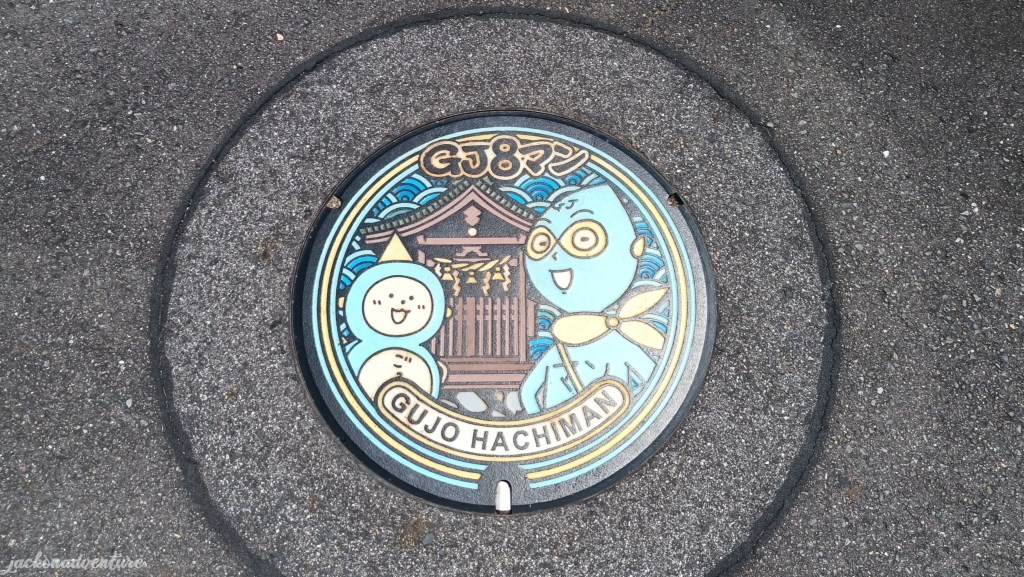
Gujo Hachiman is best experienced on foot and can easily walk just about anywhere in the town. There are free self-guided walking tours which include a full set of detailed guidelines and a detailed map from the tourist information center. You can walk through many alleyways and footpaths to explore the shops, temples and shrines. The trail to the Gujo Hachiman Castle is accessible by walking through a road path to the top of Shiro Mountain.
The Best Activities for A Day Trip to Gujo
Gujo Hachiman is one of the perfect day trips from Nagoya as it is the gateway to the Japanese Alps. The town is home to a hilltop castle, traditional-style wooden houses, temples and shrines that were built during the town restoration in 1667. A walk down the streets of this castle town unveils one of the best-preserved ancient places in Japan and is left untouched by many tourists.
Stop by Sogi Sui Shrine
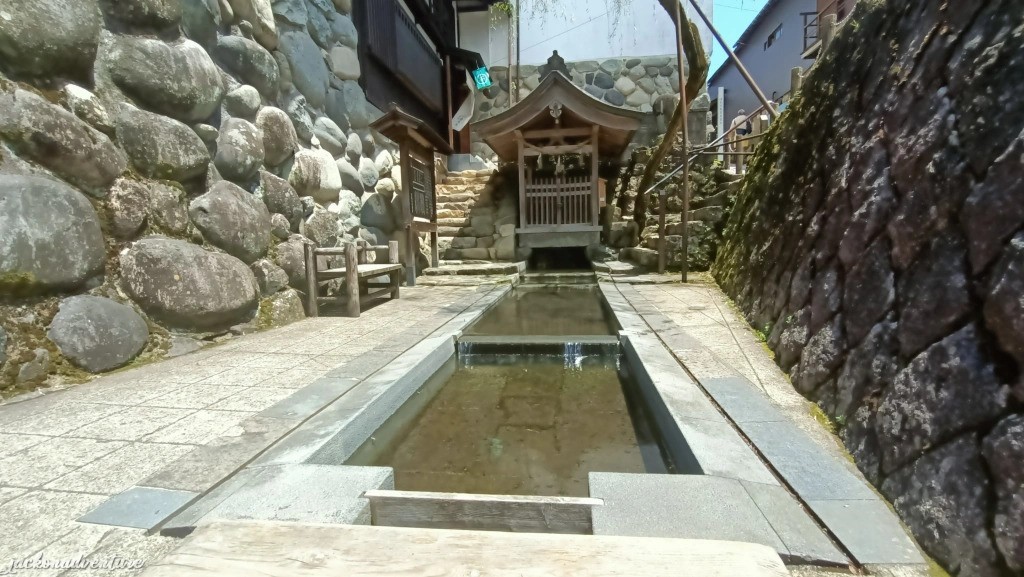
Ever wonder why Gujo Hachiman is known as the “Water City”?
Sogi Sui is one of the places where it all started as the source of Gujo’s water system from the natural spring beneath the earth. It is divided into 4 pools that are used for various purposes. The first pool is used for drinking, the second is for washing rice, the third is for washing vegetables and the last one is for cleaning tools. The water is also used for making sake.
The shrine and the water spring look small but are recognized as one of Japan’s 100 Remarkable Waters by the Japanese Ministry of Environment for its ecological and historical significance.
Treat yourself with Sougian Parfait
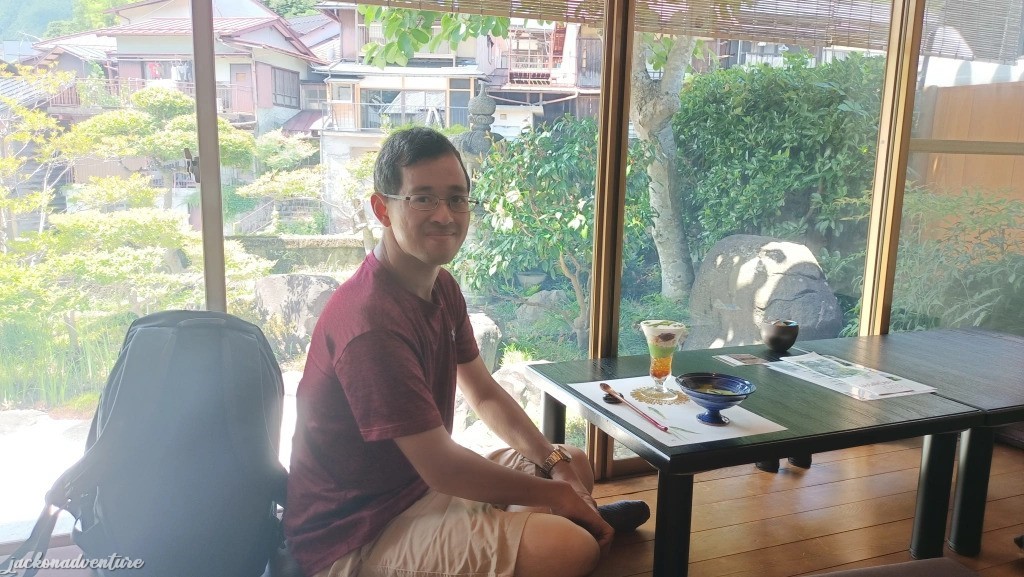
Enjoy a sweet treat at Sougian Matcha next to Sogi Spring overlooking the clear stream. Designed with a Japanese-style setting, Sougian Matcha is a cozy cafe that sits at the edge of the veranda with a beautiful outdoor rock garden planted with Japanese maples and forest moss.
Their speciality here is their Sougian Parfait served with various ingredients according to the season. This sweet dessert is layered with Kuromitsu, Hojicha jelly, green tea pudding, brown rice puff, specialty fresh cream and rich Matcha ice cream.

The Sougian Parfait is topped with Matcha powder that is well-crafted with a wonderful presentation of a Gujo Odori dancer, a symbol of Gujo’s traditional dance festival held in July and August. It is so pretty that make you don’t want to ruin the dessert!
Location: 862-10 Hachimancho Honmachi, Gujo
Opening Hours: Daily from 11 am to 5 pm except Wednesday
Be ‘WOW’ by the food replica at Sampuru Kobo
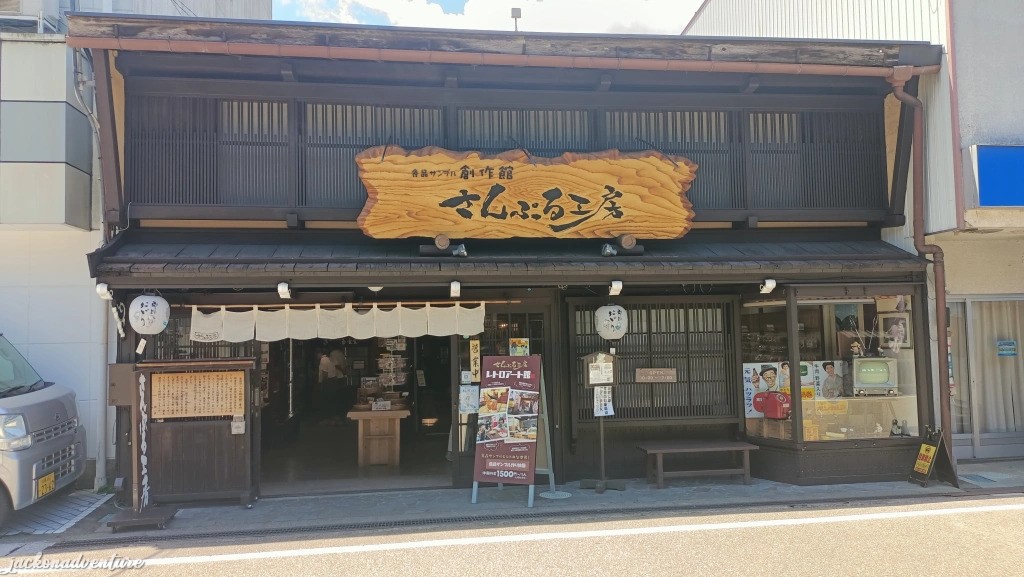
If you have been traveling in Japan and dining in at many restaurants, cafes and izakayas, you have seen those real-looking fake food displayed at their glass windows. They look so real that make you crave for their food.
Commonly referred to as the “Fake Food Capital of Japan”. Gujo Hachiman is home to sampuru-making (Japanese fake food) which manufactures and supplies around 50% of food replica samples across Japan. Sampuru Kodo not only sells food replicas but also other atypical products such as earrings, necklaces and hair ties.
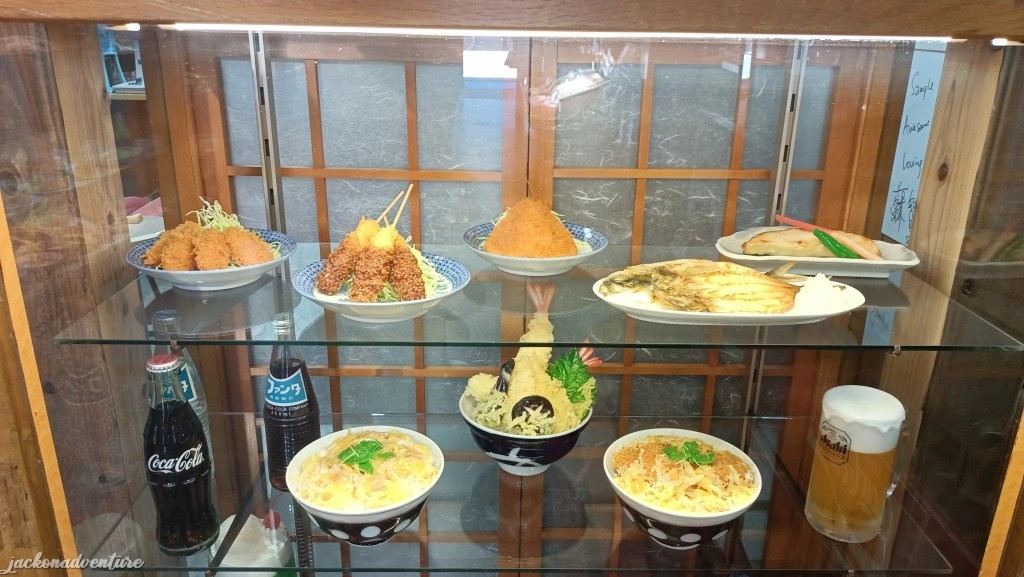
Today, there are about 10 sampuru workshops in Gujo and 4 of them currently offer hands-on programs to let visitors experience the process of making fake food.
Location: 520-1 Hachimancho Shimadani, Gujo
Opening Hours: Daily from 10 am to 5 pm
Drop by Gujo Hachiman Tourist Information Center
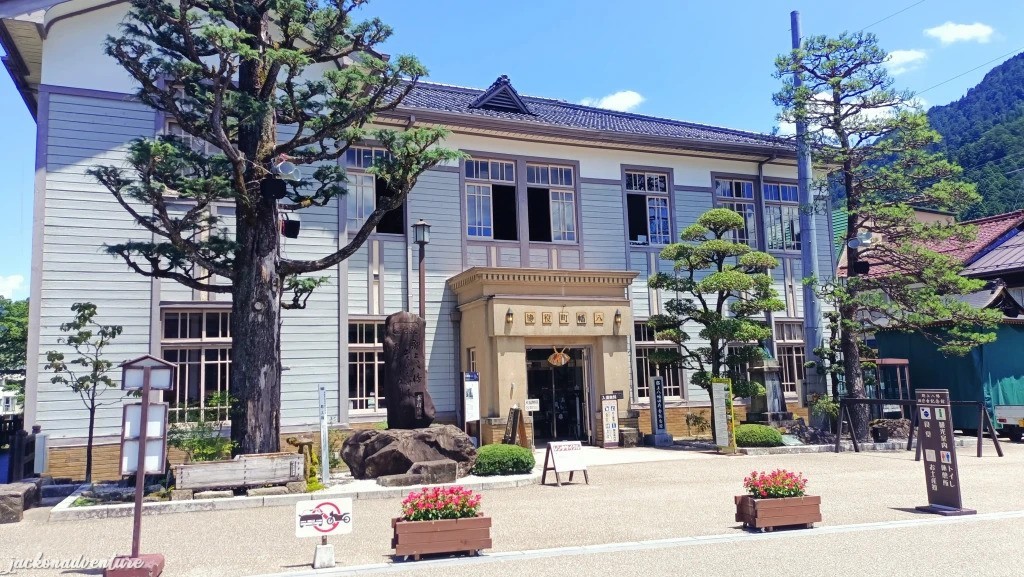
Situated at the heart of Gujo Hachiman, this wooden Showa-era building is home to the Gujo Hachiman Tourism Association and a tourist information center. It was a former Hachiman Government Building Memorial Hall until 1994.
The center is a good place to visit here before you kick start your trip by finding maps and information on local accommodation. There is also a gift shop selling local-made gifts and a small coffee shop that sells teas, coffee and light snacks.
Travel Tips: Before going back to the bus stop at Gujo Hachiman Interchange, you can get the staff to help make a taxi booking and pick you up from Gujo Hachiman Castle Town Plaza to the bus stop.
Feed the koi along Igawa Lane
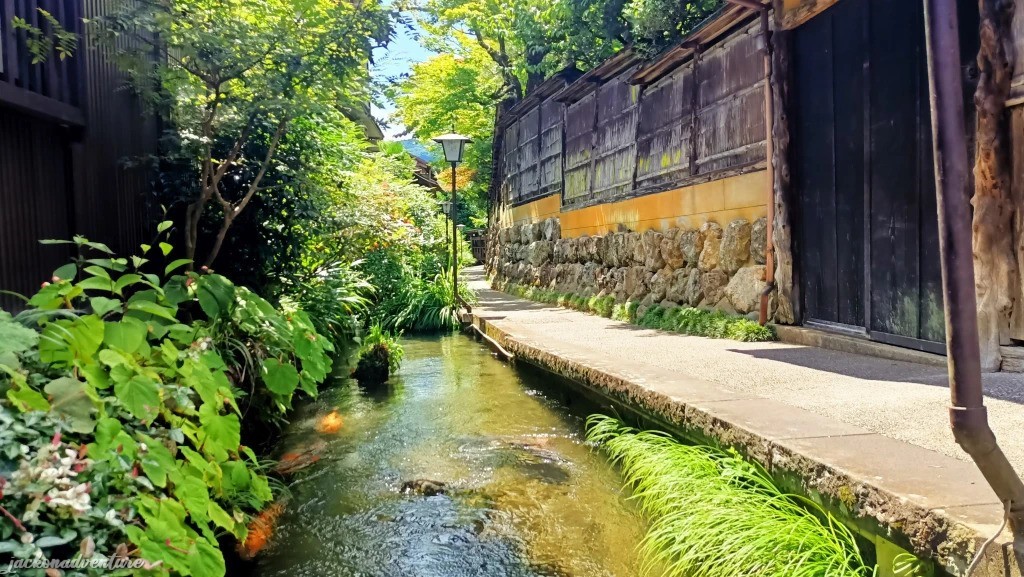
A small alley on Igawa Lane is paved with small pebbles with a canal on its side. The water of the small canal is so clean and fresh that it is filled with koi fish (Japanese carp) that live and swim freely here. I have never seen such enormous koi fish as those in Gujo.
You can drop 100 yen into the wooden mailbox and take a small bag of fish food to feed the koi fish. Probably is the food they eat that makes them grow so large.
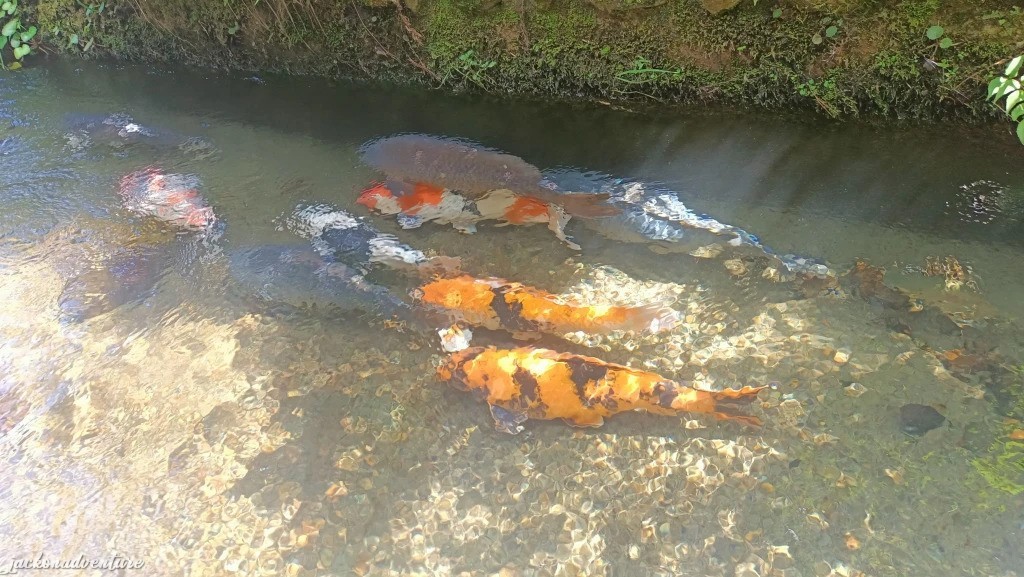
Location: 512 Hachimancho Shimadani, Gujo
Opening Hours: 24 hours
Immerse in the enchanting Jionzenji Temple
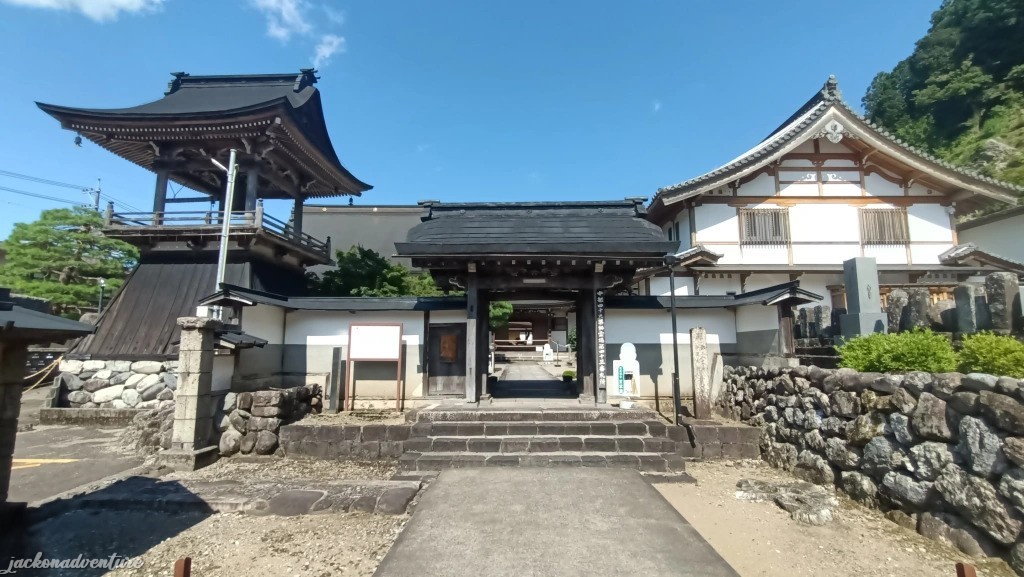
Founded in the 16th century, Jionzenji Temple (慈恩禅寺) is a family temple of the local feudal lord. The temple contains the mausoleums of four former lords.
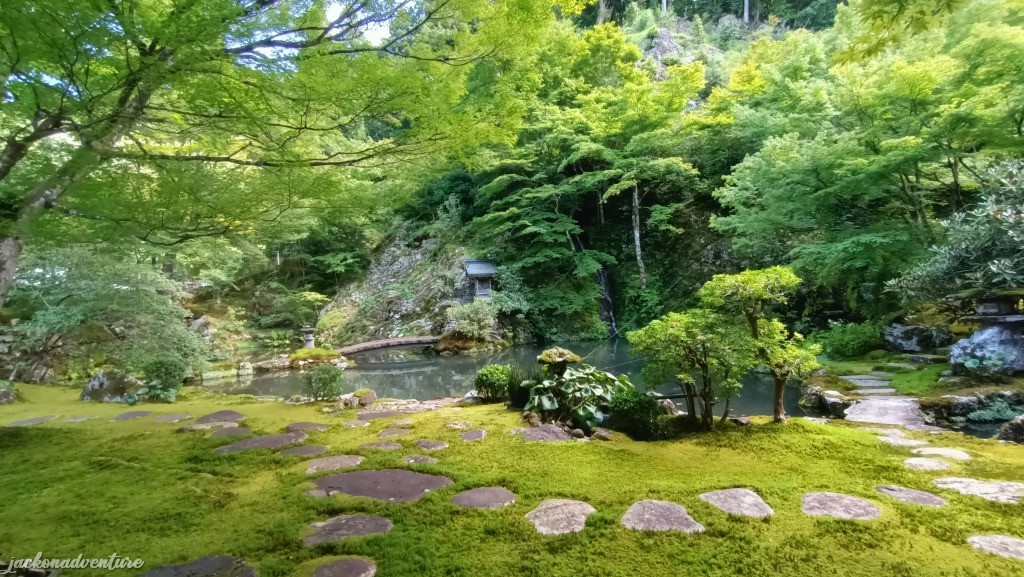
Jionzenji is extraordinary because of its stunning Zen garden designed by a priest. The garden features a pond, waterfall and many maple trees. Although it is classified as a “strolling pond garden”, it is not open for visitors to enter but can sit on the tatami mat to admire the beauty of the garden and enjoy some Zen time (if you’re alone here).
Location: 339 Hachimancho Shimadani, Gujo
Opening Hours: Wednesday to Monday from 10 am to 4 pm
Entrance Fee: 500 yen
Crossing the Shinbashi Bridge

Shinbashi offers one of the breathtaking panoramic views of the traditional wooden buildings with a mountainous backdrop. Rickshaws frequently pass along the bridge carrying passengers. A historical atmosphere with the sound of the gushing Yoshida River makes a magnificent picturesque of the countryside.
During summer, locals will spend time relaxing and swimming in the ever-flowing fresh water to cool off the heat. Sometimes, young children can be spotted braving themselves by jumping off the bridge into the river.
Visit the ancient Anyoji Temple
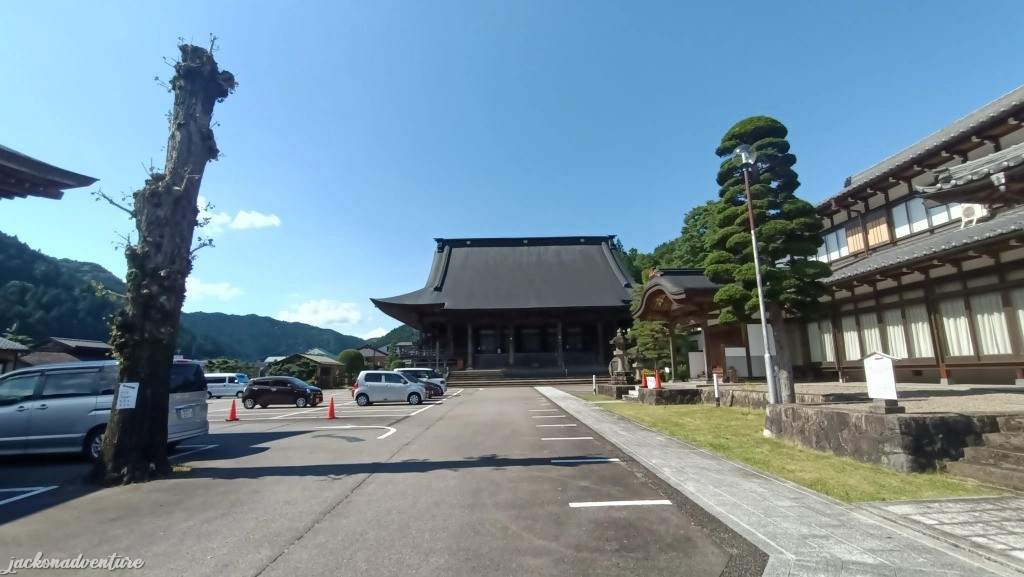
Established by Suzuki Takashige in 1256, the Anyoji Temple is the largest wooden building in Gifu Prefecture. This Buddhist temple has a treasure house that stores important artifacts.
Location: 217 Hachimancho Yanagimachi, Gujo
Explore Gujo Hachiman Castle
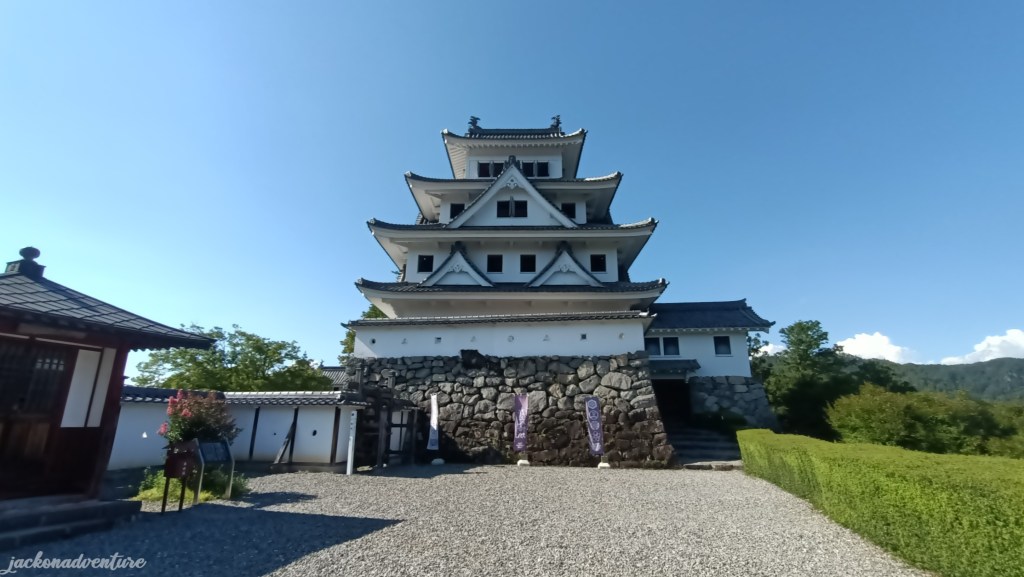
Perched 350 meters on the top of Mount Hachiman, Gujo Hachiman Castle (郡上八幡城) was originally built in 1559 by feudal lord Endo Morikazu but was demolished during the Meiji Restoration in 1870. The hillside location of the castle was chosen not only because of its incredible lookout but also due to its surrounding rivers that serve as a natural moat to defend the castle. It is home to 19 generations of feudal lords and their families for over three hundred years.
The castle that is seen today was reconstructed in 1933 with wood rather than concrete which retains the typical construction of a most original Japanese castle. However, its interior design isn’t its original design.
The castle is sometimes hidden behind a blanket of mists. It’s not hard to see why it is called “The Castle in the Sky”.
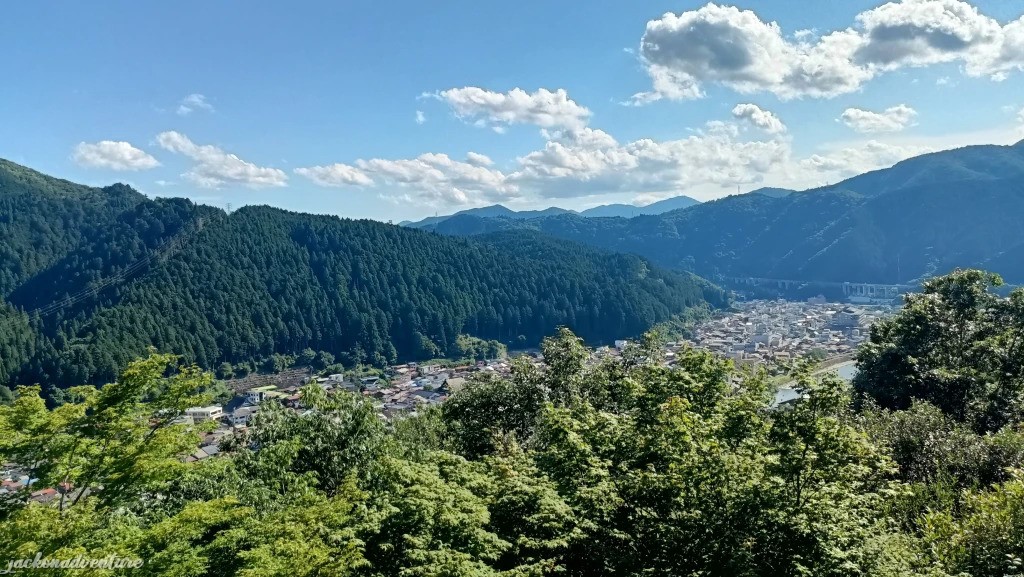
Take a 20-minute easy hike from the foot of the hill to the top and be rewarded with 360° breathtaking panoramic views of the whole town and the Yoshida River below. Come during the autumn leaf season in early to mid-November to experience the Momiji Masturi or Maple Leaf Festival.
Location: 659 Ichinohira, Yanagimachi, Yahata-cho, Gujo-shi
Opening Hours: March to May and September to October: Daily from 9 am to 5 pm/ June to August: Daily from 8 am to 6 pm/ November to February: 9 am to 4.30 pm
Entrance Fee: 400 yen
Wander along the Honmachi Dori

Kajiya Machi and Shokunin Machi are two of the best-preserved streets in Honmachi Dori. It is home to the town’s craftsmen such as blacksmiths, coopers and carpenters. These houses feature workshops on the main floor facing the street with the living accommodation located upstairs.
The water channels running along each side of the street were built in 1660 following a tragic fire in 1652 that burned most of the northern area of the town to the ground. They wanted it to serve as quick protection against imminent fire and water for daily household use. The locals keep these canals clean. Therefore, the spring waters in Gujo are incredibly fresh.
As you walk along the Old Town, you will notice black or red fire buckets hanging outside their houses to provide fire relief. Some houses also have Hansho fire bells to warn others in case of fire.
Visit Chokyoji Temple

Chokyoji was established by Endo Yoshitaka as his own family temple in 1601. It is also known as a temple related to Ryosotai who fought against the new government during Meiji Restoration.
Take a self-guided walk along the Yoshida River
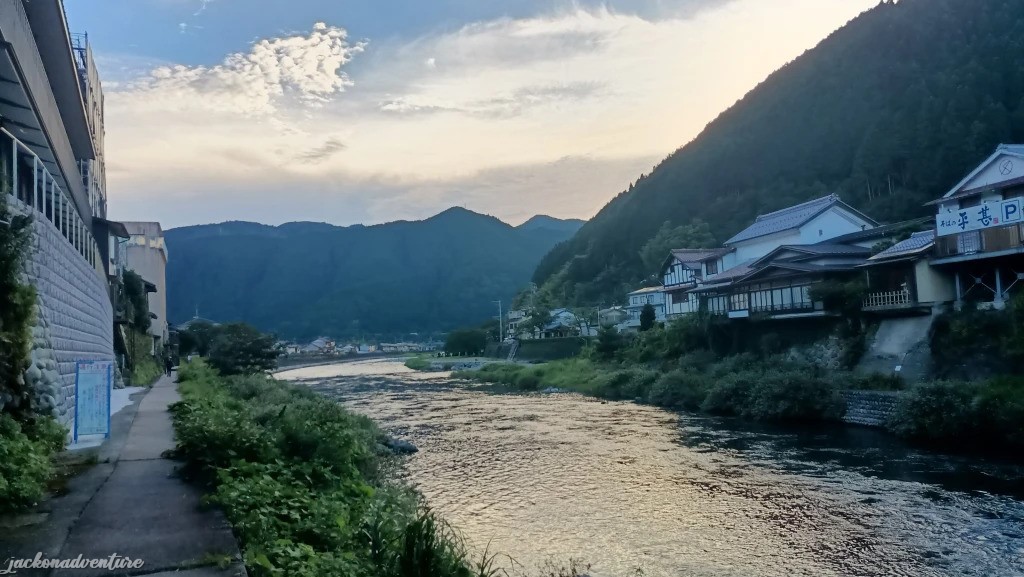
As the sun begins to set, stroll along the Yoshida River to admire the photogenic views of the town with the castle in the backdrop at the top of Shiro Mountain. The crowds slowly faded after 5 pm
Fishermen spend the day catching ayu fish with a fishing rope and occasionally use a temporary bamboo platform built along the flowing river during their breeding season in summer.
Indulge with Gujo traditional cuisine
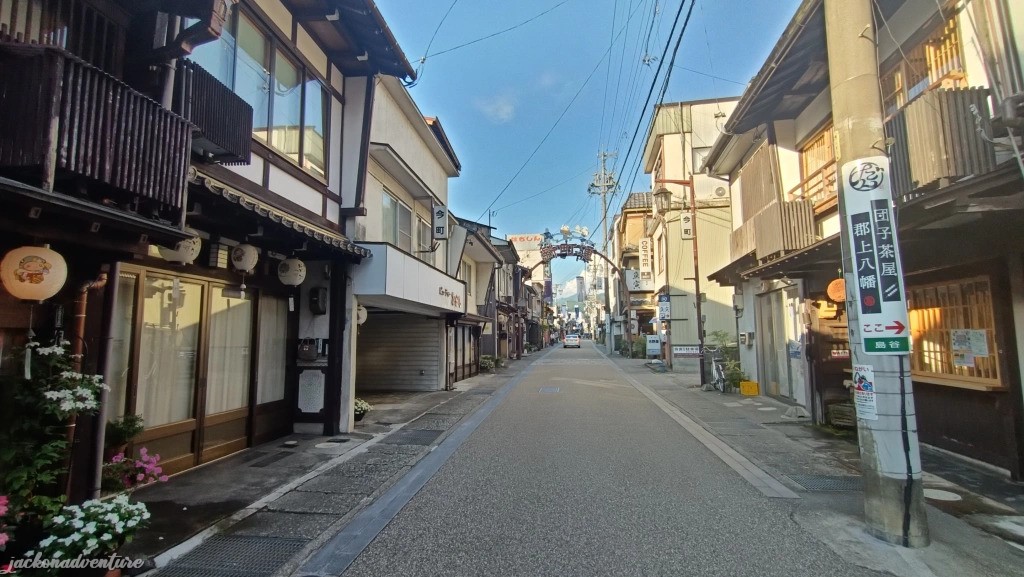
Once the crowds slowly faded away in the evening, the street of Yanaka Lane only a few handfuls of restaurants and izakayas. The eateries are established by local owners passed down from their families.
I have my early dinner at Tonkotsu Ramen Kanmina before taking the bus back to Nagoya City. This highly recommended small ramen restaurant is located a few shops away from Sampuru Kobo. I have their special pork broth miso ramen with stir-fried chicken and six pieces of gyoza. The miso ramen has a very rich flavor and the freshly handmade ramen is tasty.

There are some izakayas serving their freshly-catch ayu fish and usually come in bento set meals. Each set costs at least 3,000 yen.
Location: 501-4226, Hachiman-cho, Gujo-shi, Shinmachi
Coming to Japan Real Soon?
If you like to travel to other parts of Japan, here are some ideas of cities and towns worth visiting with the best things to do. There are also stories about my experience on the Shinkansen train ride and WWOOFing in Japan.
- Tokyo in 2024
- Tokyo in 2023
- Kamakura
- Nagoya
- Nagano
- Takayama
- Ise
- Kumano Kodo
- Okayama
- Hiroshima
- Miyajima
- Mt Fuji
- Kyoto
- Arishayama
- Nara
- Osaka
- Shinkansen Train
- WWOOFing in Japan
Like It? Pin This Article.

 Jack on Adventure
Leave a comment