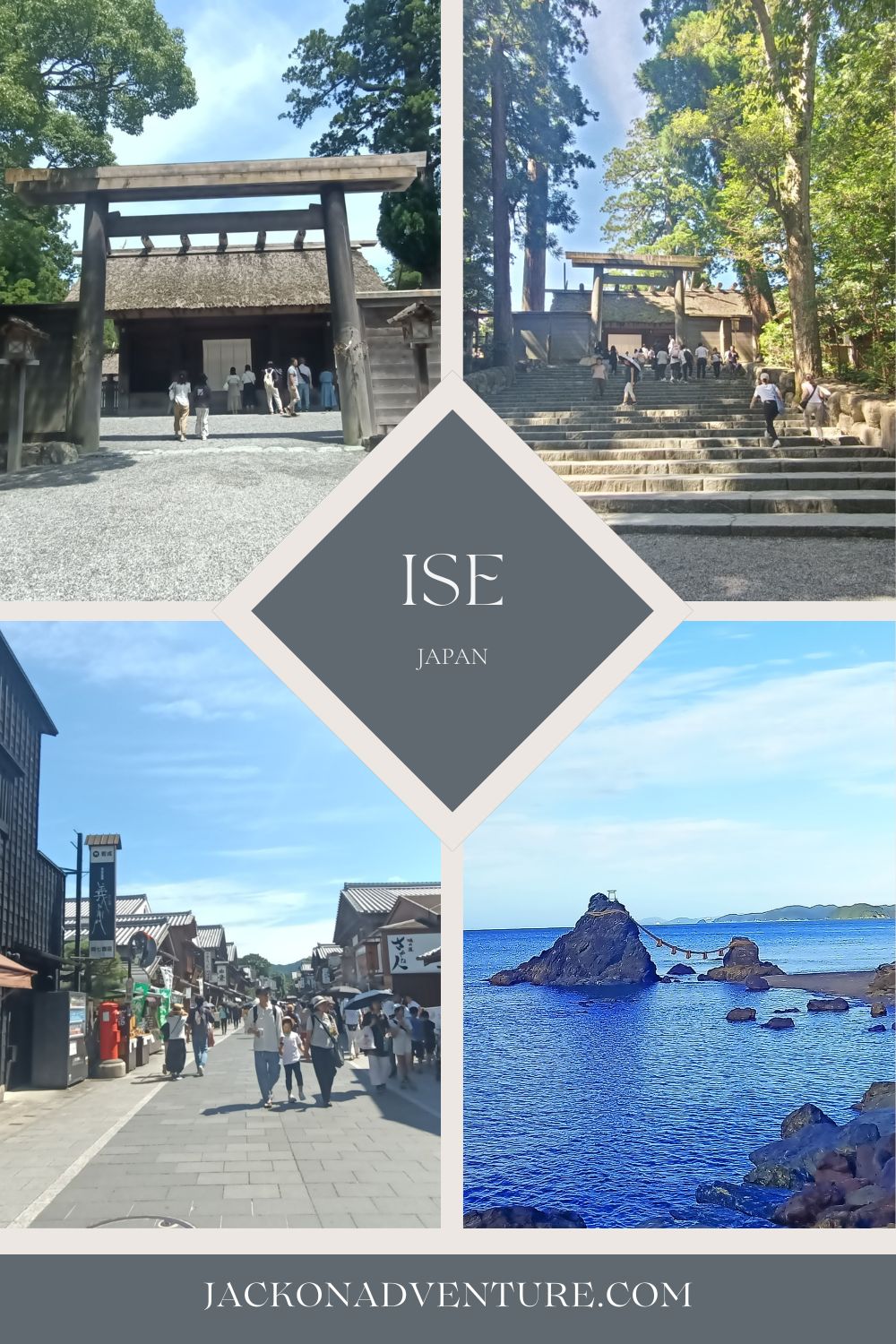
Lies in the central Mie Prefecture on the Shima Peninsular, Ise is home to Ise Grand Shrine, the most sacred Shinto shrine in Japan. The city has a long-standing title called Shinto that literally means “the Holy City” or “the Capital of the Kami“.
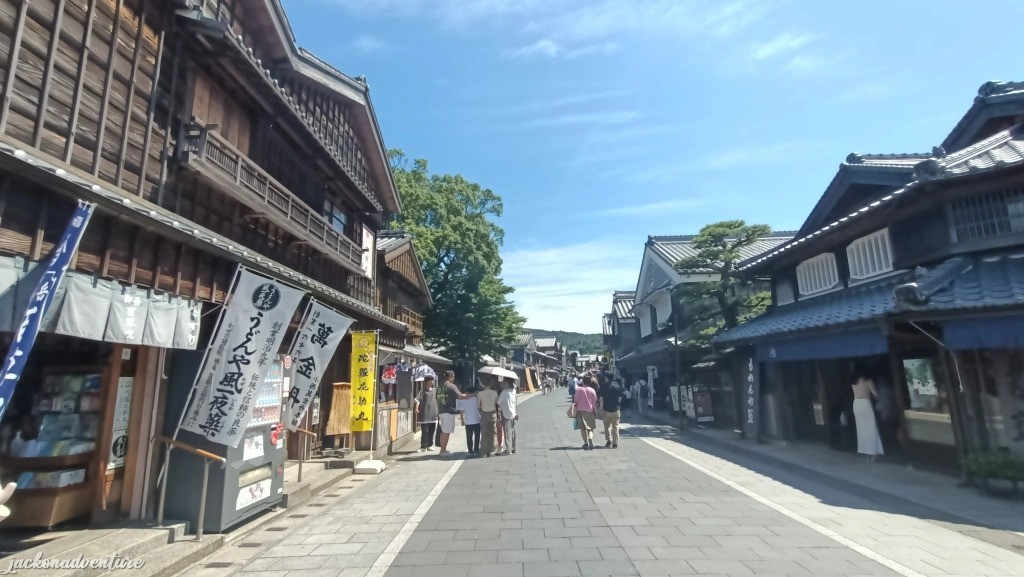
This historical Ise town was a destination for countless pilgrims across Japan to pay their respects at Ise Grand Shrine during the Edo period. It is said that one in every five people at that time made their way to the beautiful Jinja. Many people considered the hardships that they overcame through their journey.
Despite the often long and difficult journeys, the routes to Ise were usually filled with weary travelers who often needed a helping hand. Traveling in the past was challenging because of a shortage of lodging and food as well as the need for authorized permission to venture beyond one’s home area.
Knowing the hardship the pilgrims encountered on their journeys here, the Ise people greeted the exhausted travelers with open arms and gratitude. They believed their kindness and generosity were their humble ways of expressing their gratitude to the deities of Ise Jingu.
There is even a folk song with lyrics that went, in part, “I want to go Ise, I want to see Ise, at least once in my lifetime.” That is why I made this fulfilling and meaningful journey to visit the Ise Shrines.
Best Time to Visit
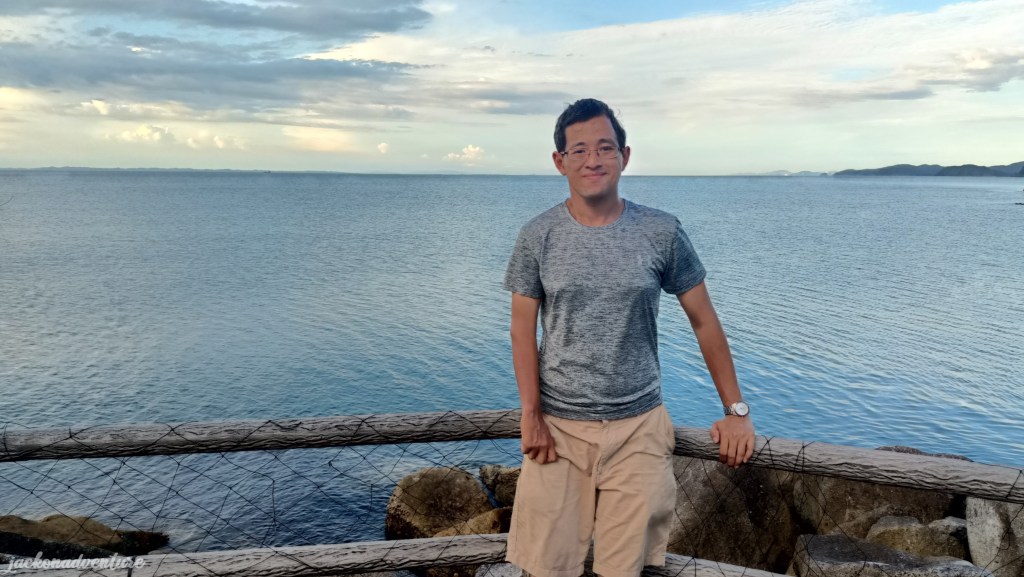
Ise can be visited all year round. However, a sunny day is always the best time to come if you wish to watch the sunrise or sunset at Meoto Iwa in Futami.
Many fireworks shows and summer festivals are held between mid-July and early August. You can experience one of Ise’s cultural festivals such as the Kannamesai and the Ise Matsuri. In winter, the town served some of the best fresh seafood delicacies like oysters and spiny lobsters.
Getting There
By Train
Ise is reachable by a direct “Mie” rapid train from JR Nagoya Station. The train takes 80 minutes to get to Iseshi Station and the one-way journey costs 2,040 yen. There is one train departing every hour and most services terminate at Toba Station. JR Pass holders can use the JR card but need to pay a supplemental fee of 520 yen per one-way onboard the train because it partially runs on non-JR tracks.
An alternative way to get to Ise is by a direct Kintetsu limited express train from Nagoya Station. A one-way ticket is 3,080 yen and all seats are reserved. Many trains terminate at Toba and Kashikojima. The slower express train takes about 100 minutes but costs only 1,740 yen. You don’t need to reserve a seat for this slower express train.
Getting Around
Ise city is easy to get around on foot, the local bus and train. Ise’s Outer Shrine is located in the city center with a 5-10 minute walk from Isesh Station. The Inner and Outer shrines are located 4 kilometers apart and the fastest way to travel between the two shrines is the local bus.
You can take the CAN Bus that connects Ise’s railway stations with most of the city’s main attractions including Ise Shrines and Meoto Iwa Rocks. The “Michikusa Pass” can be purchased at the tourist information center in Iseshi Station for 1,200 yen which gives 1 day unlimited use of the CAN bus and other local buses in the Ise and Toba area.
The Best Activities for A Day Trip in Ise
The charming town of Ise is one of the great day trips from Nagoya. Its deep-rooted culture and history entice many travelers to visit some of Japan’s most sacred Shinto shrines. The appetizing traditional delicacies and stunning natural beauty have captivated visitors to wander this historical place.
Explore Ise’s Outer Shrine
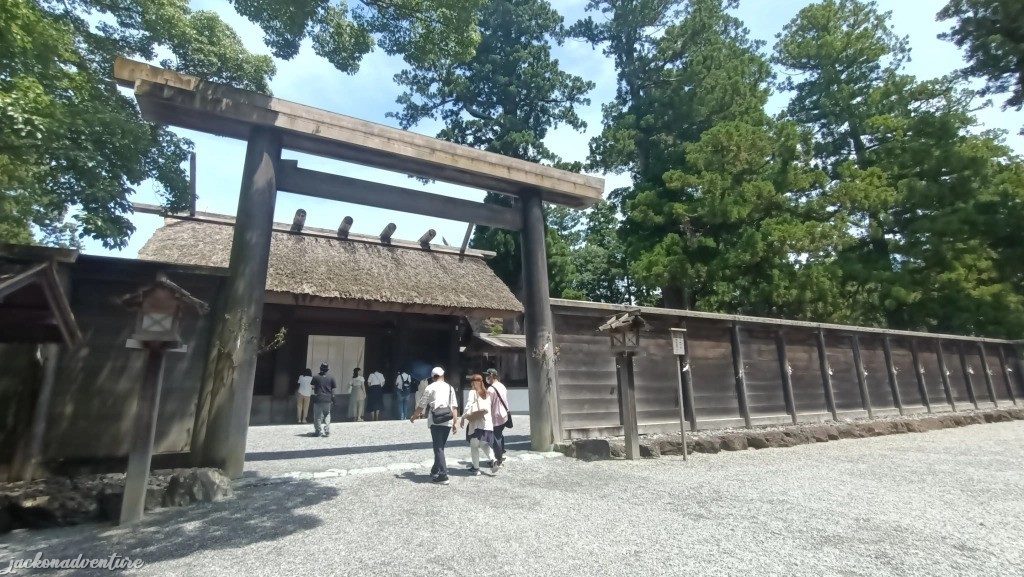
The Outer Shrine or Gekū (外宮) is known as the Toyouke Daijingu, where Toyouke Omikami is enshrined. Toyouke is the Shinto deity and guardian of the three essentials of human life: food, shelter and clothes. The deity provides food for the Sun Goddess, Amaterasu Omikami.
The shrine was founded after Emperor Yuryaku dreamt that he saw Amaterasu. She told the emperor that she was unable to get food and was asked to bring Togukehime from Tanba to help her. It is believed to have been established over 1,500 years ago after the Inner Shrine was built. It was rebuilt every 20 years (the next time in 2033) with an architectural style with less influence from the Asian mainland.
Location: 279 Toyokawacho, Ise, Mie
Getting There: Take a 10-minute walk from Iseshi Station to the Outer Shrine’s entrance.
Opening Hours: January to April, September: Daily from 5 am to 6 pm/ May to August: Daily from 5 am to 7 pm/ October to December: Daily from 5 am to 7 pm
Entrance Fee: Free
Have lunch at Okage Yokocho
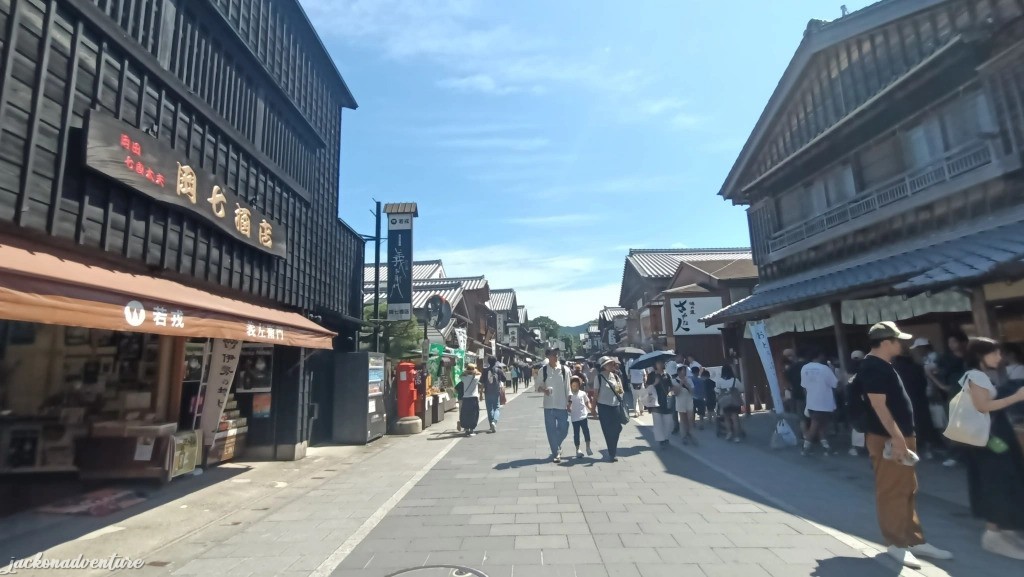
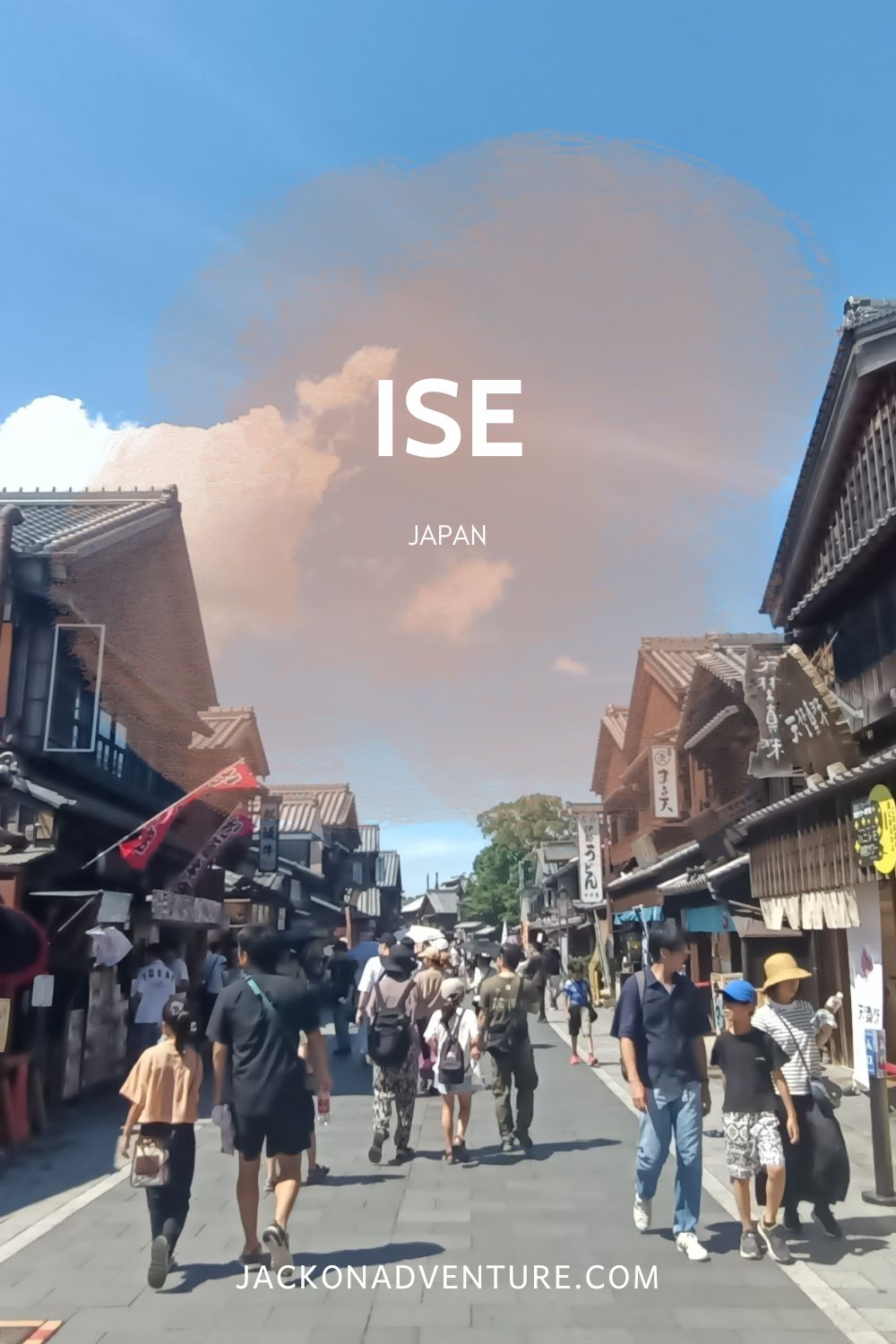
Stretches about a kilometer long, Okage Yokocho or Oharaimachi is packed with restaurants, cafes, confectionery shops, tea houses, handicraft shops and gift stores. There are plenty of traditional gastronomic delights with about 60 establishments. It is fascinating to see the buildings here beautifully lined with nostalgic Edo and Meiji architecture and traditionally built with tsuga pine wood.
It is said that Ise Jingu priests will perform Shinto music, dances and rituals to chase away oharai (evil spirits) for the travelers who experienced hardships along the way. Thus, the name Oharaimachi.

Matsusaka beef is a must-have food as it originated from the Matsusaka region of Mie prefecture. The meat comes from the Japanese black cattle fed under strict conditions. It is highly priced and is one of the three Sandai Wagyu in Japan. Many stores commonly sell the meat as beef skewers but can be eaten in a rice bowl, bone soup, ramen or steak. The juicy meat is irresistibly delicious as it melts inside your mouth.
Location: 52 Ujinakanokiricho, Ise, Mie
Getting There: Take the local bus heading for “Naiku-mae” from Iseshi Station or Ise’s Outer Shrine and get off at “Jingu Kaikan-mae” bus stop.
Opening Hours: The stores are open from 9.30 am to 5.30 pm but are varied depending on the store and season.
Enjoy a sweetened Afatuku Mochi
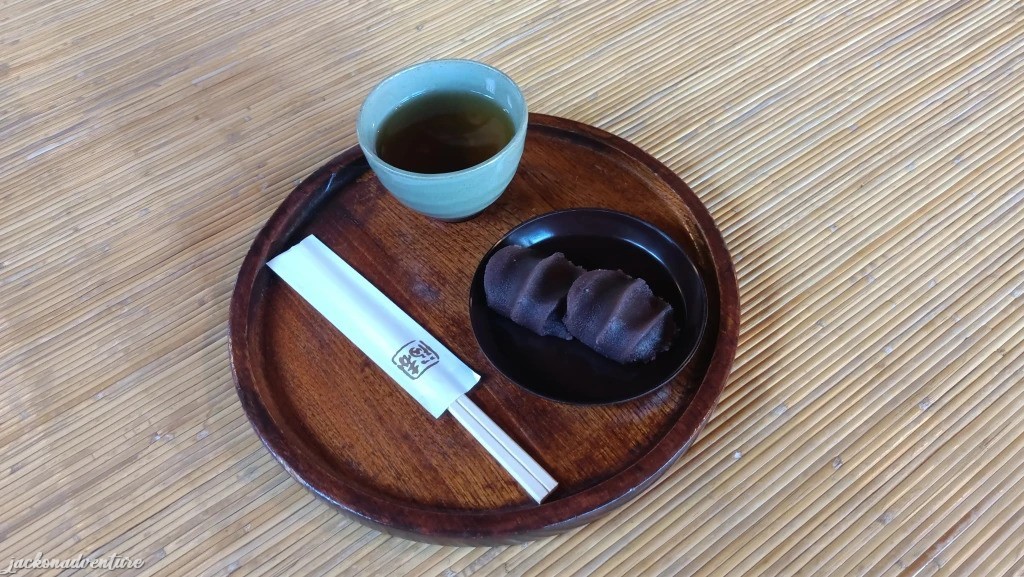
After having your lunch, treat yourself to the sweet Akafuku mochi. Located in the center of Okage Yokocho, Akafuku Honten serves this purple delicacy that has been lovable by many tourists who venture for local desserts.
Akafuku mochi is made of sweet bean paste wrapped with pounded rice cake. It is best to pair with hot green tea. You can enjoy this sticky confectionery inside the store lying with tatami mats and overlooking the wonderful views of the Isuzu River.
Location: 26, Ujinakanokiricho, Ise
Opening Hours: Daily from 5 am to 5 pm
Step into the Inner Jingu Shrine
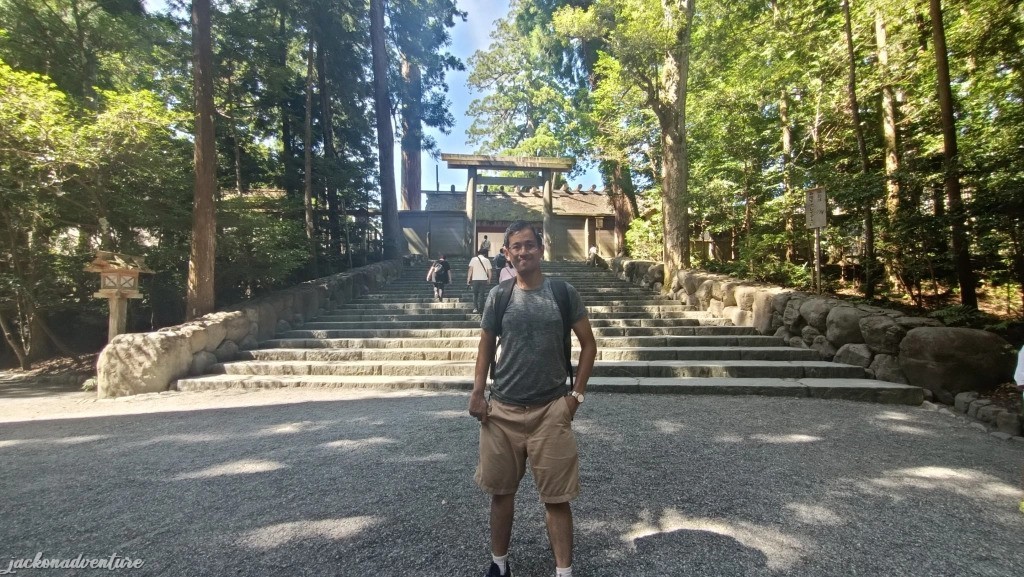
The Inner Shrine or Naikū (内宮) is among the most sacred shrines in Japan. Known as Kotai Jingu, this shrine is dedicated to Shinto’s most revered deity, the Sun Goddess named Amaterasu Omikami. Its main buildings resemble ancient rice granaries.
The shrine is believed to have been established over 2000 years ago. Like the Outer Shrine, the Inner Shrine is built with an architectural style without outside influences and predates the introduction of Buddhism. It is rebuilt from scratch every 20 years, with the next reconstruction (63rd) will take place in 2033.
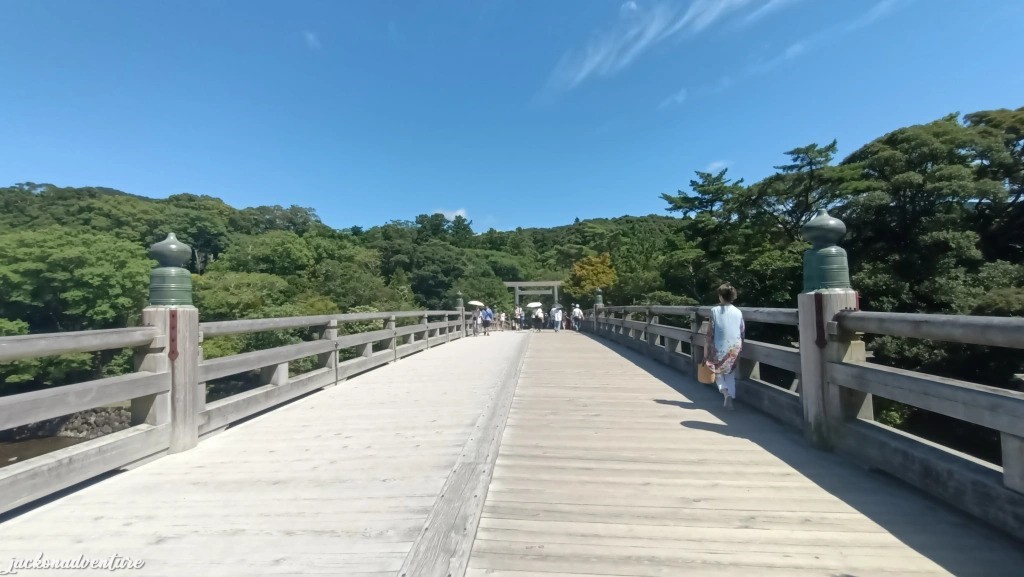
Walk across the 100-meter wooden Uji Bridge and come to the riverside site. You can cleanse and be purified at the Isuzu River before entering the main sanctuary. Then, climb a flight of stone stairs to the main hall where the Sun Goddess is enshrined. You can feel the calm serenity around the shrine ground with tall shady trees
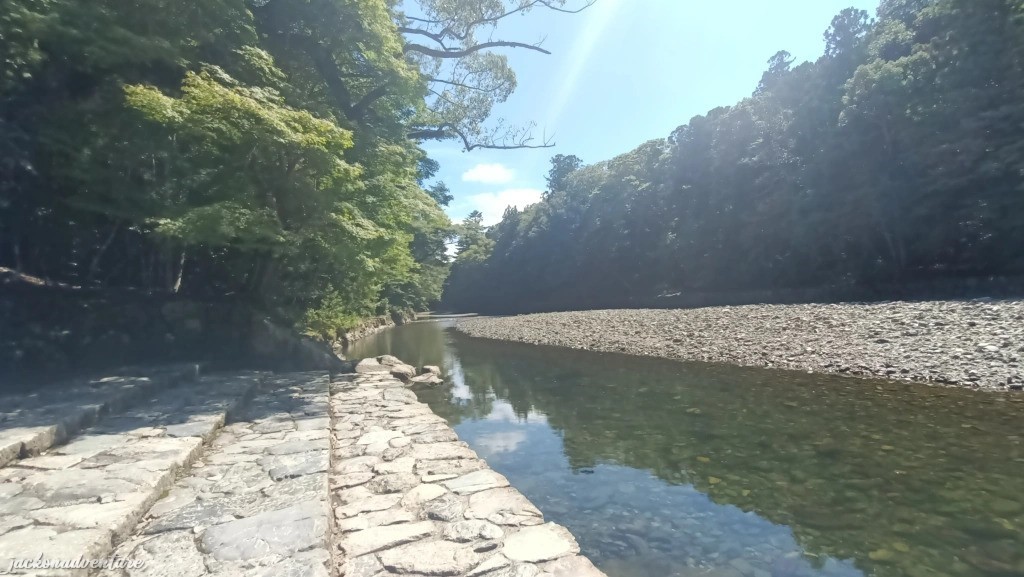
Location: 1 Ujitachicho, Ise, Mie
Getting There: Take the CAN bus No. 51 or No. 55 from Iseshi Station or Geku-mae (Bus Stop No. 2) to Naiku-mae.
Opening Hours: Daily from 5 am to 7 pm
Entrance Fee: Free
Admire the beautiful Meoto Iwa
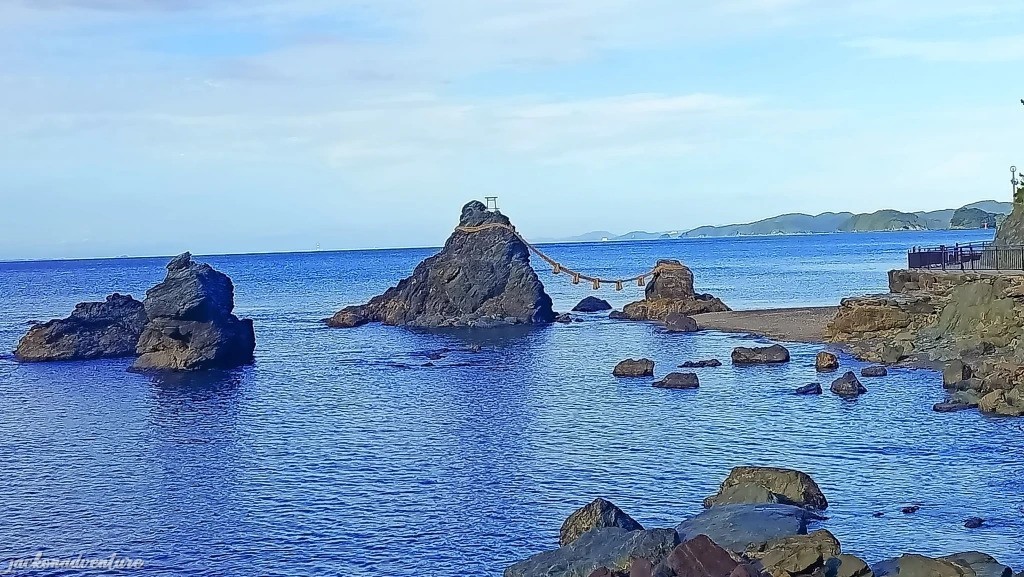
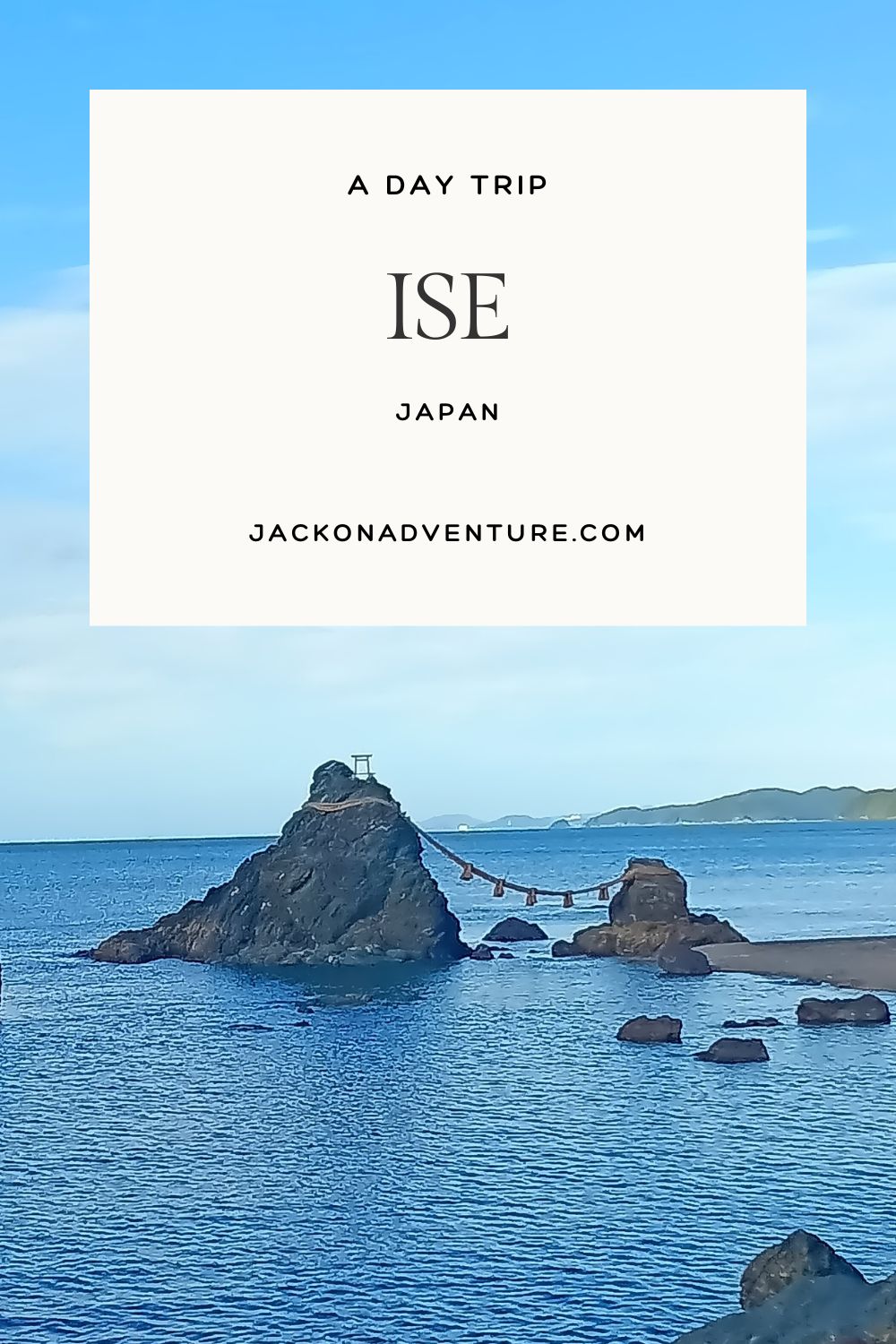
This breathtaking Meoto Iwa or the Wedded Rocks (夫婦岩) caught my attention for its unique landscape in the ocean near Ftami. The larger rock represents the husband and the smaller one represents the wife. Both rocks are joined with a shimenawa rope (a heavy rope of rice straw) representing the union of Izanagi and Izanami deities. The rope is replaced three times a year in a ceremony.
According to Japanese folklore, they birthed the isles of Japan as well as many of the kami (sacred spirit) pantheon. It acts as the division between the spiritual and earthly realms. Many married couples visit the rocks because they represent marriage and the act of creation.
The best time to visit Meoto Iwa is during the high tide when they are submerged with water. If you’re in luck, you can see the sun rising between the rocks at high tide with the silhouette of Mt. Fuji at a distance during good visibility.
Location: 575 Futamichoe, Ise, Mie
Getting There: Take the CAN bus from Naiku-mae Bus Stop No. 1 to Meoto Iwa Higashiguchi Bus Stop.
Opening Hours: 24 Hours
Entrance Fee: Free
Visit Futamiokitama Shrine
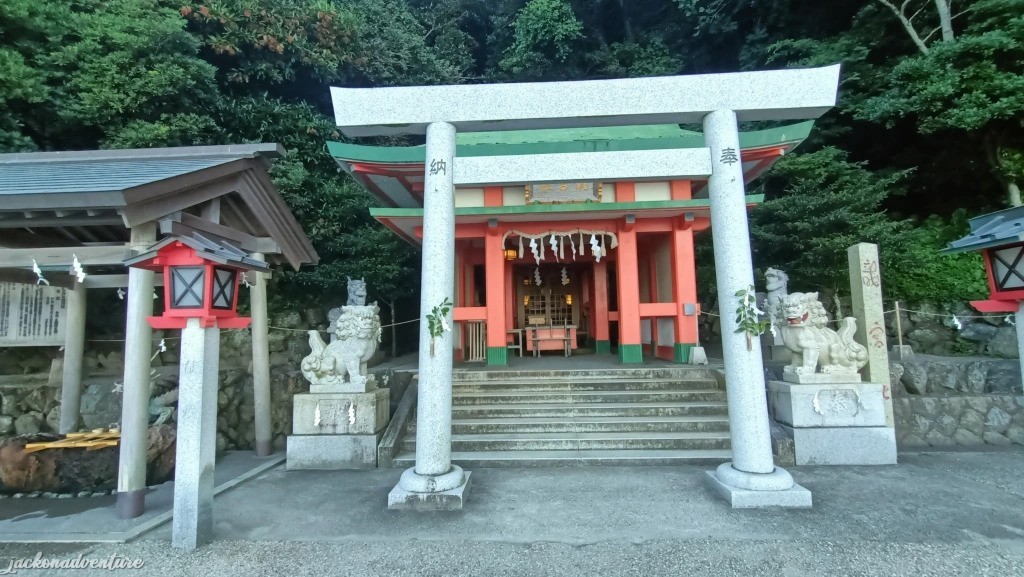
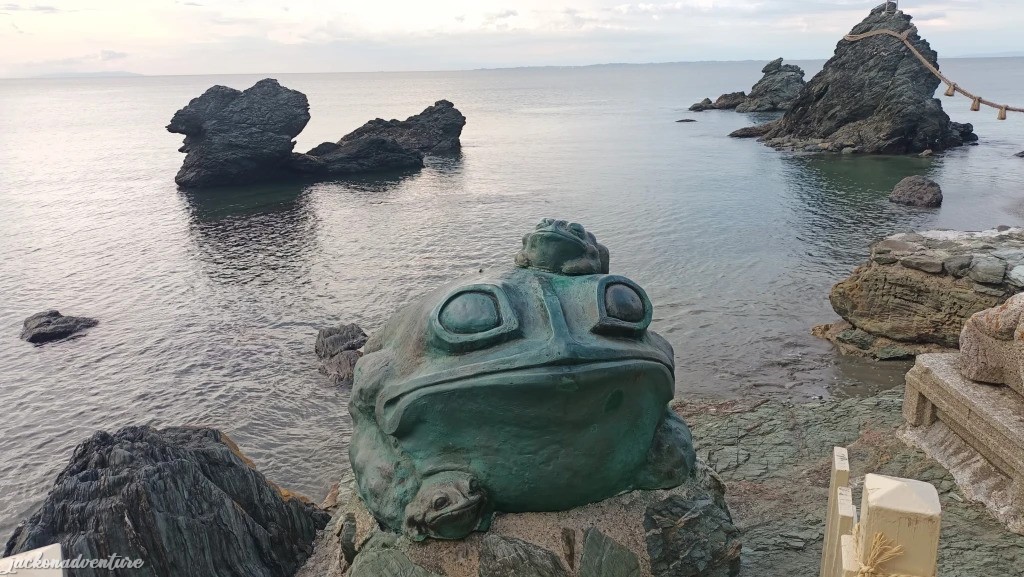
Next to the “Married Couple Rocks” is Futami Okitama Shrine known for its frogs. These frog statues are believed to bring good fortune in returning lost items. The Japanese word for frog is “kaeru”, which shares the same pronunciation as “return.” If you’re waiting for something or perhaps someone to return to you, patting a frog statue will bring some good luck.
Coming to Japan Real Soon?
If you like to travel to other parts of Japan, here are some ideas of cities and towns worth visiting with the best things to do. There are also stories about my experience on the Shinkansen train ride and WWOOFing in Japan.
- Tokyo in 2024
- Tokyo in 2023
- Kamakura
- Nagoya
- Nagano
- Takayama
- Gujo
- Kumano Kodo
- Okayama
- Hiroshima
- Miyajima
- Mt Fuji
- Kyoto
- Arishayama
- Nara
- Osaka
- Shinkansen Train
- WWOOFing in Japan
Like It? Pin This Article.

 Jack on Adventure
Leave a comment