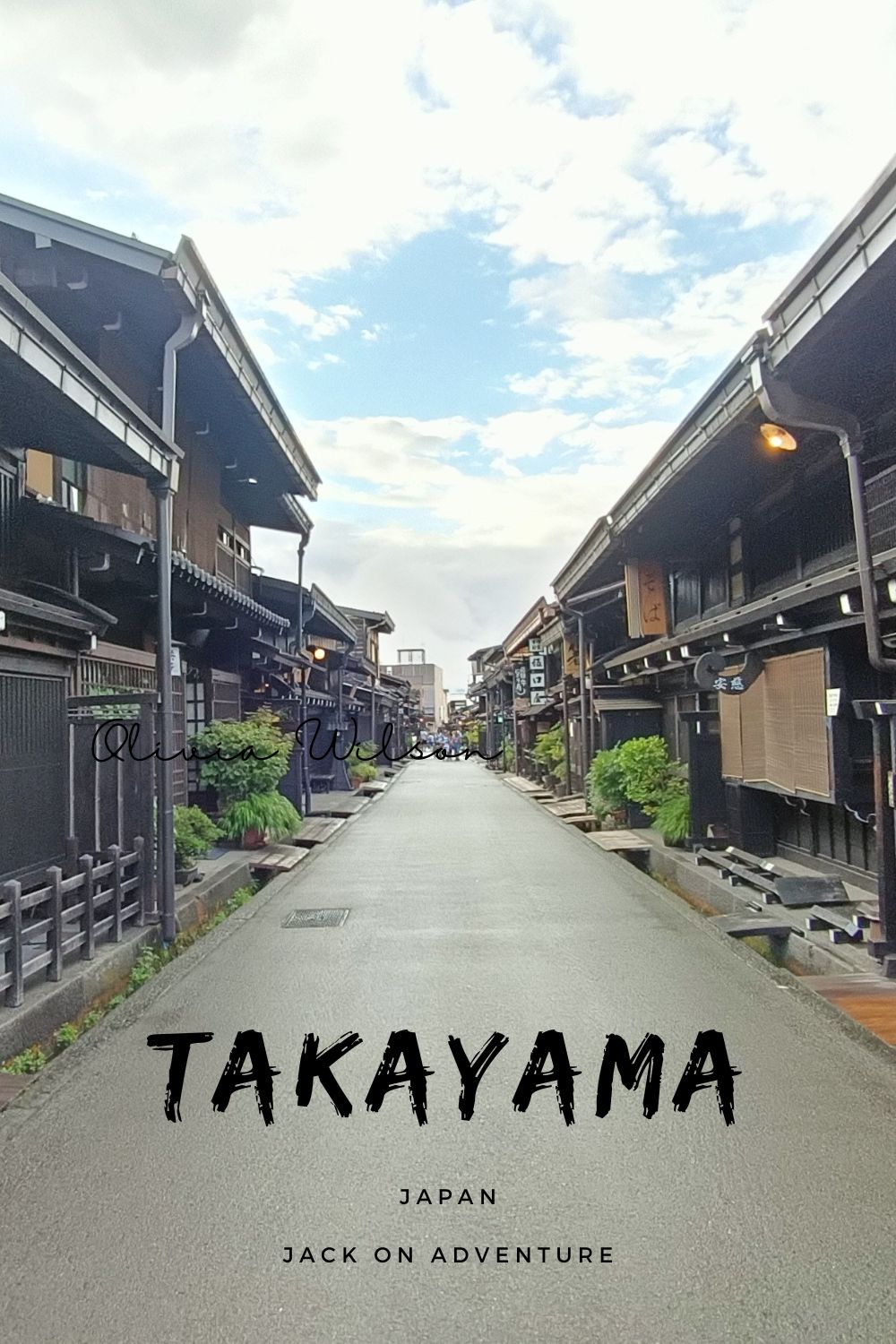
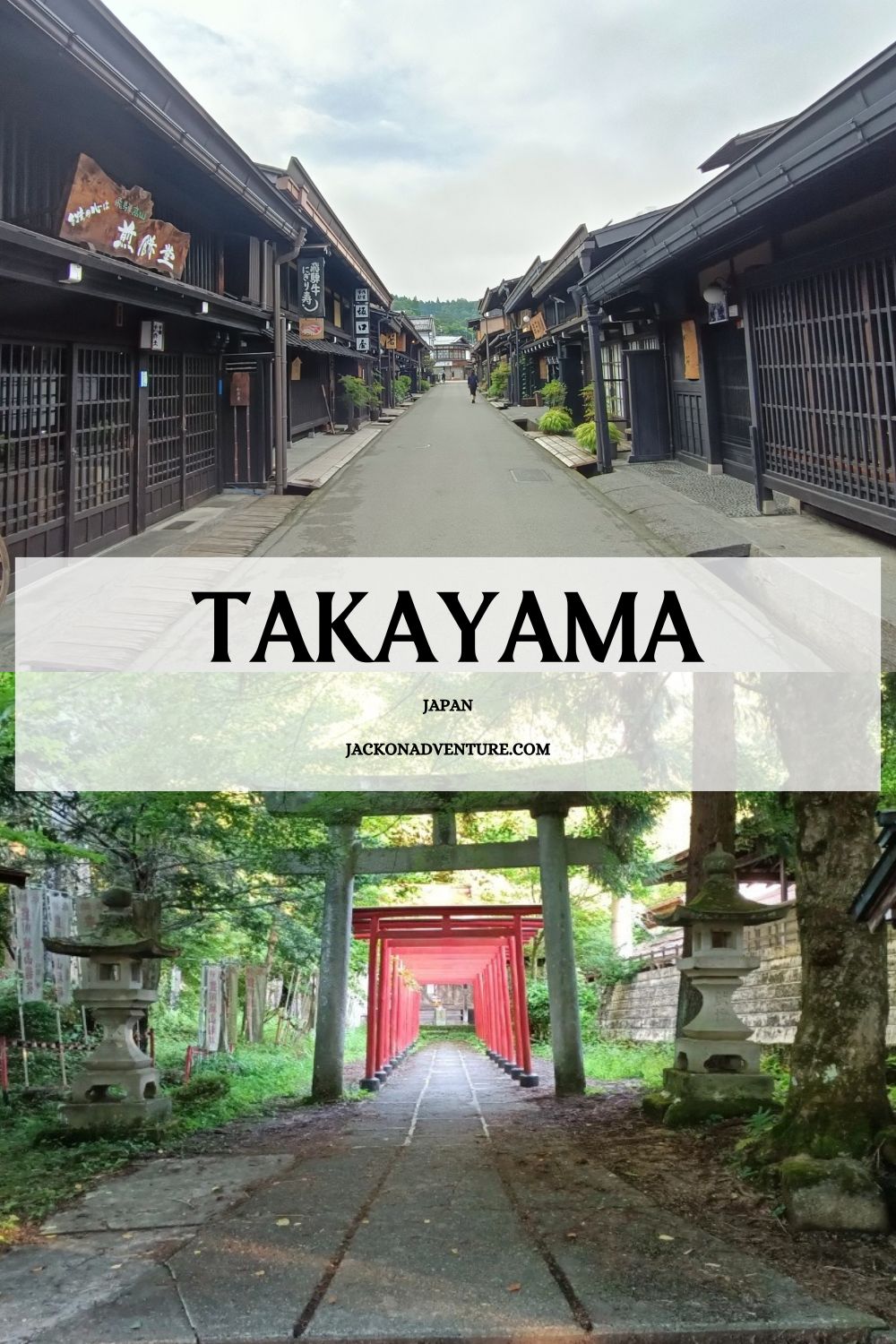
Blessed with rich history and culture, Takayama is nestled in the Hida region of the Gifu prefecture in the Japan Alps. The well-preserved town is known for its historical townhouses, enchanted temples and shrines, famous sake breweries, unique Hida beef and traditional festivals.

Takayama dated back to 400 years ago to the Edo era when it was the center of the timber-producing region in Japan. Once ruled by shoguns and samurai, this charming little town was attracted by large numbers of sake brewery owners, cloth merchants, woodworkers and other craftsmen. It was the last province that joined a unified Gifu prefecture in 1876.
History buff can take the popular Higashiyama Walking Course to admire many impressive temples and shrines. These places of worship originates in the 16th century when a feudal lord named Nagachika Kanamori established the castle town by relocating the buildings to the east side of the castle.
Often referred to as “Little Kyoto”, Takayama is one of the best places to experience authentic Japanese charm that will leave you enriched. As you cross the bridge over the Miyagawa River to Sanmachi Suji, you will feel the presence of the past with hidden gems that give absolute photogenic views of Takayama.
Best Time to Visit
Takayama experiences the nicest weather of the year during spring in April and May, and fall in October and November. The rainy season falls on mid-June to mid-July but it doesn’t rain daily. It is also a nice time to visit as the temperature will be cooler. Always bring a rain jacket or umbrella just in case.
The summer season falls between August and September and the weather is warm and humid but occasionally wet and mostly cloudy. My 3-day stay in Takayama during summer is a mix of both weather condition. I enjoyed exploring the old district and walking the Higashayama Walking Course.
The weather can get pretty cold and snowy in the winter, with 1 meter or more of snow piled up every month! Due to its higher altitude, the average low temperature in January and February can reach down to -5 C.
Getting There
From Nagoya
Nagoya is the closest city to Takayama and is reachable either by JR Shinkansen train or expressway bus. The JR Wide View Hida train departs from Nagoya Station and arrives at Takayama Station, which takes slightly more than 2 hours. The train is covered under the JR Rail Pass and seat reservation is recommended especially when traveling during holidays, festive seasons and weekends.
If you opt for more budget transportation, you can take the expressway bus operated by Willer bus company. The bus usually takes slightly more than 2 hours depending on the traffic. The service is pretty frequent as the buses depart from JR Nagoya Station to Takayama Nohi Bus Center next to the train station.
From Nagano
Nagano is located northeast of Takayama and is reachable by train and highway bus. You need to take the Shinano Shinkansen train from Nagano Station to Matsumoto Station. Then, transfer to a highway bus from the bus terminal at Alpico Plaza opposite the train station. The bus will drop off the passengers at Takayama Nohi Bus Center.
I took this route when traveling from Nagano to Takayama. The journey was very straightforward without any hassle. It saves me some time and money without traveling back to Nagoya city and taking a highway bus to Takayama.
From Tokyo and other cities
If you’re traveling from other cities in Japan, you can take the Tokaido-Sanyo Shinkansen train to Nagoya Station. This line is connected with big cities including Tokyo, Kyoto, Osaka, Hiroshima and Okayama. Then, make a train transfer for the Hida Shinkansen train to Takayama. You can use the JR Pass for the entire journey.
Getting Around
Takayama is filled with many historical landmarks, great food, stunning natural landscapes and friendly neighborhood. It is easy to navigate around this charming town on foot with most tourist sites located close with each other in the renowned Sanmachi Suji district.
The Higashiyama Walking Course tucked in the upper level of Takayama is just a 15-minute walk from the east of Sanmachi Suji district. The 5.5-kilometer trail is well-marked and it will lead you into many temples, Shiroyama Park and the ruins where Takayama Castle once stood.
The Best Activities for 2 days in Takayama
With so many historic sites dotted around Takayama, it is best to spend 3 days and 2 nights to explore the beautiful well-preserved wooden houses, shops, cafes and morning markets. While Japan is always famed for Wagyu beef, you can savor yourself with Takayama’s very own popular Hida beef as well as sampling some of the locals’ best sakes. You can go temple-hopping in the early morning or late evening along the Higashiyama Walking Course.
Step back in time to Sanmachi Suji
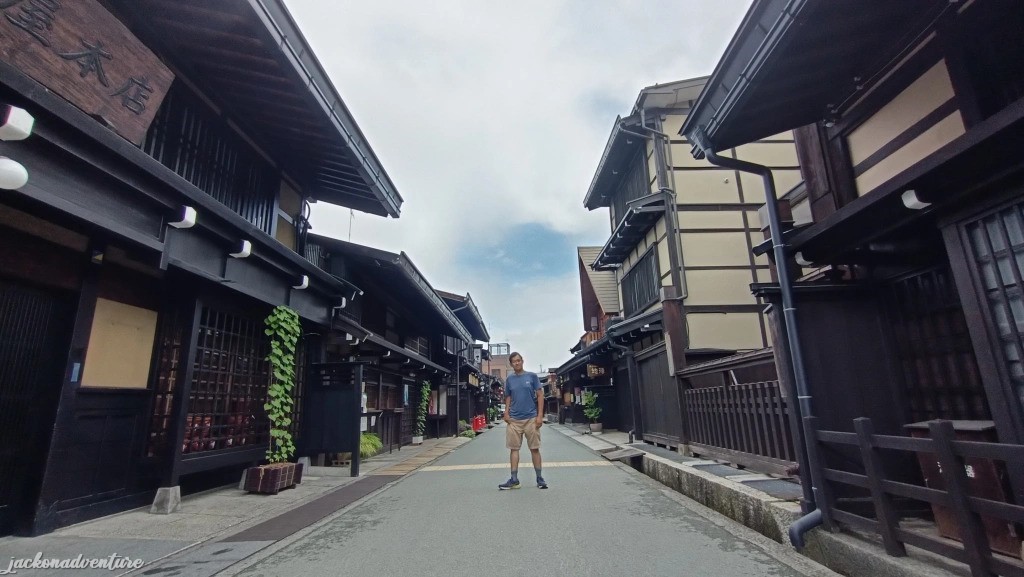
Walking down the preserved Sanmachi Suji district will be the highlight of Takayama trip. It is home to the remarkable well-preserved cypress and old merchant houses dating from 1600-1868 in the Edo era.
You can easily lose track of time and spend hours soaking the local vibes along the network of three long and narrow pedestrian lanes called Ichi-no-machi, Ni-no-machi and San-no-machi. Many craftsman stores, restaurants, teahouses, sake breweries and gift shops have been open for over 400 years.
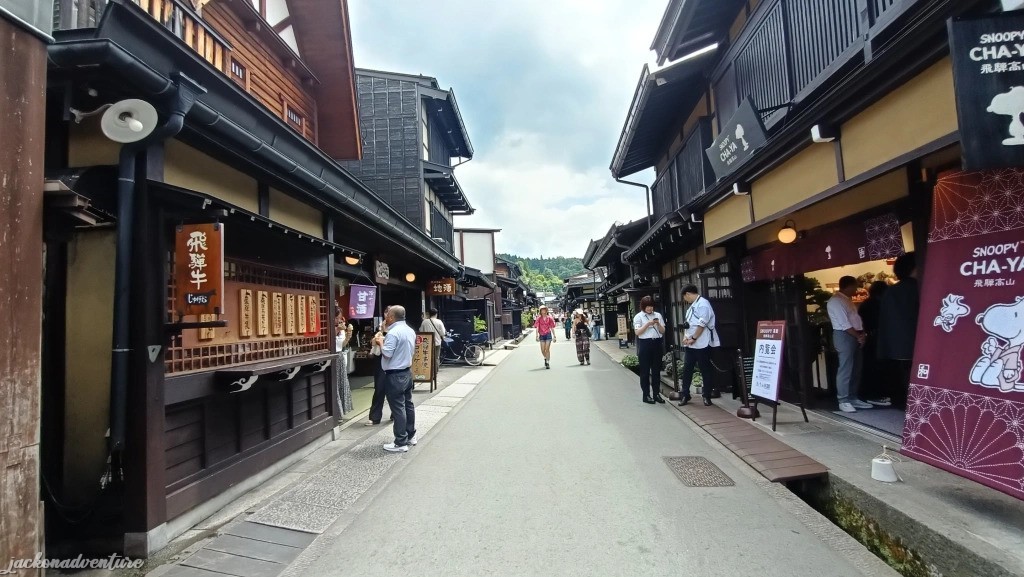
During the Edo period, there was an increase in trade as well as money and credit rather than the use of barter system. Takayama was famous for its high-quality lumber and carpentry. Their production and work expertise have contributed to the construction of the historic two-story merchant houses with the aged wood and sliding doors today.
Once the shops close and crowds disperse in the evening, it’s much easier to picture this town hundreds of years ago. Otherwise, wake up as early as 6 am to wander the ancient streets to get the historical feel.
Location: 20 Kamisannomachi, Takayama
Opening Hours: The opening hours of the shops varied
Get Sarubobo Dolls as Takayama gift
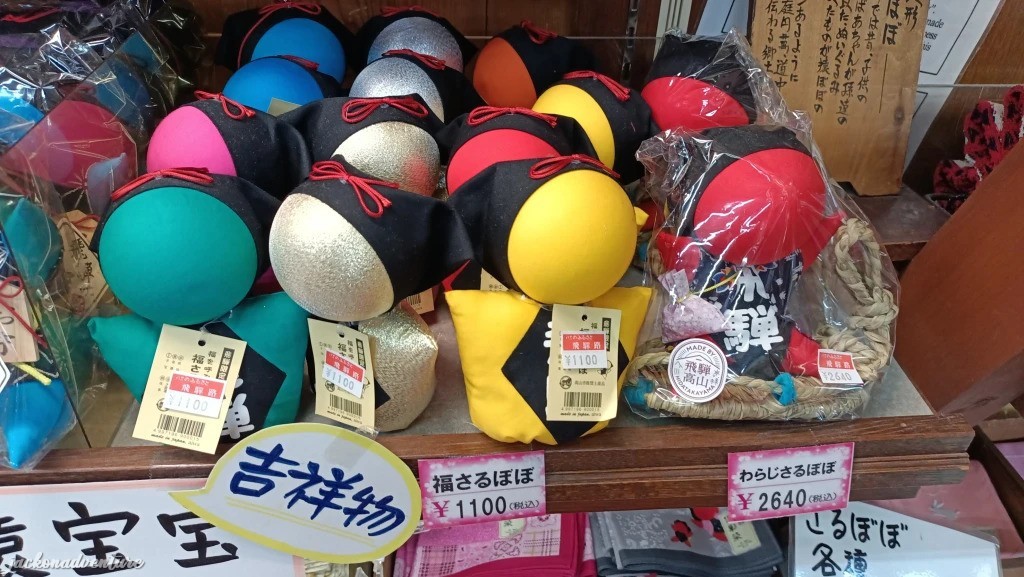
Visit a gift shop selling this cute Sarubobo doll, a human-shaped but faceless doll associated with Takayama. The word Sarubobo literally means “baby monkey” and they’re traditionally made by grandmothers in this agricultural area who give them to their grandchildren for protection. The mothers also made the dolls for their daughters as good luck charms before marriage.
Traditionally made in red, the dolls are now selling in different colors and sizes. Every color represents different wishes like great health, love, fertility, success and money. Since the dolls are considered lucky mascots for the Hida region, many shop and restaurant owners put them outside their stores and establishments.miyagawa river
Enjoy scenes, smells and sounds of Miyagawa Morning Market
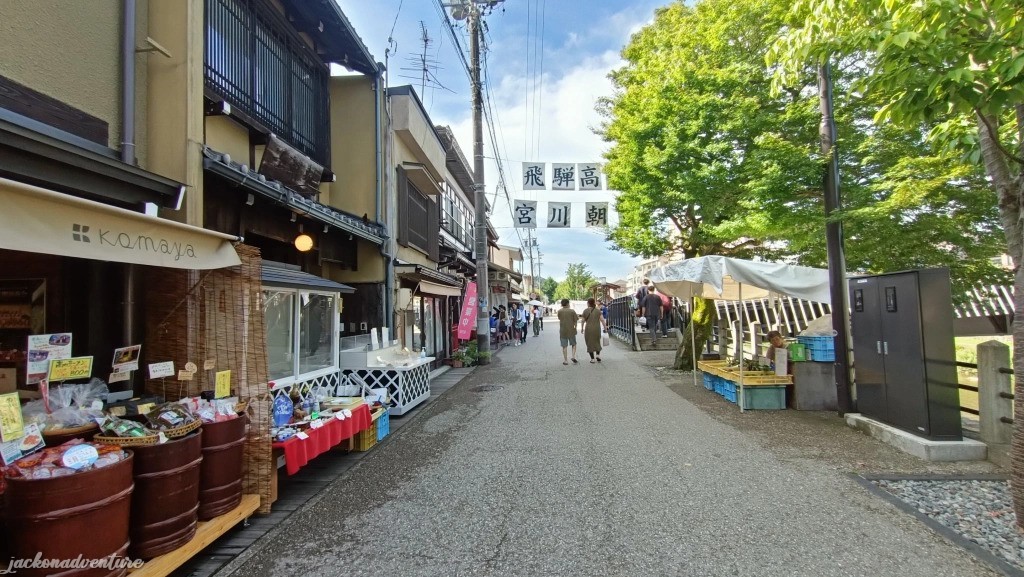
Head to the open-air Miyagawa Morning Market to taste Takayama’s fresh produce and hearty breakfast. The market is the largest of the two markets in town that stretches several blocks. It is a wonderful way to sample local food such as takoyaki, hida beef sushi and croquettes, Gohei mochi, homemade Senbei (rice cracker) and Matcha green tea. They provide wooden benches to sit down to eat while enjoying the beautiful backdrop of the Miyagawa River and traditional shophouses.
Local farmers sell pickled vegetables and seasoned fresh fruits including pears, apples and grapes at an affordable price. There are also handmade handicrafts and souvenir stalls here where you can buy Sarubobo Dolls made and sold by the ladies themselves. The dolls sold at the market are cheaper than in-stores and buying from these ladies will directly support them.
Opening hours: April to December: Daily from 7 am to 12 pm/ January to March: 8 am to 12 pm
Go shopping for Japanese chopsticks
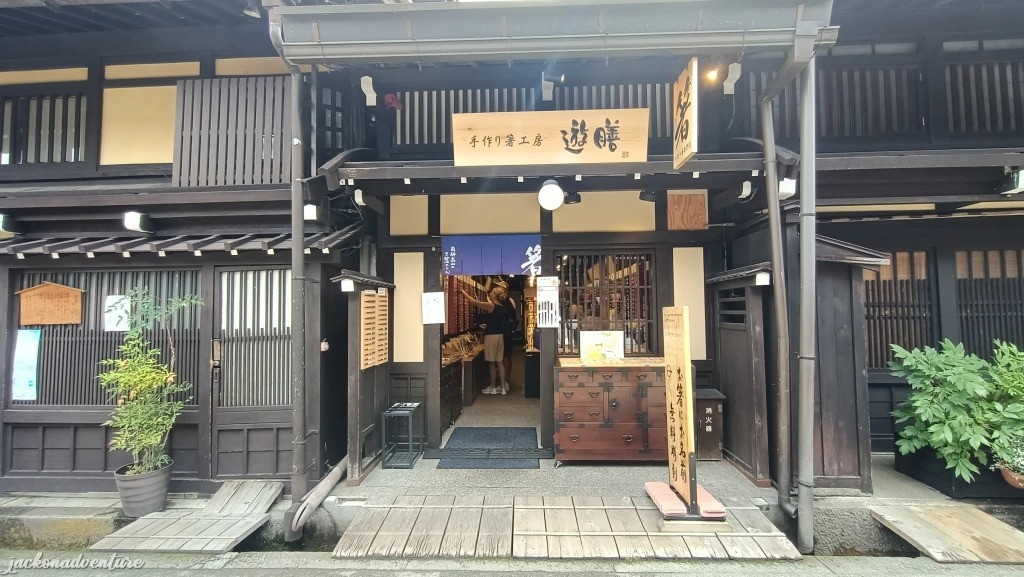
Another must-have souvenir to get from Takayama is the hand-crafted Japanese chopstick. The chopsticks are made either with bamboo or lacquered wood and crafted with high-skilled workmanship. Some products are sold based on the season of the year or special themes and prices range between 3,000 yen to 40,000 yen.
I bought my Japanese bamboo chopstick from Yuzen Takayama shop specialities on selling only such items. The friendly staff offers special carving of customers’ names in English or Japanese on this chopstick without additional cost. Nevertheless, I still prefer to have the chopstick in its original state.
Indulge with local speciality Hida beef
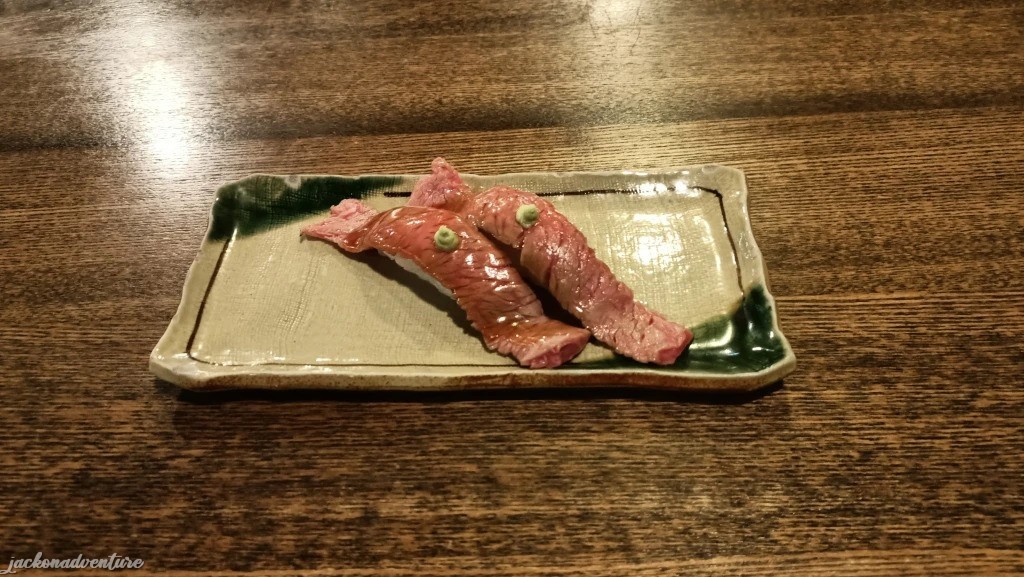
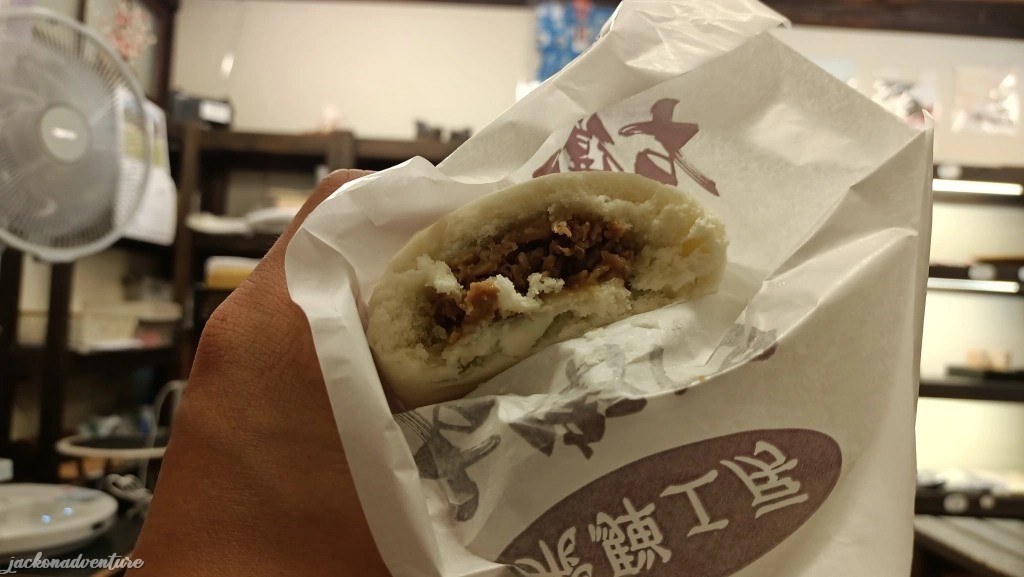
As you stroll Sanmachi Suji Street, it is easy to realize what is the town’s specialty. The popular Hida beef has been sold throughout the town in many restaurants and small stalls. Just like Kobe beef, Hida beef is considered one of the most prized beef brands in Japan, known for its intense juiciness. The meat gives a true melt-in-your-mouth experience and can be served as a simple beef skewer, croquettes, sushi or Hida beef bun to a most fulfilling and nutritious bento set meal, beef steak or Western-style beef burger.
Hida beef is Wagyu produced from black-haired Japanese cattle raised with loving care and great time and effort by seasoned farmers in Gifu prefecture. To give the Hida beef brand, the cattle are fed for at least 14 months and receive the rich blessings of nature such as vast land, pure water, clear air, seasonal temperature differences, and atmospheric temperature differences in the day and night.

Visit Sakurayama Hachimangu Shrine
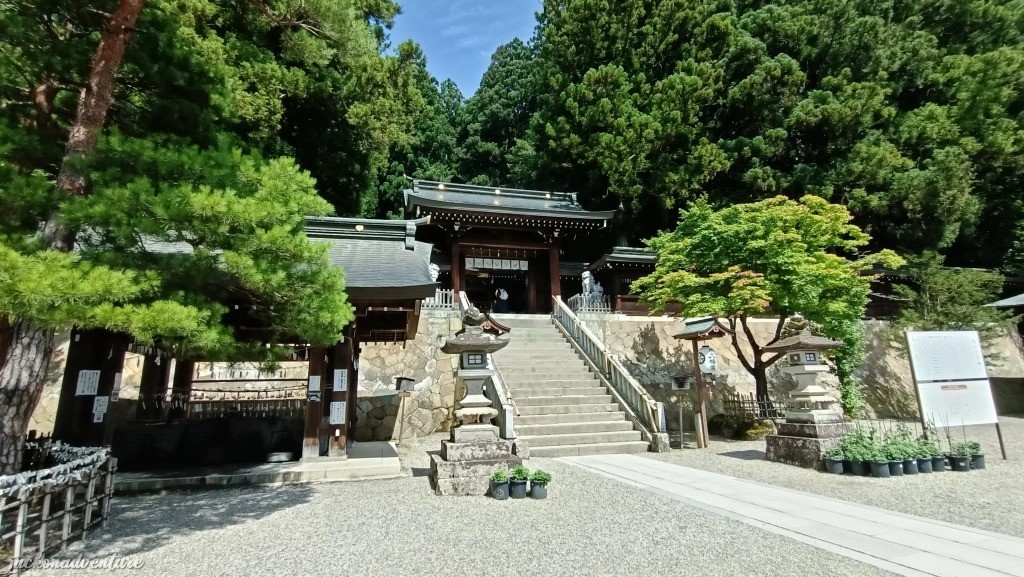
Sakurayama Hachimangu Shrine (櫻山八幡宮) is the oldest Shinto shrine in Takayama. It dates back as early as the 4th century under the reign of Emperor Nintoku who was the 16th emperor of Japan.
This relatively small shrine is in a quiet wooded area with a serene atmosphere. However, it has become the most happening place with locals flooding the streets to celebrate the Takayama Masturi in the autumn. The festival is one of the three most beautiful festivals in the country when it started 350 years ago (along with Chichibu Masturi in Saitama Prefecture and Gion Matsuri in Kyoto).
This event consisted of two festivals called the Spring Festivals (April 14 and 15) featuring 12 yatai and Autumn Festival (October 9 and 10) using 11 yatai. The people will pull the stunning yatai through the streets.
Location: 178 Sakuramachi, Takayama
Opening Hours: Daily for 24 hours
Entrance Fee: Free
Go temple-hopping from Unryu-ji
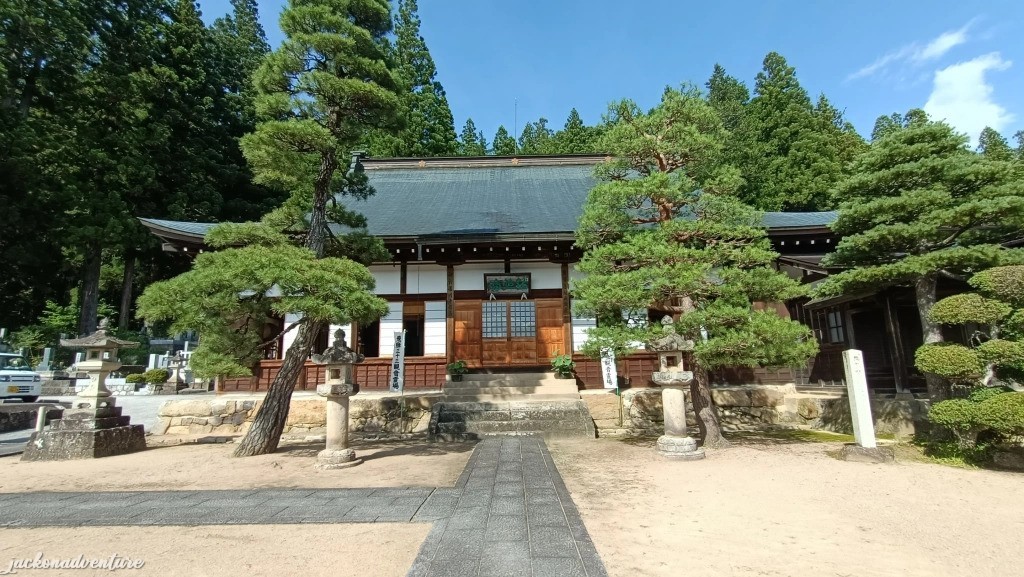
The first temple to step foot along the trail is Unryuji Temple (雲龍寺). The temple is easy to spot from the street by the size and the large belfry gate. The picturesque surroundings create an ideal setting for peaceful reflection and discovery.
The temple was originally built in 720 but was destroyed twice by fire. Over the centuries, the Zen Buddhist temple was finally reconstructed in 1732. The temple served as a family temple for the Kanamori family when a local samurai named Kanamori Nagachika ordered to relocate from Takayama Castle in 1590. He fell in love with Kyoto and wanted Takayama to be filled with gorgeous temples like Kyoto.
Location: 1 Chome-86 Wakatatsumachi, Takayama
Walk up to Higashiyama Hakusan Shrine
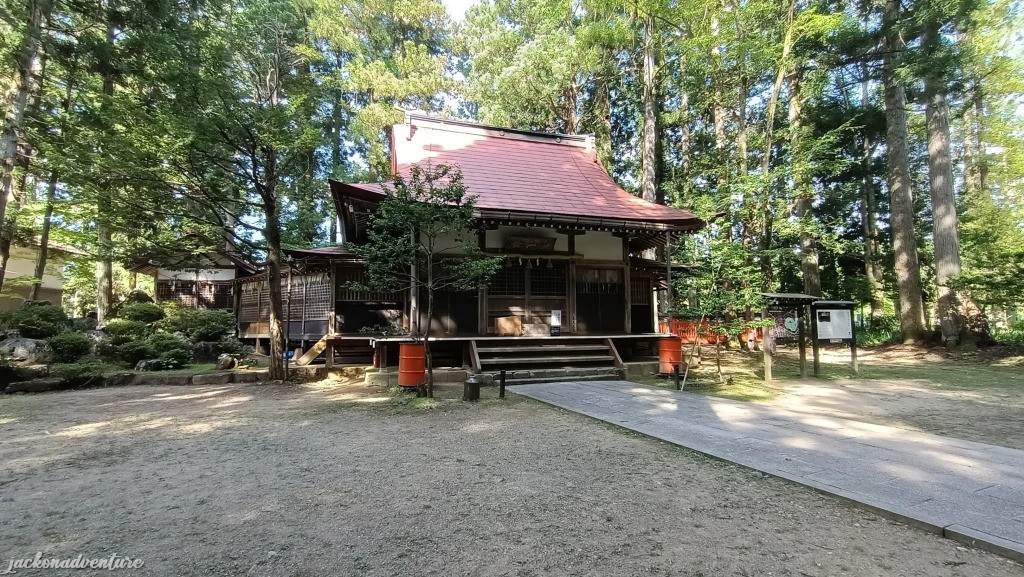
Just behind Unryu-ji Temple lies a stone path to Higashiyama Hakusan Shrine (東山白山神社). Surrounded by tall cedar trees, it is the oldest shrine along the walking course which was built in 719. The main deity here is a goddess called “Kukurihimeno Mikoto” and it is believed that she would make our dreams and wishes come true.
The guardian dogs and the main hall horse statues were craved by Hida carpenters. A portable Kaguratai shrine is kept inside and only used during the local festival which is held annually on 5 May.
Location: 1 Chome-74 Wakatatsumachi, Takayama
Stroll around Daiou Temple
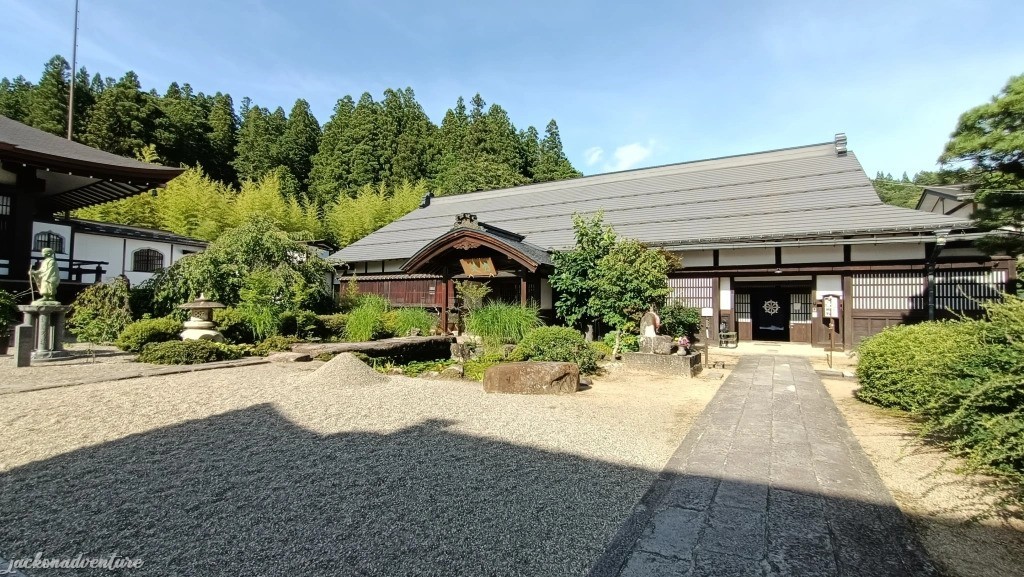
Daio-ji Temple (大雄寺) was once situated in Kamihirose village, Yoshiki-gu but the first lord of Takayama castle Lord Kanamori relocated to the present site in 1586. It became the dojo– training hall of Jodo-shu.
The temple houses a painting of hell (from the Buddhist tradition), the oldest belfry and the only two-story gable-roofed Sanmon Gate in the Hida region. The gate was destroyed by typhoon in 1791 but was restored by Hida carpenters in 1807.
Location: 67 Atagomachi, Takayama
Explore Doun-in Temple
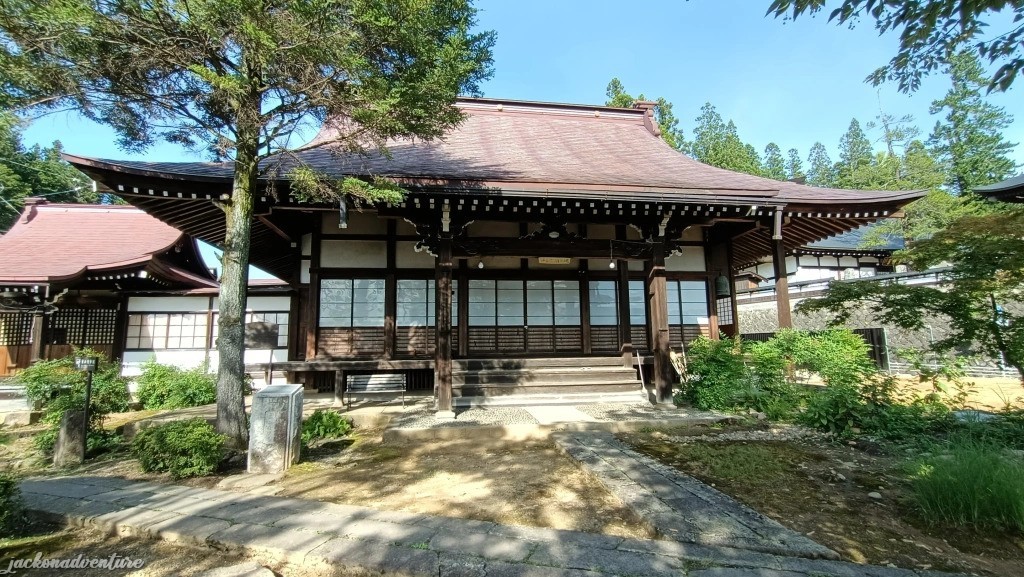
Doun-in Temple (洞雲院) was built by the priest Senso in 1614 and has small statues of a guardian deity, Koyasu Jizo. It was enshrined here after many children lost their lives due to a famine and diseases caused by the eruption of Mount Asama in Shinshu, Gumma Prefecture in 1783. The locals come here to pray for safe childbirth in Japan.
Location: 64 Atagomachi, Takayama
Visit Sogenji Temple

Sogenji Temple (素玄寺) was built in 1609 by the son Arishige Kanamori to mourn the soul of Nagachika Kanamori. The temple was named after Nagachika’s Buddhist name and later became the Kanamori family’s cemetery. The highlight is the main hall of the temple with a hipped cooper roof.
It is said that it was originally a conference building in the outermost region of Takayama Castle and was relocated to the present site in 1635. The remains of the Shoin-zuki building represents the mansion of Damiyo (feudal lord).
Location: 39 Tenshojimachi, Takayama
Take a glimpse of Higashiyama Shinmei Shrine
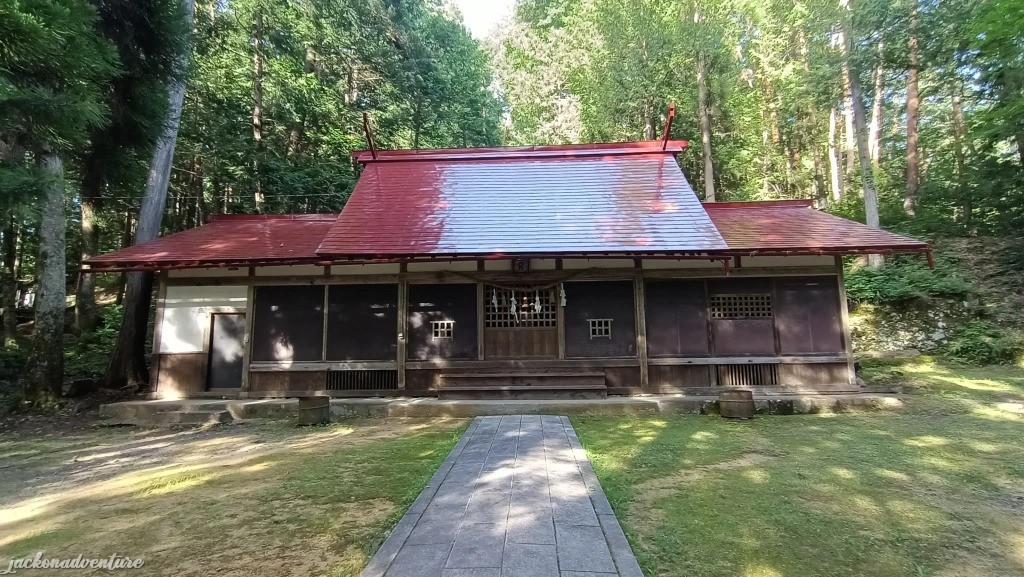
The Shinmei Shrine (東山神明神社) is pretty unique to other temples along the walking course with its Ema-den hall at the entrance. The Ema-den was moved from the castle when it was demolished in 1695 and used for moon-viewing due to its square pillars without walls in between.
Location: 71 Tenshojimachi, Takayama
Visit Tenshoji Temple
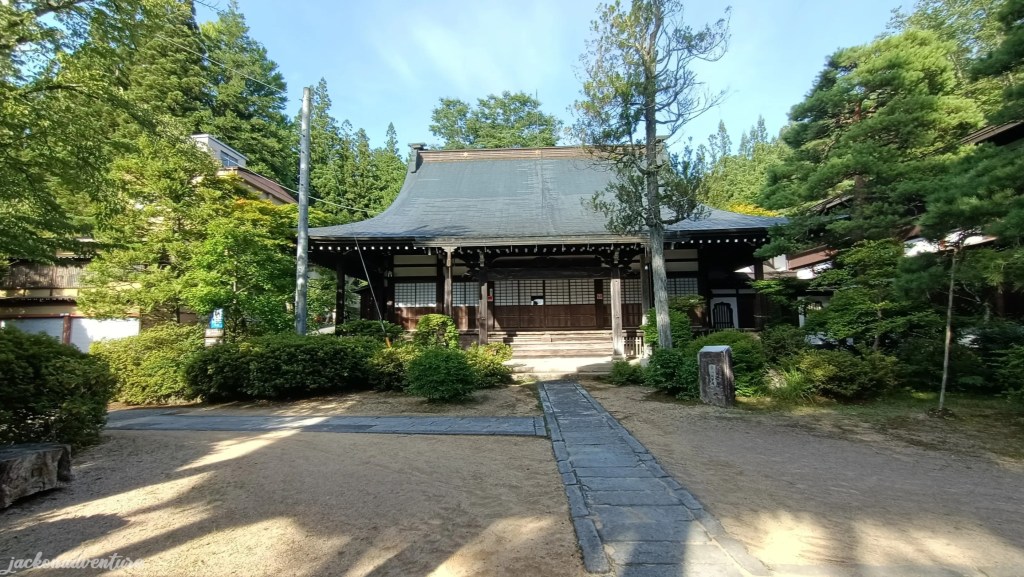
Tenshoji Temple (天照寺) was built around 1182 and restored in 1615 after it was abandoned for a very long time. The experienced Hida carpenters sculpted two wooden elephants on the top of the pillar to replace the old cloud shape.
If you visit Takayama in autumn, Tenshoji Temple flourishes with fabulous colors of Japanese maples.
Location: 83 Tenshojimachi, Takayama
Take a break at Hokkeji Temple

Hokkeji Temple (法華寺) was relocated from the castle by the third lord of the castle Shigeyori Kanamori in 1632. He prayed for the spirits of his grandson who was exiled to Takayama.
There is a small pond and a stone-arched bridge on the temple grounds. After you cross the bridge, you’ll come to a Shinto shrine with a perfect example of how the two religions coexist.
The temple ground is sheltered by some trees which makes it a great place to take a short break. You can admire the town’s panoramic views from the hilly slope and enjoy the calm atmosphere here.
Location: 62 Tenshojimachi, Takayama
Wander through Zenno-ji
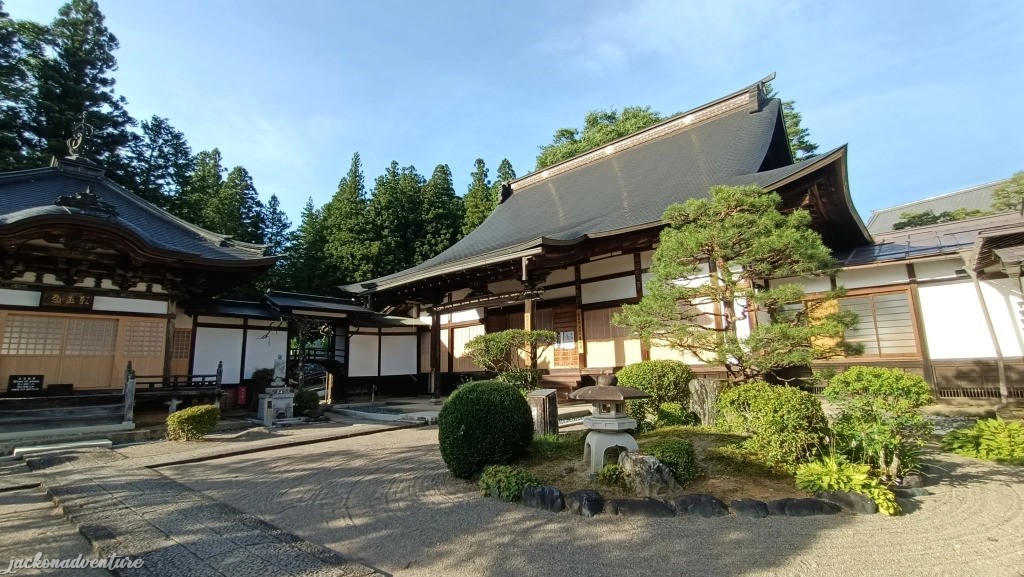
Zenno-ji Temple (善応寺) was established in 1558 but burnt down in 1585 with Matsukura castle. The temple was later relocated from Matsukura to Higashiyama in 1835 by Lord Kanamori. This Buddhist temple is a good place to practice Zen meditation.
Location: 177 Soyujimachi, Takayama
Finish the walking trail at Soyu Hondo Temple
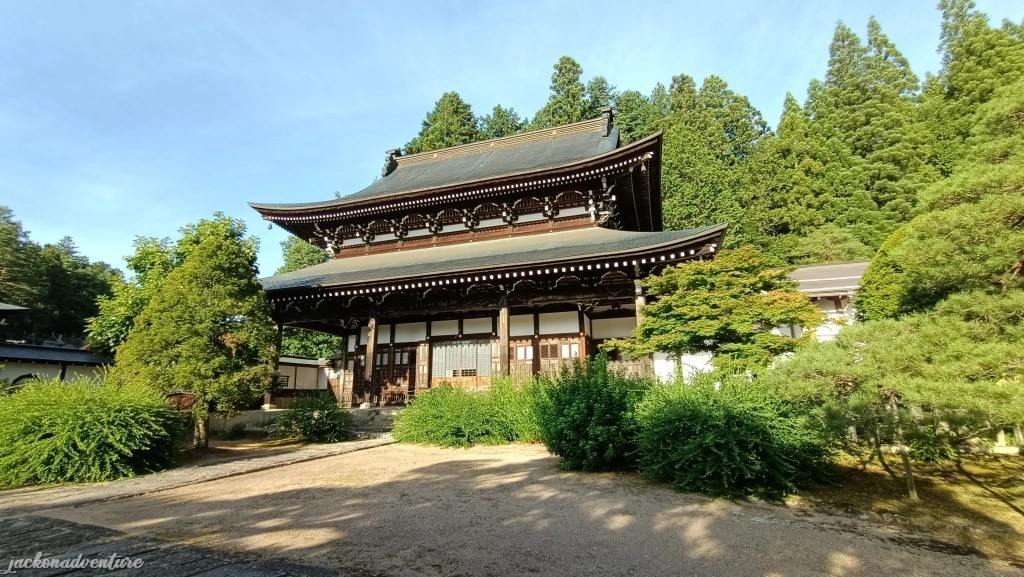
Soyuji Hondo Temple (宗猷寺 本堂) is the final stop on the Higashiyama Walking Course. The temple is the largest temple on this trail and was built in 1632 to pray for Arishige Kanamori, the father of the third generation of the Kanamori family.
Location: 218 Soyujimachi, Takayama
Visit Takayama Jinya
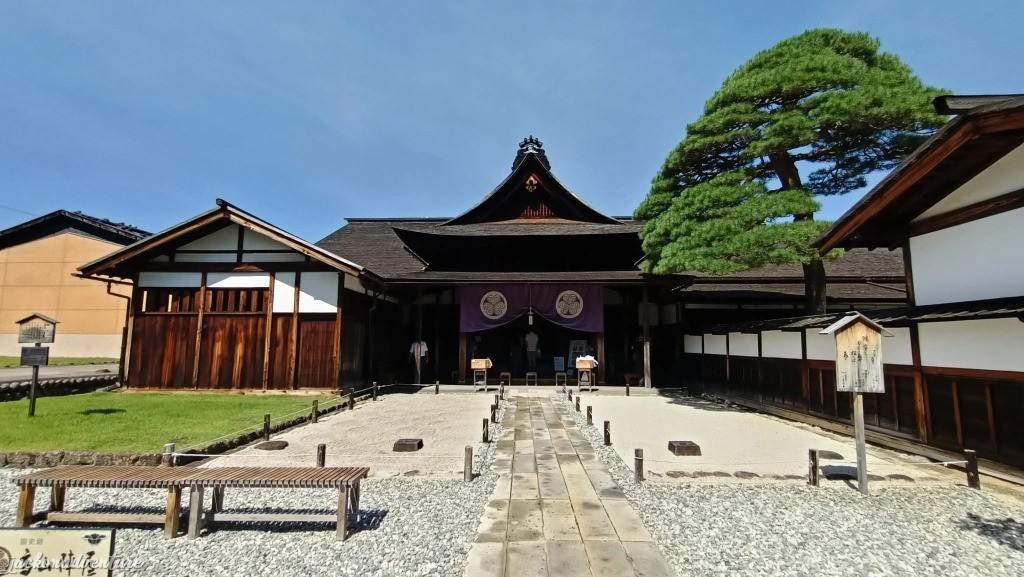
Takayama Jinya (高山陣屋) is another historic landmark worth visiting in Takayama. It served as a government administrative office and the home of the governor. Due to Takayama’s valuable timber, the city fell under the control of the Tokugawa shogunate who sent officials here from Edo (today’s Tokyo) in 1692.
The hall features beautiful tatami floors and wooden sliding doors and was used as the living quarters of the governor and his family. It also has a conference room to invite important guests, an interrogation and a courtroom.
The 17th-century storehouse beside the main building is the largest traditional rice storehouse in Japan. It was converted into a museum in 1969 to showcase the belongings and official documents of the past local leaders, old maps of the Hida Region and historical town plans.
Location: 1 Chome-5 Hachikenmachi, Takayama,
Opening Hours: April to October: Daily from 8.45 am to 5 pm/ November to March: Daily from 8.45 am to 4.30 pm
Entrance Fee: 440 yen
Stroll around Jinya-mae Market

Located at the doorstep of Takayama Jinya, the Jinya-mae Market is a smaller yet charming market. The vendors here mainly sell seasonal fruits, miso sauces, vegetables and beautiful blooms. It’s an excellent spot to buy fresh ingredients for breakfast or a picnic.
Location: 1 Chome-5 Hachikenmachi, Takayama
Opening Hours: Daily from 7 am to 12 pm
Sample sake at one of Takayama’s breweries

A visit to a sake brewery is a MUST in Takayama. You can’t leave without trying some of them.
Sanmachi Suji is home to some of the finest sakes in Japan that have been brewing for hundreds of years. Its colder climate is a perfect place to produce their sake.
There are 8 sake breweries dotted around Takayama where you can go for plenty of sake tasting and tours. The breweries are easy to spot by their large white sake barrels (sakadaru) or large balls of cedar branches (sugidama) that hang above the entrance.
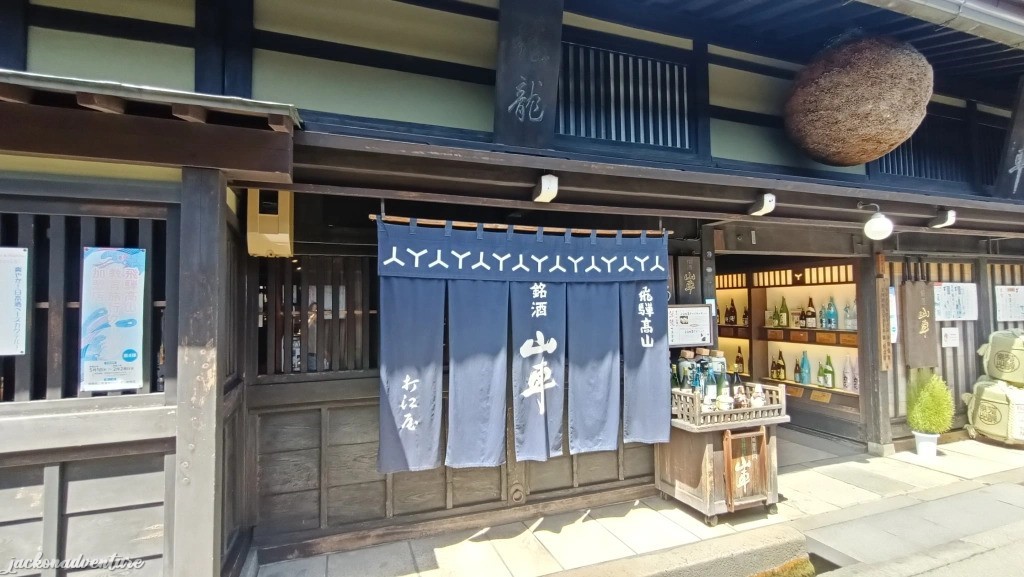
The Harada Sake Brewery is highly recommended where you only pay 450 yen to sample 12-14 different types of sake. It is interesting to learn that the color of sugidama indicates the maturity of the sake. The green sugidamas are freshly pressed sake and the brown ones are the matured ones.
Travel Tips: The alcohol content of the sakes is between 50-60% and is best to drink within your limit to avoid getting drunk.
View the ancient Kokubun-ji Temple
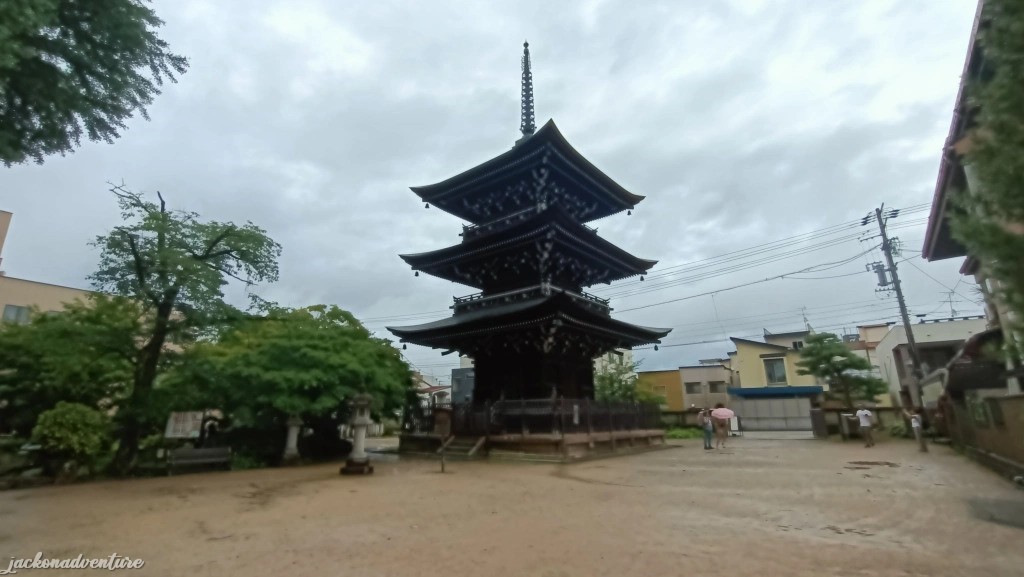
Founded in 746 AD by a Japanese Buddhist priest Gyōki, Hida Kokubun-ji Temple (醫王山飛騨国分寺) was built under the orders of Emperor Shōmu. It is one of the finest ancient temples and the only three-storied pagoda in the Hida region.
The compound was planted with a gingko tree which is said to be over 1250 years old. The temple houses a statue of the Medicine Buddha Yakushi Nyorai, which is the principal item of worship.
Location: 1 Chome-83 Sowamachi, Takayama
Opening Hours: Daily from 9 am to 4 pm
Entrance Fee: 300 yen
Coming to Japan Real Soon?
If you like to travel to other parts of Japan, here are some ideas of cities and towns worth visiting with the best things to do. There are also stories about my experience on the Shinkansen train ride and WWOOFing in Japan.
- Tokyo in 2024
- Tokyo in 2023
- Kamakura
- Nagoya
- Nagano
- Gujo
- Ise
- Kumano Kodo
- Okayama
- Hiroshima
- Miyajima
- Mt Fuji
- Kyoto
- Arishayama
- Nara
- Osaka
- Shinkansen Train
- WWOOFing in Japan
Like It? Pin This Article.


 Jack on Adventure
Leave a comment