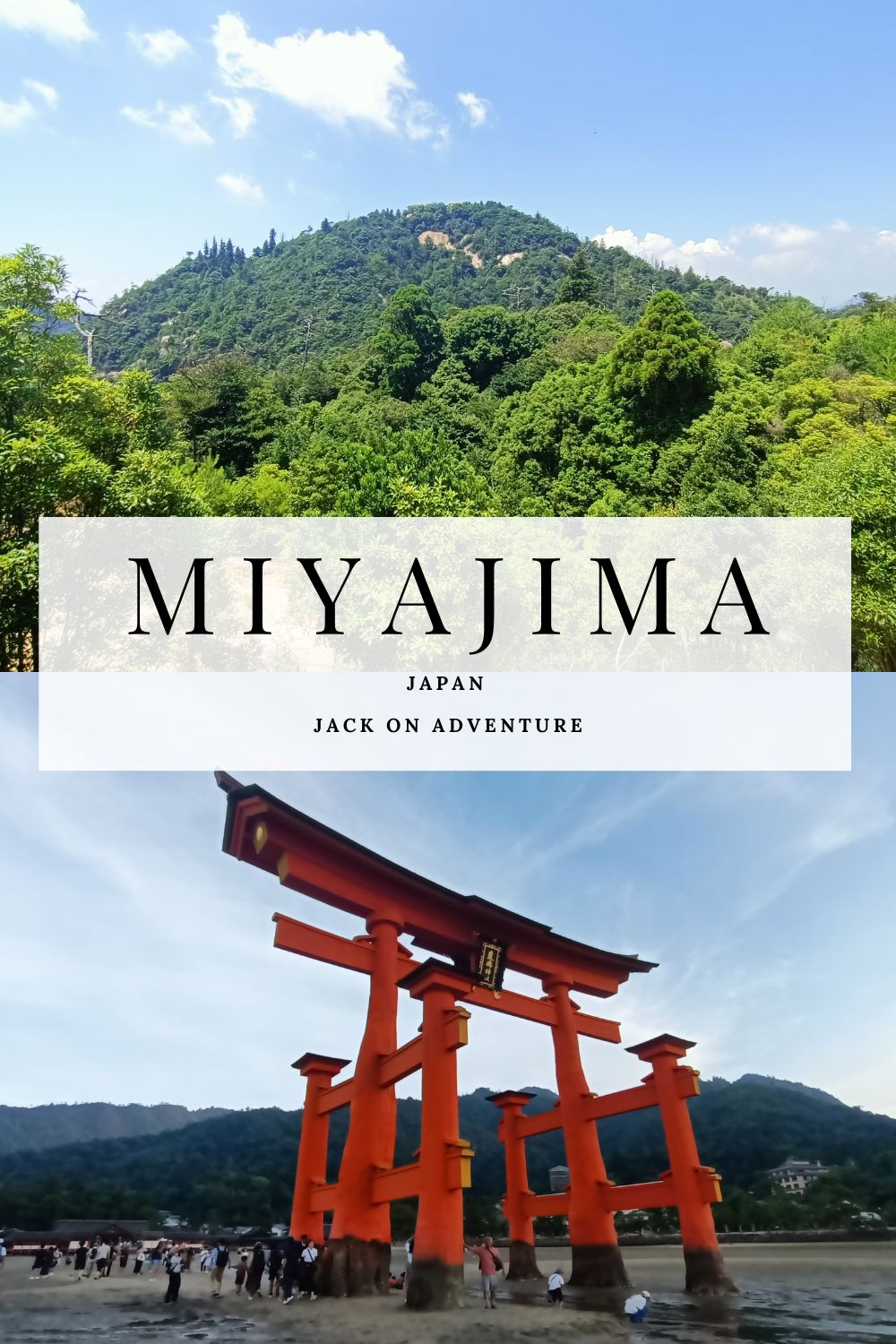
Located in Hiroshima Prefecture, Miyajima (宮島) is a small island on the southeastern coast of Hiroshima City within its bay. Known as the “Island of God”, the island is an incredible destination with scenic views, impressive cultural sites and sacred wildlife.

My 3-day visit to Hiroshima has landed me on the Island of God. Miyajima has been considered as a sacred site for centuries. In ancient times, the island was believed to have been worshipped as a god.
This holy island has been inhabited for 1,500 years and is dotted with ancient Shinto and Buddhist shrines, vibrant torii gates and the majestic Mount Misen. Itsukushima Shinto Shrine and Mt. Misen Primeval Forest were designated as World Heritage Site in 1996. It has captivated visitors for its natural beauty and divine atmosphere.
Best Time to Visit
Miyajima can be visited throughout the four seasons. The best time to visit Miyajima depends on the type of activities you want to experience.
During spring from March to May, the island flourished with beautiful cherry blossoms. The surrounding areas are landscaped with vibrant pink flowers. The weather is generally mild, making it pleasant for hiking and outdoor activities.
Summer between June and August has warmer temperatures and higher humidity but offers longer daylight hours, giving ample time to explore the island. Hiking on the mountain can be more challenging due to the heat. It is still a great time to enjoy the lush greenery and the vibrant colors of the surrounding nature.
If you come to Miyajima in autumn from September to November, you can witness the foliage transformed into a stunning display of red, orange, and yellow hues, creating a stunning panorama. It is also perfect for hiking and other outdoor activities with mild weather.
The winter from December to February, you can catch a glimpse of snow-capped landscapes. You can seek a peaceful retreat with fewer crowds and enjoy crisp air. Mount Misen can be cold, with temperatures dropping below freezing. However, the serene beauty of the mountain is blanketed with snow that gives a tranquil highlight.
Getting There
By Plane
The closest airports to Miyajima are Hiroshima Airport (Airport Code: HIJ) in Mihara and Iwakuni Kintaikyo Airport (Airport Code: IWK) in Iwakuni. There are no express trains but are reachable to Hiroshima downtown by limousine bus from both airports.
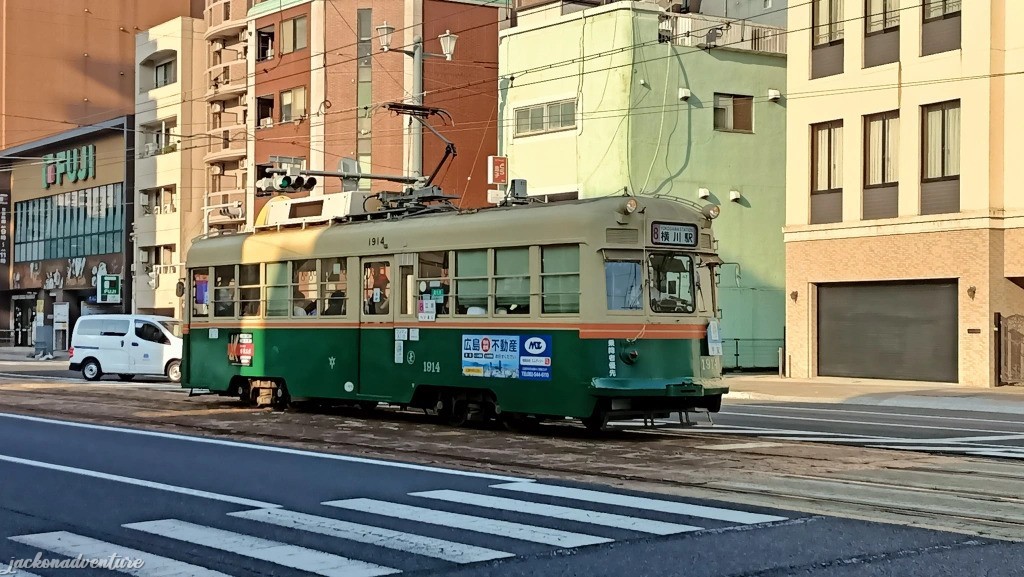
From Hiroshima City, take the Miyajima Line train which runs from Hiroden-nishi-hiroshima to Hiroden Miyajimaguchi Station. Alternatively, you can take the San-yo Line train from the city center to Miyajimaguchi Station. The train rides take about 45-60 minutes and costs 420 yen one way. There are announcements in English on the train to tell which station to disembark for the JR Ferry.
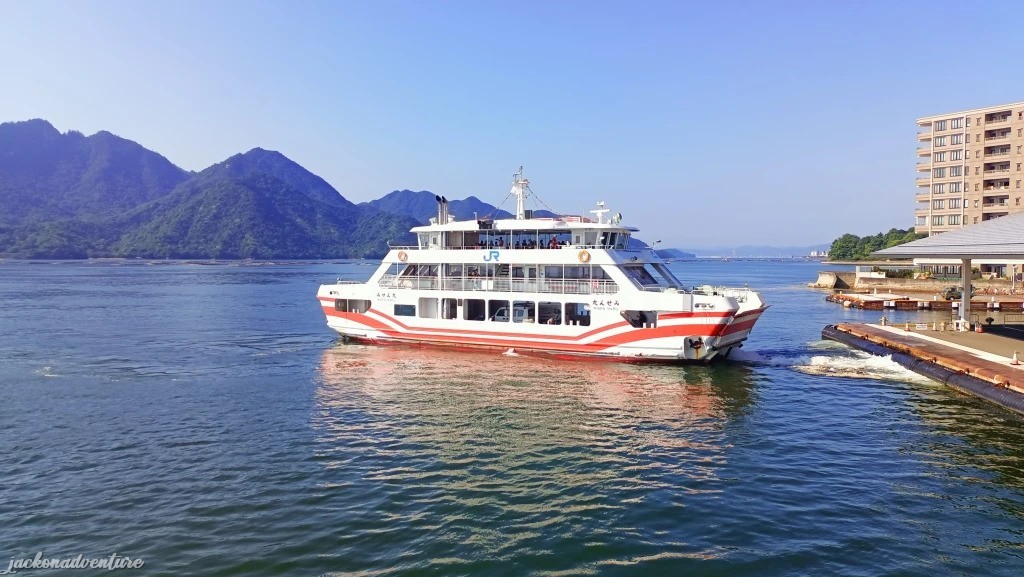
Then, take either the JR Miyajima Ferry or the Matsudai Ferry across to Miyajima Island. Both ferries take 10 minutes and cost 500 yen round trip. The JR Miyajima Ferry is covered with a valid 7, 14 or 21-day JR Pass without any extra cost (See the ferry timetable for JR Miyajima Ferry and Miyajima Matsudai Ferry).
By Train
For those traveling by train, the easiest option is to take the Tokaido-Sanyo Shinkansen train to Hiroshima city. You can take a direct Hikari Shinkansen train with a JR Pass from cities like Tokyo, Nagoya, Osaka or Kyoto. If you do not have a JR Pass, I recommend taking the Nozomi Shinkansen train from these cities. Although the fare is more expensive than the Hikari Shinkansen, it takes a shorter time to reach Hiroshima.
After arriving at Hiroshima, take the Miyajima Line train or San-yo Line train to Miyajimaguchi Station and transfer to the JR Miyajima Ferry or the Matsudai Ferry to Miyajima Island. Both ferries take 10 minutes and cost 500 yen round trip. The JR Miyajima Ferry is covered with a valid 7, 14 or 21-day JR Pass without any extra cost (See the ferry timetable for JR Miyajima Ferry and Miyajima Matsudai Ferry).
Getting Around
The Miyajima main town center is very walkable and has many pedestrian pathways. Most attractions, restaurants and bars are located close to each other. You don’t really need to travel around by car.
The island doesn’t have public transportation and I hardly see any taxi driving around. In fact, a large part of the island can’t be accessible by car because there are no roads to drive on. Many hotels are situated along the seafront and near the ferry terminal. Many hotels offer free shuttle bus service or you can get to the hotel on foot.
The only exception is when you explore off-beaten-path or hike to Mt. Misen summit. There is a cable car service at the foot of Mt. Misen with a short transfer from the mid-section to the top of the mountain. You can also go along the hiking trail to the summit if you stay overnight on the island.
The Best Activities for a Day Trip to Miyajima
Miyajima is a perfect day trip from Hiroshima. With the incredible Torii gate, a breathtaking mountain hike to Mount Misen, impressive shrines and adorable wild deer, there’s no shortage of things to do for one day on this enchanted island.
Admire the Giant Floating Torii
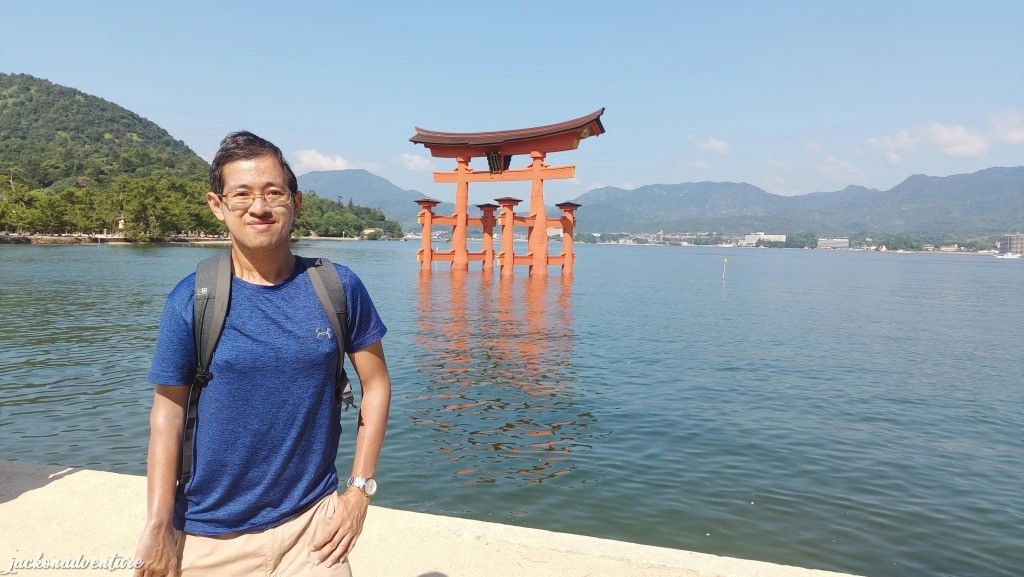
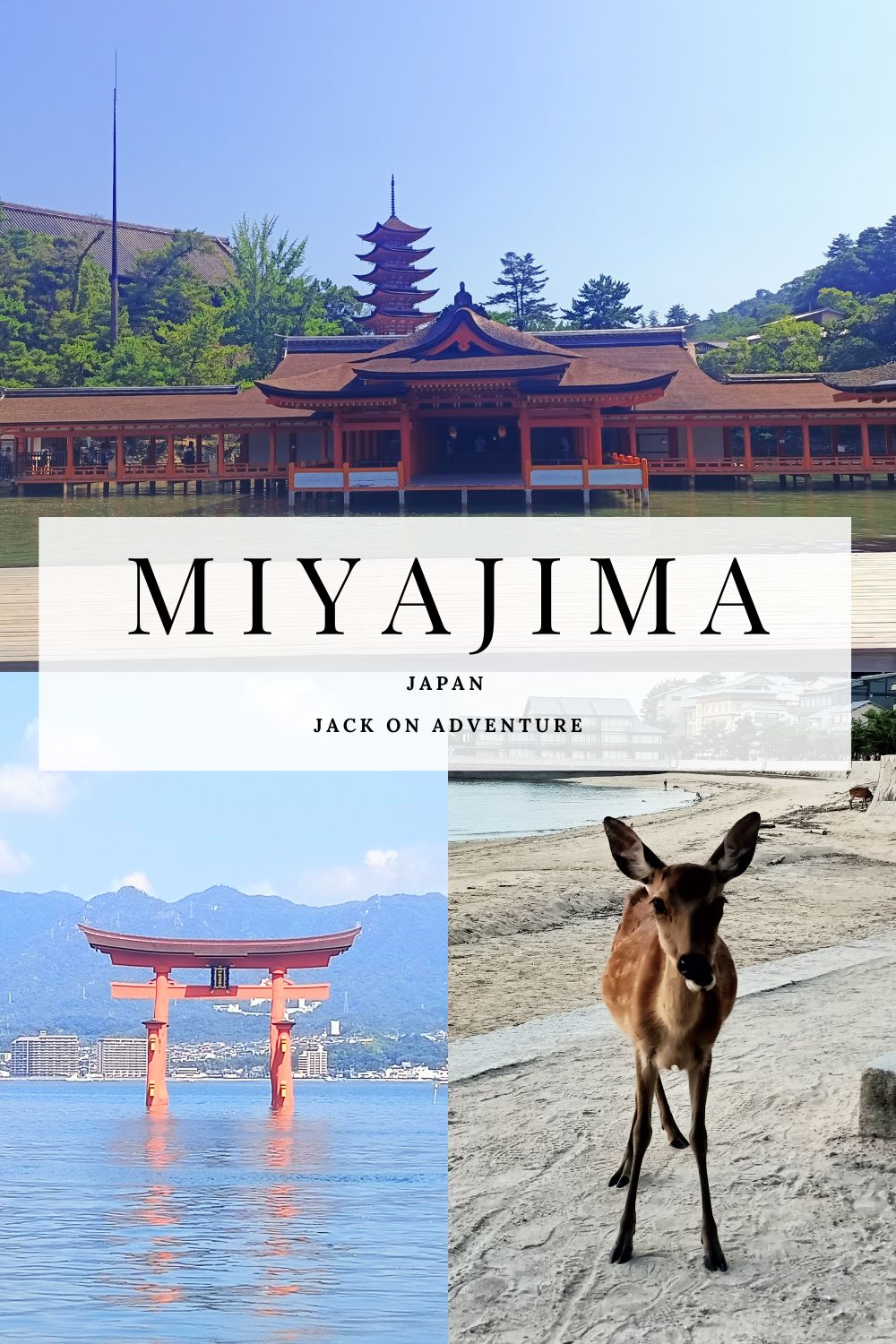
The first highlight of Miyajima Island is the Giant Floating Torii. Set out in the Seto Inland Sea, the torii is surrounded by water and appears as if it’s floating on the water during high tide. As part of Itsukushima Shinto Shrine, it is said to be the boundary between the spirit and human worlds.
Located 160 meters away from Itsukushima Shrine, this O-torii was originally built in 1168 but it has been reconstructed throughout its history. Unlike a traditional torii seen throughout Japan, this massive vermillion torii has an additional four supporting pillars. The entire structure weighs 60 tons and stands almost 17 meters high.
Explore Itsukushima Shrine
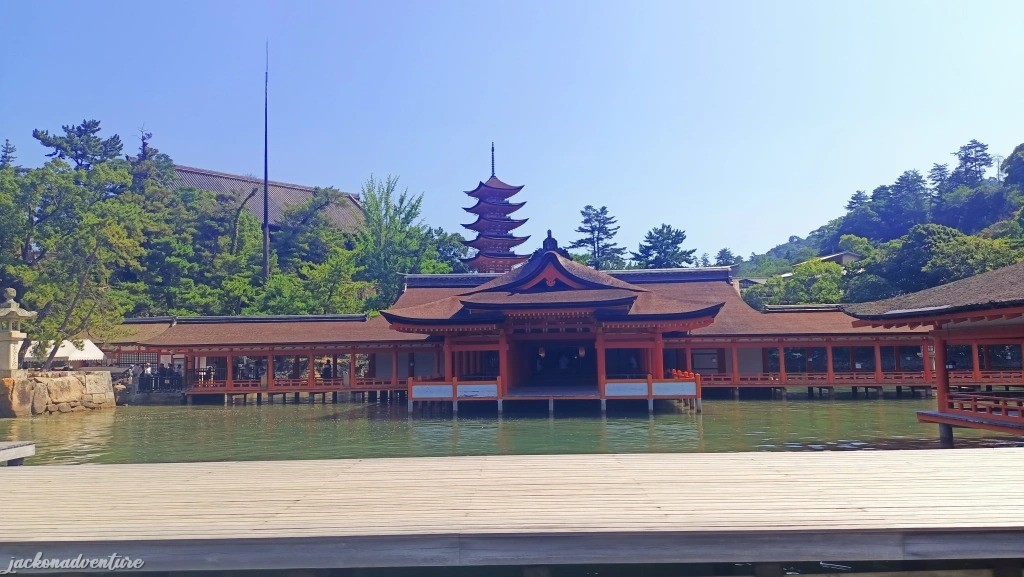
Itsukushima Shrine is one of the most well-known attractions on the island. The island’s formal name is Itsukushima in honor of the shrine but more commonly called Miyajima which translates as “shrine island” in Japanese.
Dating back to the 6th century, Itsukushima Shrine has existed in one form or another for more than a thousand years. This place of worship is dedicated to three female deities known as sanjoshin. These Shinto deities are the goddesses of seas and storms, believed to help guard Japan, protect seafarers and ensure the welfare of the imperial family.
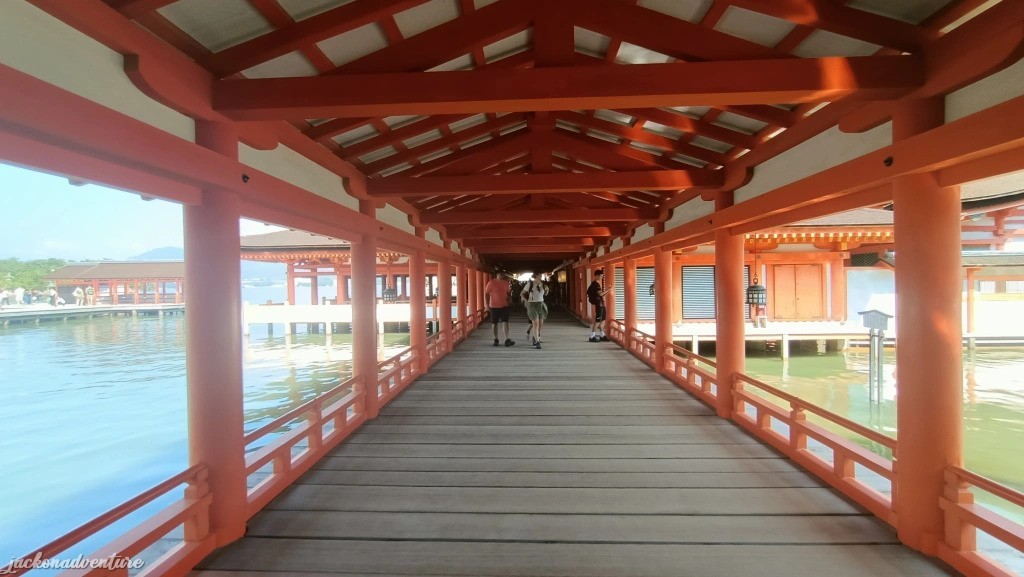
The red-orange complex consists of two main halls named the Honsha Shrine and the Sessha Marodo-jinja, and 17 other buildings overlooking the stunning Great Torii. During high tide, the gate becomes completely surrounded by water, earning it the designation of a “floating” torii gate. Together with Mt. Misen, they are listed as a World Heritage Site.
Location: 1-1 Miyajimacho, Hatsukaichi, Hiroshima
Opening Hours: Daily from 6.30 am to 5 pm or 6 pm depending on the season
Entrance Fee: 400 yen
Visit Daigan-Ji
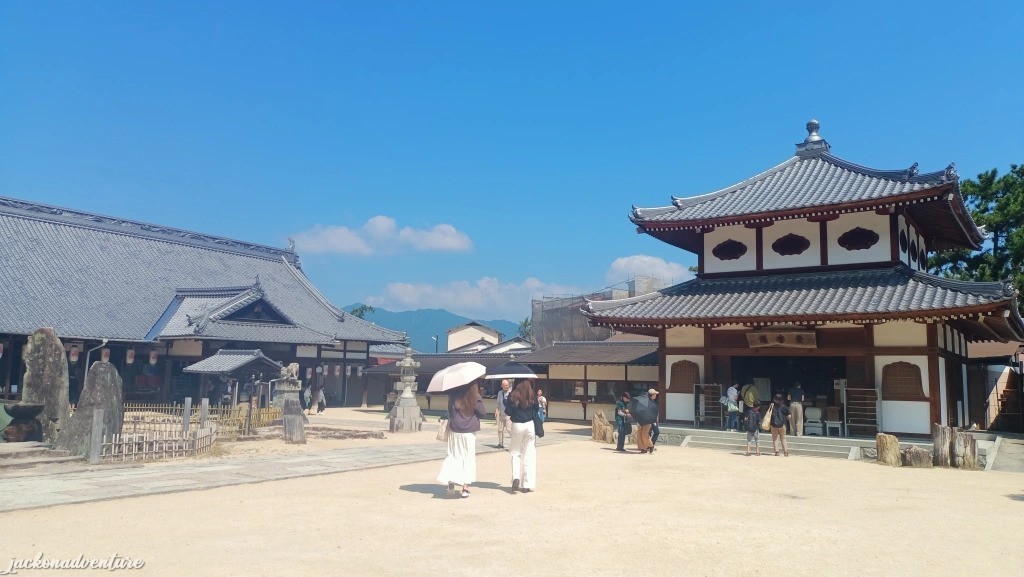
Known as Kikyozan Hokoin, Daigan-ji dates back to 1201 and is dedicated to Benzaiten, the Goddess of eloquence, music, wisdom and wealth.
Have lunch at Hatsukaichi area
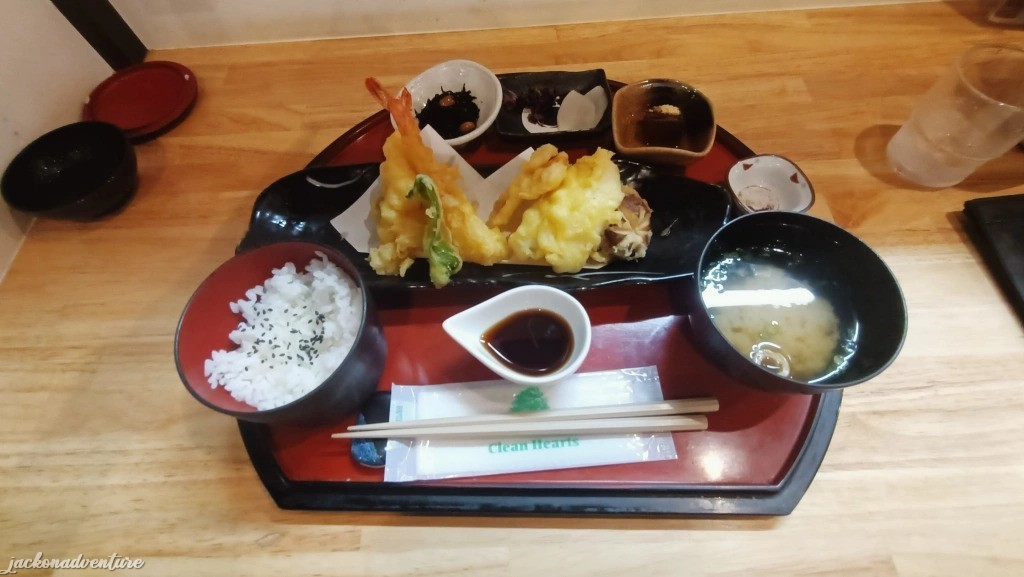
Before taking the Ropeway to Mt. Misen, have brunch or lunch at one of the restaurants or food stalls in Hatsukaichi. The shops are located behind Itsukushima Shrine. You absolutely need it to keep your energy going when hiking to the summit.
I had an appetizing Tempura Gozen at Shibaisaryo which serves fresh prawn and vegetables tempura. The set meal comes with a side dish, soup, pickled vegetables, rice and dessert. The price is pretty decent considering the big portion they served in this authentic Japanese restaurant.
Spot Miyajima’s sacred deer
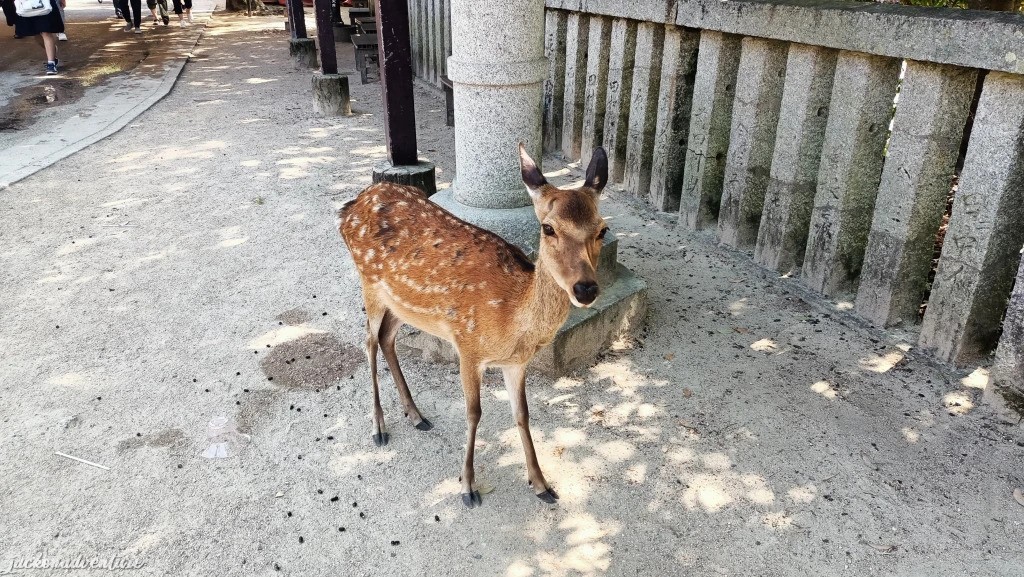
Apart from the magnificent cultural sites, this sacred island is also known for its local residents of Sika deer. These wild but tame animals were once believed to be the messengers of the gods. Therefore, they are considered as protected creature and designated as a national treasure.
The deer roam freely on the island and love to interact with visitors and locals. Some of them will sniff from visitors’ bags or be on a lookout of people’s hands in search for a treat.
Be sure to keep all food and snacks out of reach as they can sometimes be very persistent to try grabbing food from you.
Take the Ropeway up to Mount Misen
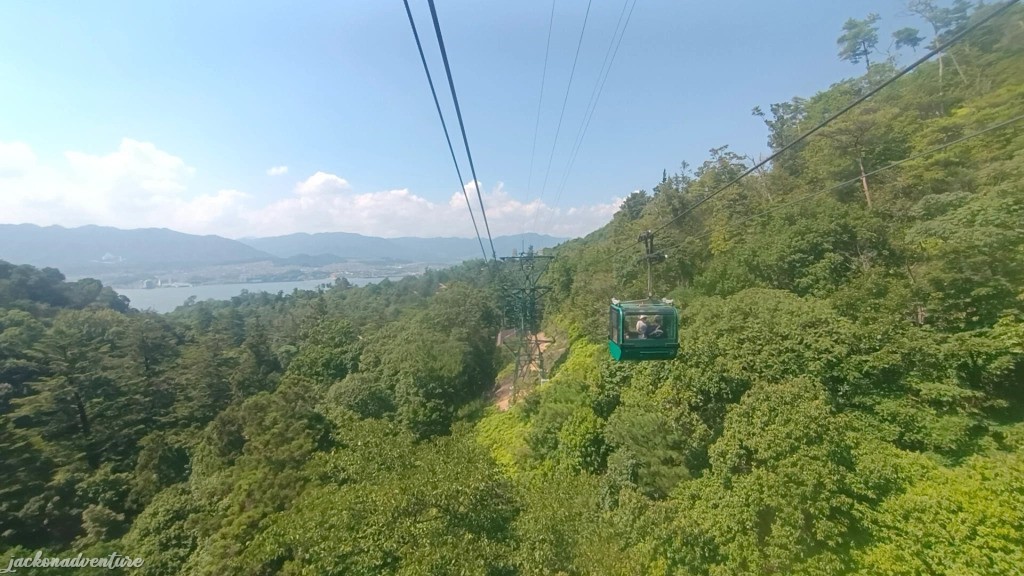
Standing at 535 meters above sea level, Mount Misen is the tallest peak on the island. The fastest way to get to the top is by the Ropeway from Momijidani Station. You can either take a shuttle bus or a 15-minute walk from Itsukishima Shrine to the station.
The ropeway ride is divided into two sections. You will start from Momijidani Station to Kadadama Station and switch for the second ropeway to Shishiwa Station. If you’re taking a day trip here, riding on the ropeway will be more practical and you don’t have to spend too much time walking.
If you’re staying for a night on the island, it will be fun to hike up the mountain. The three walking trails are the Momijidani Course (shortest but steepest), Daisho-in Course (less steep but more steps to climb) and Omoto Course. These trails will take you 90 minutes to 2 hours.
Opening Hours: Daily from 9 am to 4 pm (Operating hours may change due to weather condition)
Cable Car Ticket (Round Trip): Adults: 2,000 yen/ Children: 1,000 yen
Hike Mount Misen
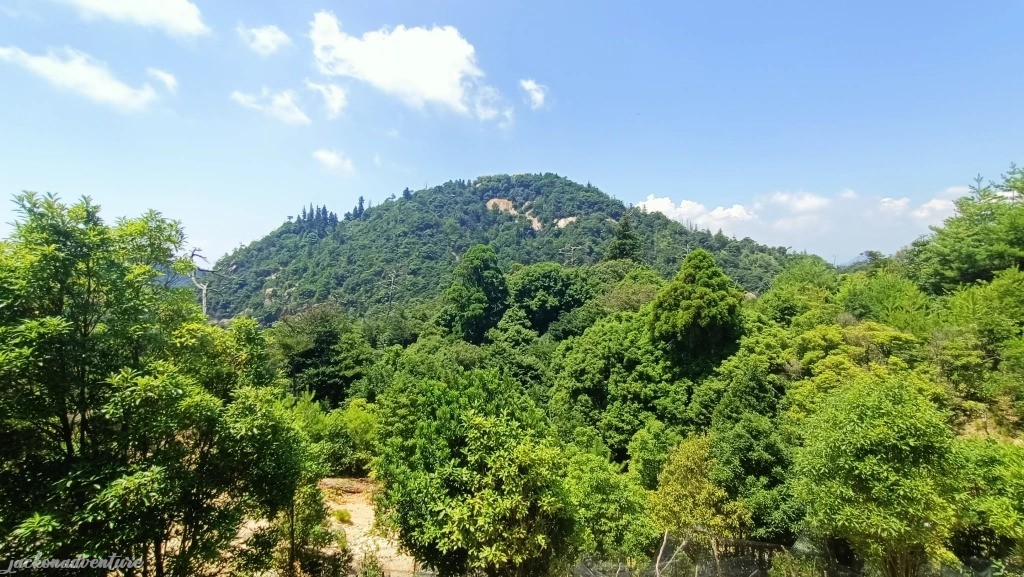
Hiking to the summit of Mount Misen is a must-do activity during the visit to the island. The mountain is home to impressive shrines and rare species of plants as part of Mt. Misen Primeval Forest. The trail is blessed with breathtaking views of its surroundings, the Seto Sea and Hiroshima City.
At the top of the mountain, you can hike on the trail to the highest point of the island. The trail starts from Shishiiwa Station through the forest, ancient shrines and uniquely-formed rock formations. It is easy to walk on the trail and usually takes 1-2 hours to complete. There are several resting points and observation decks to take a break and marvel at the natural beauty. Nature lovers can enjoy bird-watching from the lookout points including the Japanese pygmy woodpecker and the fairy pitta.
Mt. Misen became a holy mountain when a Buddhist priest named Kobo Daishi known as Kukai established Daishonin Temple at the mountain’s foot in 806 AD. He also founded the Shingon school of Buddhism in Japan
Travel Tips: Bring sufficient water or buy cold drinks from the vending machine at Shishiiwa Station, especially during the summer. They are not sold along the trail including the summit area. Wear comfortable shoes and use sunscreen for the hike.
Opening Hours: Daily for 24 hours
Entrance Fee: Free
Visit the Misen Hondo Main Hall
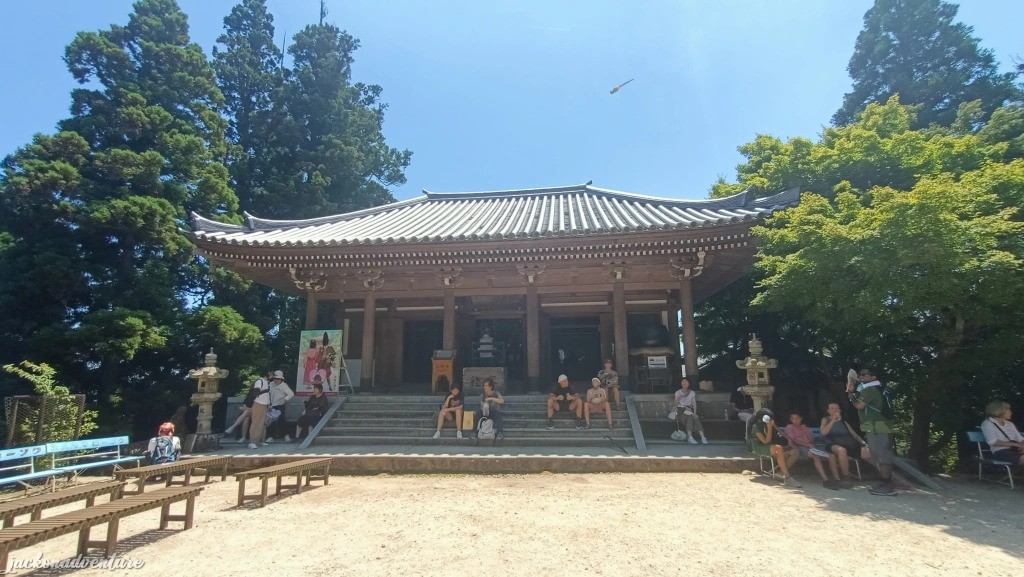
Misen Hondo is the first shrine you will visit along the Mt. Misen trail. This ancient religious site was founded in the 9th century and is considered one of Japan’s most sacred mountains. It is believed that the mountain holds spiritual energy and serves as a gateway to the divine realm. The Buddhist monk Kobo Daishi known as Kukai performed 100 days of Gumonji, here a Shingon Buddhist practice.
Many visitors come to this main hall to seek spiritual enlightenment, participate in meditation retreats or simply enjoy the serene atmosphere.
Opening Hours: Daily from 8 am to 5 pm
See the eternal flame at Reikado Hall
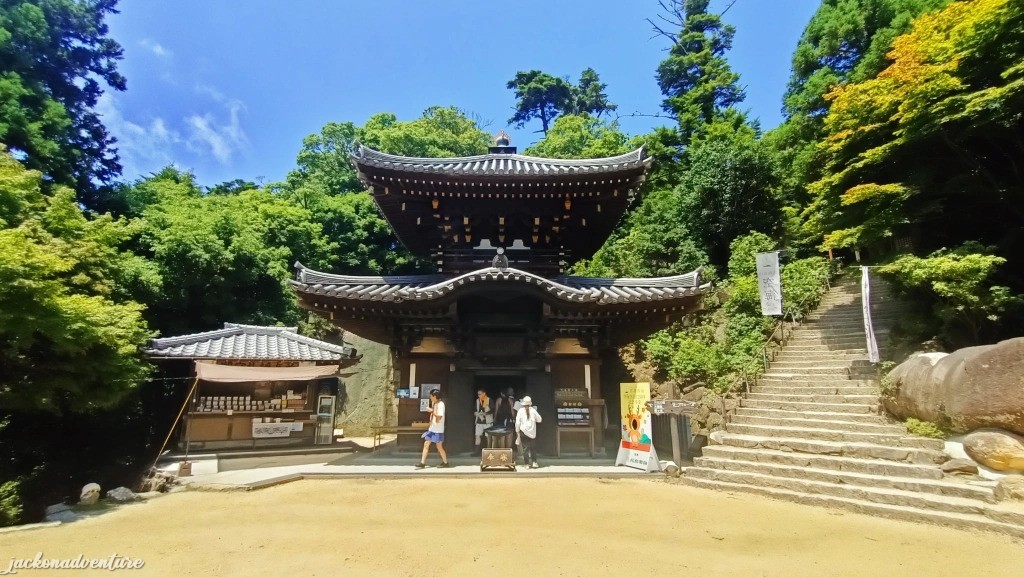
Reikado Hall houses a black pot gently simmering over a hearth. The small fire below the pot is known as the ‘Eternal Flame’ and it has been continuously burning since Kukai kindled it 1,200 years ago. Feel free to try the water in the cauldron, thought to have the power to heal all illnesses.
The flame was also used to light the Flame of Peace in the Peace Memorial Park in Hiroshima City.
Opening Hours: Daily from 8 am to 5 pm
Visit Sankido Hall
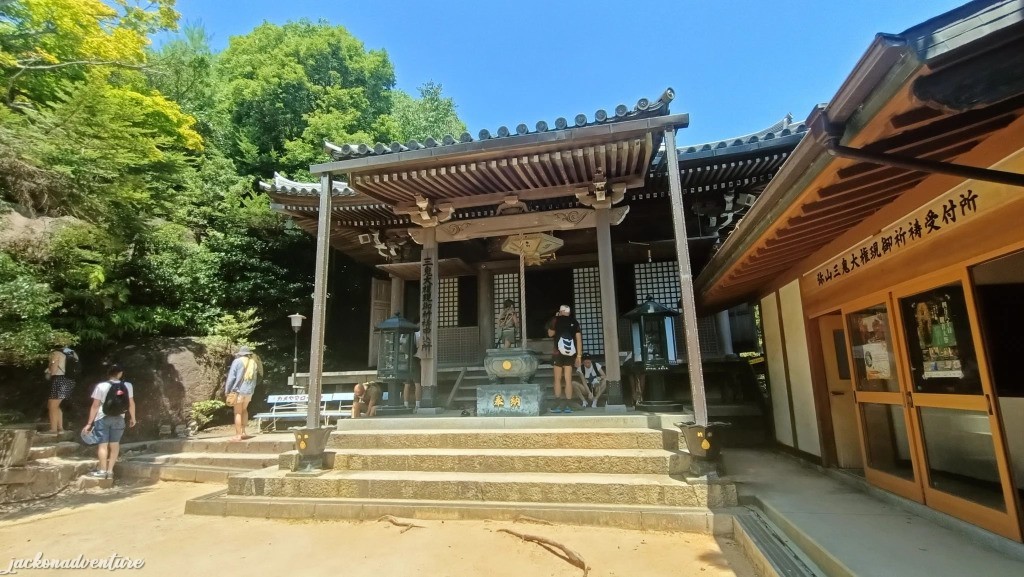
The Sankido Hall enshrines the three fierce gods called “The Three Great Oni Gongen.” The main god is Tsuichokijin and the long-nosed goblins called Tengus are their servants. These guardian deities of Mt. Misen provide blessings for safe family life and prosperity in business.
Opening Hours: Daily from 8 am to 5 pm
Enjoy magnificent views from the summit of Mt. Misen
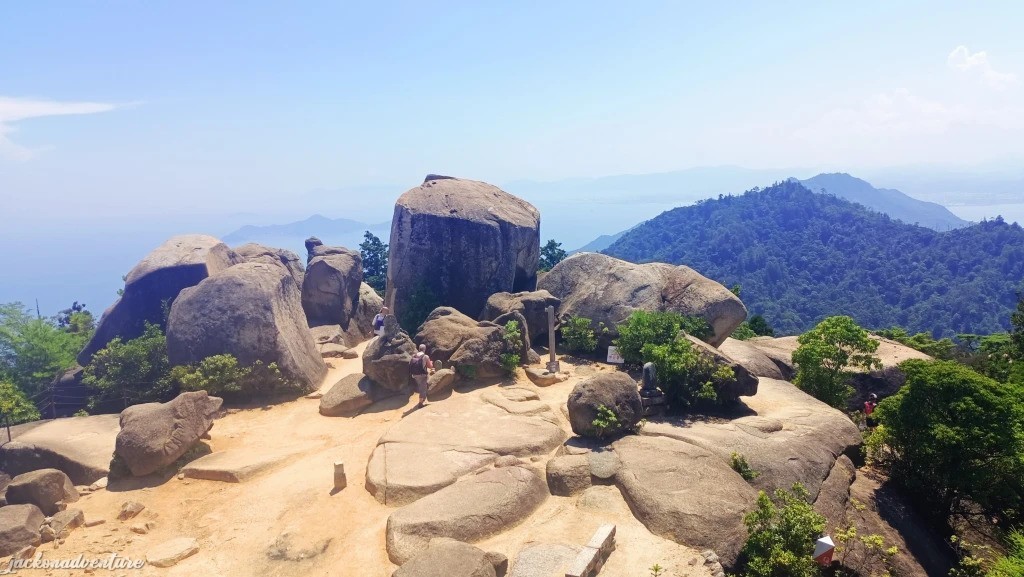
The summit is just a short climb from Sankido Temple. The path weaves around towering boulders and the views give a glimpse of what’s awaits at the top.
I feel a sense of accomplishment and satisfaction upon reaching the summit on a hot summer day with every effort worth counting. There is a modern wooden observation deck to get my feet rested after a hard work of an uphill hike while admiring the magnificent nature wonders surrounding Mt. Misen. Many hikers brought their packed bento lunch boxes or sushi with drinks to replenish their energy before making the journey down the mountain.
Wander around the spacious Senjokaku Hall
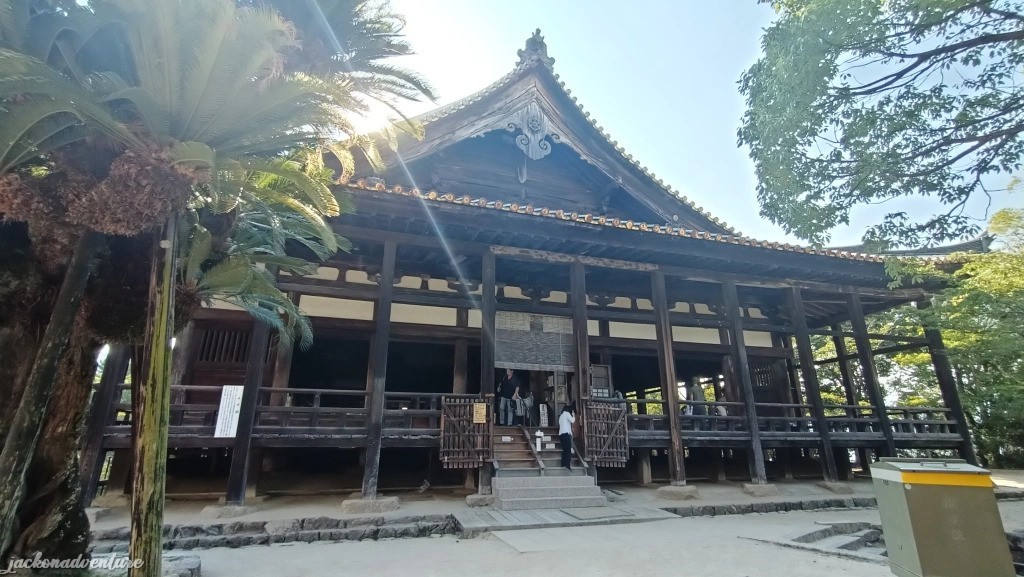
This unfinished Senjokaku (千畳閣) dates back to 1587 when Toyotomi Hideyoshi, one of the three unifiers of Japan built this massive hall for chanting Buddhist sutras for fallen soldiers. The hall is so massive that the building can place about one thousand tatami mats. Hence, its name.
The hall remained incomplete when Hideyoshi passed away in 1598 and later Tokugawa Ieyasu took power. The unfinished appearance of Senjokaku has remained until today with the lack of the gold decorations, lanterns and statues usually found in shrines and temples. There are some incredible ancient paintings hanging from the ceilings. Senjokaku was converted into a Shinto shrine in 1872 and rededicated to the spirit of Hideyoshi.
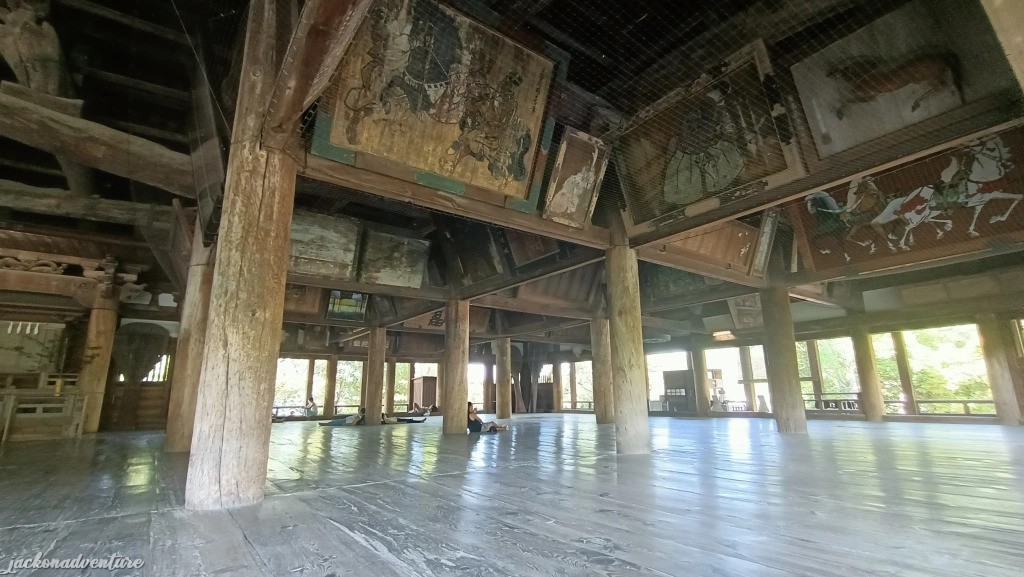
You can sit near the open corridor to appreciate the gorgeous views of the Itsukushima Shrine, the five-story pagoda and the surrounding mountains.
Location: 1-1 Miyajimacho, Hatsukaichi, Hiroshima
Opening Hours: Daily from 8.30 am to 4.30 pm
Entrance Fee: Adults: 100 yen/ Children: 50 yen
Take a glimpse of the Five-Storied Pagoda
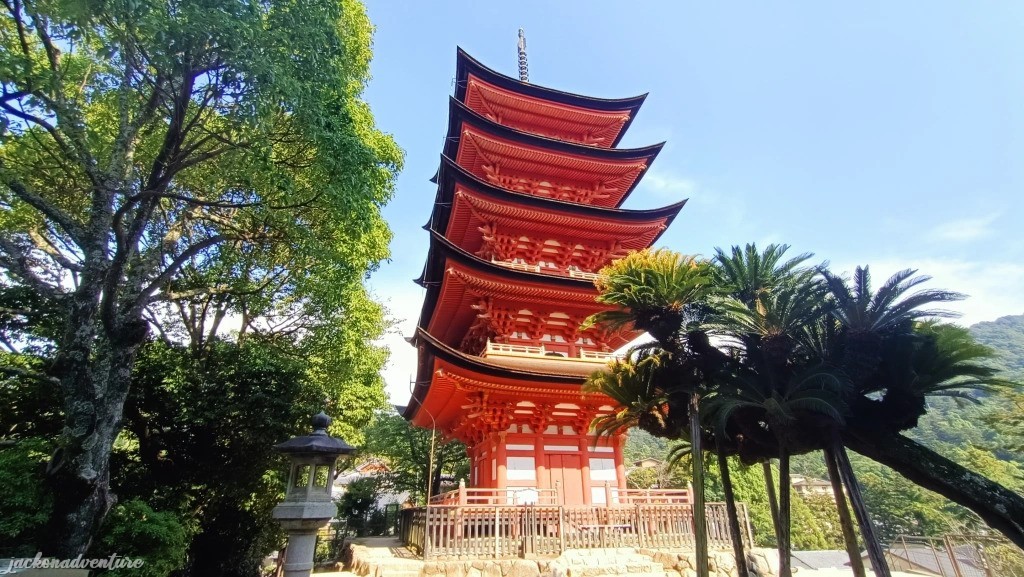
This enchanted five-storied pagoda was built in 1407 with Japanese and Chinese architectural styles. Standing at 29 meters in height next to Senjokaku, the vermillion pagoda enshrines the Medicine Buddha, a Buddhist saints Fugen and Monju. Unfortunately, the pagoda is not open to the public but is still worth checking out from up close and afar.
Go food tasting at Omotesando Arcade
Located near the Miyajima port, the Omotesando Arcade is filled with a variety of restaurants and shops where people can relax and enjoy a great meal after a long day of sightseeing on the island. Some of the delicious food found here include grilled oysters, anko (red bean) sweets and okonomiyaki (one of my favorite Japanese dishes).
Walk down to Great Floating Torii
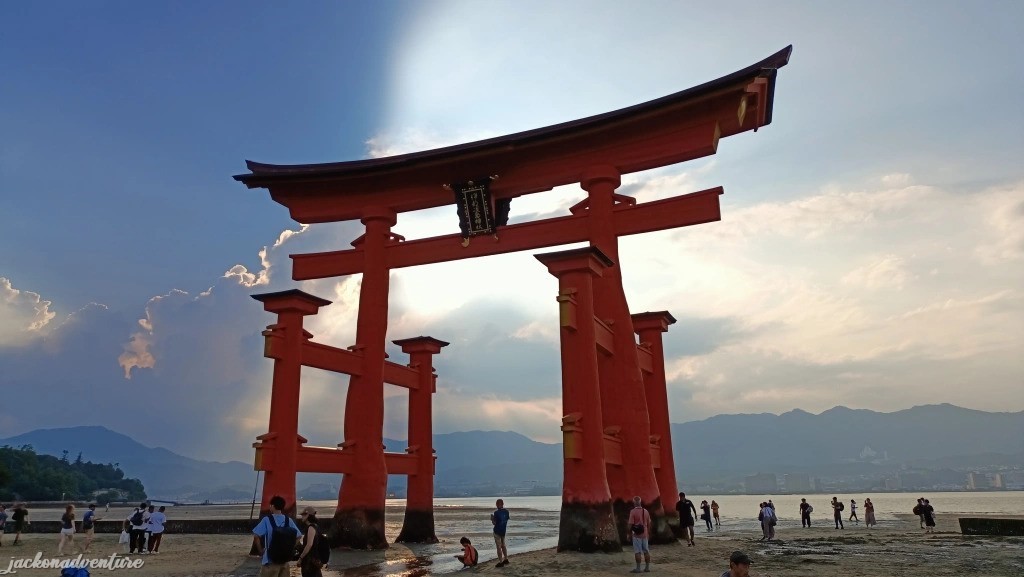
As the sea level subsided in the afternoon, stroll along the beach and get a closer view of this impressive Great Torii. You can admire the picturesque views of the Torii gate with the backdrop of the Seto Sea and the stunning sunset.
You may be lucky to have a friend accompany you to watch the beautiful scenic views when the sun sets off through the horizon- the sacred deer.
Travel Tips: Always be alert when the sea level quickly rises in the evening.
Coming to Japan Real Soon?
If you like to travel to other parts of Japan, here are some ideas of cities and towns worth visiting with the best things to do. There are also stories about my experience on the Shinkansen train ride and WWOOFing in Japan.
- Tokyo in 2024
- Tokyo in 2023
- Kamakura
- Nagoya
- Nagano
- Takayama
- Gujo
- Ise
- Kumano Kodo
- Okayama
- Hiroshima
- Mt Fuji
- Kyoto
- Arishayama
- Nara
- Osaka
- Shinkansen Train
- WWOOFing in Japan
Like It? Pin This Article.

 Jack on Adventure
Leave a comment