
Situated along the Douro River estuary, Porto is a city and port located at the river’s mouth on the Atlantic Ocean. It is the second largest city in Portugal after Lisbon and one of the oldest European centers. The historic centre of Porto was designated a UNESCO World Heritage Site in 1996.
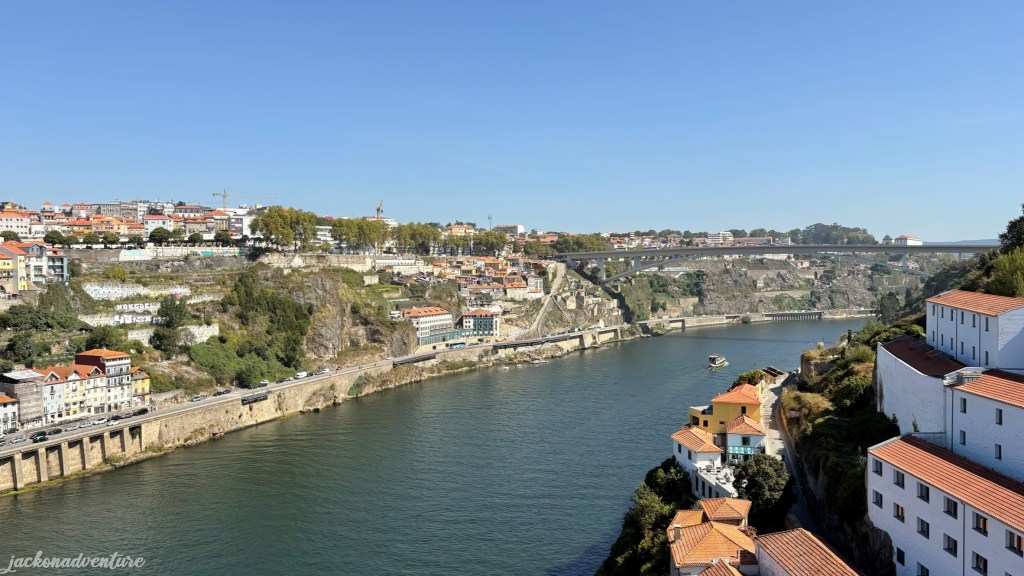
History buffs and architecture enthusiasts can explore the old streets dotted with well-preserved historic buildings. Porto’s initial fame derived from the production of the famous Port wines, a sweet red drink typically served with dessert.
In recent years, visitors have flocked to the city to admire its distinctive azulejo tiles, which adorn many churches, museums, hotels and other public spaces. Harry Potter fans also come to visit the renowned Livria Lello, a bookshop that inspired J.K. Rowling to create the world of Hogwarts.
Brief History of Porto
Porto was once inhabited by the Gallaeci, a Celtic people who settled at the mouth of the Douro River in the early 8th century BC. The Romans developed the settlement into a significant commercial hub and named it Portus Cale during the Roman Empire. It was earlier a flourishing community on the Douro’s south bank. The nomadic Alani tribe later founded the city of Castrum Novum on the north bank.
The Visigoths occupied the site about 540 CE, but were conquered by the Moors in 716. Christian forces recaptured Porto in 997, which became the capital of the counts of Portucalense for a time while Moorish rule persisted in the southern part of the kingdom. The Moors briefly held the city again, but it finally came under Christian rule in 1092.
By the 15th century, Porto had become a prominent shipbuilding and maritime center. Prince Henry the Navigator, born there in 1394, launched the Conquest of Ceuta from Porto. He initiated the Portuguese Age of Discovery.
Wines from the Douro Valley had been transported to Porto in flat-bottomed barcos rabelos since the 13th century. The Portuguese established commercial and military ties with England and the English began dominating the port wine trade.
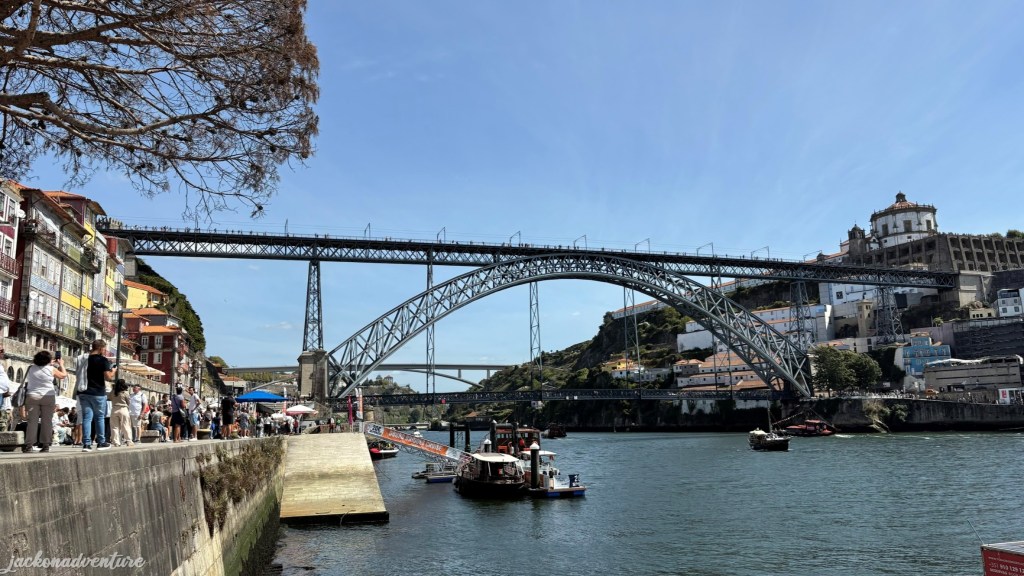
The city of Porto built the Ponte das Barcas in 1806. During the Peninsular War, British forces under Arthur Wellesley crossed the Duoro River using wine barges to counterattack the French and captured the city on May 12, 1809. The bridge collapsed when thousands of civilians tried to flee across, resulting in the death of approximately 4,000 people. The bridge was later replaced with the current Dom Luís I Bridge.
When the republican revolt occurred on January 31, 1919, the monarchist forces proclaimed the so-called Monarch of the North in Porto. The city briefly served as the capital of the restored monarchy before the republican forces regained control.
Best Time to Visit
Some of the best times to explore Porto are in late spring (May and June) or early autumn (September to November). The shoulder seasons are generally the most favorable periods to visit Porto when the weather is mild or occasionally warm. There are fewer tourists and the price of accommodation is more affordable.
Winter is also a great time to visit if you love cooler weather. The weather can be wet and the temperatures remain relatively mild with average highs around 17 °C. You can avoid crowds and experience some of Portugal’s festive season.
The summer between June and mid-September is usually hot, with temperatures often exceeding 30°C. It is the peak travel season in Europe, and large crowds are expected in Porto as well. Accommodation and airfares tend to spike during this season.
Getting There
By Plane
There are regular direct flights to Porto’s Francisco Sá Carneiro Airport (Airport Code: OPO) from various destinations across Europe. This second-largest airport of Portugal is located about 11 kilometers from the city center and is well-connected by the public transport.
The best way to get to the city on a budget is to take the E-metro line. Trains depart directly from the airport every 20 minutes from 5 am to 1.30 am and the journey takes about 30 minutes. You need to buy an Andante Card at the ticketing machine at the airport station. The fare to the city center costs €2.
Alternatively, you can take the GetBus from the airport and arrive at Campanhã Bus Station in approximately 30 minutes. There are 9-10 departures daily and the fare is €3 one way or €5.10 for a return-trip. This is a good option if you’re carrying many bags.
If you’re traveling in a group, you can take an Uber or Bolt to the city center for as little as €13. This way is faster and more convenient, especially if you have heavy bags and the driver can drop you off directly at your accommodation.
By Train
Comboios de Portugal (CP) is the national railway system in Portugal. Alfa Pendular (AP) is the fast train and Intercidades (IC) trains travel between Lisbon, Porto and the Algarve daily. Urbano (U) and Regional (R) trains travel within the local regions.
To reach São Bento Station, you can choose to take either first-class or second-class seats on the AP or IC trains. Seat reservation is required for these services. Although train tickets are more expensive than buses, the train journey is considerably faster. All train schedules and prices are available on the CP website and their app.
By Bus
The most economical way to get to Porto is by taking the popular Flixbus if you’re already located in Portugal. You can find affordable bus rides from major cities, including Lisbon, Coimbra and the Algarve region. Buses will arrive at Campanhã Bus Terminal and later transfer to the local subway from Campanhã Station to the city center.
You can also take the ALSA bus and Flixbus from the neighboring Spain. I always favor ALSA when traveling from and across Spain because the service is very reliable and punctual. I took ALSA bus from Santiago de Compostela after my one-week Camino Portugués Coastal Route walk and had a smooth 3-hour journey to Porto.
Getting Around
Porto is a beautiful city filled with city wonders and rich history. Whether you’re visiting for the first time or returning for another new adventure, exploring the city on foot is the great way to soak up Porto’s vibrant vibes and cultural depth. Many attractions are within walking distance, it is often unnecessary to rely heavily on public transportation. Be sure to wear comfortable walking shoes as many pathways are cobblestone and situated along steep hills.
If you prefer to use public transport, the city is well-connected with by an extensive network of buses, trains, trams and subways. For just €15, you can purchase a 3 Day Transport card that covers most forms of public transportation in Porto.
A 1 or 2-day panoramic hop-on-hop-off bus pass is also available, covering many city attractions. The price of the pass starts from €20 and provides free or discounted prices to many museums, wine cellars and restaurants.
The Best Activities for 3 days in Porto
Picture yourself walking down the cobblestone streets filled with beautiful churches, stunning Duoro River and other historical landmarks. Or enjoy savoring the delicious culinary meals or sipping the regional brewed Port wines. You can spend 3 days enjoying the best of Porto, and also recommend taking a day trip to the nearby Braga City.
Take the picturesque Porto City Hall
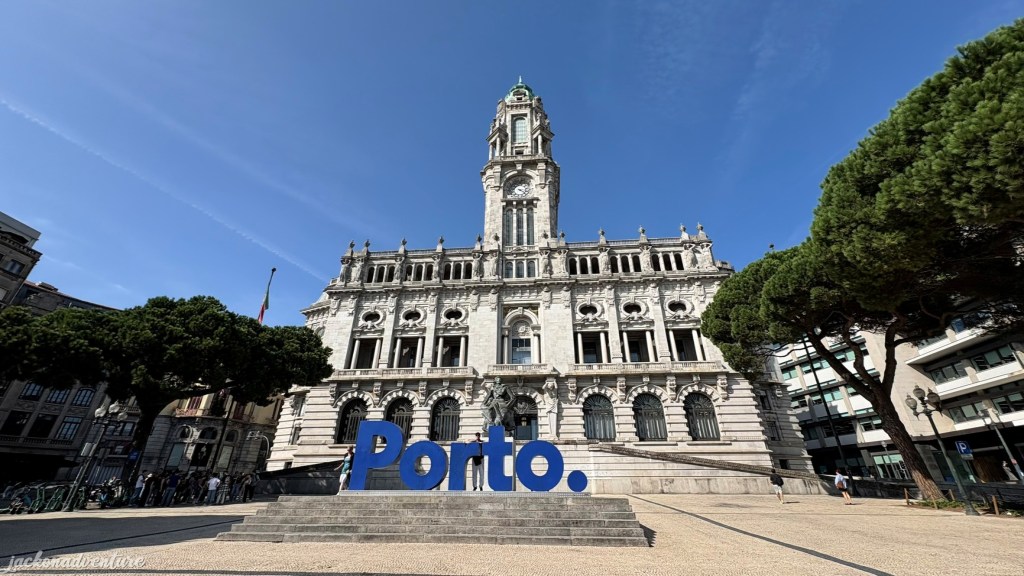
Kick-start your Porto journey at the Porto City Hall. Locally known as Camara Municipal do Porto, this impressive Neoclassical building and plaza sit at the heart of the city center. The 70-meter clock tower is an iconic symbol of the city. The Praça do Município pool in front of the town hall gives a beautiful reflection of the building.
Although the town hall seems old, it was built in 1957. It serves as the headquarters for the city’s municipal government and is frequently hosts civil events and celebrations.
The main hall is open to visitors on weekdays and you can admire the grand interior, which features several artworks.
Location: PC GEN Humberto Delgado, 4049-001 Porto
Opening Hours: Monday to Friday: 9 am to 5 pm
Stroll along Rua do Almada
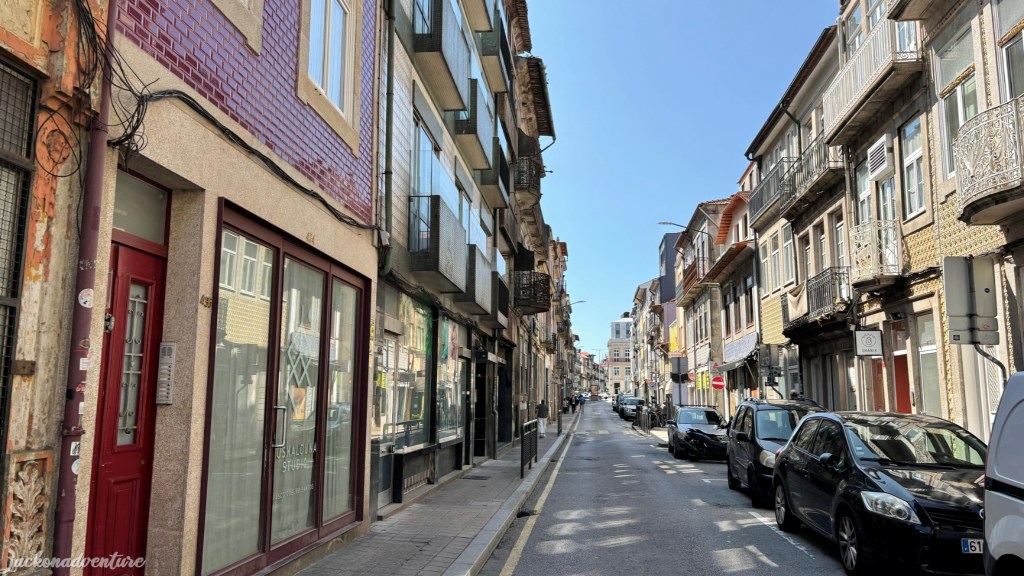
Rua do Almada is one of the oldest streets in Porto. It was named in honor of the Governor of Porto, João Almada e Melo, who served in the second half of the 18th century. He played an important role in the city’s urban expansion.
The street was once known as the “street of hardware” or “taps, nails and locks” when many hardware stores were established. It is strongly tied to the iron trade and some commercial properties still display the wagon rails once used to transport heavy goods.
The road has transformed over time into a mix of shops, restaurants and apartments featuring beautiful iron balconies and tile façades. Today, many people shop and dine beneath the clothes that hang from the residents’ laundry lines.
Visit the Church of Saint António de Los Congregados

The Church of Saint António de Los Congregados was built in 1703 on the site of an earlier chapel. It was dedicated to St Anthony, a Franciscan priest from the 12th century.
The Baroque-style church was restored in the 19th century. The classic blue-and-white azulejo tiles were added by Jorge Colaço in the 20th century and portray the scenes from the life of Saint Anthony and the Assumption of the Blessed Virgin Mary.
Location: R. de Sá da Bandeira 11, 4000-433 Porto
Opening Hours: Monday to Saturday: 10 am to 12.30 pm and 1.30 pm to 7 pm
Entrance Fee: Free
Marvel the Livraria Lello Bookstore
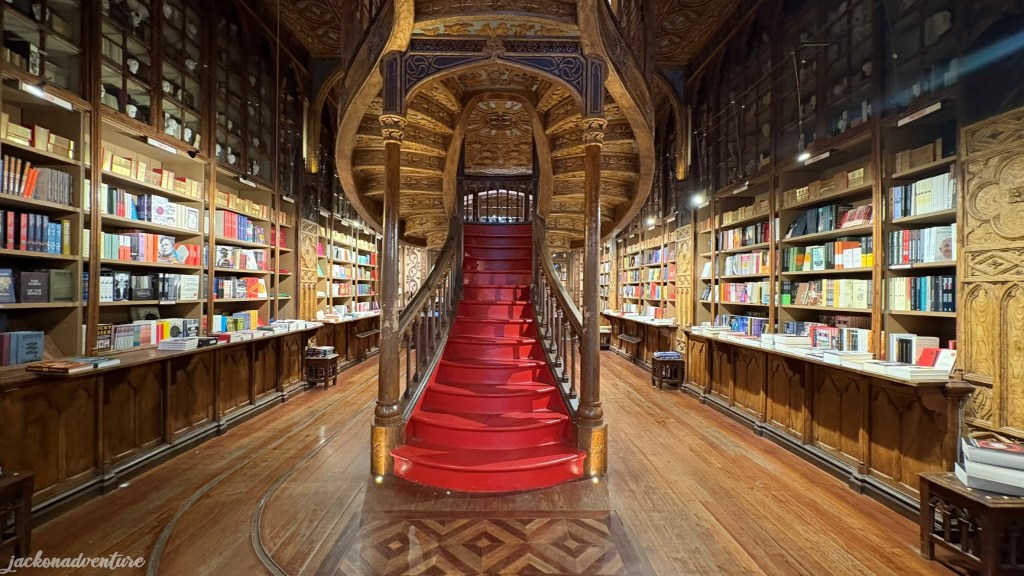
Named one of “the Prettiest Bookstores in the World”, this Livraria Lello is famed for its iconic red staircase and striking interior. The bookstore opened its door in 1906 and has since become a ‘must-see’ tourist attraction in Porto.
The fascinating Lello Bookstore was established by the brothers, Joses and Antonio Lello. The store houses a huge collection of historic books dating back to the Middle Ages. Its spectacular façade was designed by Francisco Xavier Esteves in the Neo-Gothic and Art Nouveau styles.
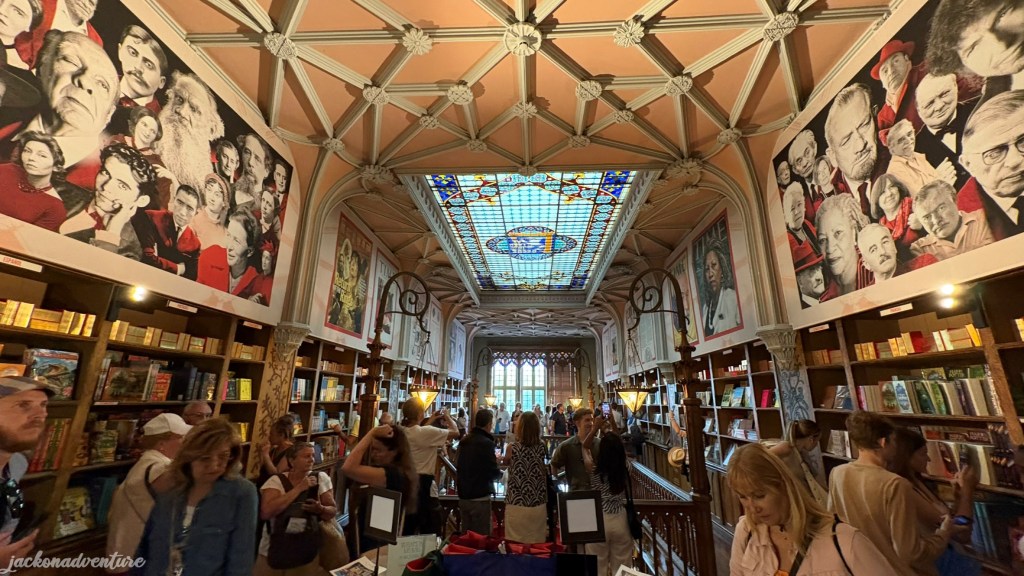
Legend has it that the stunning interior inspired J.K. Rowling to create the wizarding world of Harry Potter and elements of Hogwarts during her years of teaching in the early 1990s. The bookstore was very impressed that it lured Potter-mania and Instagrammers to flock here. The compact interior and exquisite scarlet staircase attract up to 4,000 visitors each day.
Travel Tips: The best time to visit Livraria Lello is in the late evening. It is advisable to go to the bookstore an hour before the store closes. That way, you can have a pleasant visit after the day-trippers and city tour groups have left. Visit their official website to view other entry passes and purchase tickets in advance.
Location: R. das Carmelitas 144, 4050-161 Porto
Opening Hours: Daily from 9 am to 7.30 pm
Entrance Fee: Ticket Silver: €10 (An entry with a voucher discounted with the purchase of a book)/ Ticket Gold: €15.95 (Gold entry line self-guided visit and a voucher discounted on a book from Livraria Lello Edition)
Have breakfast at Manteigaria
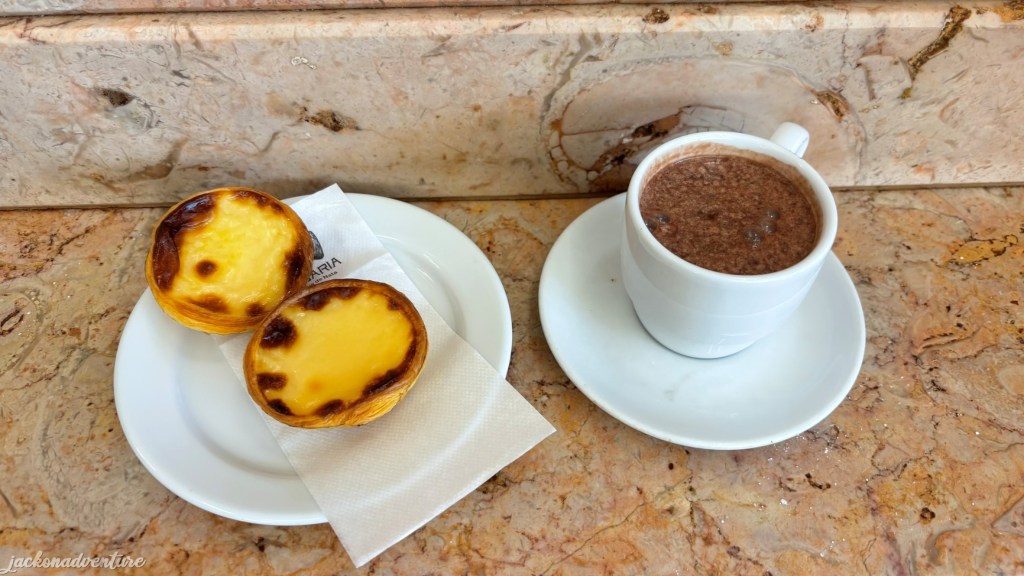
Manteigaria is one of the popular cafés that sells freshly baked pastéis de nata, perfect for those searching for sweet treats. As you savor their delicious pastries, you can watch the master pastry chefs in action behind the Estremoz marble worktop, as they prepare up to 8,000 flavorful pastéis de nata daily.
In 2014, the owner opened their first shop in Chiado, Lisbon and expanded the business through the capital of Portugal, Porto and Braga.
Visit the Chapel of Souls

The Chapel of Santa Catarina, commonly known as the Chapel of Souls (Capela das Almas), is a small 18th-century chapel with a lovely gem. The present building was completed at the end of the 18th century when the Brotherhood of Souls and Wounds of Saint Francis relocated from the Monastery of Santa Clara to this site. It was rebuilt to replace an old wooden chapel due to the growing popularity of the cult of Saint Catherine.
The church is decorated with 15,947 blue-and-white tiles by Eduardo Leite in 1929, depicting the death of Saint Francis of Assisi and the martyrdom of Saint Catherine.
Location: R. de Santa Catarina 428, 4000-124 Porto
Opening Hours: Monday, Tuesday and Saturday from 7.30 am to 1 pm and 3.30 pm to 7 pm/ Wednesday to Friday: 7.30 am to 7 pm/ Sunday: 7.30 am to 1 pm and 6 pm to 7 pm
Entrance Fee: Free
Explore the wonderful Porto Cathedral
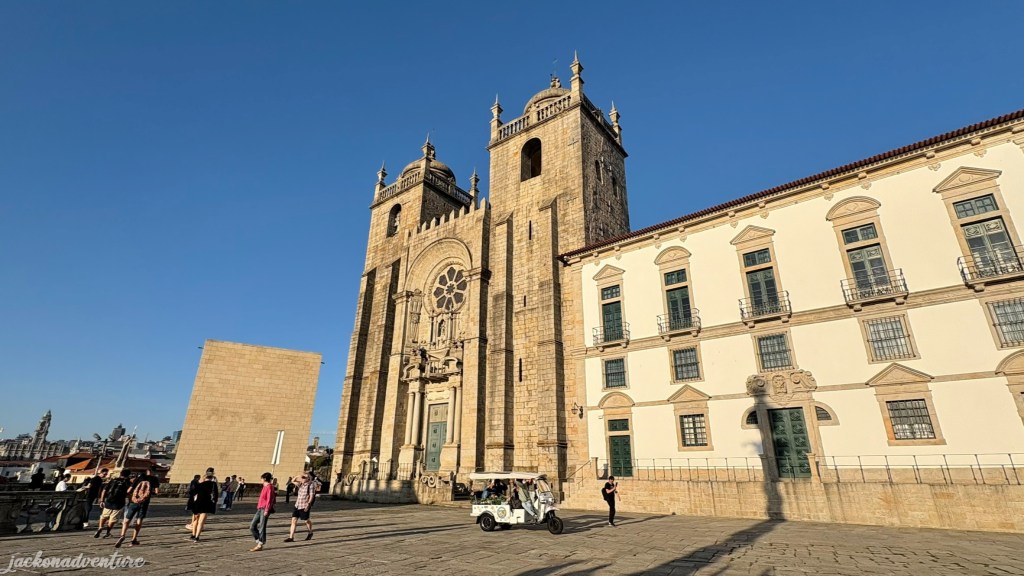
The Porto Cathedral (Sé do Porto) is among the oldest monuments in the city’s historic center. The construction began in the 12th century, but the cathedral was rebuilt and renovated numerous times over the following six centuries. This explained why the cathedral has a blend of Romanesque, Gothic and Baroque architectural styles.
Inside the Roman Catholic church, you can see opulent gilded woodcarvings, an altar with intricately carved pews and large pillars supporting a high ceiling. The beautiful blue and white azulejo tiles illustrate various religious and cultural stories.
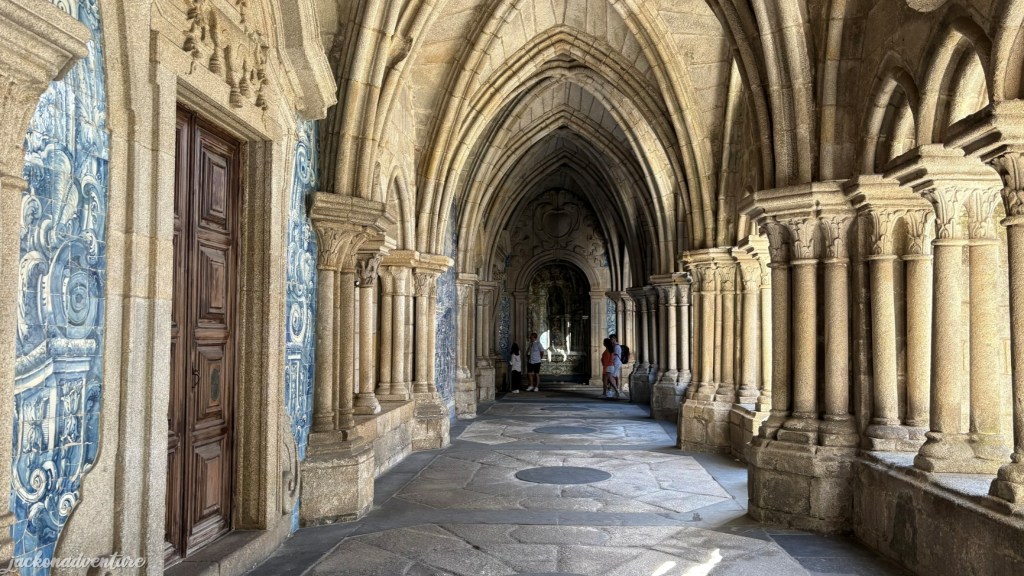
The cloister, dating back to the 14th century, is decorated with tiles depicting some scenes from the Bible. The Casa do Cabildo houses a collection of the most valuable possessions of the Cathedral Treasure.
The rooftop is one of the best vantage points to enjoy the spectacular views of the orange-roof houses, maze-like streets, the Douro River and the wine cellars along the opposite riverbank.
Location: Terreiro da Sé, 4050-573 Porto
Opening Hours: April to October: Daily from 9 am to 6.30 pm/ November to March: Daily from 9 am to 6.30 pm
Entrance Fee: Cathedral: Free/ Cloister: €3 (Porto Card Holder and Students: €2/ Children: Free)
Enjoy the scenic views of Miradouro da Rua das Aldas
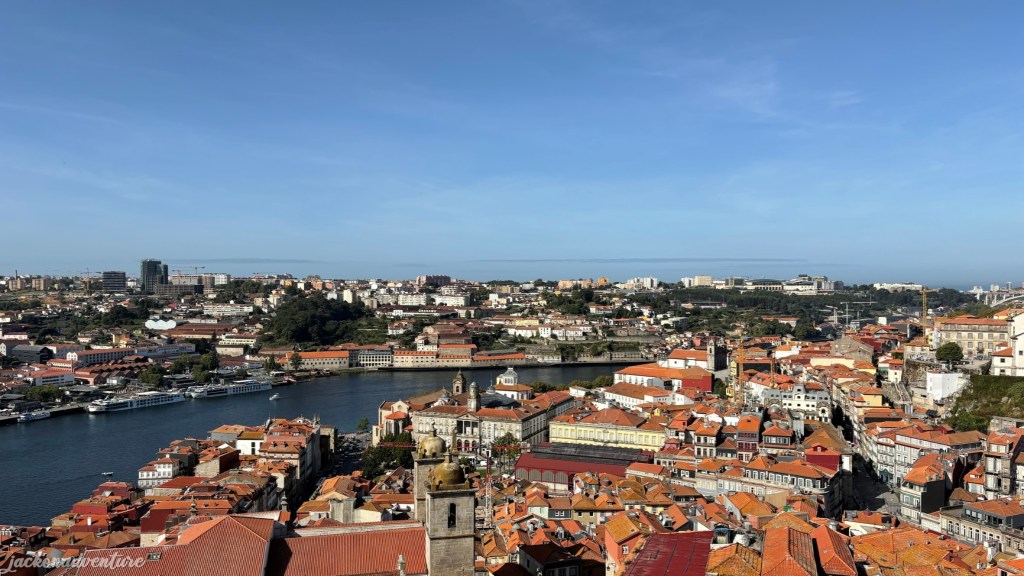
Perched on a picturesque hill, Miradouro da Rua das Aldas offers sweeping scenic views of Porto’s magical cityscape. The viewpoint is a tranquil escape from the hustle and bustle and a perfect photographic scene of charming architecture, historic bridges, the Clérigos Tower and the Douro River. In the evening, the area often comes alive with street performers and local vendors..
The Pillory of Porto in the square tells a remarkable story of the city’s past. This iconic structure symbolised authority and justice during the medieval era, where criminals were publicly punished. Today, this historic landmark has become one of the starting points for pilgrims embarking on the Camino de Santiago to the cathedral.
Location: R. das Aldas 1, 4050-026 Porto
Hop on the Douro River Cruise
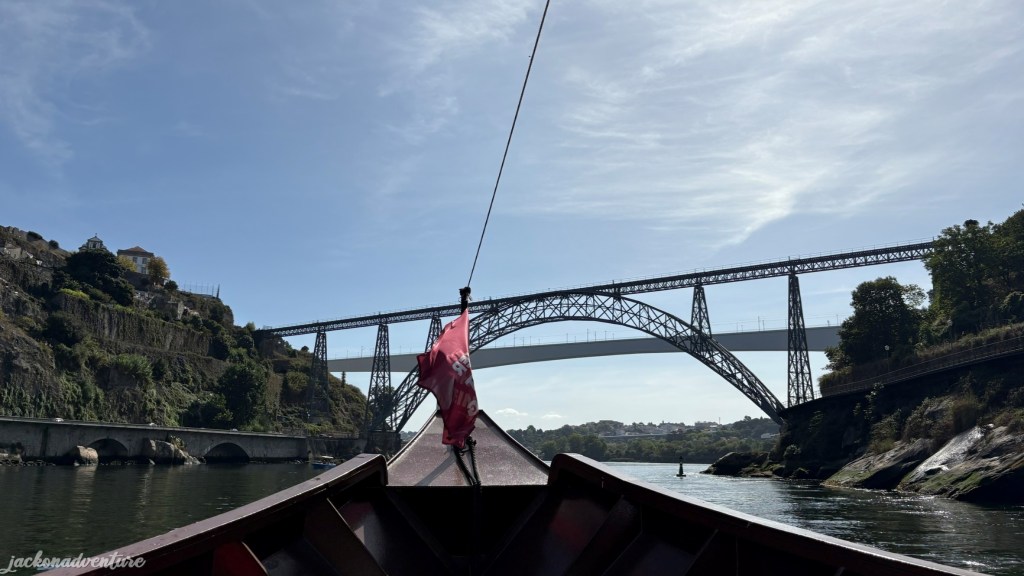
One of many memorable experiences in Porto is taking the Six Bridges Douro River Cruise.
Not only will you learn about the iconic Luís I Bridge, but this 1-hour cruise onboard a traditional rabelo boat takes you through the six iconic bridges of Porto. The cruise passes the bridges of Ribeira and Vila Nova de Gaia, while the guide recounts the fascinating history behind these six bridges.
The guide will also point out historic landmarks along the bank of the Douro River, making this tour one of the highlights of any visit to Porto.
Admire the stunning Igreja de Santa Clara

Designated a National Monument, Igreja de Santa Clara was completed in 1457 to replace a medieval Franciscan convent. It belonged to the cloistered Franciscan order of nuns, the order of Poor Clare until the 19th century, when the last nun of the order passed away.
The exterior largely retained its 15th-century Gothic style, although the main entrance has been remodeled in Baroque design.
Don’t judge by the plain exterior design at the entrance. You’ll be stunned by the overwhelming gilded woodwork dating to the 17th century. The church is richly adorned with carvings of angels, cherubs and saints. The revolving wooden door was used by the nuns to sell sweets to the public and make transactions. They were prohibited from having contact with people outside the order.
Location: Largo Primeiro de Dezembro, 4000-404 Porto
Opening Hours: Daily from 9 am to 12.30 pm and 2 pm to 5.30 pm
Entrance Fee: Church: Free/ Cloister: €3 (Free for visitors with disabilities)
Visit the Igreja of Saint Ildefonso

This elegant Igreja of Saint Ildefonso was completed in 1739 and named in honor of the Bishop of Toledo. The construction of the main church started from 1709 to 1730 and took another nine years to finish the bell towers.
One can’t help but be captivated by the striking façade of over 11,000 striking blue and white azulejo tiles created by Jorge Colaço in the 1930s. This masterpiece depicts scenes from the life of St Ildefonso and stories from the gospel. The interior features stained-glass windows near the altar and is adorned with golden decorations.
Location: Praça da Batalha s/n, 4000-101 Porto
Opening Hours: Daily from 9 am to 12.15 pm and 3 pm to 5.15 pm
Entrance Fee: €1 (Free for visitors with disabilities)
Enjoy the evening vibe in the Ribeira district

Riberia is a postcard-perfect neighborhood with a maze of cobblestone streets and colorful tiled townhouses. Small bars and restaurants are lined up along the riverfront, serving a variety of traditional Portuguese, Italian, Western and Asian dishes.
You can dine at one of the Portuguese restaurants while watching boats and cruise ships flow through Douro River. For meals with a decent price, walk behind the main street and you find a peaceful street packed with restaurants and bar that still served delightful food.
The main street of Riberia comes alive in the evening with local musicians playing melodious tunes and street performers entertaining passersby.
Marvel the Dom Luís I Bridge
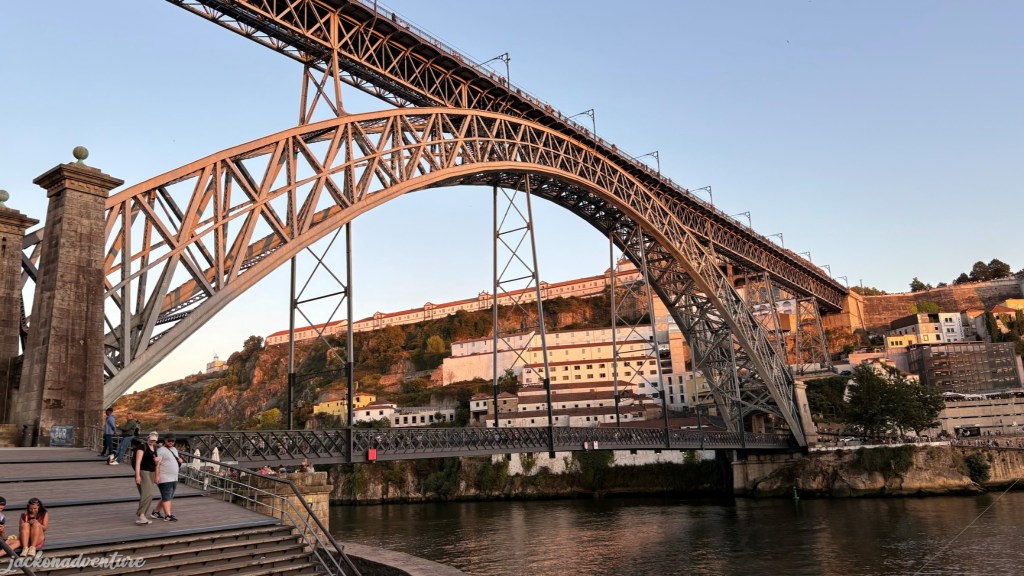
Take a walk along the famous Dom Luís I Bridge on a sunny day or a beautiful evening. Marvel at the engineering work of this legendary 172-meter-long bridge, constructed between 1881 and 1886 by a student of Gustave Eiffel, Théophile Seyrig.
This double-decker bridge was once the longest metal arch bridge in the world. The yellow-line subway crosses the Douro River via the upper deck of the bridge, while vehicles cross using the lower deck. As for pedestrians, you can use either deck to get from the historic Ribeira district to Vila Nova de Gaia.
Visit the Clérigos Church

Clérigos Church was built between 1732 and 1750 by an Italian architect Nicolau Nasoni for the Brotherhood of the Clérigos. The main façade of the church is richly decorated with Baroque motifs such as garlands and shells. The central frieze above the windows presents symbols of worship and an incense boat.
Location: R. de São Filipe de Nery, 4050-546 Porto
Opening Hours: Daily from 9 am to 7 pm
Entrance Fee: Free
Watch the sunset from Torre dos Clérigos
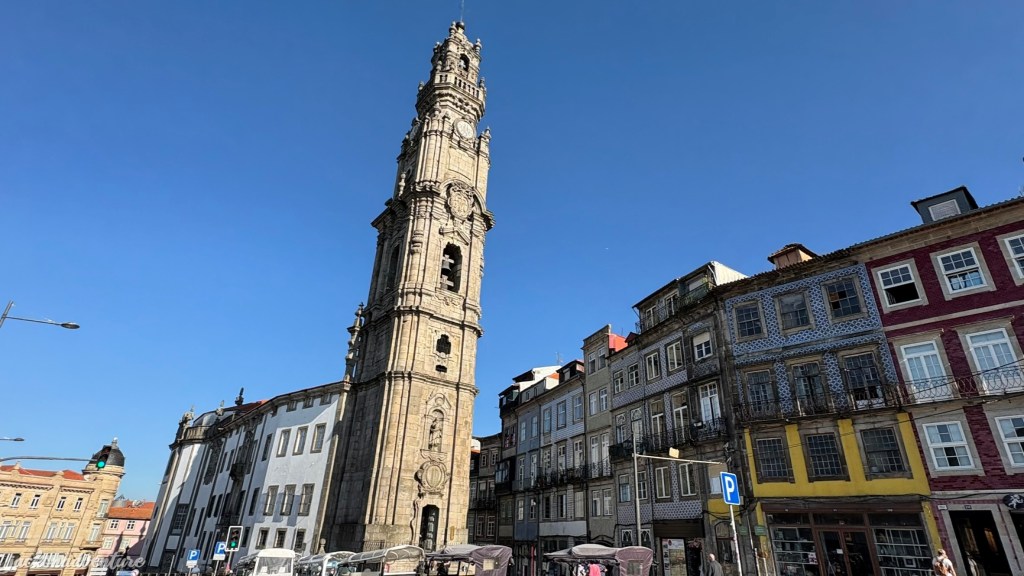
After you visit Clérigos Church, make your way to the back of the church and climb to the top of Torre dos Clérigos. If you’ve some free time, be sure to visit the museum before heading up to the tower.
The monumental Baroque tower was built between 1754 and 1763 and was once the tallest building in Portugal. Today, it is still the tallest bell tower in the country.
Dominated Porto’s entire urban landscape, the 76-meter bell tower is visible from every corner of the city. Climb the steep 225 steps to see the 49 bells and catch the most incredible 360° panoramic views of Porto.
The Torre dos Clérigos is one of my favorite vantage points to catch the stunning sunset across the Atlantic Ocean. Many historic buildings can be seen from the top of the tower, including Porto Cathedral, Vila Nova de Gaia and the six bridges along the Douro River.
Location: R. de São Filipe de Nery, 4050-546 Porto
Opening Hours: Daily from 9 am to 7 pm
Entrance Fee: Adults: €10/ Students aged 11-18: €7/ Children below 11: Free
Visit the little gem of the Parish Church of St. Nicholas
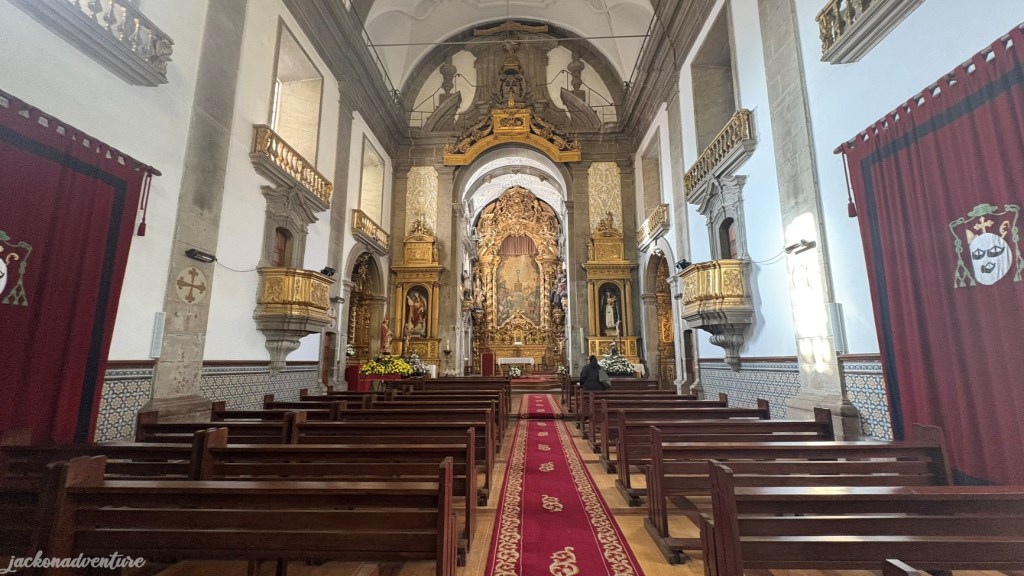
Nestled between the walls of two apartments, the Parish Church of St. Nicholas (Igreja Paroquial de São Nicolau) is a charming place of worship decorated with blue and white tiles. With its roots dating back to the 18th century, this Catholic church showcases a blend of Baroque and Neoclassical architectural styles. Its ornate façade, adorned with intricate carvings and a majestic bell tower, sets the stage for the beauty within.
The church serves as a peaceful sanctuary, where you can appreciate the beauty and atmosphere around the hallowed halls. It is surrounded by exquisite altarpieces, delicate frescoes, and beautifully crafted wooden interiors that reflect the artistic heritage of the region.
Location: R. do Infante Dom Henrique 93, 4050-298 Porto
Opening Hours: Wednesday to Saturday: 9 am to 12 pm and 4 pm to 8 pm/ Sunday: 9 am to 10.15 am
Entrance Fee: Free
Get fascinated by the interior of Palácio da Bolsa
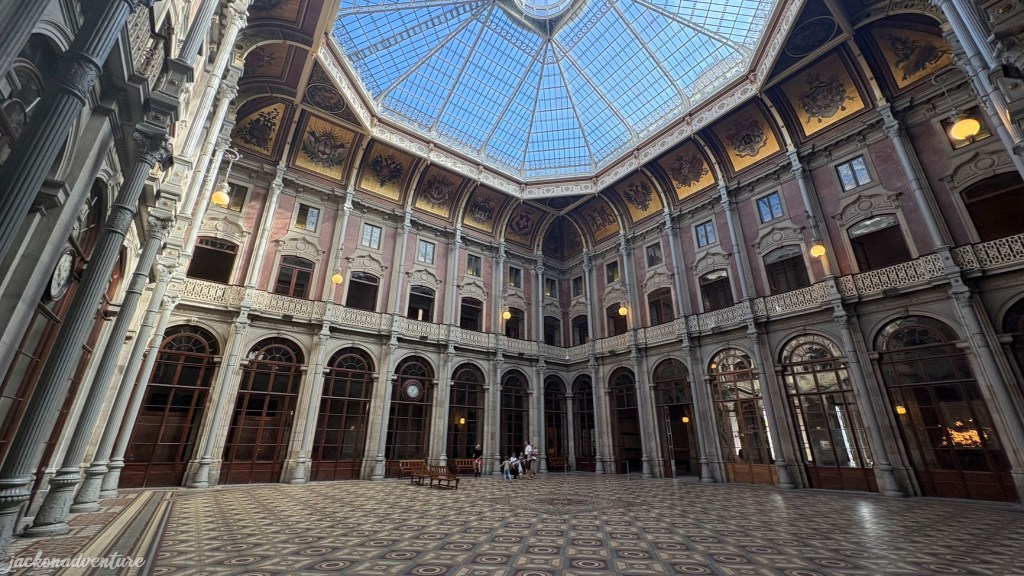
Located in the heart of the historic center, the Palácio da Bolsa or the Stock Exchange Palace, is one of the most exquisite monuments in the city.
The Neoclassical and Moorish-style building was built between 1842 and 1910 to impress European investors. It is home to the magnificent glass-domed Hall of Nations (Pátio das Nações), which allows sunlight to illuminate the beautiful mosaic flooring.
From the grand marble and granite staircase, you will step into some of the most lavish rooms, including the Gold Room, decorated in gold leaf, and the General Assembly Room, adorned with wood finishes.
The highlight of the palace is the Arab Room (Salão Árabe) that was inspired by the Alhambra in Spain. The hall is designed in exotic Moorish Revival design and gilded gold embellishment. It is now reserved for official functions.
Location: Palácio da Bolsa, R. de Ferreira Borges 11, 4050-253 Porto
Opening Hours: April to October: Daily from 9 am to 6.30 pm/ November to March: Daily from 9 am to 1 pm and 2 pm to 5.30 pm
Entrance Fee: Adults: € 10/ Students and Adults aged 65+: € 6.50 (25% off with Porto Card Holders)
Mermerzing the lavish Church of Saint Francis

Originally founded on Roman remains, the Church of São Francisco (Igreja de São Francisco) was transformed into a Gothic style and later adopted Baroque decor. It was built in 1383 during the reign of King Ferdinand to be dedicated to Saint Francis of Assisi.
The church comprises three naves covered in golden carvings. It is believed that over 300 kilograms of gold dust were used to decorate the building’s interior, earning its nickname “The Golden Church”. One of the wood carvings created by Filipe da Silva and António Gomes depicts the “Tree of Jeese”, which illustrates the genealogy of Jesus.
One of the church’s most impressive features is the Chancel, created by Manuel da Costa Andrade. The triumphal arch bears the arms of the Sá family with the dove of the Holy Spirit at the top. The family was granted the right to use the chapel as their pantheon in 1550. The arms of Saint Francis are located in the center. The exuberant decoration integrates the arch into line with the surrounding woodcarvings. The retable has a prominent Excharistic throne arranged on six levels and culminating in the crucifix.
Beneath the church lies the catacombs, where the Franciscan monks and members of Porto’s wealthiest families were buried. An ossuary containing thousands of human bones can be seen through a glass floor.
Location: R. do Infante Dom Henrique, 4050-297 Porto
Opening Hours: November to February: Daily from 9 am to 5.30 pm/ March to June and October: Daily from 9 am to 7 pm/ July to September: Daily from 9 am to 8 pm
Entrance Fee: Adults: € 10/ (25% off with Porto Card Holders and Students)
Explore Mercado Ferreira Borges

Built in 1885 by João Carlos Machado, Mercado Ferreira Borges is considered one of the finest remaining examples of Europe’s iron period.
This red iron and glass building was originally intended to replace the old Ribeira Market. However, it didn’t attract many vendors to this new place and was mostly left empty throughout the years. They repurposed it as a warehouse to store military equipment and a soup kitchen for the needy.
Mercado Ferreira Borges was given a new life to prevent its demolition to make way for a car park. The building was transformed into a Modern Art Museum, and an events and concert space called Hard Club.
You can find a variety of independent stores selling handmade crafts and jewelry, own-branded clothes and second-hand items. There is a terrace cafe with views over Ribeira and a microbrewery restaurant named O Mercado on the second floor.
Location: R. da Bolsa 19, 4050-253 Porto
Opening Hours: Daily from 10 am to 12 am
Wander along the famous Rua das Flores

Rua das Flores was once an ancient street frequented by the aristocracy and merchants. Today, this notable street is one of the most visited streets in Porto by both locals and tourists. It is filled with charming hotels, modern restaurants, relaxed cafes, independent gourmet grocers, sweet shops and traditional wine shops.
As you walk through Rua das Flores, keep an eye out for the street art that leaves a distinctive mark on the area—from painted electrical boxes to large-scale murals adorning multi-storey façades.
Admire the beautiful azulejo of São Bento Station
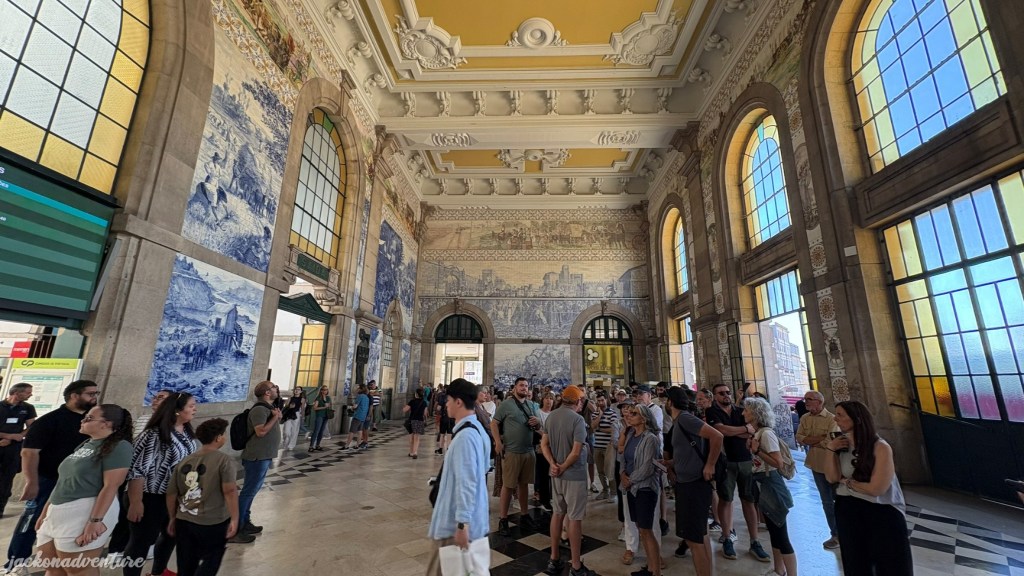
São Bento Station is the heart of Porto, connecting the city to other parts of Portugal. If you take a day trip or travel elsewhere in the country by train, you’ll likely pass through or become familiar with the station during your stay in Porto.
Opened to the public in 1916, the station was built on the site of a former 16th-century Benedictine Monastery, from which the station takes its name. It’s eye-catching 20,000 azulejo tiles were installed over 11 years between 1905 and 1916 by artist Jorge Colaço. The tiles portray the country’s history, including the story of the royalty, transportation history, and historic battles, such as the conquest of Ceuta in 1415 by Henry the Navigator.
Location: Praça de Almeida Garrett, 4000-069 Porto
Go food-hunting at Mercado do Bolhão

Opened its doors in 1914, Mercado do Bolhão is a vibrant two-level market located just east of Rua do Almada. This expansive bazaar has been feeding locals and visitors for almost 200 years, and has been a magnet for culinary enthusiasts ever since.
The market is an excellent starting point for anyone eager to discover Portuguese cuisine. Bolhão focuses on traditional food, offering both fresh and prepared meals at countless stalls. Those who want to sample local seafood, meats, vegetables and cheeses can order and have their selections prepared on the spot. These delicacies pair perfectly with locally produced Port wines, which are sold by vendors within the market.
The market’s upper floor features several sit-down eateries, serving delectable dishes made with high-quality ingredients. Among the notable venues are the contemporary Michelin Guide Culto Bacalhau, Casa das Ostras and Padaria Alzira do Bolhão, each offering a relaxed ambiance and exceptional food.
After savoring the local food and drinks, continue shopping for souvenirs, accessories and artisanal products. You might even be lucky enough to hear some live music.
Location: R. Formosa 322, 4000-248 Porto
Opening Hours: Monday to Friday: 8 am to 8 pm/ Saturday: 8 am to 6 pm
Visit the unique Igreja da Carmo

The Igreja da Carmo is one of the most beautiful churches in Porto, adorned with thousands of azulejo tiles on its eastern wall. This church looks odd with its unusual construction. If you look closely, you’ll notice that the building is composed of two adjacent churches.
The two churches are separated by a narrow 3-story Casa Escondida (Hidden House), built to avoid conflicts between the nuns of Igreja dos Carmelitas and the monks of Igreja do Carmo. Someone had lived in this 1-meter-wide house until the 1980s and it even has its own tiny front door.
To the left stands Igreja dos Carmelitas, built between 1616 and 1628 as a convent. The granite façade features three portals topped with images of Saint Joseph, Saint Teresa of Jesus and Our Lady of Mount Carmel. Its interior is richly gilded in Baroque and Rococo style and illuminated by large windows and a brightly colored ceiling. Its single nave contains six ornately decorated side chapels. Today, the former Carmelite convent building is the headquarters of the GNR (Portuguese National Guard).
Occupying the right-hand side of the complex is the Igreja do Carmo. Built between 1756 and 1768, the church was designed in the late Baroque style by José de Figueiredo Seixas, a disciple of Nicolau Nasoni. Its exterior features magnificent azulejo panels created in 1912 that portray scenes from the founding of the Carmelite Order and Mount Carmel. The façade also includes a rectangular portal flanked by sculptures of the prophets Elijah and Elisha. The interior displays a single nave with seven lavish gilded altars and several fine oil paintings.
Location: Praça de Gomes Teixeira 5, 4050-456 Porto
Opening Hours: April to October: 9 am to 6 pm/ November to March: 9 am to 5 pm
Entrance Fee: Free
Taste some local-grown Port wines

Porto is best known for its Port wine or simply Port. You can sample a range of sweet red Ports at one of over 50 wine lodges dotted across Vila Nova de Gaia. Ports are categorised according to their method of maturation, either in sealed glass bottles or wooden barrels. They are further distinguished by their degree of aging, being labelled as Ruby, Reserve, Rosé, Tawny and Vintage.
Port is traditionally served towards the end of the meal with cheese, as a dessert wine or as an after-dinner drink. These days, many people regard Port wine as one of the most civilised and sociable of wines, perfect for making any occasion special, whether at an informal gathering or paired with a main dish.

This iconic Portuguese fortified wine is produced from grapes grown in the Douro Valley of northern Portugal. Port owes its distinctive character to a unique combination of climate, soil, grape varieties and winemaking tradition. The valley’s microclimate is ideal for cultivating grapes, olives and almonds, with temperatures in the valley reaching 50°C in the hot summer and dropping to 3°C in winter. After fermentation, the wine was traditionally transported downriver on barcos rabelos for aging and storage. However, this process has been replaced with tanker trucks in modern days.
Experience The Best of Portugal
Have you started falling in love with Portugal after discovering how fascinating Porto is? Why not explore other cities and towns across the country, each with its own unique history and culture:
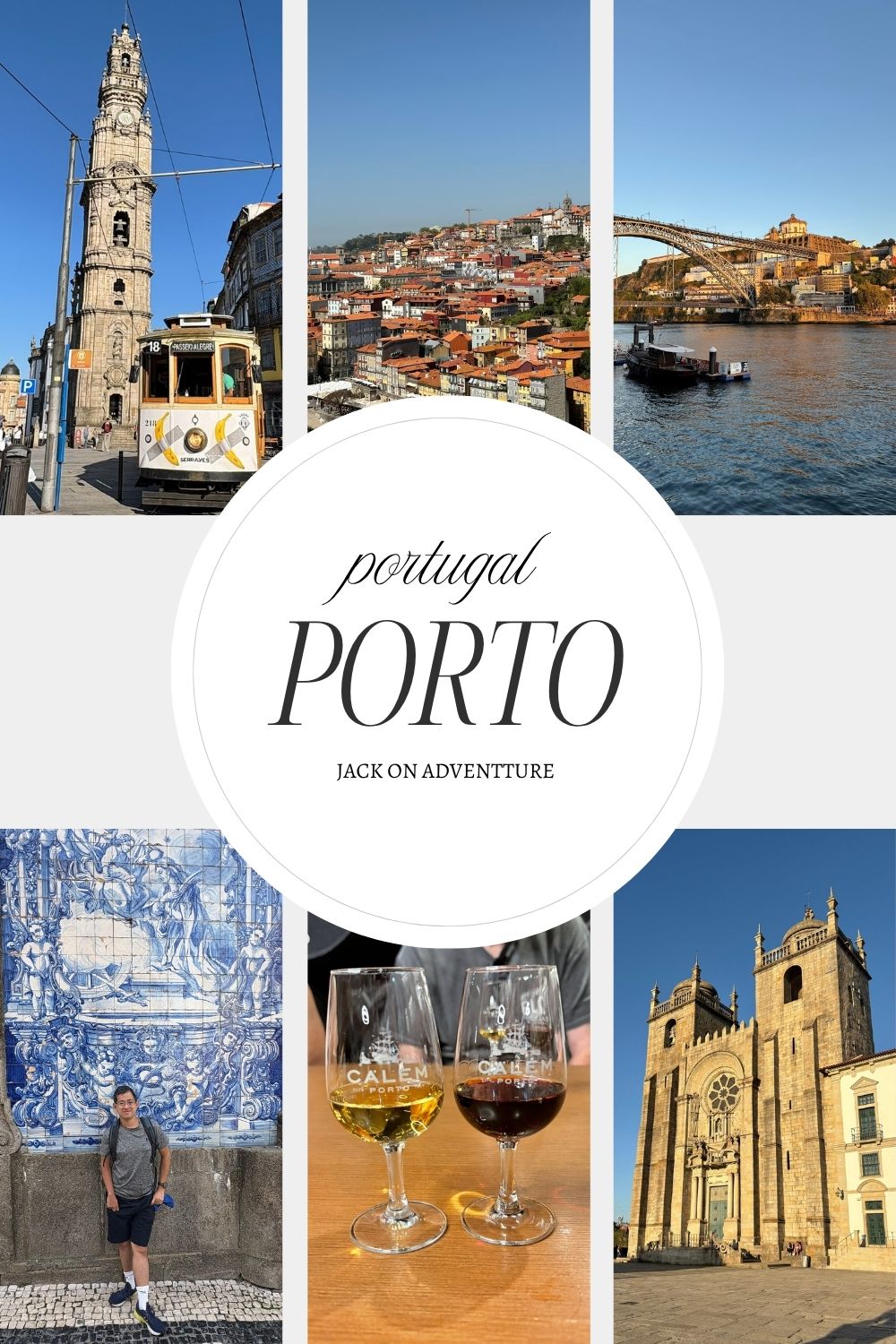
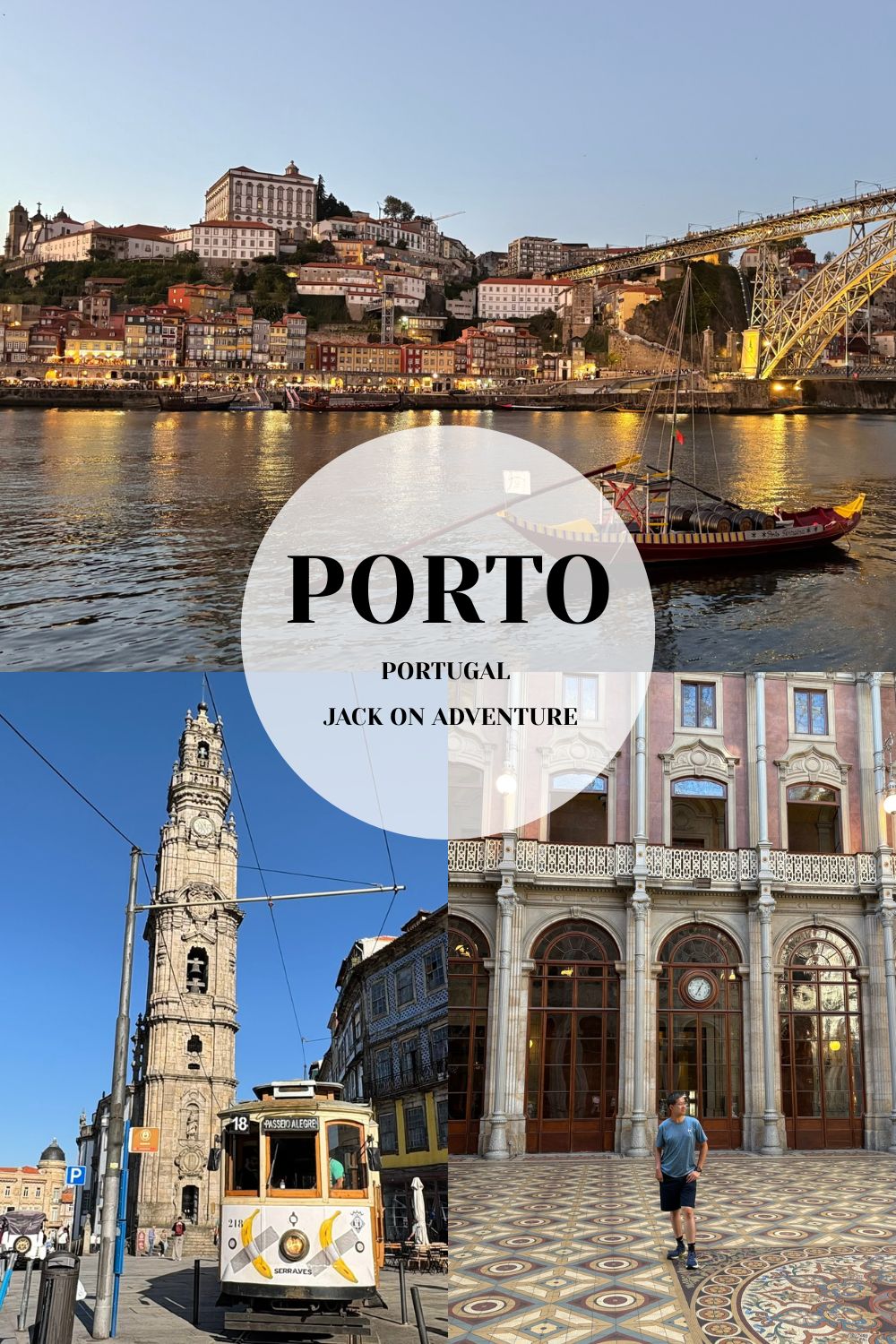
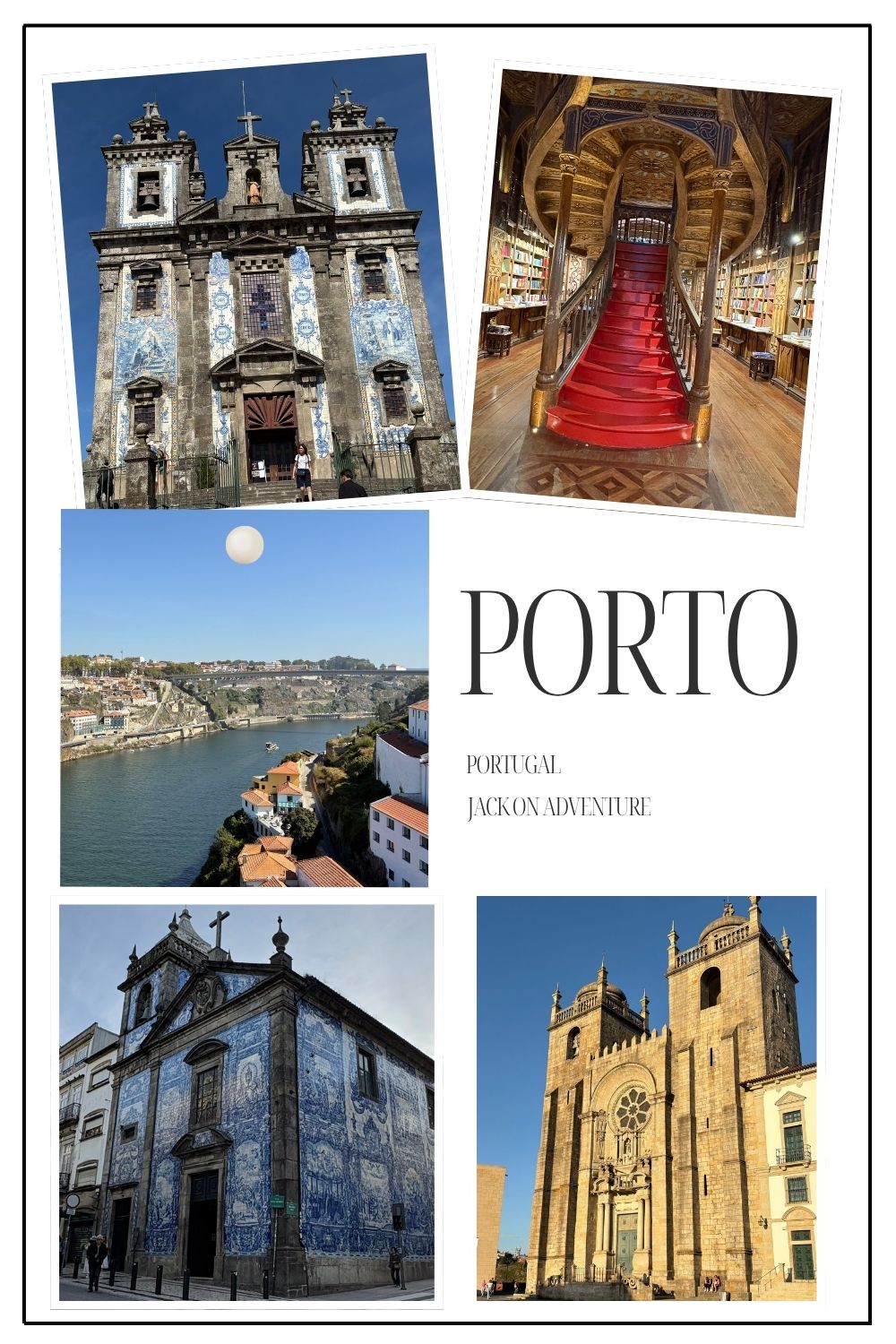
Like It? Pin This Article.

 Jack on Adventure
Leave a comment