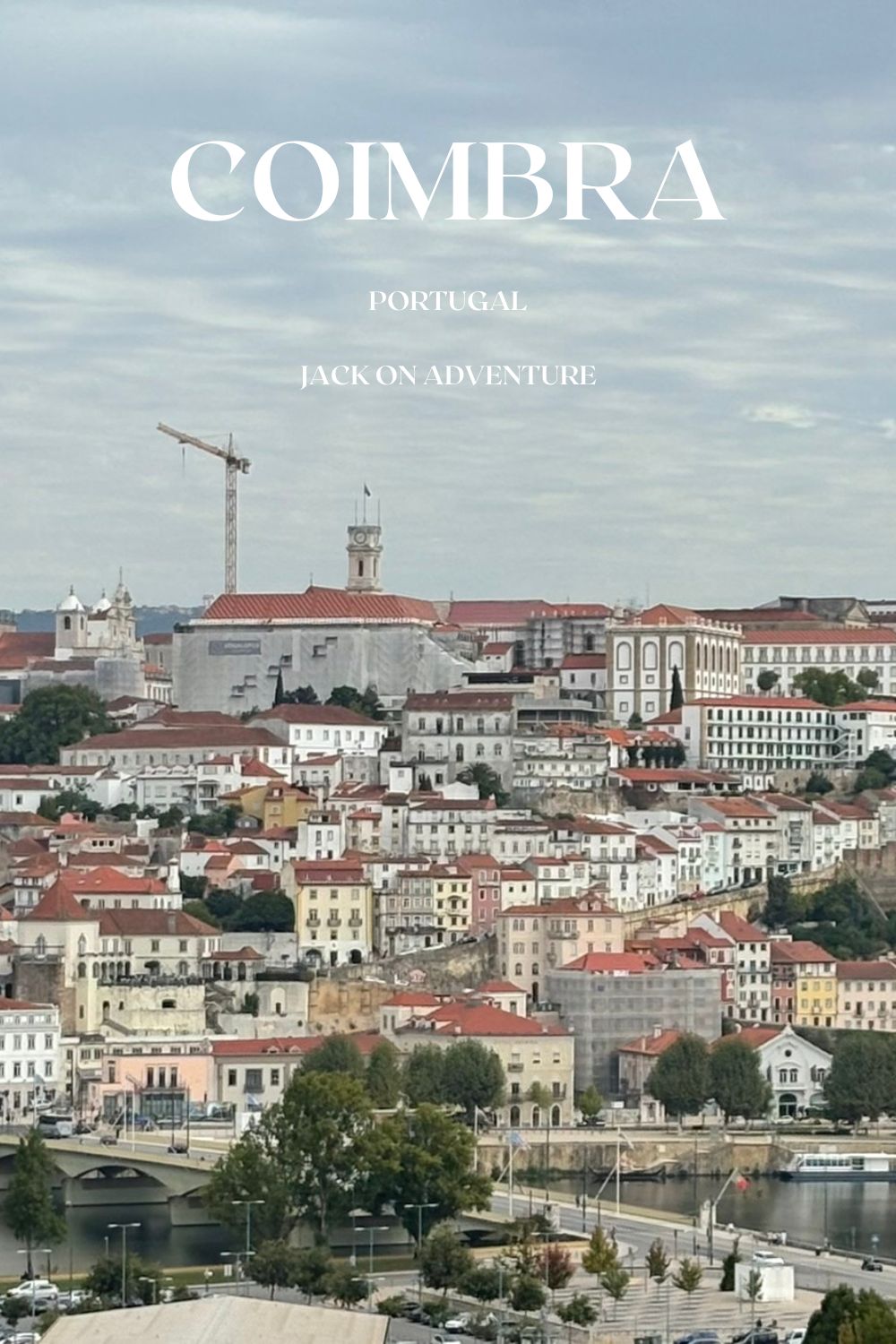
Coimbra is a small city located along the Mondego River, not far from Porto. Walking through the narrow, cobbled streets of the Old Town gives one a sense of being transported back in time. As one of Europe’s oldest cities, Coimbra was once the capital of Portugal between 1139 and 1385. Six Portuguese kings were born in this old city.

While this charming city is not entirely off the tourist radar, it is less crowded than the big cities such as Lisbon and Porto. Its steep terraced history center dates back to the Moorish period and the Old Town is lined with a monumental cathedral and historical landmarks.
The former capital is home to the University of Coimbra, one of the oldest universities in Europe. The youthful city is swarmed by students swirling their traditional black uniform as they move through the streets. The city often echo with the deep voices of fado and melodic notes of the guitarra, known as the Portuguese guitar.
Best Time to Visit
Spring is one of the best times to visit Coimbra. The weather is mild and sunny and the city is at its liveliest. The “Burning of the Ribbons” festivities take place in the first week of May, to mark the end of the academic year. It is the school’s tradition for university graduates to ceremoniously burn their gowns and ribbons. Male students also sing fado on the streets as a farewell to their student lives. Naturally, this is also the time for student parties, with lots of revelry by the river.
Unlike most cities in Europe, the summer here, from June to August is hot and mostly dry, with an average high of 28°C. The city experiences long evenings, and locals often host riverside concerts. It is rather quiet in August when the students leave for the school holiday break.
Autumn lasts from September to November, with temperatures ranging from 17°C to 26°C. It frequently rains and it is a great time for exploring museums and churches without crowds. Throughout my trip to Coimbra in September, I enjoyed consistently sunny days and cool weather.
Winter, from December to February, is mild, and rain is common. Daytime temperatures average around 13°C, and nighttime temperatures can dip to 6°C. It is the quietest season, perfect for strolling the medieval lanes with lesser crowds. It is important to pack layers and to expect to keep warm in a café between visits to the university, churches and riverfront walks.
Getting There
By Bus
Coimbra does not have a commercial airport, and one option for reaching the city is to take a bus. Porto is the closest city to Coimbra and buses operated by Flixbus, Getbus and Rede Expresso frequently depart from there.
If you arrive at Francisco Sá Carneiro Airport (Airport Code: OPO), those three bus operators depart regularly from “Stop D”, which is located outside the terminal building. Ticket prices varies depending on the departure time and they cost at least €5.50 per trip. The journey to Coimbra will take about 2 hours.
If you’re staying in the city center, take the metro to Campanhã Bus Terminal and catch a bus operated by Flixbus, Getbus or Rede Expresso. Buses from the city center are also frequent and a single ticket costs as little as €3.50 per trip. The journey takes approximately 1.5 hours.
You can also take a bus from Lisbon, which departs from Lisbon Oriente Station, and takes up to 2 hours and 40 minutes. If you’re traveling from other regions of Portugal, such as the Algarve region, you first need to catch a bus to Lisbon and then transfer to another bus to Coimbra.
By Train
Trains to Coimbra depart from Campanhã Train Station and São Bento Train Station. The train service is operated by the national railway system, Comboios de Portugal (CP).
The Alfa Pendular train takes between 60 and 90 minutes to reach Coimbra, with around 18 to 22 services running per day. The first train leaves from São Bento at 5.40 am. A single ticket costs at least €17, and it can be bought only from the ticketing office or ticket machine at the station.
If you’re coming from Lisbon, regular trains depart from Lisbon Oriente Station and Santa Apolónia Station. The fare costs between €33 and €43, and the journey takes between 3.5 hours to 5 hours.
Getting Around
The best way to soak up the local vibes in the charming city is to explore on foot. Wear comfortable shoes as you’ll be walking on cobbled streets and climbing the steep hill to the University of Coimbra and other sites nearby.
If walking isn’t your thing, there is always public transportation to ease your burden. The local SMTUC bus network and the trolleybus system take passengers around the city centre, linking the lower and upper parts of Coimbra.
Uber and Bolt are also widely available in Coimbra and it is easy to get a ride around the city. Fare within the city starts from €5.
The Best Activities for 2 Days in Coimbra
The historic city of Coimbra is relatively small, and its main attractions are within walking distance. It feels like stepping into a living museum where history and youthful energy converge. The city’s soul reveals itself through the old town, its ancient streets, prestigious university and renowned religious monuments.
You can easily take a day trip from Lisbon or Porto. If you have enough time, why rush when you can spend a night or two in the lovely city of Coimbra? Spending two days in the city is a great way to soak up the youthful ambience and immerse yourself in the historic atmosphere.
Explore the University of Coimbra
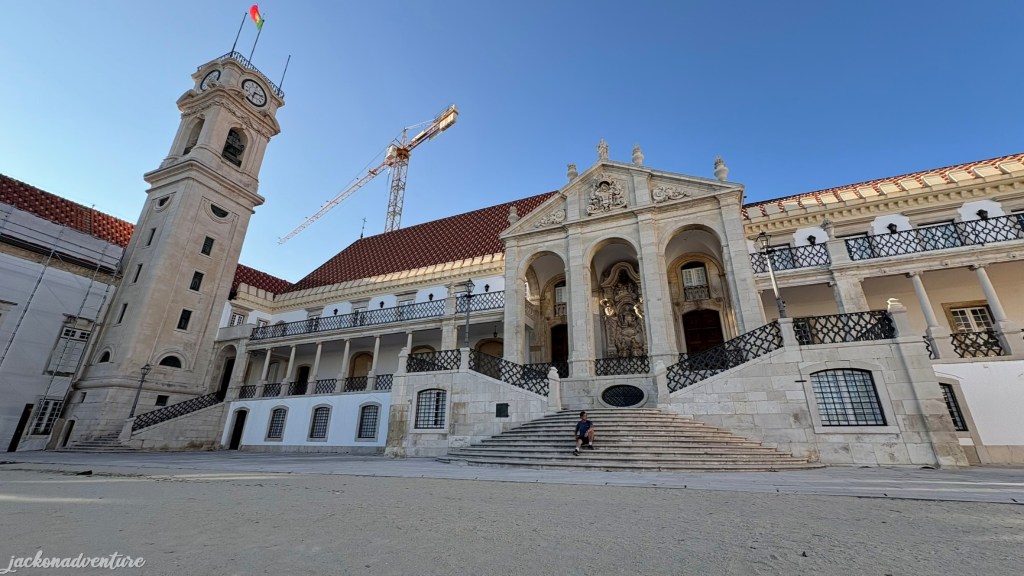
Perched at the top of Alcaçova Hill, the University of Coimbra is the oldest in Portugal and one of the oldest universities in the world. The school was founded by King Dinis I in 1290 and alternated between Coimbra and Lisbon before settling definitively in Coimbra in 1537. It was declared as a UNESCO World Heritage Site on 22 June 2013, and it is one of only five universities in the world to hold this designation.
Today, more than 20,000 students from 80 nationalities study here, and their traditions form part of the city’s cultural life. It still maintains the longstanding custom of students wearing the traditional uniform, which includes black robes during special occasions.
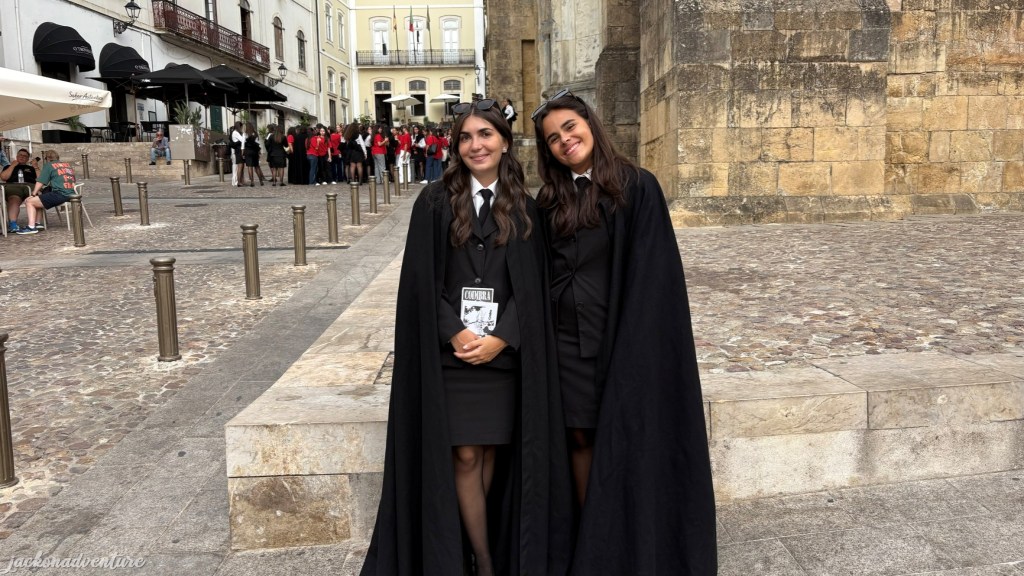
Known as Queima das Fitas, the annual “Ceremonial Burning of the Ribbons” celebrates the end of university courses with a traditional ritual. As one of the largest student festivities in Europe, the event takes place in the second semester and lasts for eight days, with each day dedicated to one of the following faculties: Humanities; Law; Medicine, Sciences and Technology; Pharmacy; Economics; Psychology and Education Sciences; and Sports Sciences and Physical Education.
During this period, a series of concerts and performances are held, turning Coimbra into a lively and vibrant city. Male graduates perform the nighttime fado serenade with their guitars in the square of the Old Cathedral, bidding farewell to their student life.
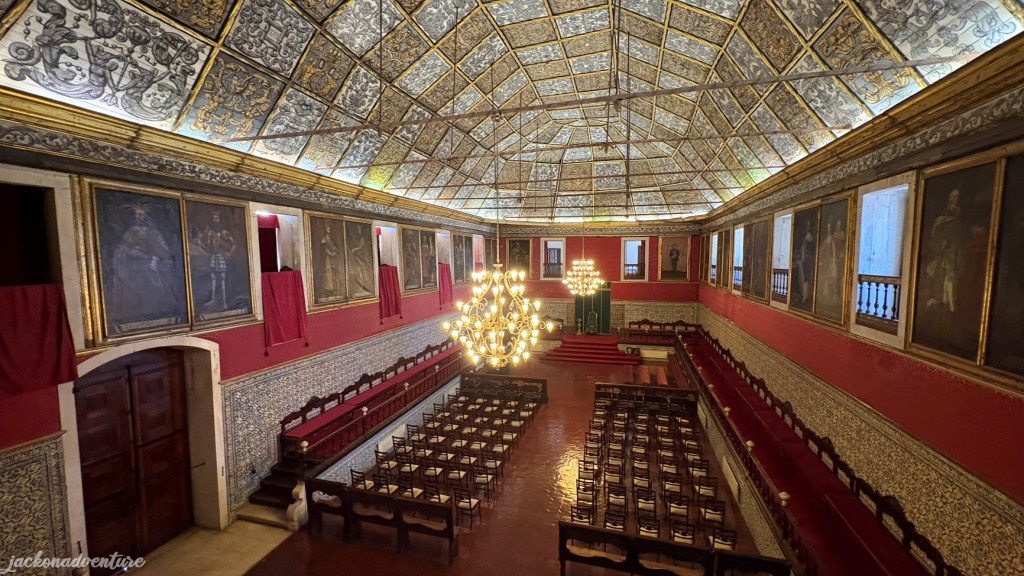
The Royal Palace was built at the end of the 10th century as the citadel for Coimbra’s governor. Later, it became the royal residence of the first king of Portugal, King D. Afonso Henriques. You can now visit some of the rooms inside the palace, including the Weapon Room, Private Inspection Room and the Hall of Great Acts, where students still defend their theses in ceremonies that have been held for centuries.
The Ceremonial Hall (Sala dos Capelos) was originally the Throne Room, and is currently where the Institution holds most of its official ceremonies, including the rector’s investiture ceremony. Oral exams are still conducted in this room. The room’s current design dates back to 1655 and is adorned with 17th-century portraits of all Portugal’s kings on its red velvet walls, except the dynasty of the Philips, when Spain ruled the country.
The 34-meter clock tower was erected between 1728 and 1733. It houses the bells known as “the Goat” and the chimes used to conduct the university’s rituals. To my surprise, the tower doesn’t have a roof because it was used for astronomical observations. You can climb 184 steps to enjoy the magnificent views of Coimbra.
Travel Tips: Purchase the ‘Joanina, University and Science Museum‘ combo ticket that includes a visit to the exquisite library and St. Michael’s Chapel. Tickets cost €16.50 for adults, €14.50 for Seniors 65+ and Visitors with disabilities, €8 for Children aged 6 to 17 and free for children under 6. Be sure to pay attention to the admission time because 60 visitors are allowed to enter for 20 minutes in the library.
Opening Hours: Monday to Friday: 9 am to 8 pm/ Saturday to Sunday: 9 am to 6 pm
Visit Saint Michael’s Chapel

The Royal Chapel of St Michael (São Miguel) was probably built in the 12th century to serve as the private oratory for the former Royal Palace. It is named after Archangel Michael, the protector of King Afonso Henriques.
The present building was erected in the late 15th and early 16th centuries. You will be greeted by an intricate Manueline doorway. The 17th-century vaulted ceilings are covered in delicate frescoes and the walls are stunningly clad in ‘azulejo de tapete” carpet tiles.
The larger altarpiece dates back to the 18th century and is decorated with gilt. The left side contains the altar of Our Lady of Light, the patroness of the academic community, as well as two smaller statues representing St. Joseph and St. Augustine. The right side contains the altar of St. Catherine and the statues of Jesuit Ignatius of Loyola and Francis Borgia. Next to this altar is the statue of the Immaculate Conception, the patroness of the University and Portugal.
Dating back to 1737, the Baroque organ has more than 2,000 tubes and is decorated with oriental motifs. The organ, a gift from King John V, was originally intended for a much larger church. It is still used for concerts, masses and other religious ceremonies.
Location: R. Dr. Guilherme Moreira 10, 3000-210 Coimbra
Opening Hours: Daily from 9 am to 12.45 pm nd 2 pm to 4.45 pm
Discover the Biblioteca Joanina

Make your way to the impressive Biblioteca Joanina via the Minerva Stairs and through an antechamber. First known as the “Book House,” the old library was built from 1717 to 1728 during the reign of King João V to house over 60,000 volumes, all dating from before the 18th century and most of which were written in Latin.
The royal portrait of the king hangs on the wall at the end of the room. The painting, believed to be the work of Giorgio Domenico Duprà, pays tribute to the monarch and symbolizes his power.
The library is one of the two in the world where books are protected by a colony of bats. These mammals feed on all kinds of insects, especially moths, during the night to eliminate the pests and protect the library’s stacks. These centuries-old books are preserved at a constant 19°C.
Appreciate the beauty of the stunning interior, while photography is not allowed inside the library.
Opening Hours: Daily from 9 am to 5.45 pm
Visit some of the museums at the University of Coimbra

The Academic Museum is a space dedicated to preserving the intangible heritage of the university, where you can experience the connection between the university and the city. The museum houses a collection that represents some of the most memorable experiences of the student community, displayed through a series of evocative rooms.
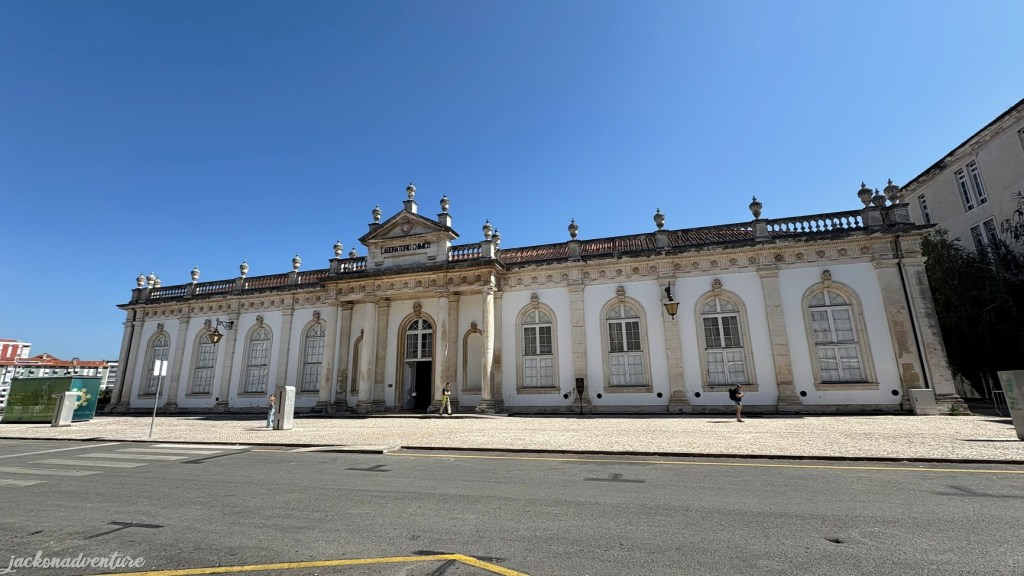
Just across the street is the 18th-century Chemistry Laboratory, the most important neoclassical building in Portugal. Experimental Chemistry was taught during the reform of the university, initiated by the Marquess of Pombal, and it typifies the Enlightenment ideal of practical science education.
Admire the beauty of Sé Nova de Coimbra

Locally known as Sé Nova de Coimbra, the New Cathedral of Coimbra was originally the church of the Jesuit university college established in 1543. The Jesuit Order was banned from Portugal in 1759 by the Marquis of Pombal, the Prime Minister of King José I.
The bishopric seat was transferred from the Old Cathedral to this modern Jesuit church in 1772. The Baroque decoration dominates the upper part of the façade, contrasting with the lower part in Mannerist style.
The main chapel of the apse is decorated with large, magnificent gilt-wood altarpieces built between the 17th and 18th centuries. The choir stalls were brought from the Old Cathedral along with the intricate stone baptismal font in the late Gothic-Manueline style.
Location: Largo Feira dos Estudantes, 3000-214 Coimbra
Opening Hours: Monday to Saturday: 9 am to 6.30 pm/ Sunday: 10 am to 1 pm and 7 pm to 8.30 pm
Entrance Fee: Free
Learn local history from Museu Nacional Machado de Castro
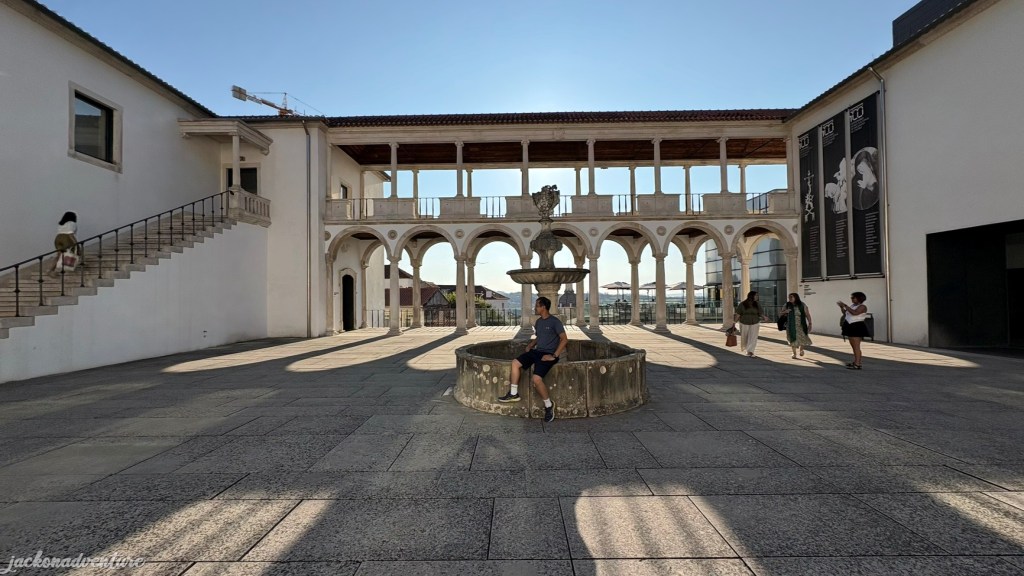
Enrich yourself with fascinating history from the Coimbra region at the National Museum of Machado de Castro.
Dating back to the 11th or 12th centuries, the art museum was once served as the Bishop’s Palace and is named after the renowned Portuguese sculptor Joaquim Machado de Castro. Today, the three-level museum holds several thousand archaeological artifacts, sculptures, goldsmithing, jewellery, paintings, drawings, ceramics, textiles and furniture. These artifacts come mostly from Coimbra, from the convents, monasteries and churches politically extinct in 1834, as well as from the university colleges and bishoprics.
The collections range from key examples of Coimbra’s sculptural production from the 14th to the 16th centuries, to sacred jewellery from the 12th to the 18th centuries, and Portuguese paintings from the 15th to the 20th centuries.
There is a remarkable Criptoportico, a maze of underground passages displaying sculptures and archaeological pieces dating back 2,000 years.
Location: Largo Dr. José Rodrigues, 3000-236 Coimbra
Opening Hours: Tuesday to Sunday: 10 am to 6 pm
Entrance Fee: €10 (Visitor with Disabilities: Free)
Explore the Botanical Gardens of the University of Coimbra

Founded in 1772 by the Marqués de Pommel, the Botanical Garden of the University of Coimbra is considered the largest garden in Portugal, covering 13 hectares, and is home to many rare and exotic plant species from around the world. Originally donated by Benedictine friars, the garden was established to support the teaching of medical sciences.
The grounds are adorned with 19th and 20th-century sculptures, including a notable piece by Portugal’s greatest sculptor, Soares dos Reis. The meandering path also gives way to a bamboo forest and an elegant greenhouse built in 1859, one of the earliest iron-and-glass architectural structures in the country.
The chapel hidden among the garden’s woods served as both a summer house and a prayer space for the Benedictine monks.
Location: CC Martim de Freitas, 3000-456 Coimbra, Portugal
Opening Hours: April to September: Daily from 9 am to 8 pm/ October to March: Tuesday to Sunday from 9 am to 5.30 pm
Entrance Fee: Free
Enter the ancient Barbican Gate
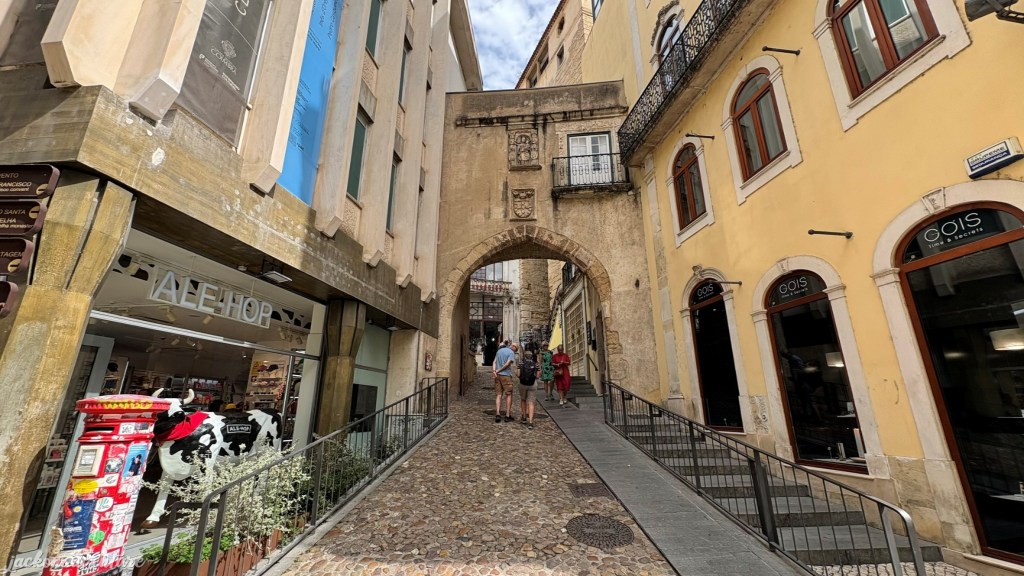
The Barbican Gate (Porta de Barbacã) once served as a fortified entryway that strengthened the defensive system of the old city. Back then, invaders had to pass through this gate before reaching the main entrance of Arco de Almedina.
Although the fortifications are no longer in use, the remaining walls are now used as the starting point of the traditional route to the Old Cathedral and the University of Coimbra.
Wander along the Old Town
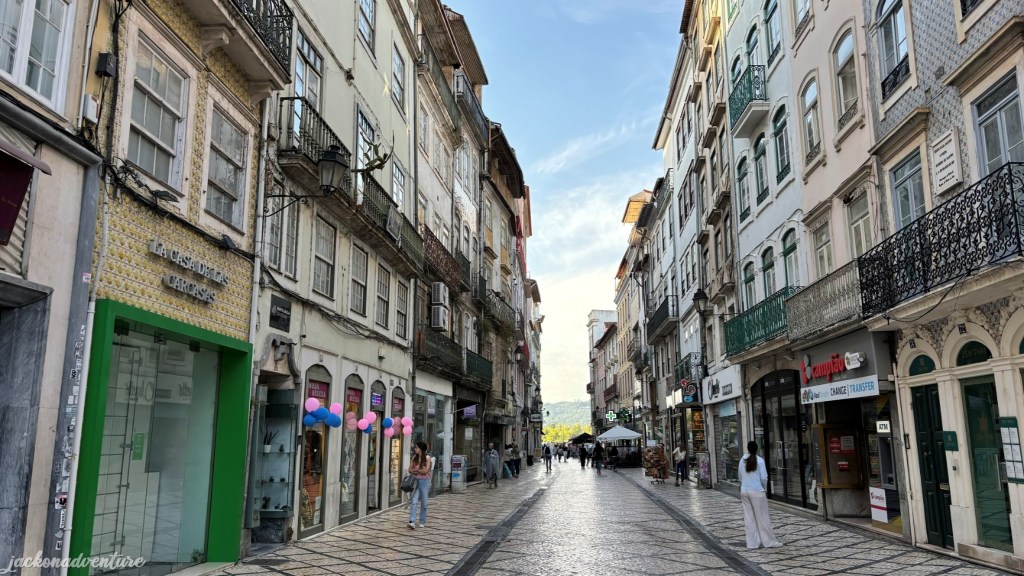
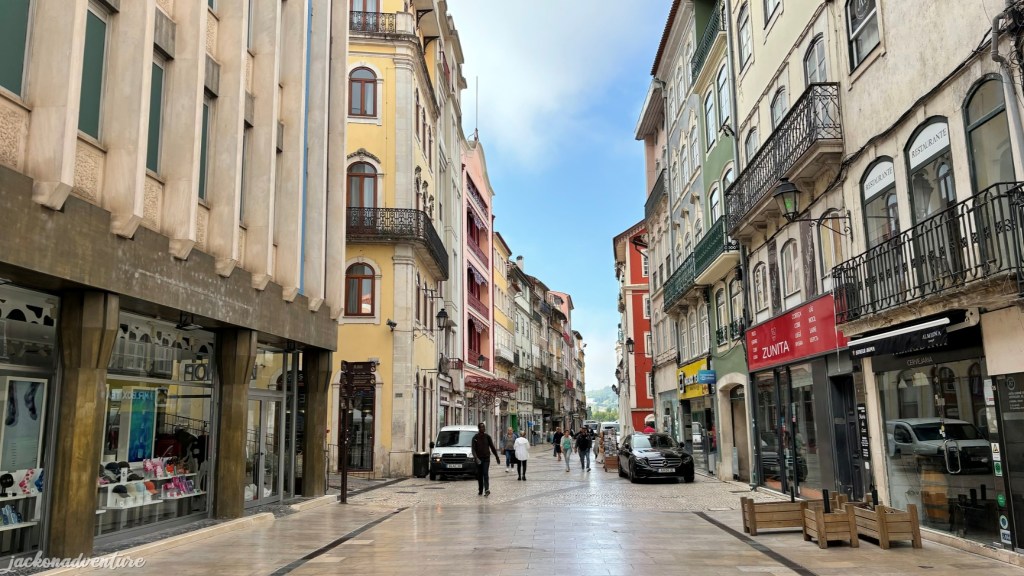
The Old Town is one of the most photogenic spots in Coimbra. Rua Ferreira Borges is the oldest cobbled street in the city. You will pass through the Arco de Almedina and look for traditional Portuguese food at one of many restaurants and cafés here. The arch is one of the few remaining examples of Moorish architecture in Coimbra, marking the gateway to the university quarter and the hilltop churches.
The pedestrian streets stretch from the Church of Santa Cruz to the pretty square of Largo da Portagem. It is lined with traditional shops, bookstores, bakery stores, restaurants and cafés, creating lively spaces where locals and students mingle. The atmosphere transforms from a peaceful morning to a lively evening as students pack the squares. Street performances and live music often animated the streets.
You can also shop for distinctive ceramics that differ from the simpler designs found in Porto and Lisbon. Coimbra pottery’s design dates back to the 15th century and reflects both Asian and Moorish influences. The ceramics are known for their polychromatic patterns, featuring geometric forms and motifs such as roosters, fish and peacocks.
Immerse yourself in the traditional fado

There is no better place in Portugal to experience a live Fado performance than Coimbra. Unlike its Lisbon cousin, Coimbra Fado has a distinctive tradition tied closely to university life. The local style carries a more romantic and hopeful character, with songs that recount stories of love, academic life and the city’s history. It is traditionally performed by male students dressed in their black robes, accompanied by Portuguese guitarists.
Although you won’t see university students performing daily on the streets, the city’s Fado houses provide the ideal setting to enjoy this unique musical tradition. Two highly recommended venues to watch Coimbra Fado are A Cappella and Casa Fado ao Centro.
I personally attended a performance at Casa Fado ao Centro on Rua Quebra Costas. It was a fantastic night to watch the former university students performing on a small stage as they sang beautifully and shared the history behind every song.
Roam around the ruin of the Mosteiro of Santa Clara-a-Velha

Just as Coimbra has both an old and a new cathedral, the city is also home to an old and a new convent.
The Mosteiro of Santa Clara-a-Velha was originally founded in 1283 by Mor Dias as a house of the Order of the Poor Clares. After its initial dissolution, Queen Elizabeth of Portugal, wife of King Denis, refounded the monastery. She was admired for her charitable nature and her devotion led to her canonisation in 1626.
The monastery was expanded in 1330, with the addition of a larger church and a new cloister. It eventually became the resting place of the Queen and the nuns before moving to the newer convent uphill. Santa Clara-a-Velha was abandoned in 1677 after it suffered continuous severe flooding caused by its low-lying position near the Mondego River.
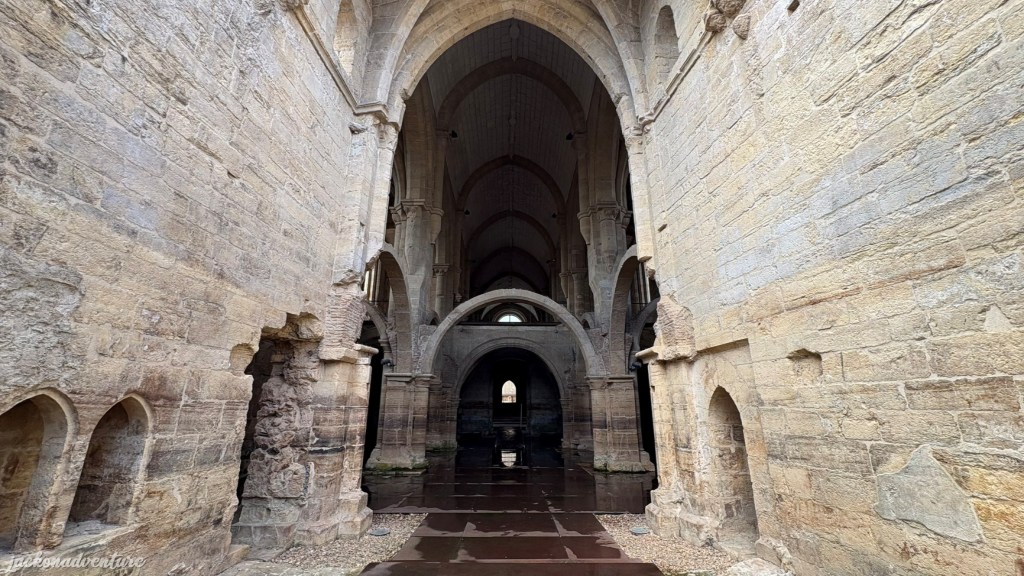
Restoration work was made after centuries of flood-related deterioration and the site is now classified as a National Monument. You can walk around the atmospheric Gothic ruins, from the cloister to the vaulted interior.
Travel Tips: Before exploring the Gothic ruins, watch the video inside the interactive mini-museum. It provides valuable context about the archaeological discoveries that reveal the architectural and historical significance of the monument, as well as tinsights into he daily lives of the monastic community that once lived here.
Location: R. Parreiras, 3040-266 Coimbra
Opening Hours: March to August: Tuesday to Sunday from 10 am to 7 pm/ September to February: Tuesday to Sunday from 10 am to 5 pm
Entrance Fee: Adults: €4/ Adults aged 65+ and Students: €2/ Visitors with Disabilities and Children up to 12 years old: Free
Discover the stunning Monastery of Santa Clara-a-Nova
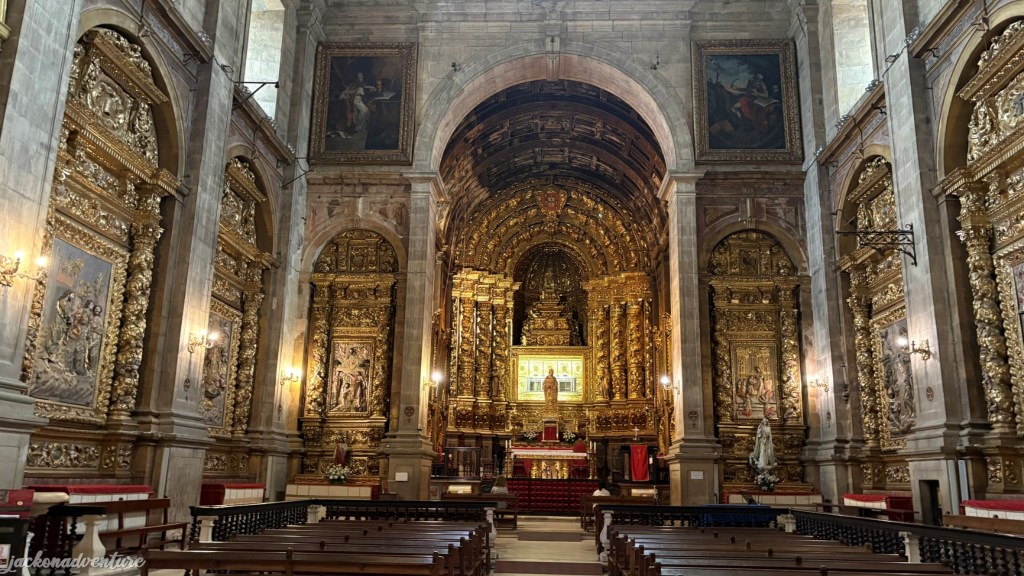
The Monastery of Santa Clara-a-Nova is the “new” convent built between 1649 and 1696 during the reign of King John IV. Hence, “Saint-Clare-a-Nova” is called.. The monastery is home to the Poor Clare nuns, who had relocated from the old convent that was ruined by severe flooding.
The Baroque church contains the Gothic silver-and-crystal tomb of Queen Elizabeth of Portugal, other royal princesses and members of the monastic community after they were moved from the old convent. The Queen’s tomb has been placed within the church’s choir.
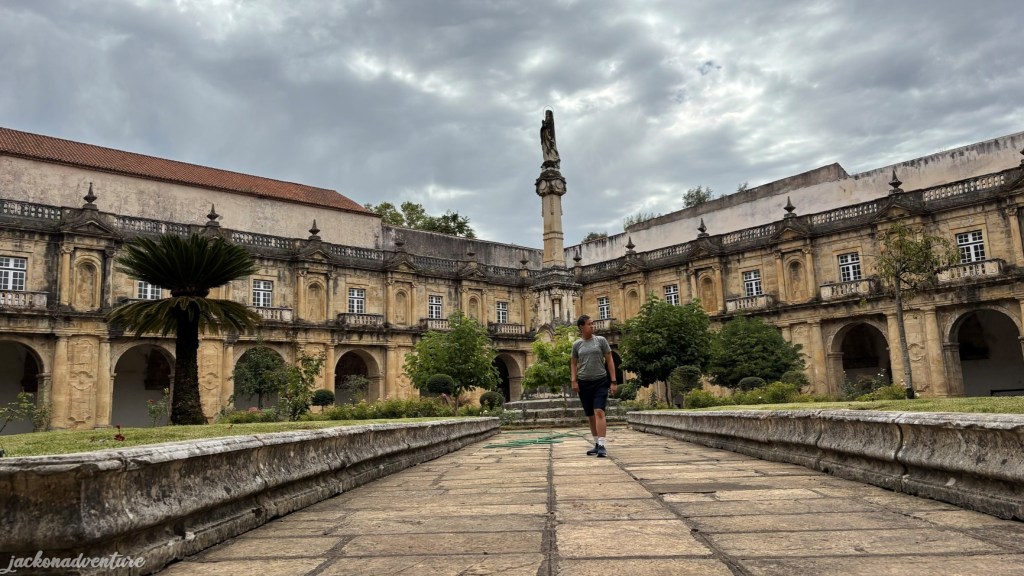
The main portal is adorned with the royal coat of arms held by two angels. An impressive cloister added in 1733 was funded by João V, a generous benefactor to the nuns. It is one of the earliest examples of neoclassical architecture in Portugal.
The terrace outside the monastery features a statue of Queen Saint Isabel. It offers breathtaking panoramic views of Coimbra, including the white-walled university and the Old Town.
Location: Calçada Santa Isabel, 3040-270 Coimbra
Opening Hours: April to mid-October: Tuesday to Sunday from 9 am to 6 pm/ Mid-October to March: Tuesday to Sunday from 9 am to 6 pm
Entrance Fee: Adults: €4/ Adults aged 65+ and Students: €2
Visit the Old Cathedral of Coimbra
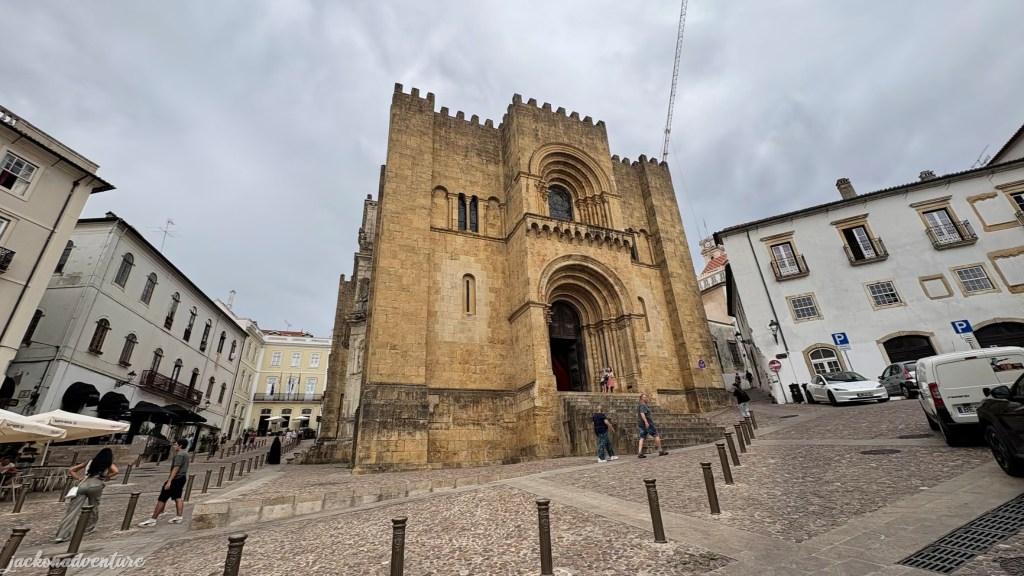
The Saint Mary of Coimbra (Sé Velha de Coimbra) is a Romanesque Roman Catholic Church dating back to 1117. It was built shortly after the Battle of Ourique in 1139, when King Alfonso Henriques proclaimed himself King of Portugal and chose Coimbra as the capital. It is referred to as “old” to distinguish it from the “new” cathedral built in the 18th century.
King Sancho I, the second King of Portugal, was crowned in this new cathedral. The main building was finished in the first decades of the 13th century, and its charming cloister began construction later in 1218 during the reign of King Afonso II. Look around the exterior to spot the Porta Especiosa, or Beautiful Gate, a masterpiece of the Portuguese Renaissance architecture located on the north side of the church.

Its interior of the cathedral has changed very little over the centuries. The tiles were imported from Seville in 1503, complement the Gothic altarpieces and baroque paintings added over time, with the highlight being the chancel’s extraordinary gilded Gothic altarpiece crafted by Flemish sculptors in the early 1500s.
The columns are decorated with vegetable motifs, animals and geometric patterns. In the late afternoon, warm sunlight streaming through the lantern-tower windows and the large west-facing window illuminates the interior, creating a magical and strikingly bright scene.
Location: Large da Se Velha 3000-383 Coimbra
Opening Hours: Monday to Friday: 10 am to 5.30 pm/ Saturday: 10 a to 6.30 pm/ Sunday: 11 am to 5 pm
Entrance Fee: €2.50
Visit the Monastery of Santa Cruz

Situated on the lovely Praça 8 de Maio, the stunning Igreja de Santa Cruz was founded in 1131 by the canons of St. Augustine.
Also known as the Church of the Holy Cross, it showcases Manuline architecture with its intricate stonework and rich religious symbolism. The most outstanding feature is the massive red pipe organ suspended overhead. The blue and white azulejo tiles inside the church depict the scene of Portugal’s history and the life of St. Augustine.
The monastery is also the final resting place of Portugal’s first two kings, King Alfonso Henriques and King Sancho I.
Location: Praça 8 de Maio, 3001-300 Coimbra
Opening Hours: Monday to Saturday: 9.30 am to 4.30 pm/ Sunday: 1 pm to 5 pm
Entrance Fee: Free
Stroll through Jardim da Manga
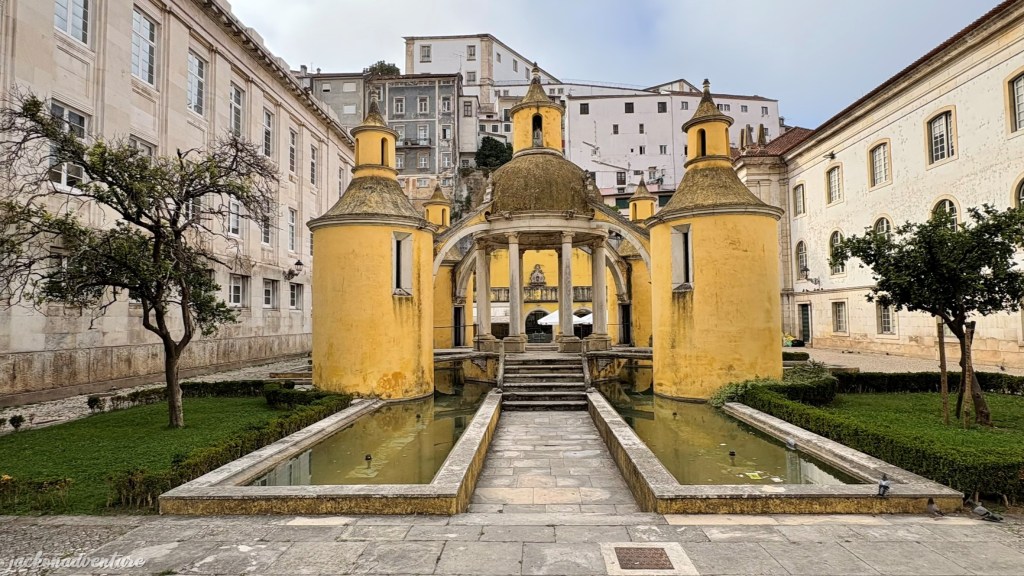
Walk behind Santa Cruz Church, and you’ll discover the Fonte da Manga set within a beautiful garden. The two-tiered fountain was originally part of the church’s cloister. The name “manga” comes from the Portuguese word “sleeves.” Legend has it that King João III sketched its design on his sleeves. The fountain’s water features are inspired by Arabic architecture, adding an elegant and exotic touch to the serene setting.
Location: R. Olímpio Nicolau Rui Fernandes 182, 3000-122 Coimbra
Entrance Fee: Free
Discover The Best of Portugal
Have you started falling in love with Portugal after learning how fascinating Coimbra is? Why not check out my posts on other cities and towns around the country with diverse histories and cultures:
Like It? Pin This Article.



 Jack on Adventure
Leave a comment