
Portimão is the second-largest city after Faro, situated on the western coast of the Algarve region. The town used to be the center for sardine fishing, fish processing and a shipbuilding hub. Today, most of the old industries have been replaced by tourism and have become one of the popular tourist destinations.
Unlike its neighboring town of Albufeira, Portimão offers a local vibe where you can soak up the serene atmosphere. The town is a collection of peaceful squares lined with small shops and cafes, stunning beaches, a thriving local market and great restaurants filled with fresh seafood.
Best Time to Visit
Portimão has a Mediterranean climate with warm, dry summers and mild winters. Some of the best times to visit Portimão are the shoulder seasons—late spring (April and May) and early autumn (September and October). The weather remains warm and sunny with less rainfall expected. There are fewer tourists than during the peak summer season.
If you’re going to hit the beach, the summer (June to August) is the most enjoyable season for many water activities. However, be prepared for higher temperatures, with average daily highs between 20-30°C, and larger crowds at the beaches. Airfare and accommodation prices are significantly higher and often fully booked.
The off-peak season is during winter (November to February). This is perfect for those who don’t tend to go for outdoor activities and visit Portimão primarily to enjoy the cold weather. It is easy to find accommodation; however, some airlines do not operate flights to the region during the low season.
Getting There
By Plane
Faro International Airport (Airport Code: FAO) is the closest airport to Portimão. There are many direct flights from destinations within Portugal and other European countries. Airfares are usually inexpensive, as budget airlines like Ryanair, easyJet and Eurowings operate frequent services.
The airport is located about 70 kilometers from Portimão, and there are several ways to get there and the fastest is by taxi or e-hailing service. A single trip with Uber or Bolt will cost at least €65 and take you directly from the airport to your accommodation. This option is well-suited if you are traveling in a group or carrying a lot of luggage.
Another option is to take a bus from the airport to Portimão. Aerobus 56 (operated by Vamus), ALSA or Flixbus depart 12 times daily from Faro Aeropuerto. The trip takes about 1 hour and 50 minutes and costs between €5 and €20. If you take ALSA or Flixbus, the bus will drop you off at Portimão Bus Terminal, which is about 3 kilometers from downtown Portimão, and you can hail an Uber or Bolt to your accommodation. Aerobus 56 stops in the downtown area, and it is possible to walk to your accommodation.
If you choose to take a regional train, you must first take an e-hailing car or taxi from the airport to the Faro Train Station, which is located 7 kilometers away. The direct train service to Portimão operates 10 times daily, and the journey takes about 1 hour and 25 minutes. Tickets cost €6.15 per way and can be purchased at the station or on the Comboios de Portugal (CP) website. Portimão Train Station is also about 3 kilometers from downtown, and you can hail an Uber or Bolt to your accommodation.
By Train
If you are traveling from Lisbon, you can use the national railway system, Comboios de Portugal (CP). Trains to Portimão depart from Lisbon Oriente Station.
The Alfa Pendular train takes between 2.5 and 3 hours, with 5 services running per day. The first train departs from Lisbon-Oriente at 8.23 am. A single ticket costs at least €14, and it can be bought from the CP website, ticketing office or ticket machine at the station.
Once you arrive at Portimão Train Station, you can take either Uber or Bolt to your accommodation. The station is located about 2 kilometers from the town.
By Bus
The cheapest way to get to Portimão is by express bus. There are regular buses from all over Portugal and the neighboring towns in Spain. Among the reliable bus operators are Rede Expressos, Flixbus and ALSA.
The Gare Rodoviária Bus Station is located less than 2 kilometers from Portimão town. You can either take a taxi, an Uber or a Bolt to your accommodation.
Getting Around
Portimão is a relatively small town and walking is the best way to explore and blend into the local lifestyle. If walking isn’t your thing, you can make use of the public transport or take Uber or Bolt at an affordable price. Portimão beaches are only accessible on foot, with some areas requiring a short hike from the town. Be sure to wear sports shoes or sneakers
The Best Activities for a Day Trip to
As the second-largest town in this Portuguese coastal region, Portimão offers a quaint setting to experience the area’s authenticity. Spend a day wandering through peaceful squares lined with small shops and cafes, marvellous beaches, a thriving local market and tasty restaurants serving fresh seafood dishes.
Catch the sunset along Praia Da Rocha

As one of the top beach destinations in Europe, Portimão beaches rank among the best in the region. Praia da Rocha is the largest and most popular beach in the Algarve region. The beach is only a 30-minute walk or a 10-minute drive from the town center.
The pristine beach stretches for 1.5 kilometers, covered with soft white sand and sheltered by red and yellow-hued rocky outcrops and limestone cliffs. You can marvel at the fabulous panoramic views of the coastline from the heights of Santa Catarina de Ribamar Fort and the Três Castelos Viewpoint. The coastal backdrops create perfect photograph masterpieces as the sun dips below the horizon.
Opening Hours: 24 hours
Stroll along Praia dos Três Castelos
Adjacent to the popular Praia da Rocha is the unbeatable Praia dos Três Castelos. The large rock formations resemble a shape like the three towers of a castle, hence the origin of the beach’s name.
The beach is less crowded and significantly quieter than Praia da Rocha. It is accessible via a tunnel during low tide and you can continue walking further westward to Praia do Alemão. The sea is usually calm with little waves, making it ideal for beginner swimmers and families with kids.
Climb up to the Fort of Santa Catarina
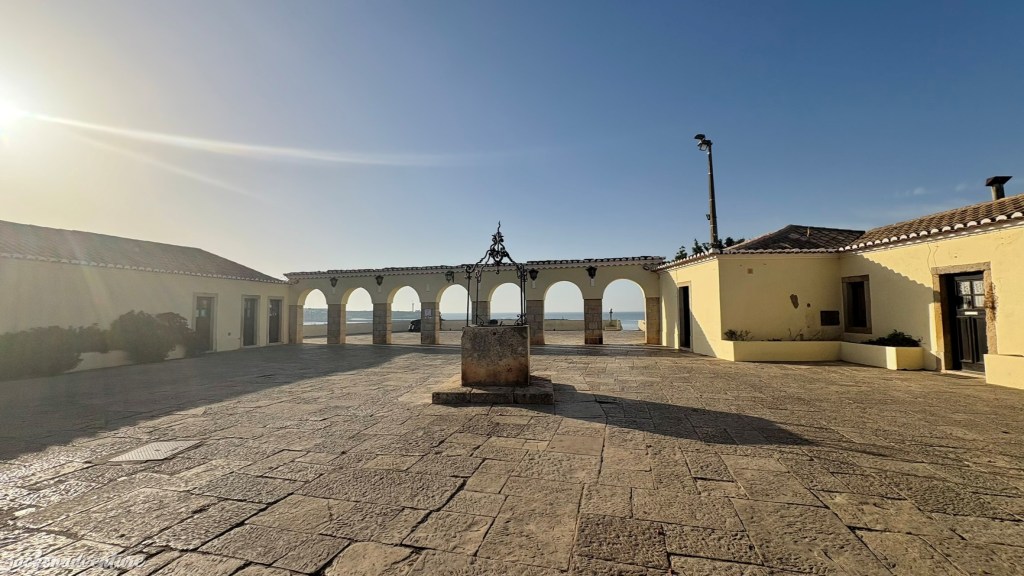
The Fort of Santa Catarina is a medieval fort located at the eastern end of Praia da Rocha. It was built in 1621 by the Italian military engineer Alexandre Massai to defend the peninsula from pirates and military invasions.
The fortress has been rebuilt several times, leaving little of its original structure intact. However, it is worth walking up to the fortress to admire the magnificent ocean views. You can enjoy the scenic views of the beach and the Arade River.
Location: Av. Tomás Cabreira, 8500-802 Portimão
Opening Hours: 24 hours
Entrance Fee: Free
Take a Benagil Caves and Dolphins Watching Boat Tour

Start your Portimão adventure by embarking on a boat tour to search for wild dolphins in the Atlantic Ocean. The likelihood of spotting the magnificent creatures increases when venturing at least 10 kilometers from the mainland. It is best to be accompanied by a reliable and knowledgeable guide or biologist with a marine background, who can locate these wild dolphins and provide valuable insight.
The most frequently spotted species in the Algarve region are the common dolphin, bottlenose dolphin, and Risso’s dolphin. Common dolphins inhabit these azure waters year-round because they can adapt to varying weather conditions. This species is recognisable by its hourglass-shaped markings on its body. They are known to demonstrate highly social behaviour and acrobatics when they are feeling playful.

Common dolphins can live for up to 50 years and may consume fish amounting to one-third of their body weight. Calves stay with their mothers until they are about 4 years old. They often travel in pods of 10 to 15 and are easily spotted near the fishing boats while hunting for food or in the area where seagulls are seen flying and circling over the ocean.

Up next, the tour continues to see the natural wonders of Portugal. Be captivated by the dramatic, awe-inspiring limestone caves and grottos carved into the towering cliffs along the Algarve coast. The caves’ ceiling arches rise over 30 meters high, creating some of the most photogenic natural wonders in the region.
Their origins date back over 200 million years to the Mesozoic era. The stunning geological formations are sculpted by the ocean’s tireless waves over many millennia. A shallow sea cradled the region, depositing layers of sandstone, limestone and marls.
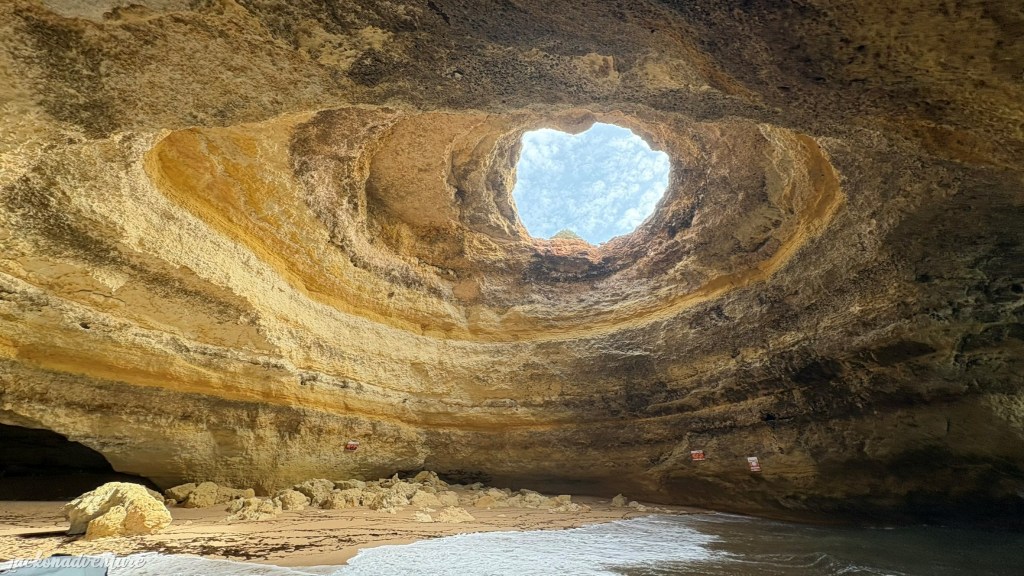
Algarve’s most postcard-worthy cave is the Benagil Caves, or Algar de Benagil, its Portuguese name. The breathtaking, cathedral-like dome cave is illuminated by shafts of golden sunlight that fall onto the golden sands and turquoise water inside. Many locals call it the Gruta de Benagil , reflecting its stunning grotto formed above the water and sand below.
Wander around Ribeirinha de Portimão
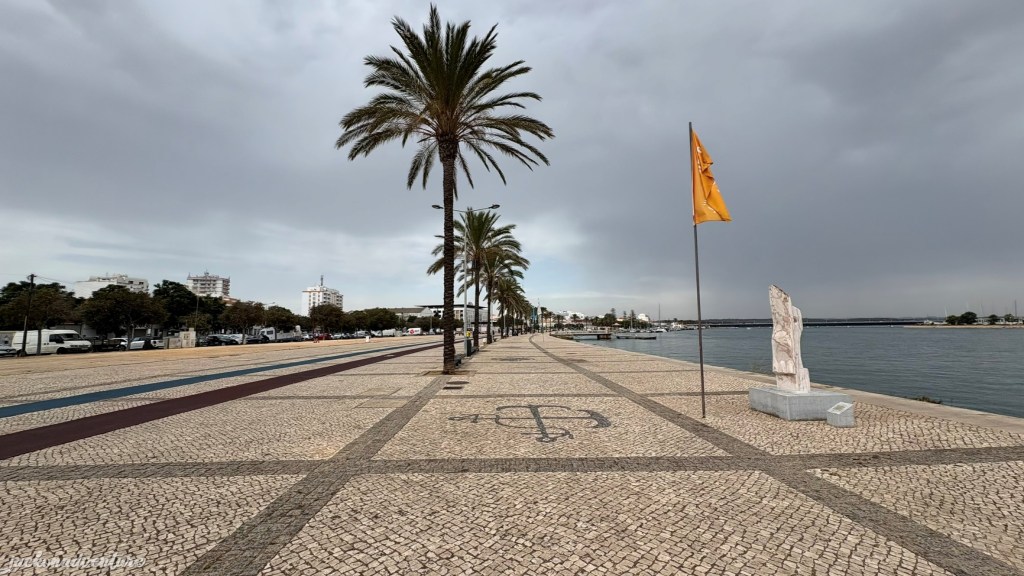
Ribeirinha is a long promenade along the Arade River. There are many benches between the palm trees, making it a perfect place to relax and enjoy people-watching. While leisurely walking along the docks, you can watch the waves rocking many small motorboats, yachts and watercraft around the harbor.
The boardwalk is lined with a handful of fresh seafood restaurants, trendy pizzerias and dessert shops. During the summer season, the streets come alive with glorious nightlife and nearby beach parties.
Visit the Museu of Portimão
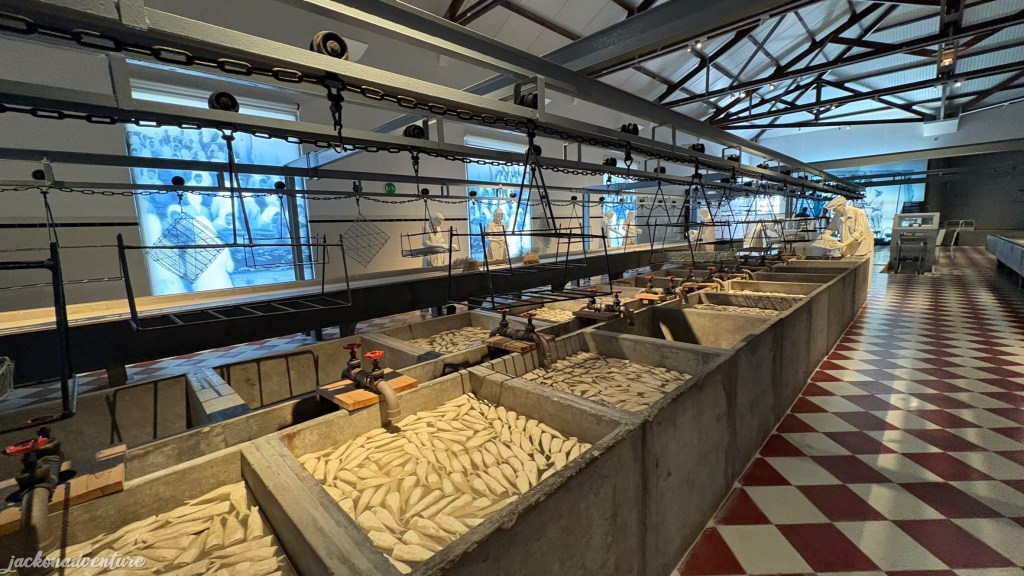
Housed in the former “Feu Hermanos” canning factory, the Museu of Portimão is a fun place to learn about the city’s past. With the theme “Portimão, Territory and Identity”, the museum tells the story of the town from the time the area was first settled by humans some 5,000 years ago.
The permanent exhibition highlights the diverse communities that have lived in the region, as well as the main industries such as canning, smoking, shipbuilding and fishing. Sardine production was booming during the early 20th century.
The museum also offers guided tours around the exterior of the building. You can learn about various aspects of the canning company and the former factory building, as well as the adjacent facilities, such as the shipyard and the workshops.
Location: Rua D. Carlos I, 8500 – 607 Portimão
Opening Hours: September to mid-July: Tuesday: 2.30 pm to 6 pm/ Wednesday to Sunday: 10 am to 6 pm/ Mid-July to August: Tuesday: 7.30 pm to 11 pm/ Wednesday to Saturday: 1 pm to 11 pm/ Sunday: 3 pm to 11 pm
Entrance Fee: Adults: €3/ Adults aged 65+ and Children aged 16 to 25: €1.50/ Visitors with Disabilities: Free
Take a glance at Igreja do Colégio dos Jesuitas
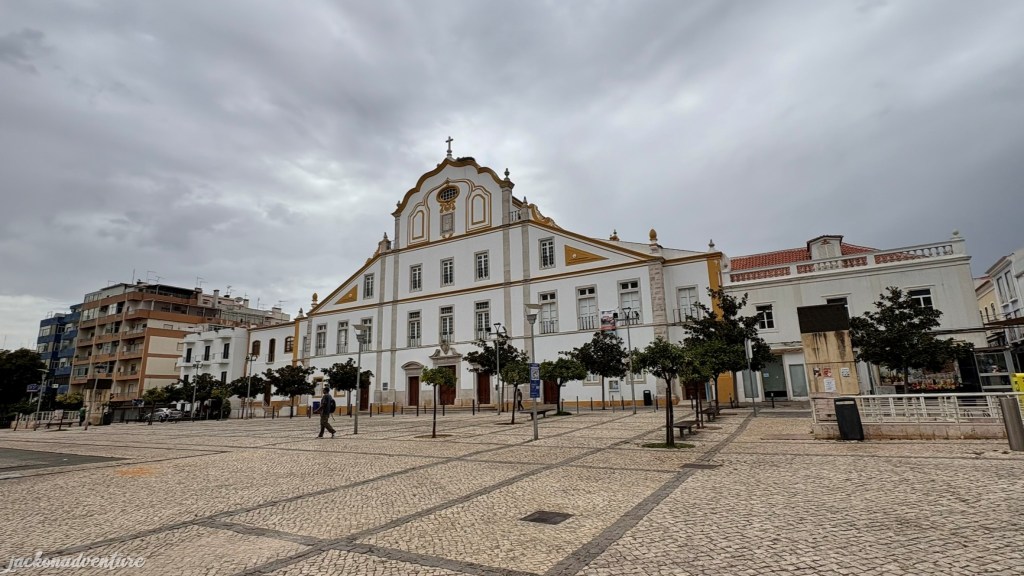
Located in the town center of Portimão, Igreja do Colégio dos Jesuitas dates back to the 17th century when it was founded by a merchant, Diogo Gonçalves. He was buried in the main chapel of this church in a marble coleseum.
The whitewashed church was largely destroyed in the 1755 powerful earthquake, but has been restored to its original state.
Location: Praça da República 25, 8500-594 Portimão
Step into the peaceful Igreja de Nossa Senhora da Conceição
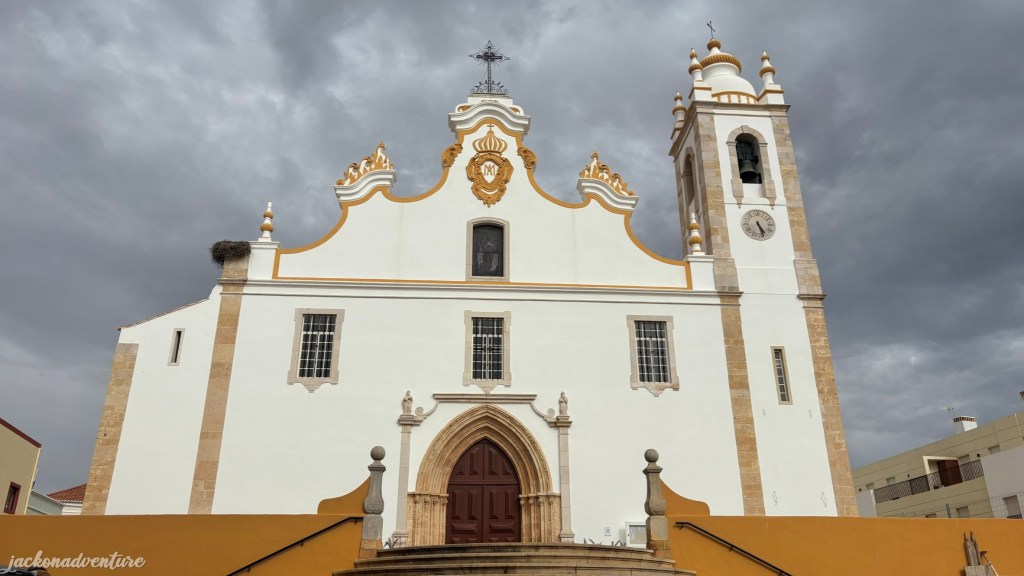
The main church of Portimão dates back to 1470 and preserves its original Gothic portal and a Manueline-era door. The rest of the building was restored after the devastating earthquake in 1755.
The interior features a Baroque altarpiece in gilded wood and the side chapels blend the Baroque and Rococo style of the late 18th century.
Location: Igreja Matriz, R. da Igreja, 8500-597 Portimão, Portugal
Opening Hours: Monday to Friday: 10 am to 12.30 pm and 3 pm to 6.30 pm/ Saturday: 5 pm to 7 pm/ Sunday: 8 am to 9 am, 11 am to 1 pm and 5.30 pm to 7 pm
Entrance Fee: Free
Spot the symbolic Largo da Mó
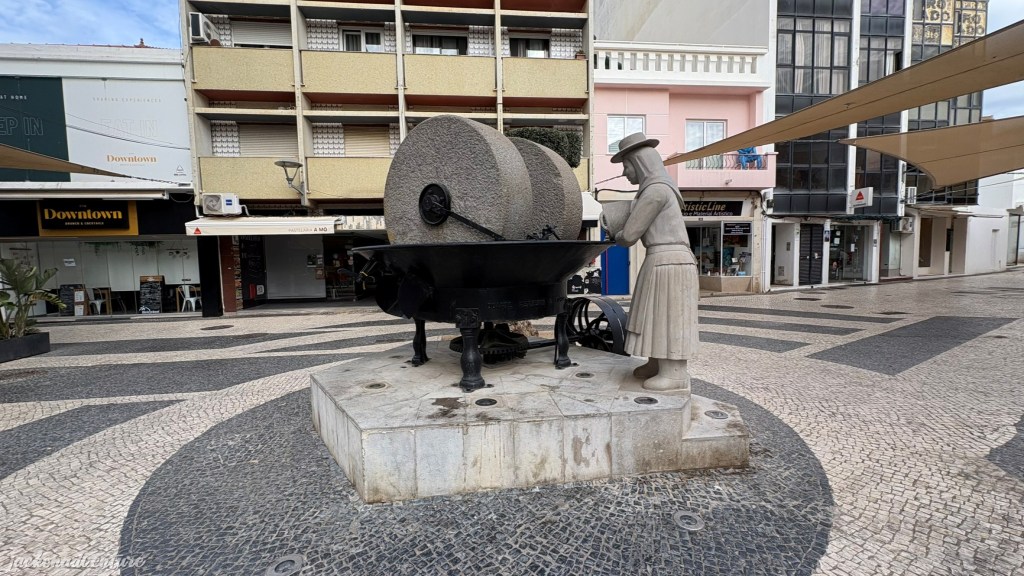
Largo D. João II is better known among locals as “Largo da Mó” because of the artistic installation of two conical stone millstones that belonged to an olive oil mill located on Rua do Carvalho. These millstones serve as a testament to a time when rural life was still very much a part of the town.
Location: Largo Dom João II 18, 8500-533 Portimão, Portugal
Discover The Best of Portugal
Have you started falling in love with Portugal after learning how fascinating Portimão is? Why not check out my posts on other cities and towns around the country with diverse histories and cultures:
Like It? Pin This Article.


 Jack on Adventure
Leave a comment