
Located on the beautiful coast of the Algarve region, Albufeira is known as one of the most popular seaside resorts in Portugal. The town is one of the most popular tourist destinations in Portugal due to its warmer climate, sandy beaches and lively atmosphere.
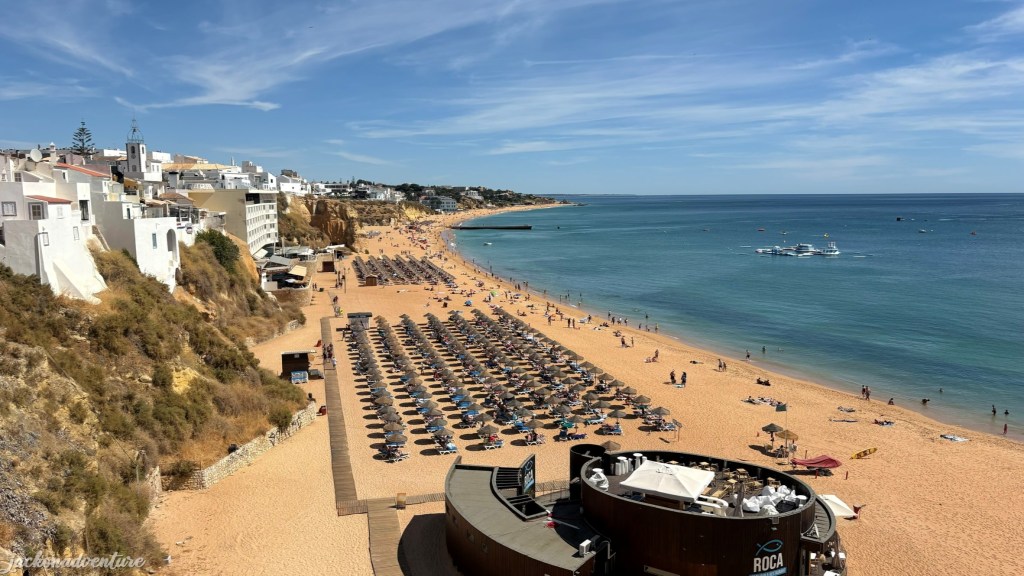
Albufeira was conquered by the Portuguese from the Moors during the reign of King D. Afonso III and was placed under military authority by the Aviz in 1250. King Manuel I granted the town independent rule in 1504. It remained an active fishing village for centuries. The Monumento ao Pescador, dedicated to the fishermen of the region, can be found by the beach. In 1986, it was promoted to a town and transformed into a popular tourist destination.
Best Time to Visit
Albufeira is situated in the Mediterranean region with warm, dry summers and mild winters. Some of the best times to visit are the shoulder seasons—late spring (April and May) and early autumn (September and October). The weather remains warm and sunny with lower rainfall expected. There are fewer tourists than during the peak summer season.
Summer is the most enjoyable season if you’re going for any water sports activities. However, be prepared for higher temperatures, with average daily highs between 20-30°C, as well as larger crowds at the beaches. Airfare and accommodation are expensive and often fully booked.
The off-peak season is during winter (November to February). This period is ideal for those who don’t tend to go for outdoor activities and visit Albufeira primarily to enjoy the cooler weather. It is easy to find accommodation; however, some airlines do not operate flights to the region during the low season.
Getting There
By Plane
Faro International Airport (Airport Code: FAO) is the nearest airport to Albufeira. There are many direct flights from destinations within Portugal and other European countries. Airfares are usually inexpensive, as budget airlines like Ryanair, easyJet and Eurowings operate frequent services.
The airport is 40 kilometers east of Albufeira, and there are several ways to get there. The fastest way is by taxi or e-hailing service, with a single trip with Uber or Bolt that costs at least €50. The driver takes you directly from the airport to your accommodation. This option is well-suited if you are traveling in a group or carrying a lot of luggage.
The cheaper but longer option is to take Aerobus 56 (operated by Vamus), ALSA, Rede Expressos or Flixbus. Regular buses depart daily from Faro Aeropuerto and the journey takes between 45 and 60 minutes. A single trip costs between €4 and €15, depending on the time and bus operator, and the driver will drop you off at Terminal Rodoviário de Albufeira. The bus terminal is located 3 kilometers away from the Old Town and you can take a local bus, Uber or Bolt to your accommodation.
By Train
If you are traveling from Lisbon, you can use the national railway system, Comboios de Portugal (CP). Trains to Albufeira depart from Lisbon Oriente Station and arrive at Albufeira-Ferreiras Station.
The Alfa Pendular or Intercidades train takes between 3.5 and 5 hours, with 5 services running per day and requires a train transfer. The first train departs from Lisbon-Oriente at 8.23 am. A single ticket costs at least €14, and it can be bought from the CP website, ticketing office or ticket machine at the station.
Once you arrive at Albufeira Train Station, you can take either Uber or Bolt to your accommodation. The station is located about 7 kilometers from the Old Town.
By Bus
The most affordable way to get to Faro is by express bus. There are regular buses from all over Portugal and the neighboring towns in Spain. Among the reliable bus operators are Rede Expressos, Flixbus and ALSA.
When you arrive at the Albufeira Bus Station, you can either take a taxi, an Uber or a Bolt to your accommodation. The bus terminal is located about 3 kilometers from Albufeira beaches.
Getting Around
Albufeira is quite spread out, where you can spend a day exploring both the Old Town and the nearby Seven Hanging Valleys Trail. If you’re going to spend only one day in Albefira like I did, it’s best to walk around the Old Town and go to the beaches, and then take an Uber or Bolt to hike on the popular trail.
When exploring the Old Town, it is best to get around on foot. The beaches, eateries and churches are within walking distance. Be sure to wear sneakers or sports shoes when navigating the cobblestone streets, as some sections require walking uphill at times. Sandals are more suitable if you are going to the beach for water activities.
The Best Activities for A Day in Albufeira
Albufeira offers golden sandy beaches, a historic Old Town and perhaps the best nightlife in the Algarve region. It is great to spend at least one day in Albufeira soaking in the beach vibes, enjoy some fun water sports and wandering through the cobbled streets.
Admittedly, clubbing isn’t much of my thing these days, with the loud noise and pricey drinks in the touristy area. But hey, this is my opinion. However, if you are planning to go out partying, you can spend an extra day in Albufeira so that you don’t have to pack your itinerary into one single day.
If you have a love of nature, head to the Seven Hanging Valleys to hike on this wonderful trail. The trail offers breathtaking scenic views of the Atlantic Ocean, gorgeous beaches and the famous Benagil Cave from above.
Admire the scenic views from Miradouro do Pau da Bandeira
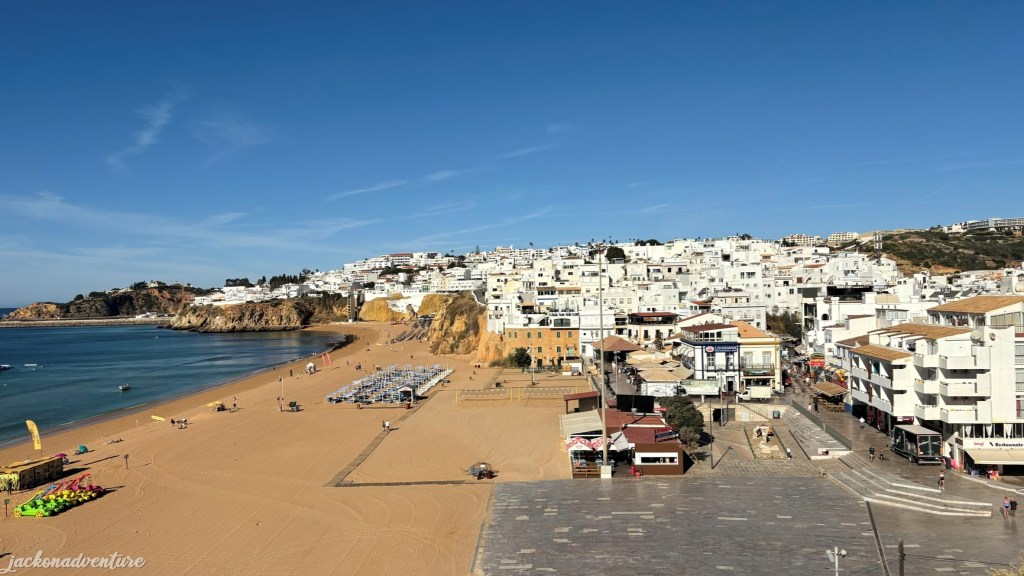
Start the day at Miradouro do Pau da Bandeira, where you can enjoy the breathtaking scenic views of Albufeira town. It is a perfect photogenic spot, landscaped by whitewashed buildings, the golden sands of Praia dos Pescadores and unrivaled panoramas of the Atlantic Ocean.
The ambiance here is serene and reflective, making it an ideal place to unwind while soaking in the gentle ocean breeze and the sounds of waves lapping against the shore.
Location: R. Sacadura Cabral 23, 8200-176 Albufeira
Gaze at the beautiful Clock Tower
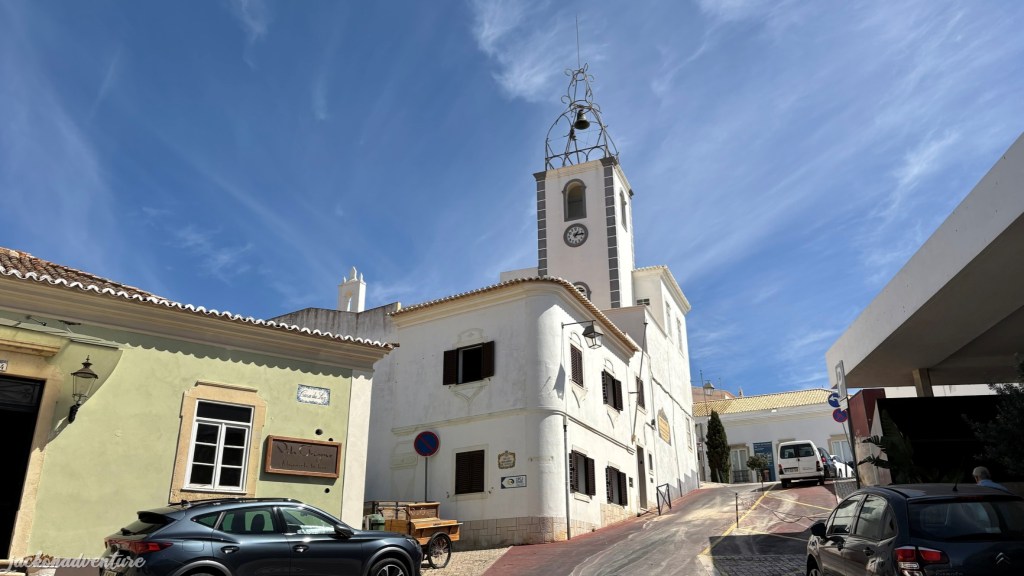
The clock tower is the symbol of Albufeira. Built in the 19th century, the tower is adorned with an iron crown that holds the bell, which rings out every hour. It is illuminated during festivals.
Below the clock tower are the Albufeira Music Conservatory and a small archaeological nucleus resulting from excavations carried out in 2000. These excavations revealed some residential structures and a silo from the 12th-13th centuries. Fig seeds were discovered here, and they were the most important production in the municipality before and after the Arab occupation. Figs were the target of piracy for centuries due to their commercial value.
Location: Praça da República 5, 8200-106 Albufeira
Wander around the beautiful Albufeira Old Town
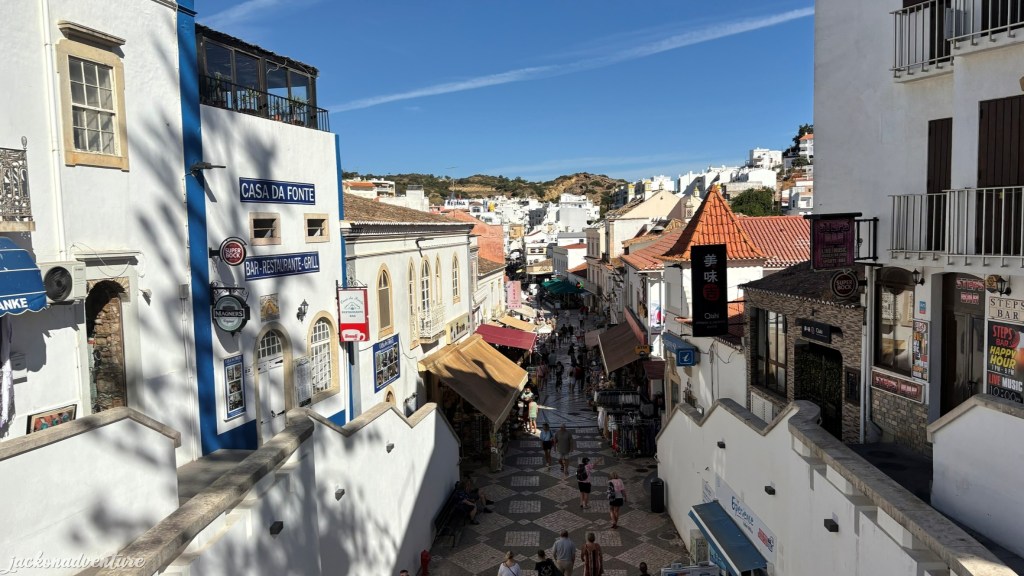
The Albufeira Old Town is the heart and soul of this lively resort town. It still holds on to some of the town’s history as a small fishing village and retains much of its authentic Portuguese character even after it has grown into a tourist magnet.
With its whitewashed buildings, quaint cobblestone streets and Moorish-inspired architecture, the Old Town is where tradition, culture and relaxed coastal living meet. The streets are packed with an abundance of restaurants, cafes, bars and gift shops.
The most happening part here is the main square called Largo Engenheiro Duarte Pacheco. Local festivals and celebrations take place in the Old Town, including Halloween, New Year’s Eve and Easter Day.
Walk under the Albufeira Tunnel
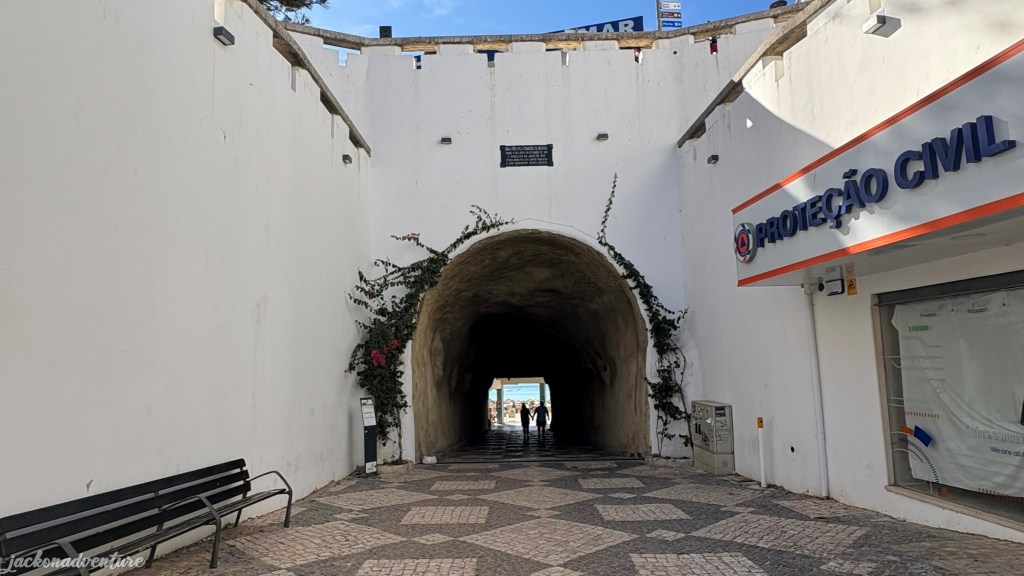
The famous Albufeira Tunnel is really not such a big attraction, but everyone in town will tell you to walk past the tunnel. This 20-meter pedestrian tunnel connects you from the Old Town to the pristine Praia dos Pescadores.
Enjoy watersports activities along Praia dos Pescadores
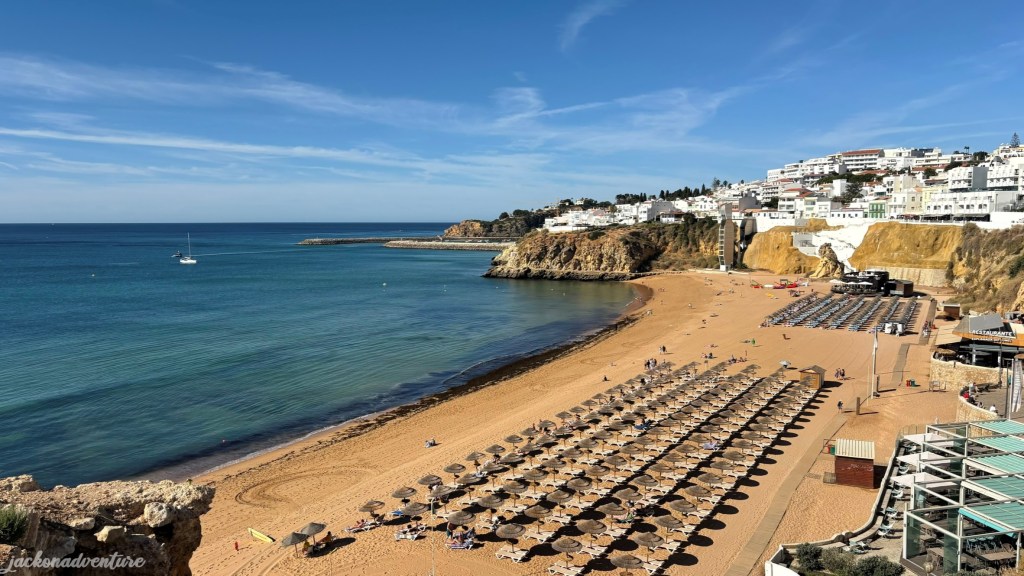
Located on the westernmost side of the main beach, Praia dos Pescadores is a vibrant beach with a long stretch of golden sand and crystal-blue water. Once a fishing village, this beach is now lined with restaurants and bars that serve its famous seafood caught in the Atlantic Ocean.
You can enjoy a unique perspective of the coastline by renting a jet ski, paddleboard or go parasailing. There is plenty of space to relax and sunbathe while enjoying the stunning panoramic views of the ocean and limestone cliffs.
The beach is usually crowded during the peak summer. Stroll along other beautiful beaches and you may find a less-crowded spot, including Praia do Túnel, Praia da Oura and Praia dos Alemães.
Going up the Elevador do Peneco
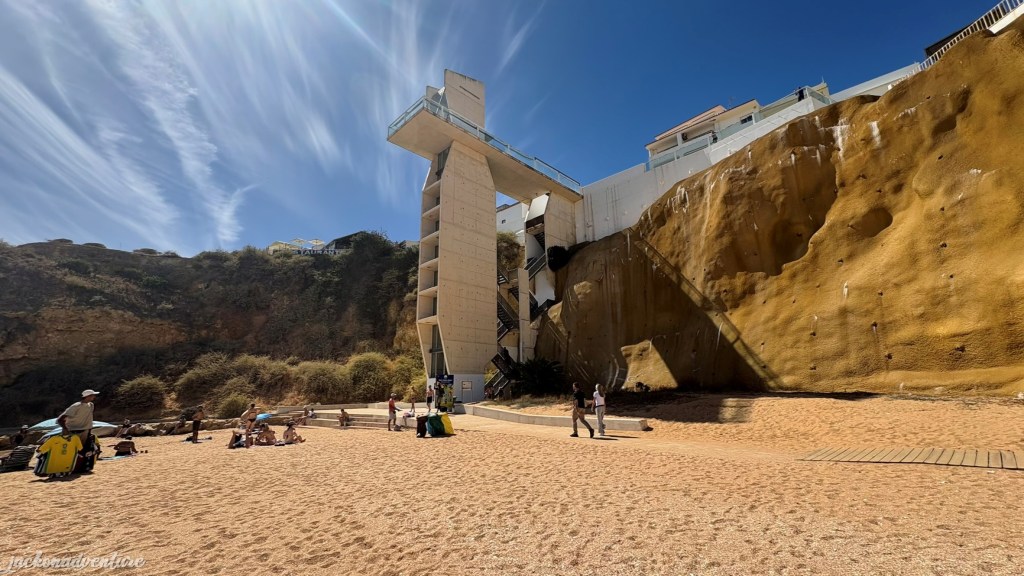
Looking for a faster way to reach the top of the cliff? Don’t sweat it!
Thanks to the Elevador do Peneco, you can take this impressive glass elevator to the top. There is a viewing platform to enjoy spectacular views of Praia de Pescadores. It also save you the hassle of walking up or down the flight of stairs if you are carrying your beach equipments.
Enjoy the backdrop of Igreja Matriz de Albufeira
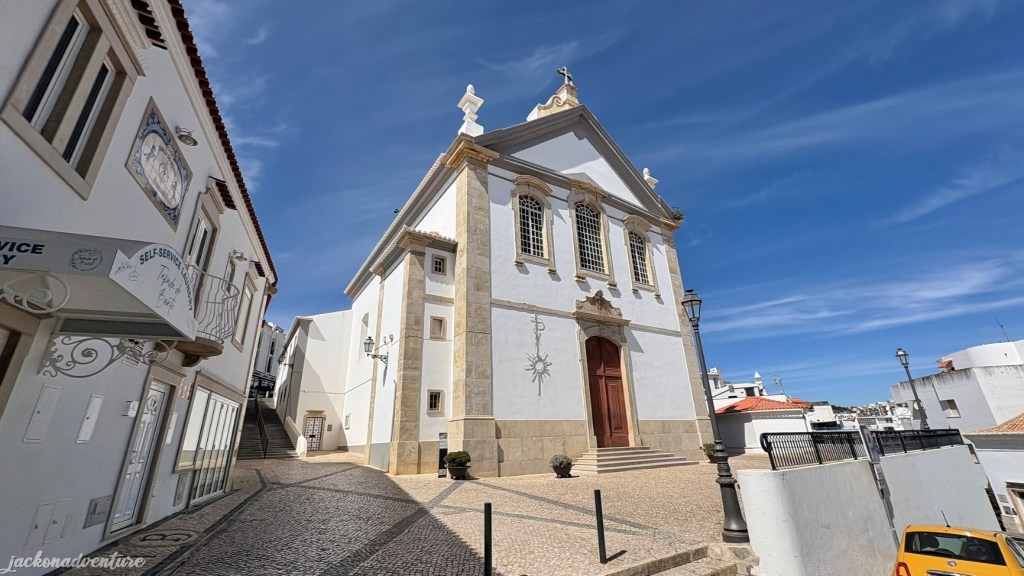
Dating back to 1782, Igreja Matriz de Albufeira was consecrated on July 15, 1800, by the Bishop of the Algarve, Dom Francisco Gomes de Avelar. The Parish Church replaced its predecessor, which collapsed during the 1755 earthquake.
The church is one of the finest examples of Neoclassical architecture with a single nave. It stands on the site of an earlier church, which was converted from a pre-existing mosque. It features four side chapels, a baptismal chapel, a choir, two pulpits, and two side rooms. These rooms are dedicated to the Holy Souls, Bishop São Luís, Our Lady of Fatima, and the Sacred Heart of Jesus.
Igreja Matriz houses a magnificent painting by the Albufeira-born painter Samora Barros, which serves as a backdrop to the image of Our Lady of the Immaculate Conception, patron saint of Albufeira.
Location: Igreja Nova Street
Take a glance of Igreja São Sebastião
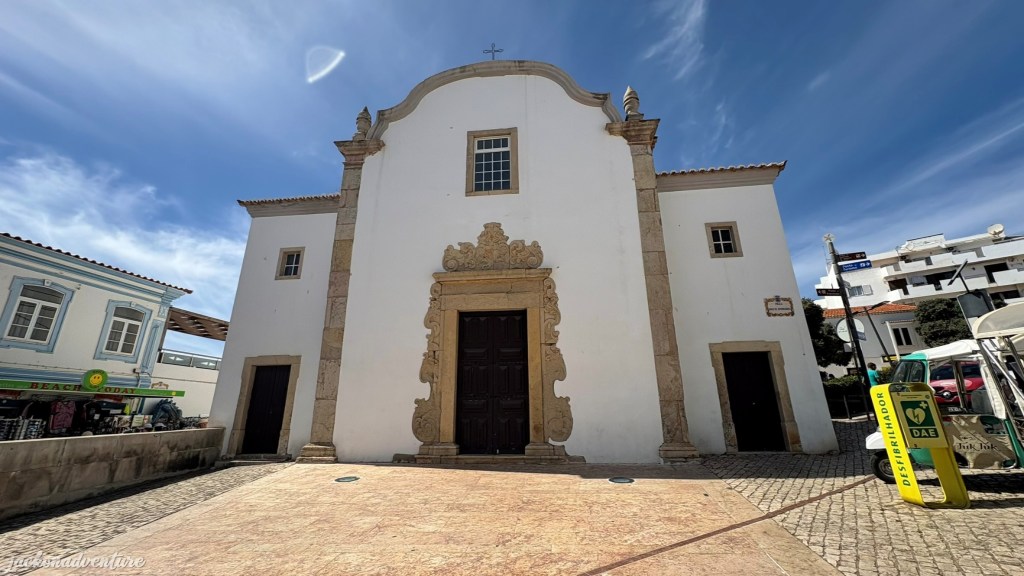
The whitewashed São Sebastião Church is believed to date back to the early 18th century, having been built on the site of a 16th-century church. The exterior blends a mix of architectural styles, including a dome and a multi-coloured wooden altarpiece. The main doorway is of the Baroque style, contrasting with a Manueline side door.
Location: Praça Miguel Bombarda 9, 8200-146 Albufeira
Stop by Igreja de Sant’Ana

Located in Jacinto d’Ayet Square, the 18th-century Igreja Sant’Ana is dedicated to St. Anne, Jesus’ maternal grandmother. The Baroque-style church was rebuilt on higher ground after the former chapel was destroyed by the 1755 earthquake and tsunami.
The dome and lantern, as well as the frontispiece of the façade, are decorated with volutes and flanked by pinnacles. The fine blue wooden altar was designed by Algarve-born master sculptors Francisco Xavier Guedelha and João Baptista. The centre of the high altar contains the statue of the Crucified Christ and Our Lady of Sorrows.
The most significant Festa Nossa Senhora da Orada takes place here on 14 August. An image of the Virgin Mary and the child Jesus is paraded around town and transported on a boat.
Location: R. Miguel Bombarda, 8200-167 Albufeira
Opening Hours: Friday to Wednesday: 8 am to 6 pm
Entrance Fee: Free
Hike the incredible Seven Hanging Valleys Trail

One of the best things to do in the late afternoon is to hike the Seven Hanging Valleys Trail in the municipality of Lagoa. You can choose either Marinha, Carvoeiro, Ferragudo or Armação de Pêra as the starting point of the hike.
The most popular starting point is the charming Marinha Beach. From here, the cliffside trail leads you along a winding path with some of the most breathtaking views in Portugal. Its golden sands, intricate rock formations and clear turquoise waters set the tone for the unforgettable adventure ahead.
The natural landscape is adorned with magnificent arches, sinkholes, sea stacks and grottoes formed by centuries of ocean waves. The trail makes its way through hidden coves and secluded beaches. Some of the hidden gems along the valleys include Praia do Barranquinho and Praia do Vale Centeanes, both awaiting your discovery.

The next popular beach is Benagil Beach, known for its nearby Benagil Cave. You’ll veer off the downhill dirt path onto the road leading to several restaurants and the beach. As you continue the hike, you’ll pass by the Benagil Cave from above. It is advisable to stay behind the barriers to avoid the risk of falling into the cave from above.
Once you reach the 4.5-kilometer mark, you will arrive at the Alfanzina Lighthouse, which was built in 1920. You can tour the lighthouse or simply enjoy it from a distance. There is an enormous sinkhole nearby. Keep a lookout for a variety of interesting fossils and shells embedded in it, as they can be easily missed.
Travel Tips: Make sure to download the Seven Hanging Valleys Trail map from the AllTrails app. The trail is well-marked with red and yellow stripes on rocks, posts or signs. Always stay hydrated, and there are some food trucks and small restaurants selling water. Do wear sneakers or sports shoes, but it is not necessary to use hiking shoes.
Getting There: Take an Uber or Bolt from Liberdade Bus Terminal to Marinha Beach: the fare is around €20. Once you have completed the trail at Alfanzina Lighthouse, walk to the bus stop at Rocha Brava to take the regional Vamus Bus No. 107. Bus No. 107 from bus stop ID: 3619 travels in a clockwise direction and terminates at Lagoa (Terminal Rodoviário), while Bus No. 107 from stop ID: 3620 travels in an anticlockwise direction and terminates at Praia do Carvalho. The last bus leaves before 7 pm and you can take Uber or Bolt if you missed it.
Location: Percurso dos Sete Vales Suspensos: Estr. da Marinha, 8400-407 Lagoa
Opening Hours: 24 hours
Entrance Fee: Free
Discover The Best of Portugal
Have you started falling in love with Portugal after learning how fascinating Albufeira is? Why not check out my posts on other cities and towns around the country with diverse histories and cultures:
Like It? Pin This Article.

 Jack on Adventure
Leave a comment