
As the capital of the Algarve region, Faro is among the most charming cities in Portugal. The city offers a mix of history, culture and natural beauty. It is renowned for its picturesque coastal landscapes, ancient architectural wonders and vibrant city center.
Faro has a long and fascinating history dating back to the 8th century BC, when it was known as Ossónoba. The city later came under Moorish rule. This bustling urban center was known for the trade of agricultural products, fish and minerals.
When Portugal gained independence in 1143, Faro became essential to the country’s expansion towards the south. After the first king and his successors took over the territories, the city continued to flourish due to its strategic location and safe seaport. Unfortunately, it was hit hard by a deadly earthquake in 1755. Nevertheless, Faro has continued to thrive over the years by attracting tourists from all around the world.
Best Time to Visit
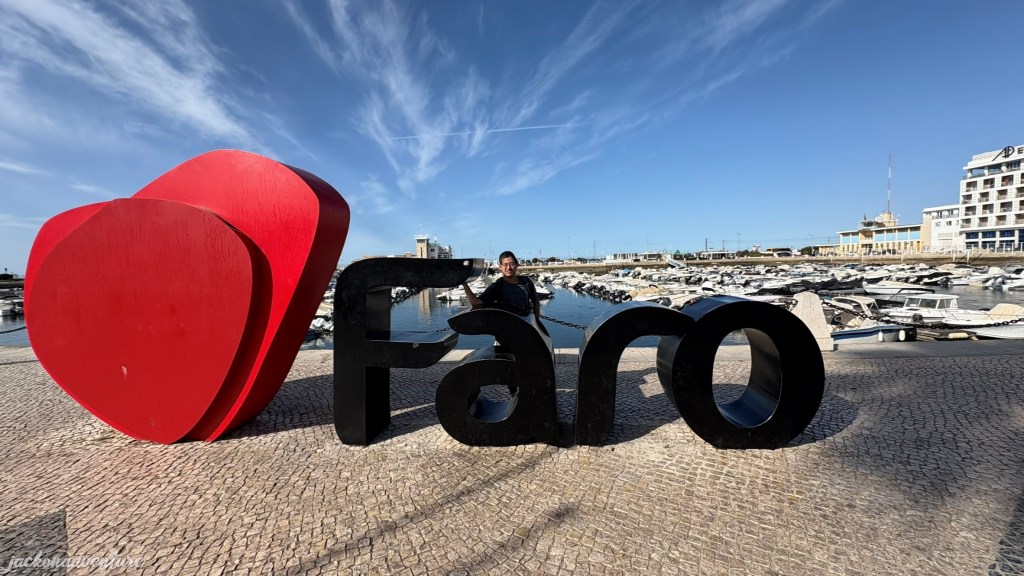
Some of the best times to visit Faro are the shoulder seasons—late spring (April and May) and early autumn (September and October). The weather is still warm and sunny with less rainfall expected. There are fewer tourists than during the peak summer season.
Summer (June to August) is expected to have the least rainfall of the year and is great for exploring Faro. Be prepared for higher temperatures, with average daily highs between 20-30°C, as well as larger crowds on the streets and in restaurants. Airfare and accommodation are expensive and often fully booked.
The off-peak season is winter (November to February). This is perfect for those who come to Faro to enjoy the festive Christmas and the cold weather. It is easy to look for accommodation, but some flights do not fly here during the low season.
Getting There
By Plane
Faro International Airport (Airport Code: FAO) is the Algarve’s regional airport, located 6.5 kilometers from Faro town. There are many direct flights from destinations within Portugal and other European countries. Airfares are usually inexpensive, as budget airlines like Ryanair, easyJet and Eurowings operate frequent services.
Once you have reached the arrival hall, you can take either a taxi, Uber or Bolt to your accommodation in Faro. A ride to Faro will cost between €10 and € 20 each trip.
By Train

If you are traveling from Lisbon, you can use the national railway system, Comboios de Portugal (CP). Trains to Faro depart from Lisbon Oriente Station and arrive at Faro Station.
The Alfa Pendular or Intercidades train travels directly to Faro between 3 and 3.5 hours, with 5 services running each day. The first train departs from Lisbon-Oriente at 8.23 am. A single ticket costs at least €11.50, and it can be bought from the CP website, ticketing office or ticket machine at the station.
Once you arrive at Faro Train Station, you can either walk or take an Uber or Bolt to your accommodation. The station is located in the heart of Faro’s Old Town.
By Bus
The cheapest way to get to Faro is by express bus. There are regular buses from all over Portugal and the neighboring towns in Spain. Among the reliable bus operators are Rede Expressos, Flixbus and ALSA.
The Terminal Rodoviário Faro – Próximo is located in the heart of Faro town. You can either walk or take an Uber or Bolt to your accommodation.
Getting Around
The Best Activities for A Day at Faro
Whether you have a love of stunning architecture, local history or the beautiful beaches, Faro has it all. It’s great to spend a day to explore Faro to soak up the local culture and unveil the region’s Moorish past by visiting museums and admire the historic sites of the old neighborhood.
Visit Museu Marítimo Almirante Ramalho Ortigão
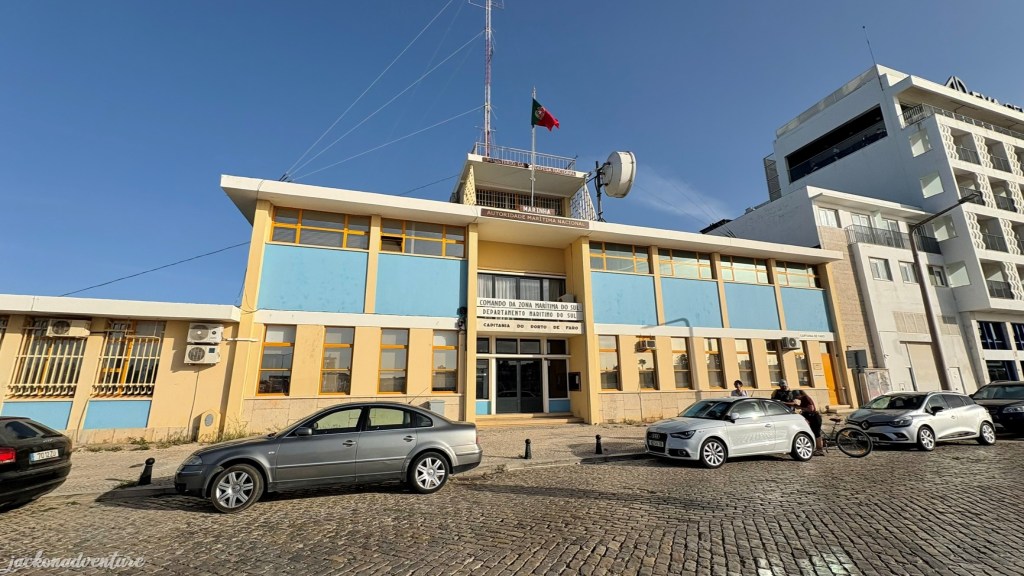
The Maritime Museum gives great insight into Faro’s history. The building isn’t that obvious at first glance, as it is located on the first floor of the port authority office.
The museum houses a significant collection of naval constructions, fishing instruments and maritime artifacts. You can learn about the local life in the Algarve region, as the town historically revolved around the fishing industry, shipbuilding and navigation. It also features an exhibition of the “Age of Discovery”, including displays of model ships and fishing equipment and marine species from the region, such as sardine, tuna and squid.
Location: R. da Comunidade Lusíada, 8000-253 Faro
Opening Hours: Monday to Friday: 9 am to 12 pm and 2.30 pm to 4.30 pm
Entrance Fee: Free
Stroll through Faro Marina
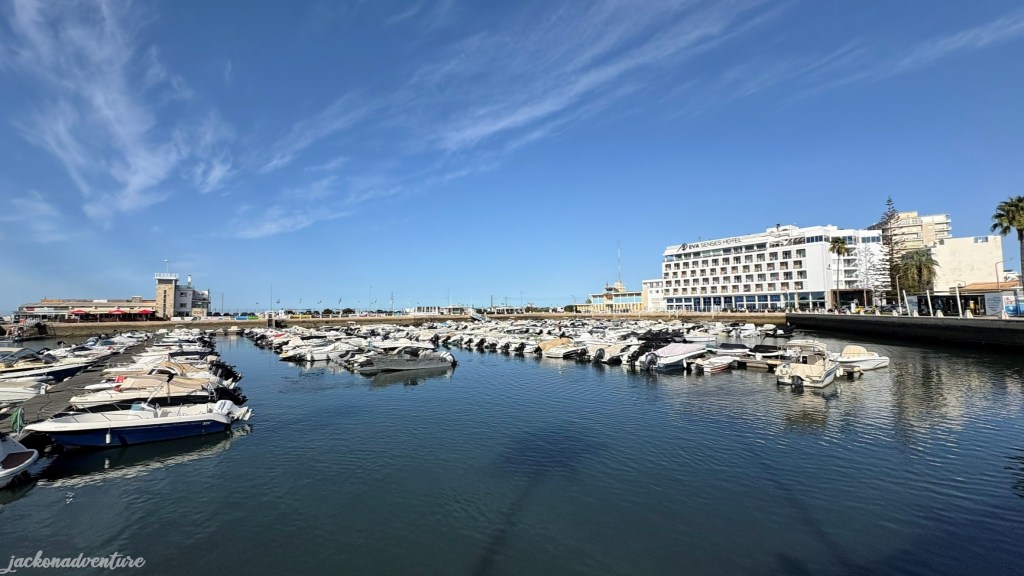
Soak up the local vibes and enjoy the cool breeze of the Atlantic Ocean. As part of the Ria Formosa lagoon, the water is calm and beautiful turquoise color, which often attracts many locals and tourists.
Take a leisurely walk along the small marina in the late afternoon or admire the sunset while relaxing at one of the waterfront restaurants. Shows and concerts are held during the summer to bring up the festive atmosphere.
Location: Praça Dom Francisco Gomes, 8000-168 Faro
Gaze the Igreja do Convento de Santo António dos Capuchos
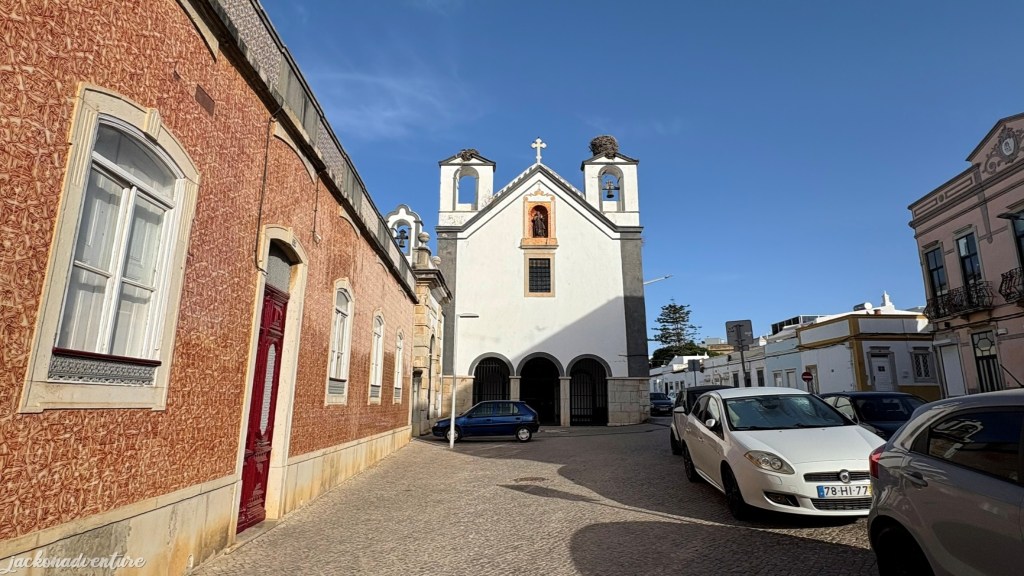
Dating to the early 17th century, the Convent of Santo António dos Capuchos is a whitewashed church with a simple façade without any outstanding features.
When the religious order was prohibited in 1834, the convent was converted into the National Republican Guard barracks and the local court offices. It was later turned into the Infante D. Henrique (Prince Henry the Navigator) Archaeological Museum and Lapidary between 1914 and 1973, when the collection was moved to new facilities in the Convent of Our Lady of the Assumption.
The church has continued its religious role ever since. The main and lateral altars were embellished with gold-leaf carving during the 18th century. The azulejo tiles in the main chapel depict scenes from the life of Saint Anthony, including the Death of Saint Anthony and the Descent from the Cross.
Location: R. Serpa Pinto, 8000-431 Faro
Discover the Igreja do Carmo

Founded in 1713 by Bishop D. António Pereira da Silva, Igreja do Carmo is a beautiful church with impressive Baroque architecture surmounted by twin bell towers. You can admire many golden angels watching over the building.
The church suffered severe damage during the 1755 earthquake and and the restoration took more than 100 years to complete.
Don’t miss the eerie Capela dos Ossos (Chapel of Bones) located behind the church’s courtyard. The walls and ceiling were adorned with the bones and skulls of over 1,245 Carmelite monks, all displayed in geometric patterns. It served as a poignant reminder of human mortality and encouraged people to live a virtuous life. The engraving above the door translates to “Stop here and consider, that you will reach this state too.”
Location: Largo do Carmo 21, 8000-148 Faro
Opening Hours: Monday to Friday: 9 am to 1 pm and 3 pm to 5 pm/ Saturday: 9 am to 1 pm
Entrance Fee: Church: Free/ Chapel of Bones: €2
Admire Igreja Matriz de São Pedro
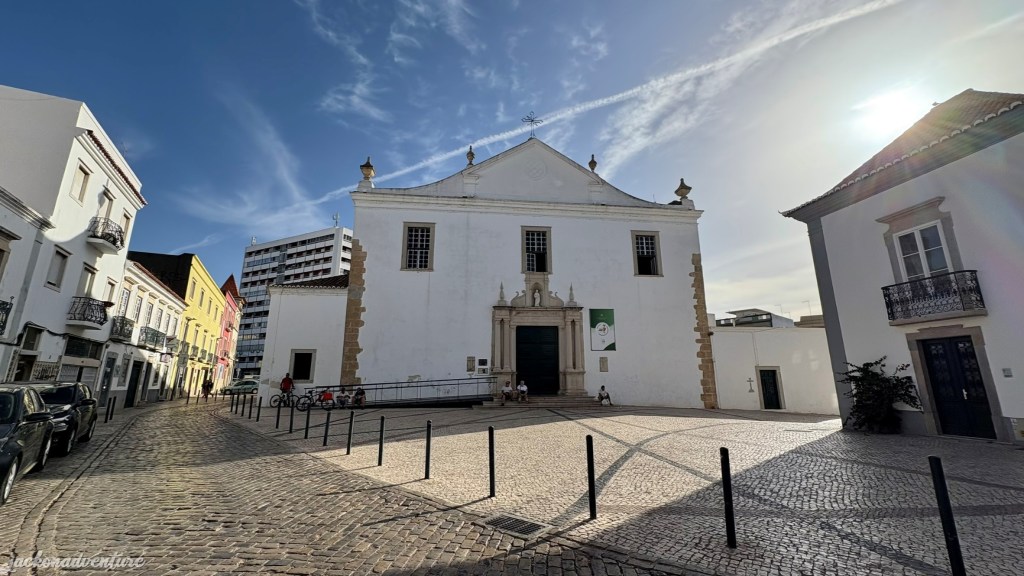
Igreja Matriz de São Pedro is considered to be one of the oldest churches in Faro, as it dates from the 13th and 14th centuries. Originally built as the Collegiate Church of St. Peter, the church contains an altarpiece depicting him with striking imaginary, that was created by a local artist João da Costa.
This Baroque church is known for its spectacular 17th-century azulejo tiles with unique blue and yellow designs. Some notable Portuguese figures are buried in the church, including the iconic painter Josepha de Óbidos and the religious scholar Silveira Malhão.
Location: R. Serpa Pinto, 8000-431 Faro
Visit the impressive Igreja da Misericórdia
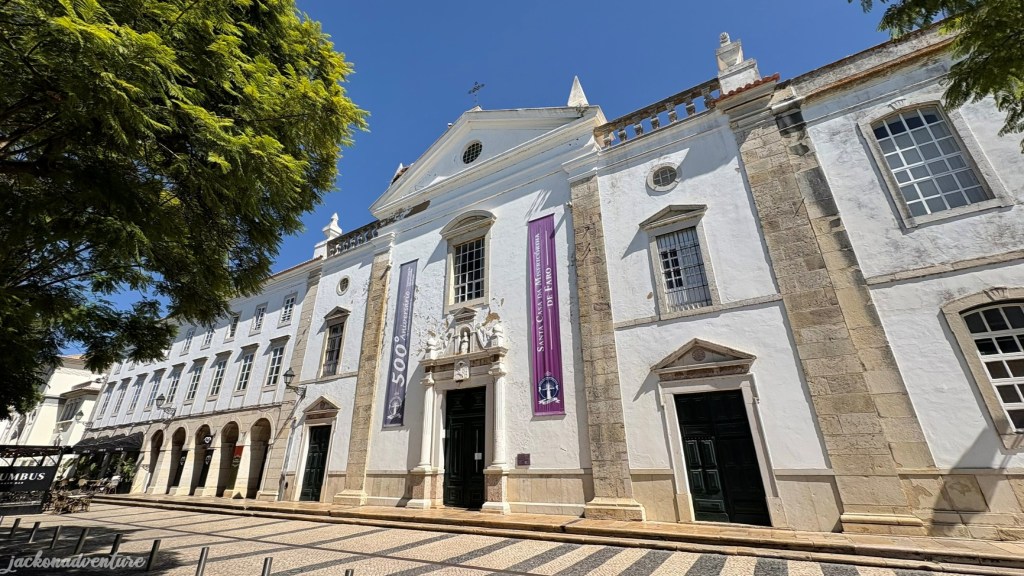
The beautiful building was once the site of the Chapel of the Espírito Santo (Holy Spirit), part of the city’s reconstruction plan carried out by king Manuel I in 1499. By the end of the 16th century, Bishop Afonso Castelo Branco opted to replace the chapel with the current Church of Misericórdia (Compassion) and an adjoining hospital. One of the most interesting aspects of its construction is the only building in the Algarve region laid out in the form of a Greek cross.
The façade and a new hospital were rebuilt after the 1755 earthquake. The main altar features a remarkable 17th-century Mannerist retable. The triumphal arch is lavishly decorated in rococo carving and establishes a connection between the two collateral altarpieces.
Location: Jardim Manuel Bivar 8005-152 Faro
Opening Hours: Monday, Wednesday and Friday: 9.30 am to 1 pm and 3 pm to 5 pm/ Tuesday and Thursday: 9.30 am to 1 pm
Entrance Fee: Free
Walk under the Arco de Vila
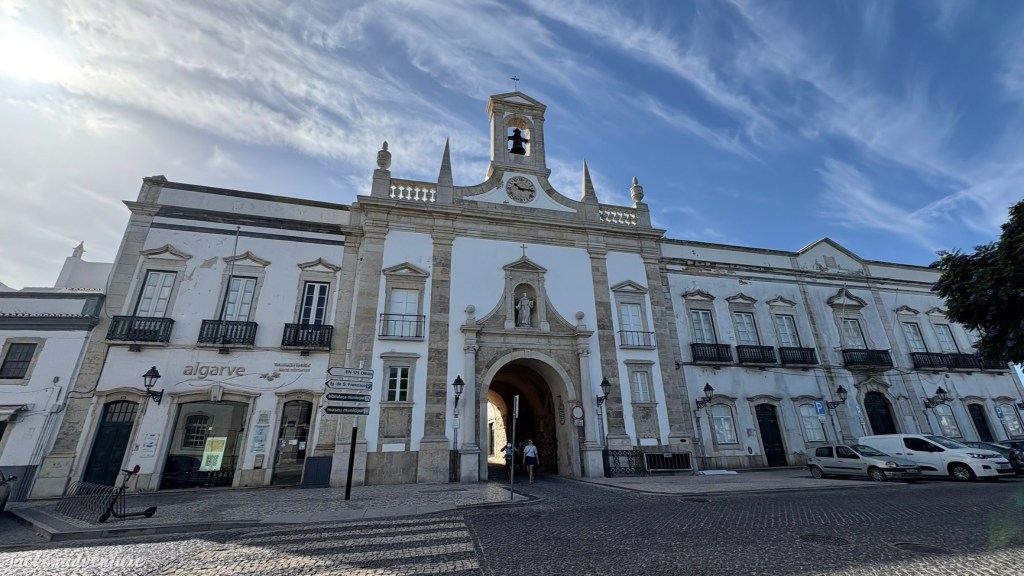
The historical town of Faro boasts several breathtaking architectural wonders. Among them is the Arco de Vila that marks the entrance to the Old Town. It serves as a great reminder of the city’s rich history.
Dating back to 1752, the Boraque-style town archway was built by Bishop Francisco Gomes de Avelar, and the architecture remains in its original form. It is one of the last remaining gates of its kind, allowing travellers to appreciate its true, intricate details. The Italian-made statue of Saint Thomas of Aquinas above the gates is one of the finest examples of Neoclassical design in the Algarve.
The tower above is accessible through the tourist office, which contains small exhibits. You can marvel at the magnificent scenic views of Fuzeta Beach and the storks that build their huge nests on top.
Location: R. da Misericórdia 8, 8000-168 Faro
Discover the elegant Sé Catedral de Faro
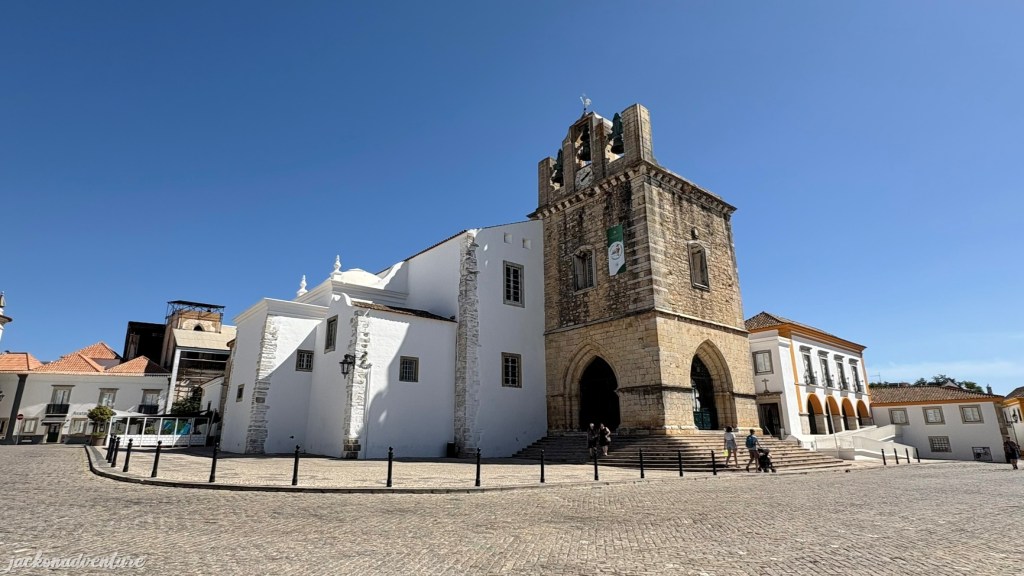
The elegant Igreja de Santa Maria (Sé Catedral de Faro) was built in 1251, two years after the reconquest of the village. The church sits on the remains of an ancient Paleochristian basilica that has been converted into a mosque.
It is the largest religious building in the Algarve region and was built in Romanesque and Gothic styles. It conserves several architectural elements from the original 13th- and 14th-century structure, like the bell tower and two transept chapels.
In 1596, the church and the city were ransacked and set on fire by the English troops of Robert Devereux, 2nd Earl of Essex. From the Gothic era, only the sanctuary chapels, the façade tower and the walls of the nave survived, while the altars and the wooden ceilings were destroyed.
The interior was later rebuilt in Mannerist style during the 17th century and contains valuable artistic examples from the 17th and 18th centuries. The altarpiece and the chancel of the main chapel, the Chapel of the Saint Lenho, are adorned with glided carvings. You can admire the reliquaries and the tomb of the founding bishop. The Chapel of Our Lady of Pleasures is a tiny jewel of Baroque art, featuring fine examples of gilded carving, inlays, tiles and painting.
You can climb to the top of the tower to catch the stunning views of Ria Formosa, the ocean and the Old Town.
Location: Largo da Sé 11, 8000-138 Faro
Opening Hours: Monday to Saturday: 10 am to 6.30 pm
Entrance Fee: Free
Explore the exquisite Paço Episcopal de Faro
The Paço Episcopal de Faro dates back to 1585 and was built to accommodate the bishop of the Algarve. After the earthquake, restoration was made and repurposed as a training centre for priests. Today, you can explore the palace and admire an excellent collection of religious art, namely including portraits of of bishops. There are also sculptures depicting several Algarve bishops from the 17th and 18th centuries.
For architecture lovers, the palace is one place you should be. Take time to appreciate the stunning blue azulejo panels around the building walls. They were created in the 18th century in the Rococo style with some Baroque influence.
One of the most impressive azulejos on the ground floor from the late Baroque period represents Faith, Hope, Prudence, Justice and Strength.
Location: Largo da Sé 15, 8000-138 Faro
Opening Hours: Monday to Saturday: 10 am to 1 pm and 2 pm to 6 pm
Entrance Fee: €2.50
Get a glimpse of the impressive Murallas de Faro
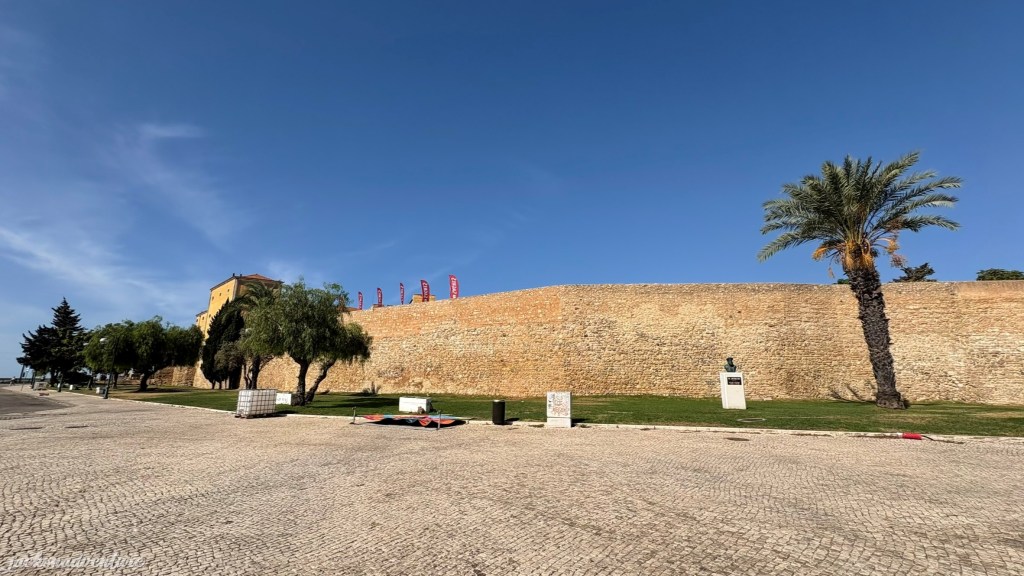
The Murallas da Faro is a great testament to the city of Faro, as it represents one of the important landmarks with a fascinating history tracing back to the 9th century.
Faro City was once surrounded by ancient fortification walls built to protect the citizens from invasions. The walls were first erected by the Moors, who also constructed the Arco da Vila, previously known as Porta Arabe (Arab Gateway). After the Almahade invasion in the 12th century, two large watchtowers were built as part of the Arco do Repouso.
When the Portuguese regained control of the city, they added extra defense along the coastline, which the remnants now stand today. Several sections of the ancient fortification walls are still intact after the major earthquake.
Location: R. do Castelo 2, 8000-243 Faro
Walk under Arco de Repouso
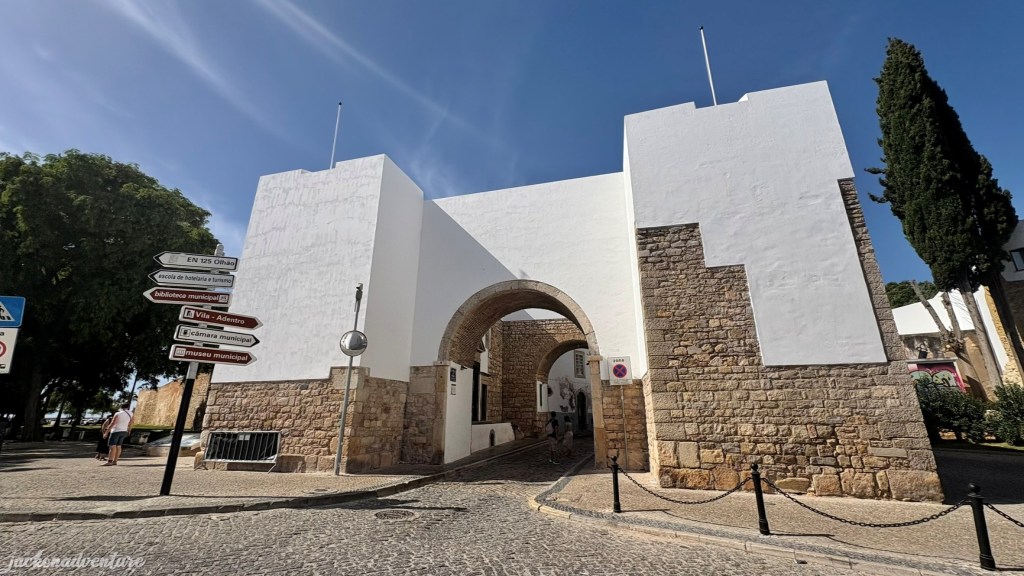
Known as the Gate of Rest, Arco do Repouso is an entrance to the Old Town. The gate dates back to the 12th and 13th centuries, during the Christian reconquest of the region from the Moors. Alfonso III reinforced the walls with two barbarian towers at the side entrances.
Legend has it that the gate got its name when Afonso III rested his feet here while listening to a nearby Mass after recapturing the city.
Another legend tells of a Moorish princess who fell in love with a Christian knight during the war and was bewitched by her angry father. Her soul is said to still rests beneath the gate.
Location: Muralhas de Faro, R. do Repouso, 8000-302 Faro
Getting lost in the ancient Old Town
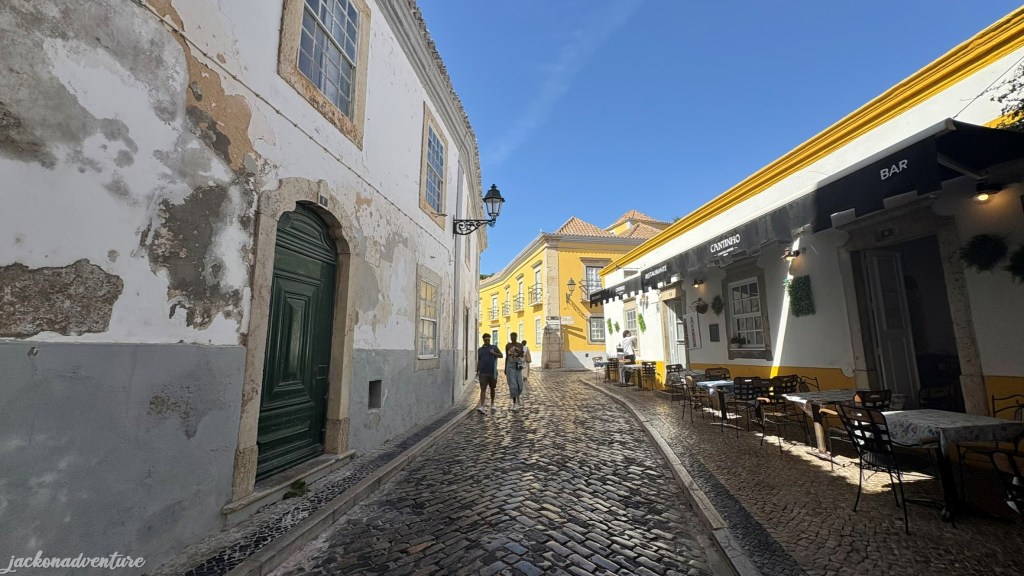
Wander down the beautiful cobblestone streets that date back over 2,000 years. They make you feel like as if you’re stepping back into the past. In ancient times, many inhabitants lived within the walls to protect themselves from pirates.
You can walk around the winding alleys and passageways of the Old Town, surrounded by Gothic and Baroque-style whitewashed buildings, its brightly coloured doors and orange trees. There are plenty of small independent stores where you can pick up gifts and handicrafts. Otherwise, take a break and have lunch at one of the many restaurants or taverns that serve authentic Portuguese meals and desserts.

Don’t miss the panels of traditional Portuguese blue and white azulejos at the front of the entrance. They depict the story of King Alfonso III, who drove the Moors out of the Algarve and liberated the city in 1249.
Discover local secrets at the Faro Municipal Museum
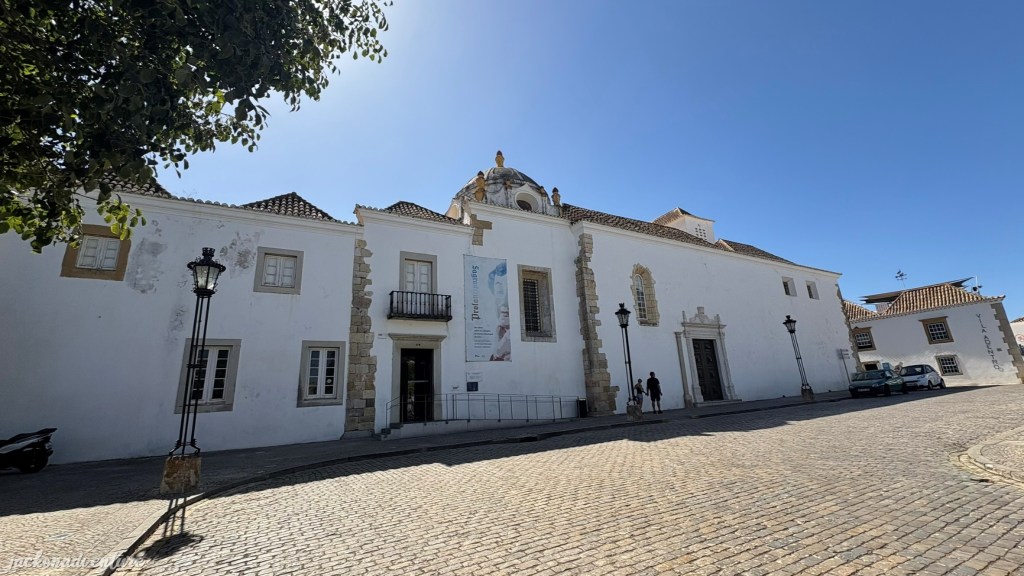
Located in the Old Convent of Our Lady of the Assumption, the Faro Municipal Museum was built in the first decades of the 16th century. It is one of the Renaissance jewels of the Algarve. The nuns inhabited the convent until 1834, when the religious orders were dissolved.
The museum preserved many archaeological treasures from the prehistoric, Roman and medieval era. Notable objects from the Roman period include a mosaic from the 2nd and 3rd centuries, the imperial busts of Hadrian and Agrippina and a collection of Ossonoba epigraphs.
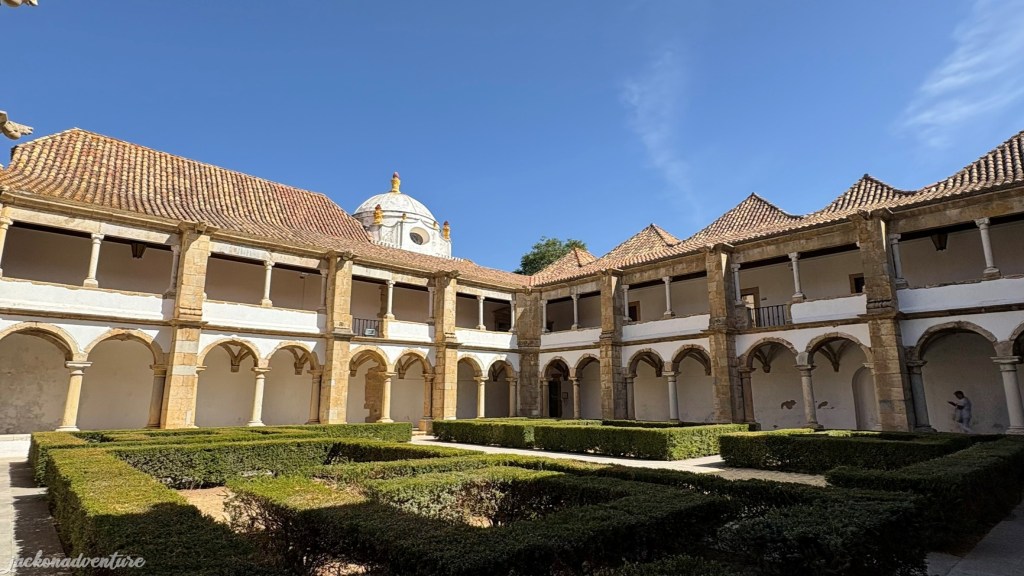
It is also home to a collection of coats of arms and a set of magnificent religious canvases painted by important national and foreign artists between the 16th and 18th centuries. There are many artifacts from the Moorish era, including farming tools, scenes of daily life in the bedroom, kitchen and taverns, and costumes used for the corridinho dance.
After completing a self-guided tour in the museum, wander around the charming garden and the cloister of the monastery, and admire its beautiful architectural design.
Location: Largo Dom Afonso III 14, 8000-167 Faro
Opening Hours: Tuesday to Friday: 10 am to 6 pm/ Saturday and Sunday: 10.30 am to 5 pm
Entrance Fee: Free
Browse the boutique shops with canopies overhead
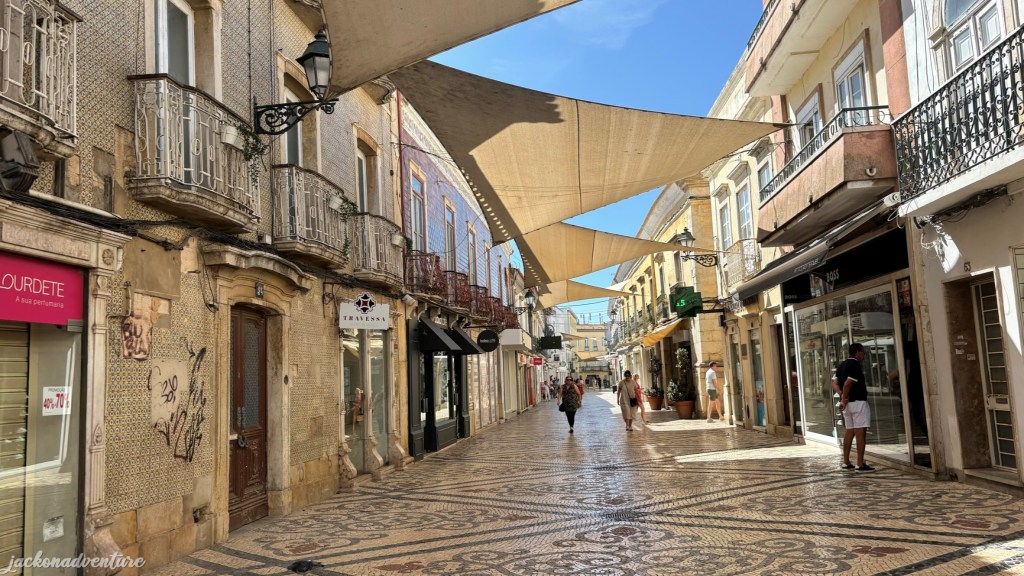
The main shopping streets in Faro are covered by big white canopies hanging like the sails of a ship, providing shelter from the summer heat. This creates a wonderful shopping experience, especially on the lovely Rua de Santo Antonio.
Dozens of independent boutique shops line the streets, selling local and international brands. I picked up some unique souvenirs from one of the stores, perfect as gifts, ready to give to my friends at Christmas.
You can also dine in at one of many cafés and restaurants that serve Portuguese dishes, fresh juices and desserts. The streets have a serene ambiance where you can indulge in the delicious food while enjoy people-watching.
Discover The Best of Portugal
Have you started falling in love with Portugal after learning how fascinating Faro is? Why not check out my posts on other cities and towns around the country with diverse histories and cultures:
Like It? Pin This Article.


 Jack on Adventure
Leave a comment