
Tucked away in the Alentejo region, Évora is a charming museum city in central southern Portugal. Designated as a UNESCO World Heritage site, the city has been off the travel radar for many visitors to Portugal and is a perfect getaway from the bustling Lisbon.
There are many fabulous things to do in this secret jewel of Portugal, thanks to its rich history and culture. The city dates back to the Roman era and was chosen by the kings of Portugal as their residence during the golden age in the 15th century. It carries a refreshing, youthful atmosphere due to its significant student crowd.
Best Time to Visit
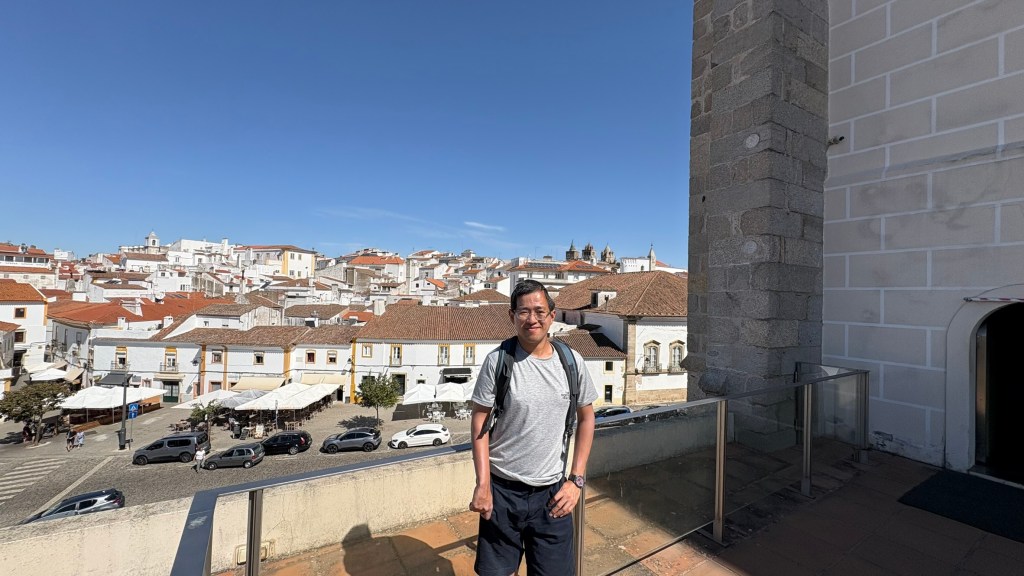
Évora can be visited in all seasons of the year. Yet, the best time to visit is in spring, from March to May. The days are cool, dry and sunny. The city is colored by beautiful flowers that bloom throughout the neighbourhoods. Locals host fabulous events, including Mardi Gras and the Holy Week.
Autumn, which falls between September and November, is an atmospheric time to visit. The weather is also warm and sunny. The Al Mossassa Festival is held in early October to celebrate the town’s Moorish origins with markets, music and street performances within the medieval walls. November brings the Chestnut Festival, which celebrates the region’s autumn produce. Do expect plenty of roasted chestnuts, local wines and live music.
During the summer from June to August, the city experiences the hottest temperatures that can exceed 40˚C. Some of the most celebrated festivals are Feira São João in June and the Évora Classical Music Festival in July. If you plan to visit in the summer, consider taking it slow. Remember to wear a hat, apply sunscreen and always stay hydrated.
The coldest months are from December to February, and temperatures rise only to about 13˚C. The weather is not too bad if you wear a jacket and don’t mind the chance of rain. The main celebrations are Christmas and New Year, with cobbled streets beautifully decorated with lights.
Getting There
By Bus
The most affordable way to get to Évora is by express bus. Regular buses depart every hour from Lisbon City and take about 1.5 hours to reach the historic center of Évora. Flixbus departs from Lisboa Oriente and you can take the city metro to the bus terminal located above the train station via Azambuja or Sintra Line.
Alternatively, you can also take the Rede Expressos that departs from Sete Rios Bus Terminal. The city metro stops at Sete Rios Station via the Azambuja, Setubal or Sintra Line, and you can walk to the bus terminal.
Both bus operators will drop you off at Évora Terminal Rodoviário, which is located just 1 kilometer from the old town. It is possible to take a 10-minute walk or hail an Uber or a Bolt from the bus terminal.
By Train
Comboios de Portugal (CP) is the national railway system in Portugal and you can take Alfa Pendular (AP) between Lisbon and Évora. The journey takes 1 hour and 33 minutes and costs €7.50 per trip. Tickets can be purchased from the CP website, their app or the train station.
I usually prefer to travel by train rather than by bus, but there aren’t many trains going to Évora from Lisbon. However, there are only 5 departures daily from Oriente Station, with the first service starting at 7.02 am. I recommend taking the 7.02 am train if you are going on a day trip. You can spend a day exploring the old town and catch the last train at 7.06 pm back to Lisbon.
Getting Around
Évora is not a big city like Lisbon and Porto. Walking around the city is the best way to experience the rich culture and history. It is much more comfortable to wear sneakers when walking on cobblestone streets and narrow alleyways. You find it easier to get around the historic landmarks without relying on public transportation because the sites are located close to one another.
The Best Activities for a Day Trip to
Évora is an open-air city museum and a worthwhile day trip from Portugal’s capital. The town is an excellent choice for history buffs who appreciate medieval architecture, historical monuments, and a rich Roman-era past.
From wandering along Évora’s cobbled streets and visiting the eerie Chapel of Bones to indulging in the local culinary scene, here’s everything you need to know to plan your day trip to Évora from Lisbon.
Admire the beauty of Igreja de São Francisco
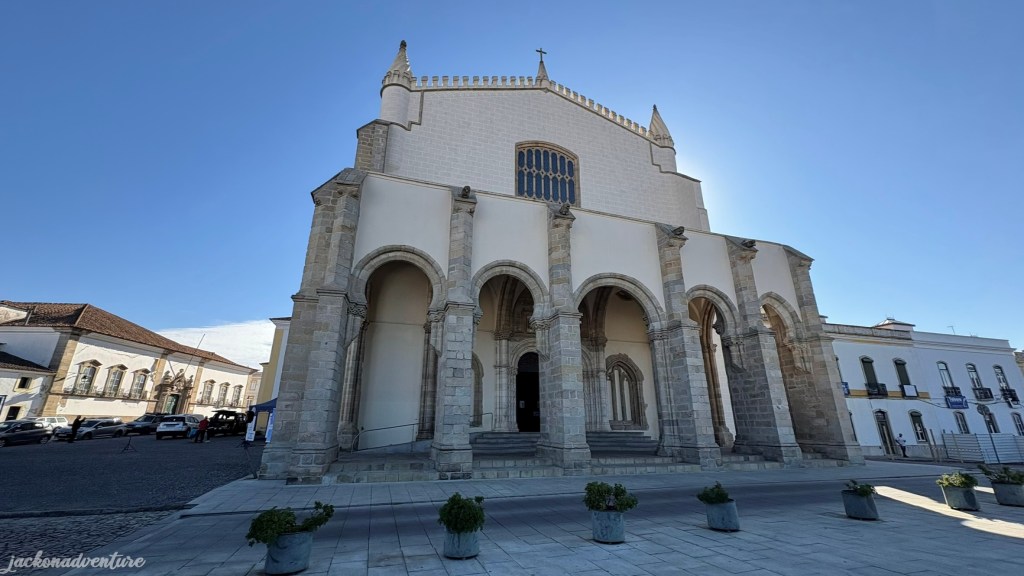
The Church of San Francisco was built in the Gothic and Manueline styles between 1475 and the 1550s on the remains of the original Romanesque convent of 1226. Construction began under Afonso V and significant progress was made under João II. Known as the Convent of Gold, the church reached its architectural and artistic magnificence under Manuel I.
The dissolution of the religious order in 1834 led to the rapid deterioration of the convent. The church survived due in part to the Third Order, to intense popular devotion to the Senhor dos Passos, and to the relocation of the parish of São Pedro’s seat to the church.
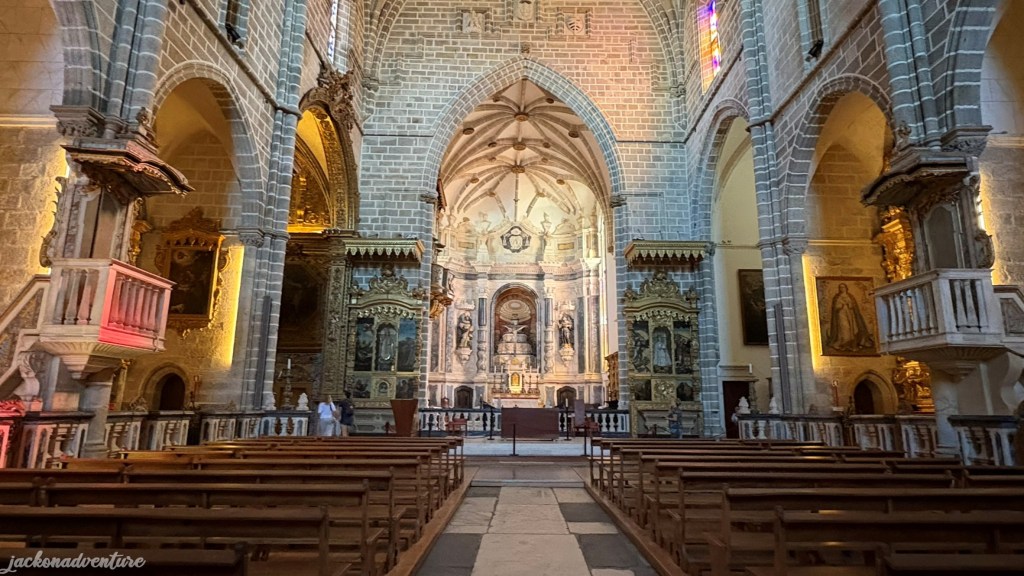
The architecture is one of a kind. Its arcade comprises 7 arches of varying forms, blending Gothic and Moorish elements. Above the Manueline entrance to the church is a pelican, the emblem of King João II and Manuel I. The nave’s sides contain 12 open chapels, built between the buttresses.
Location: Praça 1º de Maio, 7000-650 Évora
Opening Hours: May to October: Daily from 9 am to 6.30 pm/ November to April: Daily from 9 am to 5 pm
Entrance Fee: Free
Get spooked by the Capela dos Ossos

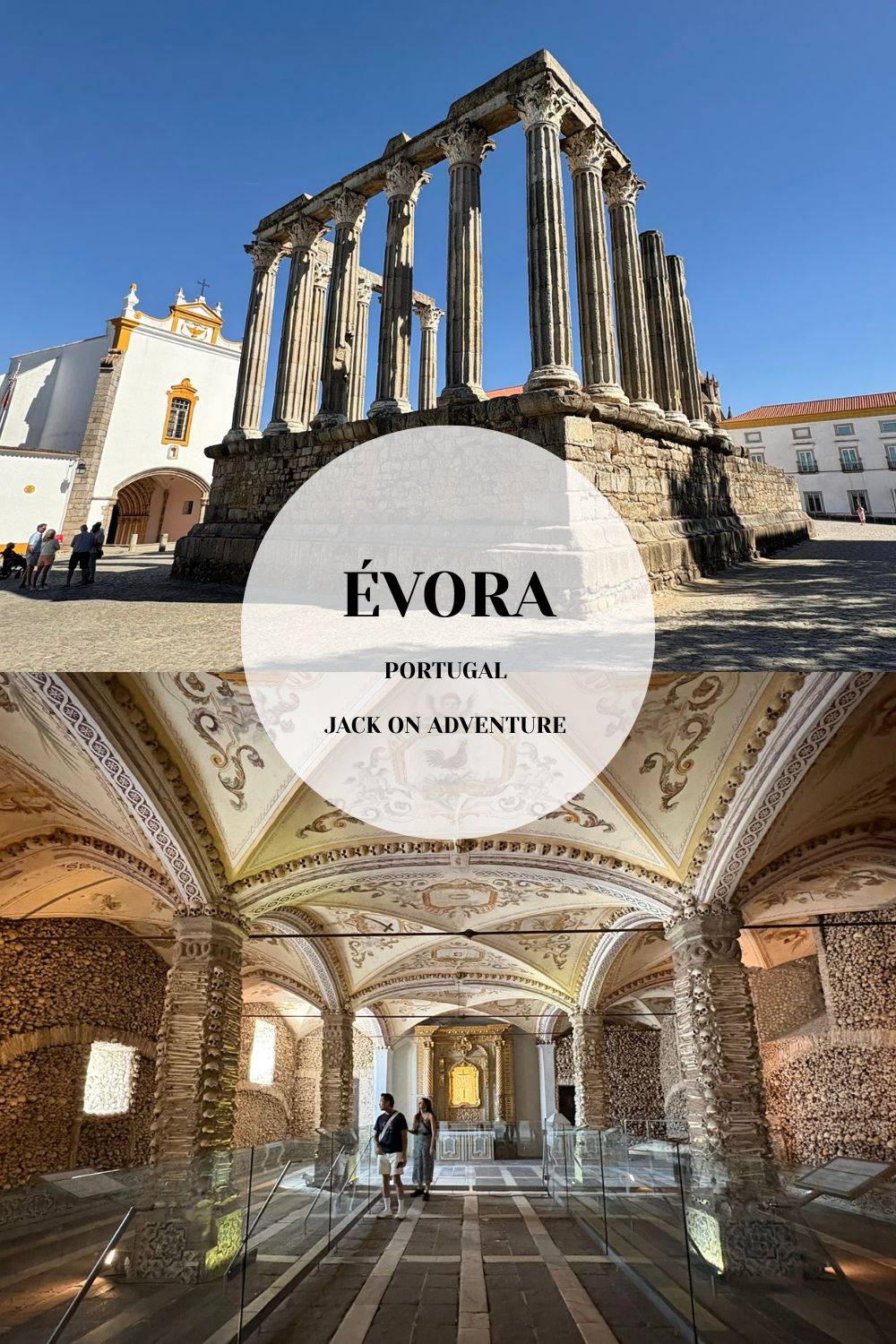
Located next to the Igreja de São Francisco is the eerie but compelling Capela dos Osos (Chapel of Bones). This chapel was built by Franciscan monks in the 17th century using roughly 5,000 bones and skulls to encourage reflection on the transience of human life and the consequent commitment to a constant Christian life.
In the 16th century, the 42 monastic cemeteries occupied too much space in the city. The monks wanted to conserve space while still honoring the dead. Therefore, they extracted the bones from the ground and used them to construct and “decorate” this chapel.
When you arrive at the chapel, the entrance welcomes you with a sign that reads, “We bones that are here, for yours we wait.” The frescoes decorating the vaulted ceiling, dating from 1810, present a variety of symbolic motifs illustrated through biblical scenes and depictions of the Passion of Christ.
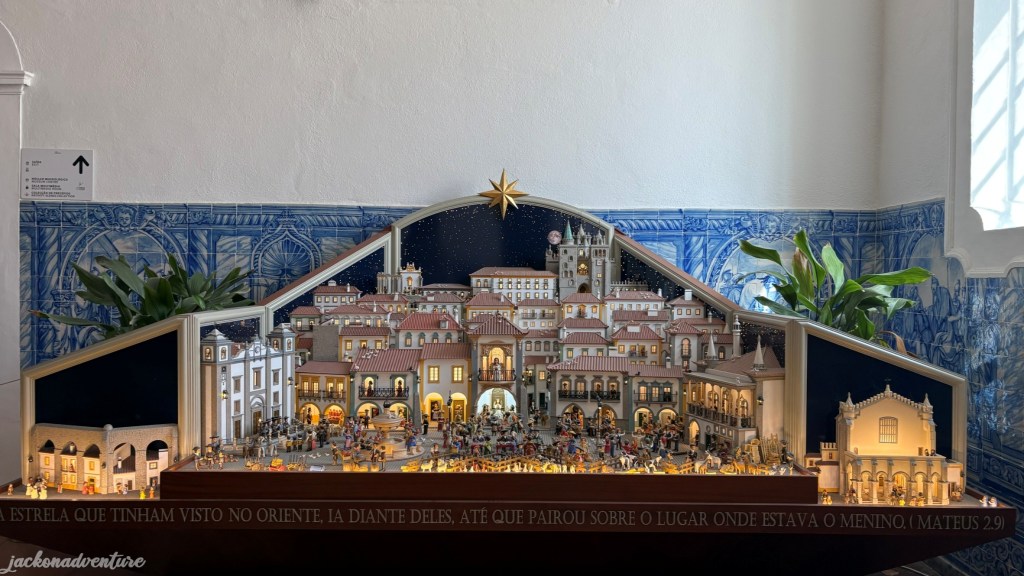
From the chapel, you can walk through several rooms containing exhibitions that house religious artifacts and nativity scenes from the large private collection of Major-General Fernando Canho da Silva and his wife, Fernanda. You can admire hundreds of Portuguese and international nativity scenes by countless artisans that represent both folk art and fine artistic skills.
Location: Praça 1º de Maio 4, 7000-650 Évora
Opening Hours: May to October: Daily from 9 am to 6.30 pm/ November to April: Daily from 9 am to 5 pm
Entrance Fee: Adults: €6/ Adults aged 65+ and Visitors aged 12 to 25: €4/ Children below 12: Free
Gaze at the Igreja da Graça

Graça Church is a 16th-century Renaissance-style church and convent that looks beautiful from the outside. Although the church is not open to the public, you can admire the impressive façade topped with four mythological figures on each side of the main entrance. They symbolize the four corners of the Earth and the universal power asserted by King João III during his reign.
Location: R. da Graça 15, 7000-919 Évora
Explore the stunning Évora Cathedral

Perched on the highest point in the town, Évora Cathedral is the largest medieval cathedral in Portugal. Construction of the cathedral began in the 12th century when a modest structure was built. It was enlarged over time and added new parts to the complex when it was completed in the 18th century. It displays a variety of architectural styles, including Gothic, Romanesque and Manueline.
An image of a local hero, Gerald the Fearless, is displayed in the cathedral in remembrance of his contribution to the formation of Portugal as a nation.

You have to climb a narrow spiral staircase to reach the roof, but the effort is rewarded with breathtaking views over the surrounding countryside. There is a very striking and picturesque lantern tower with several spires.
Location: Largo do Marquês de Marialva
Opening Hours: Daily from 9 am to 5 pm
Entrance Fee: Cathedral: €2/ Cathedral and Museum: €4/ Cathedral and Cloister: €2.50/ Cathedral, Cloister, Towers and Roof Access: €3.50/ Cathedral, Cloister, Towers, Museum and Roof Access: €4.50
Take a glance at the Templo Romano
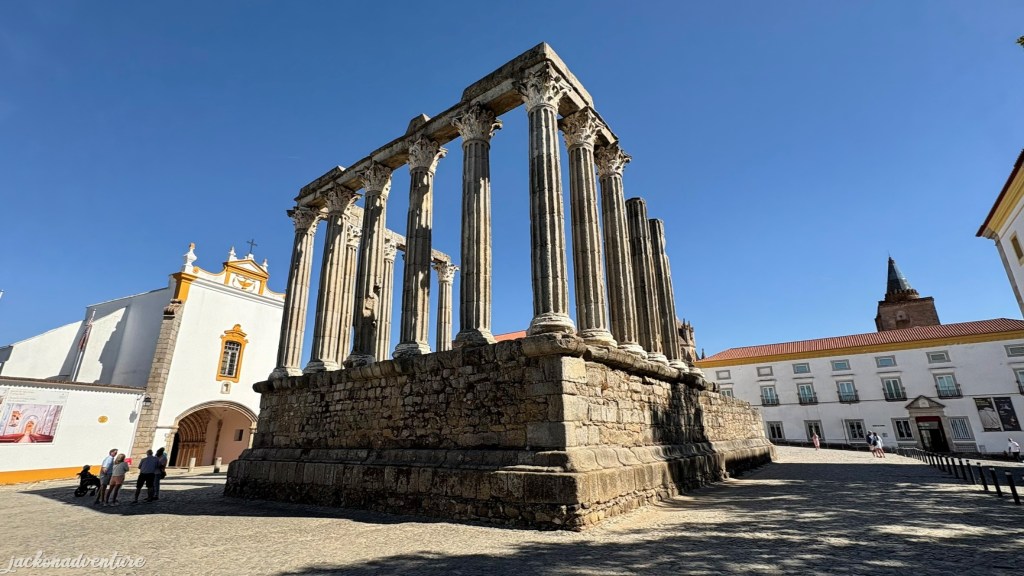
The Roman Temple of Évora was built in the Corinthian style in the first half of the 1st century AD. Known as the Templo de Diana, the temple was dedicated to Diana, the patroness of hunters and wilderness. Today, it is believed to have been consecrated to the cult of the Emperor.
The ancient temple has a long history, serving as a testimony to many transformations and varied uses over the centuries. It was largely destroyed when the Barbarians occupied the Iberian Peninsula in the 5th century. Several modifications were made to serve as a safe house, a bank vault and a slaughterhouse.
14 original Corinthian columns still stand over the base of the Roman Temple. Many of these still have their capitals, made of white marble from Estremoz. The floor, once covered with mosaic, is completely gone.
Location: Largo do Conde de Vila Flor, 7000-863 Évora
Opening Hours: 24 hours
Visit the Igreja de São João Evangelista
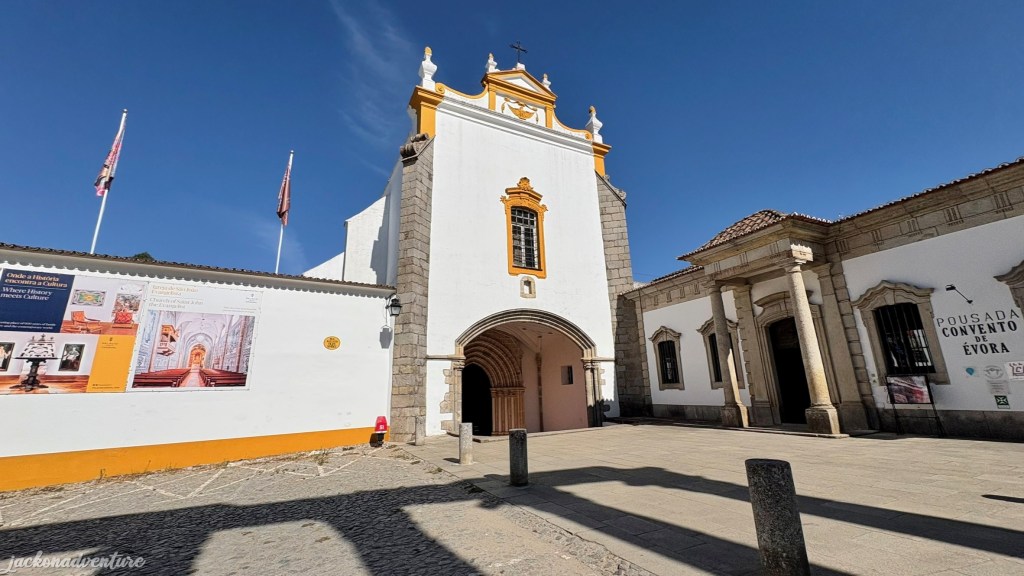
Next to the Roman Temple stands the beautiful whitewashed Igreja de São João Evangelista. It was built in 1485 as the funerary chapel for a count and his family. As you enter through the Gothic portal, be amazed by the magnificent azulejo tile panels lining the walls. Created in 1711 by the master António de Oliveira Bernardes, these panels depict scenes from the life of St. Lawrence Justinian.
There is a crypt next to the Moorish cistern. In the side chapels are fine examples of gilded woodcarving.
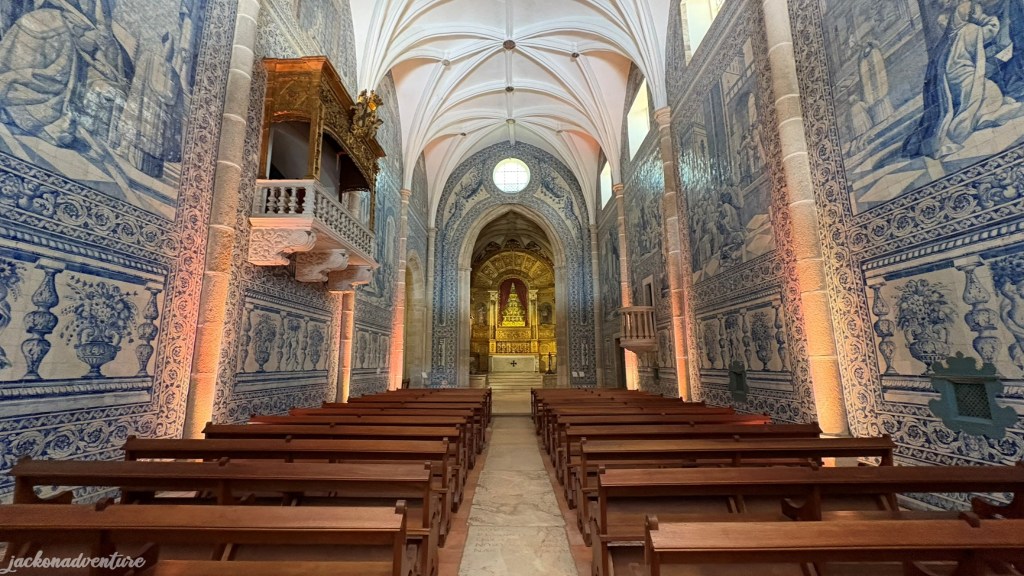
As one of the most beautiful churches in the country, the convent has had part of the building turned into a hotel that connects to the 14th-century Cadaval Palace. The palace is still the home of the Dukes of Cadaval, but a section of its interior is open for temporary exhibitions.
Location: Palácio Cadaval, 7000-845 Évora
Opening Hours: Tuesday to Sunday: 10 am to 6 pm
Entrance Fee: Adults: €5/ Adults aged 65+ and Visitors aged 13 to 25: €3/ Visitors with Disability and Children below 13: Free (Additional €1-2 to the exhibitions in the palace next door)
Wander around Jardim Diana
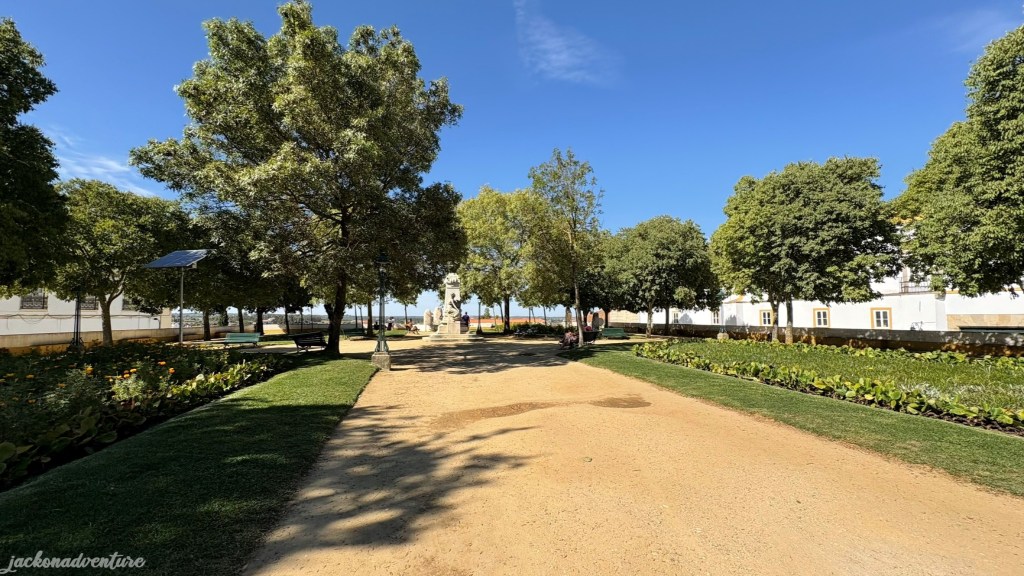
Named after the goddess of hunting, Jardim Diana is a nice place to relax after a long walk in the historic city of Évora. Although the views from Évora Cathedral are incredible, the viewpoint in the tranquil garden has its own charm as it overlooks the old city and the Alentejo region.
Location: R. do Menino Jesus 1, 7000-845 Évora
Discover the stunning Igreja do Espírito Santo
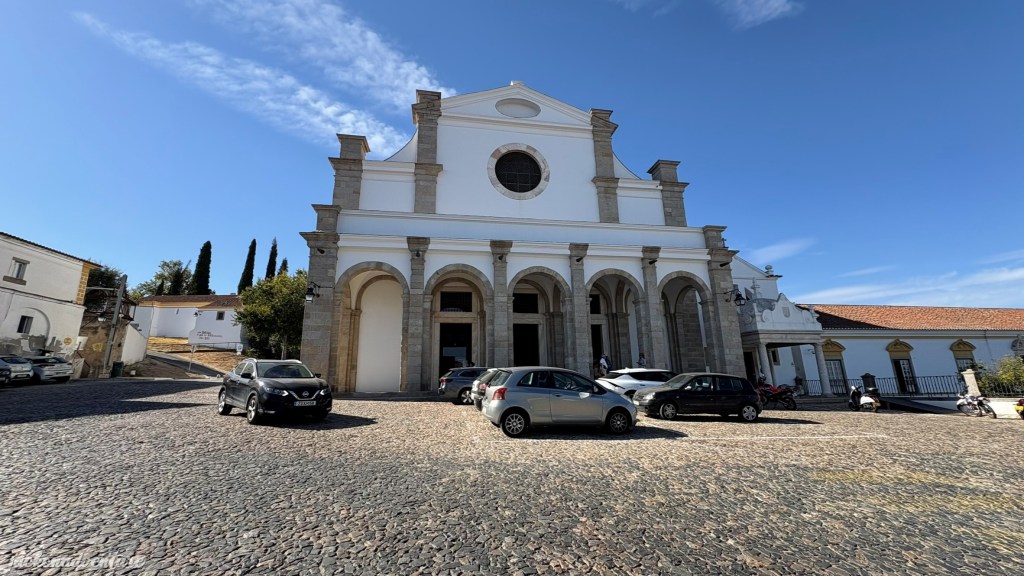
The Church of Espírito Santo was built between 1566 and 1574 to replace a small church that existed in the heart of the cloister. Cardinal D. Henrique, the first Archbishop of Évora, took another step in pursuing a true apostolic and spiritual reform of his diocese by founding a Jesuit college in the town.
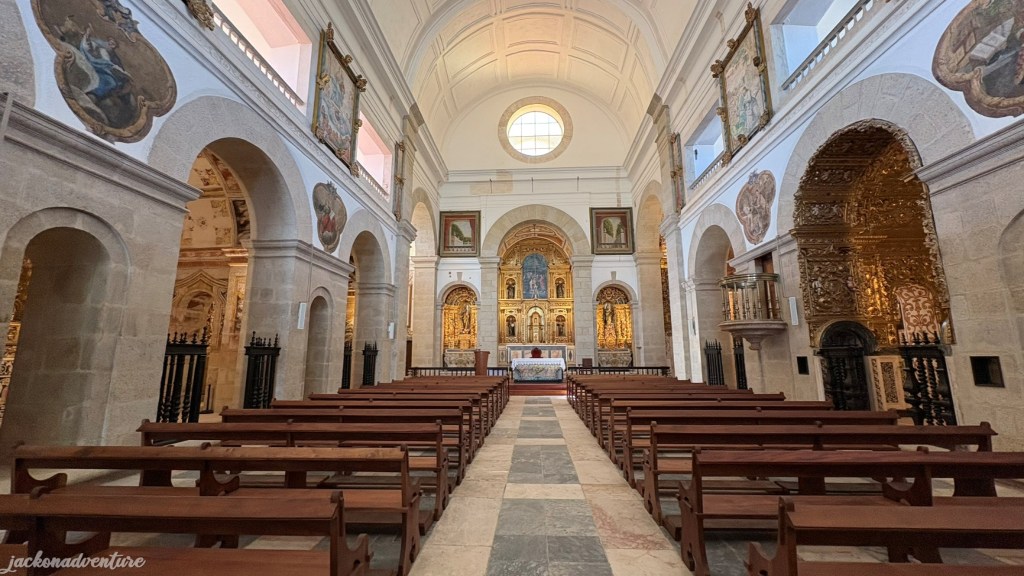
The spaciousness and luminosity of the interior are enhanced by the excellence of its artistic ensemble and devotional elements, ranging from the gilded altarpieces in the chancel to the ten altars in the chapels of the nave.
The enormous iconographic and symbolic value of the 16th-century mural painting emphasizes the entire composition of the ceiling of the new sacristy, depicting episodes of the life of St. Ignatius Loyola, and other scenes that illustrate the priests’ vocation to teaching and preaching.
Location: Largo do Colégio 1, 7000-645 Évora
Opening Hours: May to October: Daily from 9 am to 6.30 pm/ November to April: Daily from 9 am to 5 pm
Entrance Fee: Adults: €2.50/ Adults aged 65+, Visitors with Disability and Visitors aged 12 to 25: €2/ Children below 12: Free
Roam around the University of Évora
Established in the 16th century, the University of Évora is the second-oldest in Portugal after the University of Coimbra. It is a working university but is open for visitors to explore.
The university is known for its architecture and for its tile-covered classrooms and halls. There is a large arch-lined courtyard with a hallway and classrooms arranged around the complex. Each classroom has its own unique tile illustrations on the walls.
Every classroom is dedicated to a different subject, such as geography, mathematics, and physics. The tile illustrations in each room depict stories and scenes related to the corresponding theme. For example, the geography classroom contains tile illustrations depicting aspects of the country’s geography.
Visit the Igreja de Santo Antão
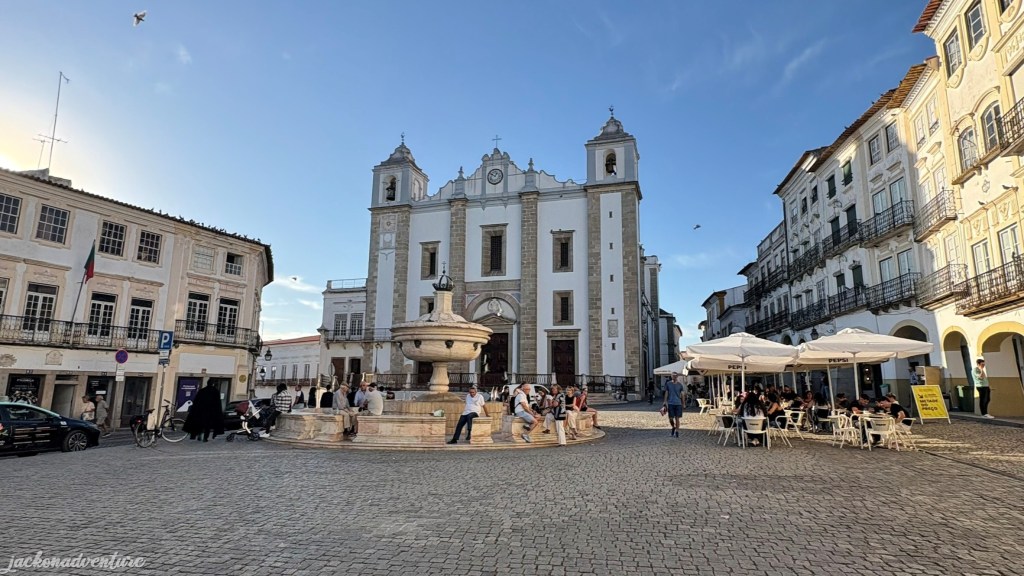
The Santo Antão Church was built in the 16th century by the royal architects Miguel de Arruda, Manuel Pires and Afonso Álvares. The Renaissance church was dedicated to St. Anthony the Great in 1557 and served as a model for other churches in the Alentejo region at the time.
The interior is adorned with Baroque and Rococo elements, including the gilded altarpiece in the chancel. Only a 14th-century marble relief representing the Apostolate survives from the former chapel.
Location: Praça do Giraldo, 7000-661 Évora
Opening Hours: Daily from 9 am to 11.45 am and 3 pm to 5 pm
Entrance Fee: free, but you need to pay 50 cents to take photographs in the church
Relax at the Giraldo Square

As the day almost comes to an end, sit down at the Giraldo Square and let the rest of the day go by. The main square is located right outside of Santo Antão Church. It is named after Giraldo Sem Pavor (Gerald the Fear), a Portuguese warrior who defended the region against the Moors during the Reconquista in the 12th century.
Giraldo Square is a perfect spot where you can enjoy the buzz of the city, people-watching or try a traditional local meal. There are many restaurants, taverns and cafés nearby. You can shop at one of the souvenir shops that sell handmade handicrafts, azulejo tiles and other gift items.
There is a large Baroque-style marble fountain, which is often set as a meeting point for walking tours and hosting local festivals.
Location: Praça do Giraldo 7, 7000-661 Évora
Opening Hours: 24 hours
Taste one of the regional authentic dishes

As the largest province of Portugal, Alentejo boasts a diversity of food and culinary arts. Évora is no exception to that. One of the traditional dishes is the Alentejo-style pork and clams, or Porco à Alentejana.
This rich and flavorful dish brings together chunks of tender pork fried in lard, then tossed with briny clams, crispy fried potatoes, and pickled vegetables in a rich, garlicky sauce.
Some say that this dish likely originated in the Algarve region, where seafood rules. However, nothing can compare to Alentejo prized black Iberian pigs (porco preto), which feast on acorns. Alentejo is known for producing some of the most flavorful, well-marbled pork in the world.
Discover The Best of Portugal
Have you started falling in love with Portugal after learning how fascinating Évora is? Why not check out my posts on other cities and towns around the country with diverse histories and cultures:
Like It? Pin This Article.

 Jack on Adventure
Leave a comment