Nestled in the heart of Triglav National Park of the Julian Alps, Lake Bohinj is the largest natural lake in Slovenia. Locally known as Bohinjsko jezero, it is an enchanted gem, often overshadowed by its more famous neighbour, Lake Bled.
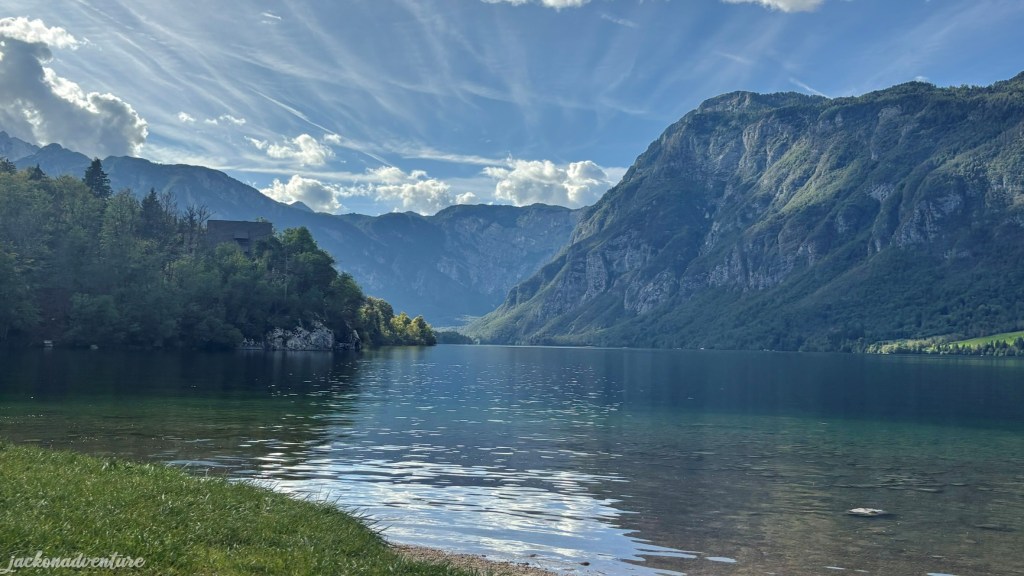
Lake Bohinj is a magnificent paradise for anyone who loves outdoor adventures. There are plenty of hiking trails winding through alpine forests, accompanied by the sounds of the wilderness and gentle breezes drifting down from the mountains. The summit of Triglav is the highest peak in Slovenia, standing at 2864 meters above sea level.
Around 53 algae species, 60 zoobenthic species, and 16 fish species have made this area their home, many of which are native to Slovenia. Among them are chamois, mouflon, ibex, roe deer, golden eagles and capercaillie, which roam the surrounding wilderness. The area is also home to 19 endemic plant species, some of which are named after the majestic mountains, such as the Triglav rose and Triglav hawksbeard.
Beyond the shores of the lake, scattered settlements stretch across the Bohinj Valley. Bohinjska Bistrica is the largest village and the municipal centre, while the others are smaller, traditional farming villages. The villages closest to the lake are Ribčev Laz and Stara Fužina. Owners of charming apartments, small guesthouses and traditional taverns warmly welcome visitors, making a trip to Lake Bohinj an unforgettable experience.
According to local legend, God once divided the world among his people. After finishing, he realised that he had overlooked a few people who had been waiting patiently. They did not complain, and God felt sorry for them. He then decided to give them the finest piece of land in the world — a place he had originally reserved for himself. The name Bohinj is said to derive from Boh, the word the people of Bohinj used for God. In other words, Bohinj literally means God’s land.
Best Time to Visit
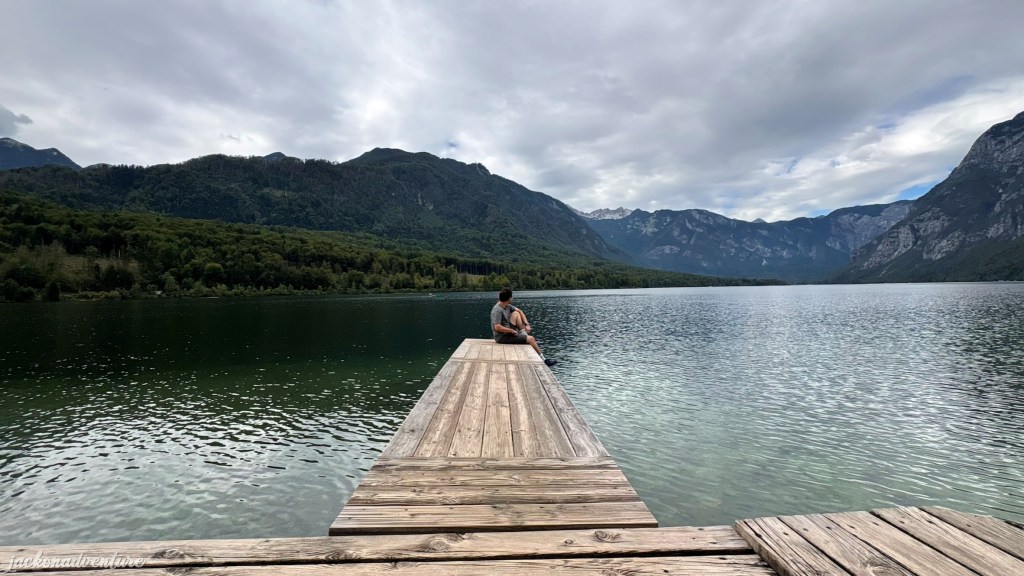
Lake Bohinj can be visited year-round, depending on the kind of experience you’re after. If you’re visiting for snow-capped mountain views or a skiing adventure, the winter months bring a magical side to Lake Bohinj. January is usually the coldest month of the year. Daytime temperatures hover around freezing, while nighttime temperatures can often drop below -3°C. Keep in mind that many hiking trails may be closed or inaccessible during winter due to safety concerns.
Spring brings nature back to life after the freezing winter. You’ll see waterfalls around Lake Bohinj flowing at their fullest as the snow begins to melt. Daytime temperatures range from 15–22°C, while nights can drop to around 5–10°C.
For warm-weather adventures, late May to early September is undoubtedly a great time for outdoor activities such as paddleboarding, swimming and hiking. The days are long and sunny, with pleasant temperatures that can rise above 25°C on the warmest days. Evenings are generally mild, with temperatures hovering around 15°C. July and August are particularly ideal for swimming.
Autumn is a wonderful time to enjoy the spectacular foliage around Lake Bohinj, making it perfect for photography enthusiasts and peaceful walks along the lakeshore. With fewer crowds around, you can enjoy the lake in a much more tranquil setting. Swimming may still be possible, with daytime temperatures ranging from 12–18°C. However, bring some warm clothes for the evenings, when temperatures can fall to around 4–8°C.
Getting There
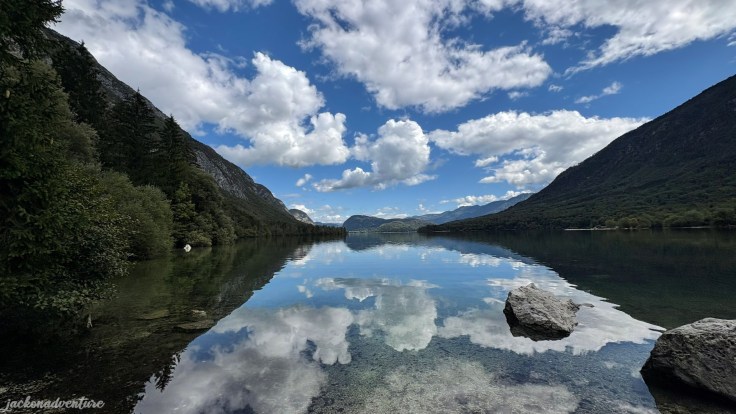
If you’re flying from other European or Middle Eastern cities, the closest airport to Lake Bohinj is Ljubljana Jože Pučnik Airport (Airport Code: LJU). From the airport, you can take a shuttle van outside the airport for €14 per person, with slightly lower rates for groups. The journey takes about 40–50 minutes, and the driver will drop you off at Ljubljana Bus Station (Avtobusna postaja).
The most convenient way to reach Lake Bohinj is by public bus. Whether you’re already in Ljubljana or after the van drop-off, you can catch the Arriva bus from Ljubljana Bus Station (Ljubljana AP), which is located right next to the railway station. The buses depart approximately every hour for Lake Bohinj, passing through the popular resort town of Bled along the way. The journey takes around two hours and costs €9.50 to €10. You can also purchase bus tickets and check the latest timetables online before your journey
The bus drops you off at Bohinjsko Jezero stop, near the Bohinj Information Centre and the well-known Hotel Jezero. From there, you can hop on a local bus to reach the smaller villages and settlements around the lake, including Ribčev Laz, Stara Fužina and Ukanc. Tickets are valid for 24 or 48 hours and can be purchased online or at the ticket machine at the Bohinjsko Jezero stop.
Getting Around
Lake Bohinj is pretty large, but you can hike around the entire lake in approximately 3.5 hours. For adventure seekers, this is a wonderful way to immerse yourself in the breathtaking scenery surrounding the lake.
Public buses also connect the smaller villages around Bohinj. You can find the bus timetables on the official website. Be sure to check the latest schedules before travelling, as departure times may change depending on the season. You can also purchase a 24-hour or 48-hour pass, either online or at the ticket machine at the Bohinjsko jezero bus stop.
Alternatively, hop aboard the panoramic boat for a different perspective of Lake Bohinj. As it glides across the lake between Ribčev Laz and Ukanc, you can take in breathtaking views of the Julian Alps along the way.
The Best Activities for 2 days in Lake Bohinj
Nestled in the heart of Triglav National Park, Lake Bohinj is a fascinating natural wonder. It deserve to spend at least 2 days to explore the lake and be amazed by the dramatic limestone peaks and crystal-clear turquoise waters. Read on to discover how to experience this magical alpine escape to the fullest.
Hiking around Lake Bohinj
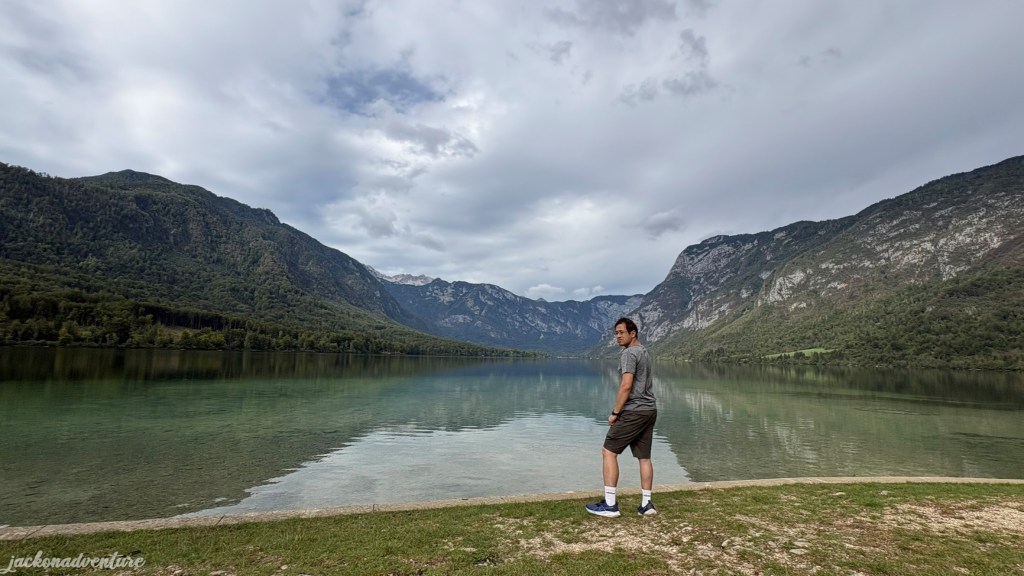
The best way to explore Slovenia’s largest lake is to take a hike along its circular lakeside trail. The 12-kilometre route usually takes around 2.5 hours to complete. It is best to set off early in the morning or later in the evening to avoid the midday heat.
Begin your walk along the easy, paved path near the Church of St John the Baptist. Along the way, you can enjoy breathtaking views of the lake and Mount Triglav from different angles. The northern shore is particularly peaceful, with a simple walking path away from traffic.
Once you’ve completed the walk, give your legs a well-deserved rest at one of the nearby bars or restaurants, where you can grab a bite to eat or enjoy a refreshing drink.
Be greeted by the Goldenhorn
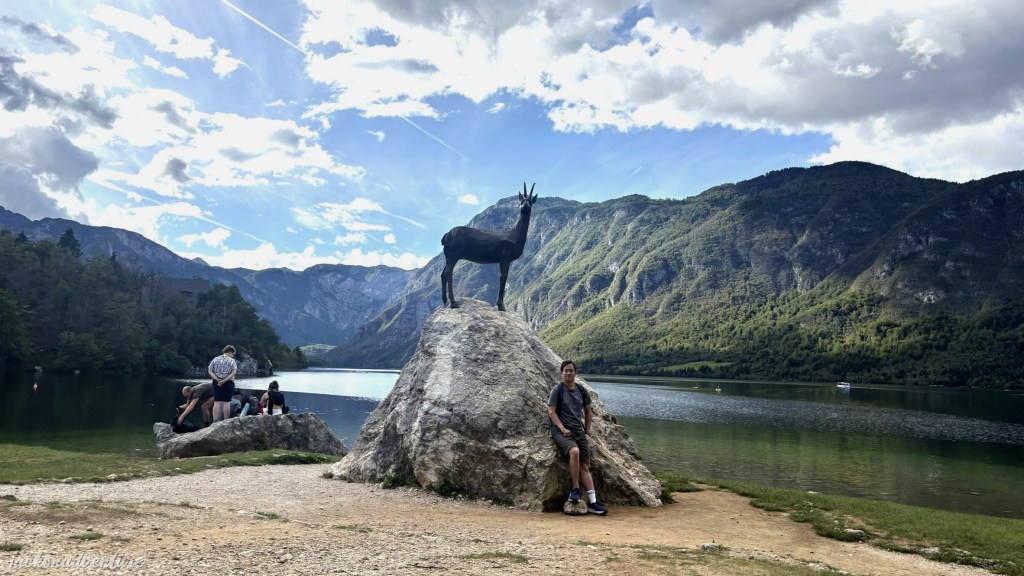
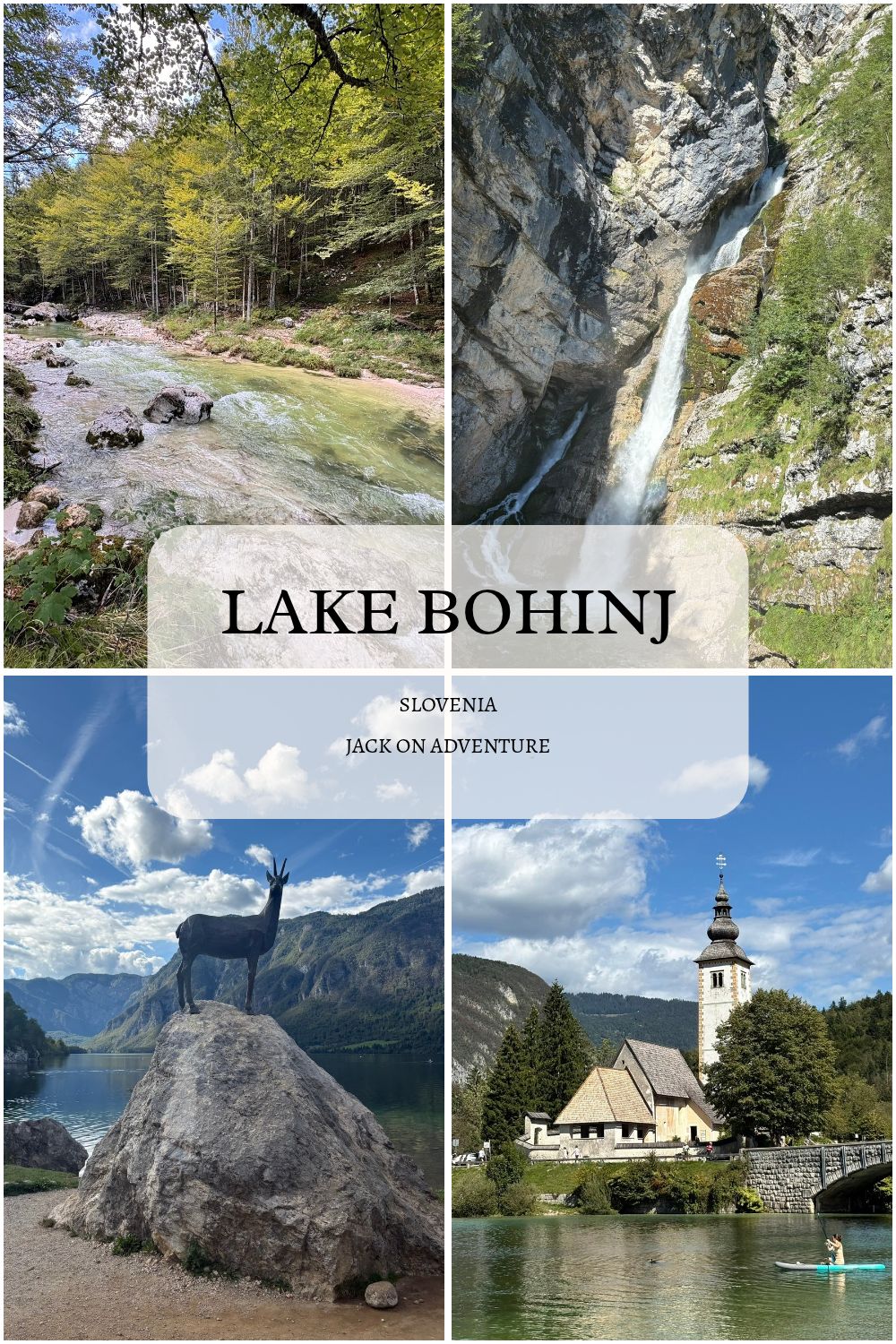
One of the most iconic symbols of Lake Bohinj is the statue of the Goldenhorn, located near the boathouse. Known locally as Zlatorog, this mythical creature from Slovenian folklore resembles an Alpine ibex, which can be found roaming at high altitudes on Mount Triglav.
Location: Ribčev Laz, 4265 Bohinjsko jezero
Meet the Four Courageous Men
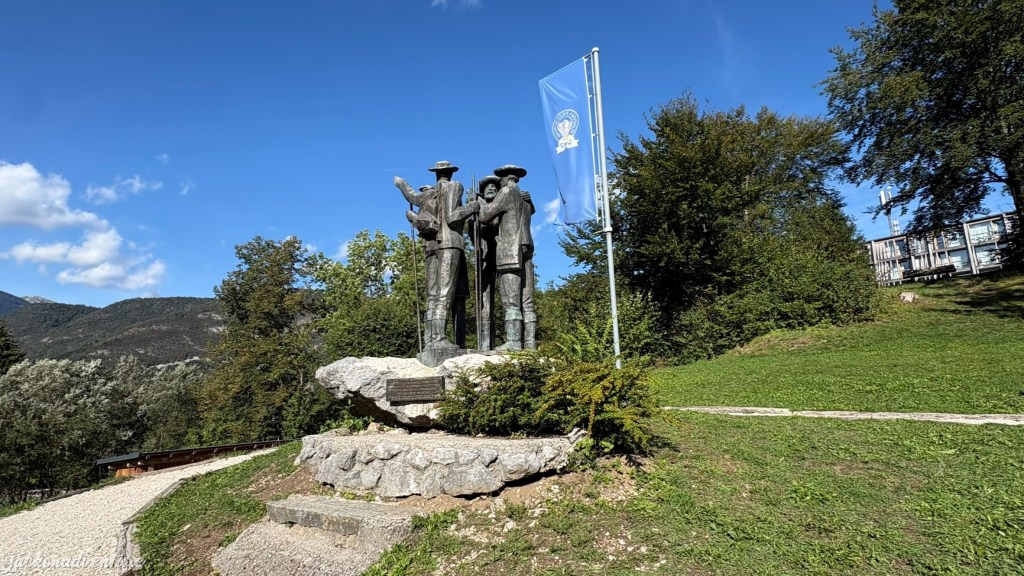
Just opposite Hotel Jezero, you’ll find the Monument of the Four Brave Men. Sculpted by Stojan Batič, the monument commemorates the 200th anniversary of the first recorded ascent of Mount Triglav.
The four brave men from Bohinj were the first to embark on an expedition to conquer the summit of Mount Triglav. They were Lovrenc Willomitzer, a doctor from Stara Fužina; hunter Štefan Rožič; miner Matija Kos from Jereka; and Luka Korošec from Koprivnik. Together, they successfully reached the summit on 26 August 1778.
Location: Ribčev Laz, 4265 Bohinjsko jezero
Admire the charming Savica Waterfall
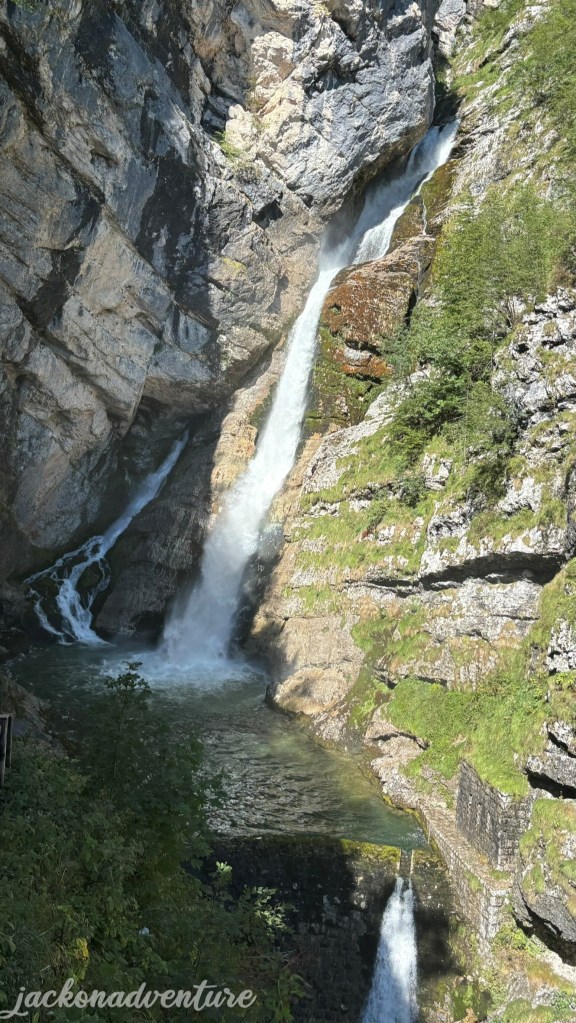
Head towards Komarča at the western end of Lake Bohinj, and you’ll find the small settlement of Ukanc. The town is home to the stunning Savica Waterfall (Slap Savica). From the entrance, it takes around 20 minutes to climb 553 steps to the waterfall. The path is well-marked and maintained, making the walk relatively easy.
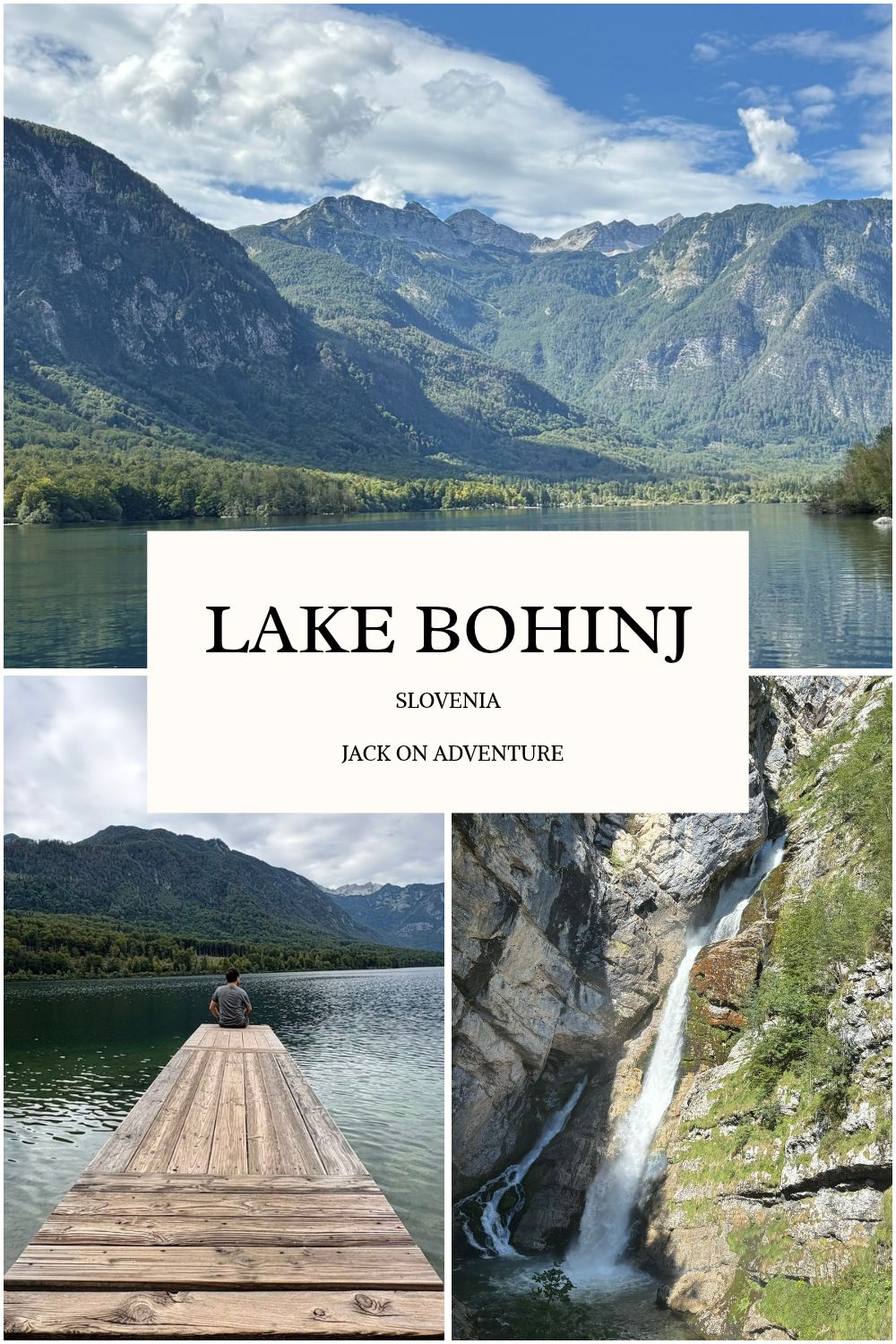
This double waterfall is among the highest waterfalls in Slovenia. It consists of two cascades, with the upper fall dropping 78 metres and the lower one 20 metres. The fresh water from the Julian Alps flows through the Seven Lakes Valley high up in the mountains before making its way through an underground cave passage in Pršivec to reach the waterfall. It then thunders down the cliff face into an incredible blue-green pool below.
Location: 4265 Bohinjsko jezero
Opening Hours: January to June: Daily from 9 am to 4 pm/ July to September: Daily from 8 am to 7 pm/ October: Daily from 9 am to 5 pm/ November to December: Daily from 9 am to 4 pm
Entrance Fee: June to September: Adults: €4/ Children: €2/ October to May: Adults: €3/ Children: €1.5 (Free with Julian Alps Pass)
Admire Lake Bohinj from a panoramic boat
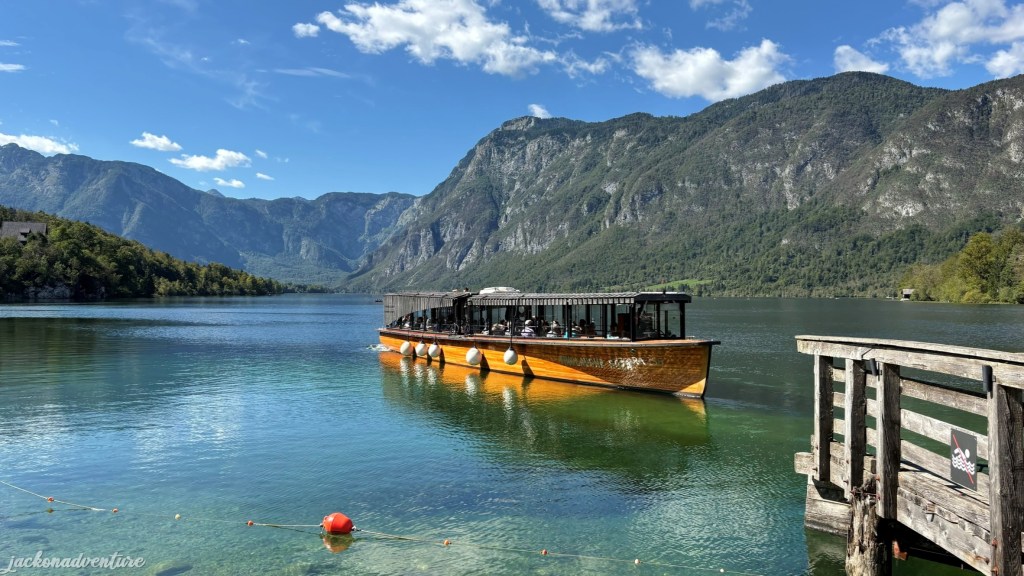
The panoramic boat is a great way to take in the scenic views of Lake Bohinj and the dramatic backdrop of the Julian Alps, including Mount Triglav. You can board the boat at the main bridge in Ribčev Laz and enjoy a 25-minute journey across the lake to Ukanc, on the opposite shore. From there, you can continue your adventure with a hike to Savica Waterfall or a ride on the Vogel Cable Car.
You can enjoy the boat ride on your return journey, take a local bus or go on an hour hike back to Ribčev Laz.
Location: Ribčev Laz 57, 4265 Stara Fužina
Boat Ride: Adults: €9/ Seniors aged 65+ and Visitors with Disabilities: €8/ Children aged 6 to 14: €5.50
Visit the Church of St. John the Baptist
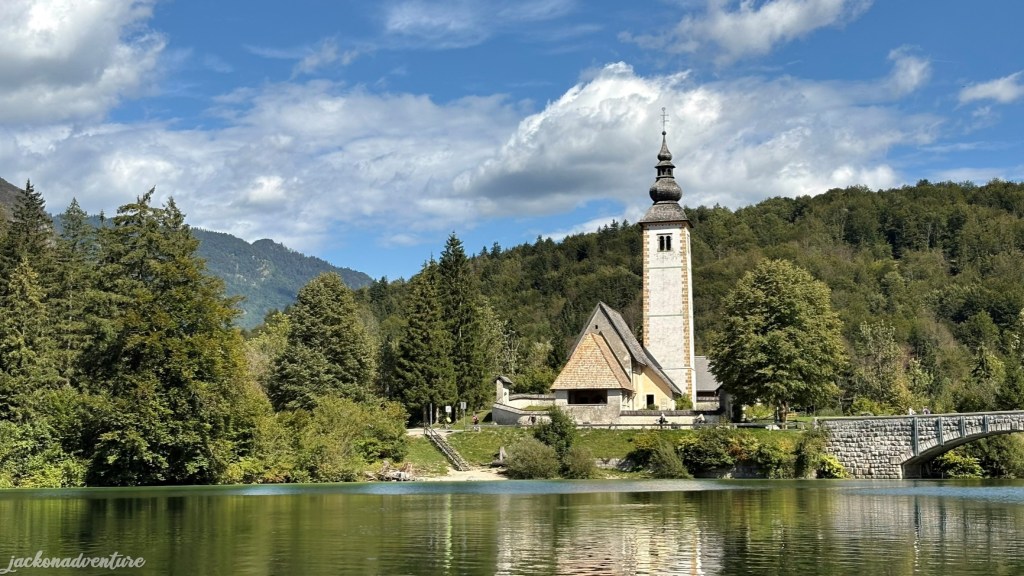
Situated beside the stone bridge of the lake, the Church of St. John the Baptist is one of the finest examples of medieval architecture dating back to the mid-11th century. The four frescoes on the southern wall depict St. Christopher dating to 1300, 1400, 1530, and 1894. He was once regarded as the patron saint of travellers and horse cart drivers. Today, he is still revered as the protector of drivers and travellers.
Most of the frescoes painted inside the church are from the 15th and 16th centuries that portrayed many martyrs.
One of the church’s remaining medieval treasures is a carved wooden head of St John the Baptist, dating back to 1380. It is often depicted on a platter or a bowl, recalling the biblical story of how King Herod Antipas had John beheaded. The cunning malice of Herod’s wife Herodias, used her daughter Salome to request John’s head on a platter as revenge against him.
The statues of St John’s head were especially cherished by worshippers suffering from headaches or neck stiffness. The locals here would also pray for favourable weather. Some cultures also used such statues when trying to search for drowned people by casting it on the water, trusting it would float to where the missing person would be found.
Location: Ribčev Laz 56, 4265 Bohinjsko jezero
Opening Hours: October to June: Daily from 2 pm to 5 pm/ July to September: Daily from 9 am to 7 pm
Entrance Fee: Adults: € 3.50/ Children up to 12 years old: Free (Free with Julian Alps Pass)
Ascend to the vantage point of Peč
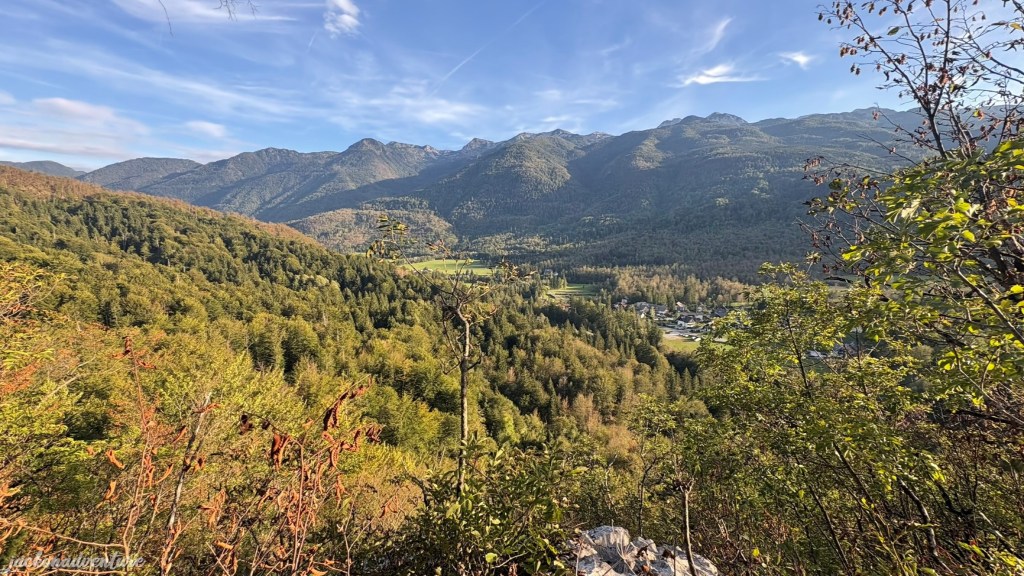
Can’t get enough of Lake Bohinj’s views? Just a short walk from the church lies the stunning Peč Viewpoint, a little hidden gem tucked among the trees.
Take a short walk towards Stara Fužina, where you’ll find a signpost pointing to a leafy footpath. The trail winds its way through beech woodland before opening out onto a couple of Alpine meadows near the top.
From here, you’ll be rewarded with magnificent panoramic views of the lake, framed by the Julian Alps. A patchwork of fields and charming little villages stretches out before your eyes at the foot of the hills.
Go for a swim in Lake Bohinj
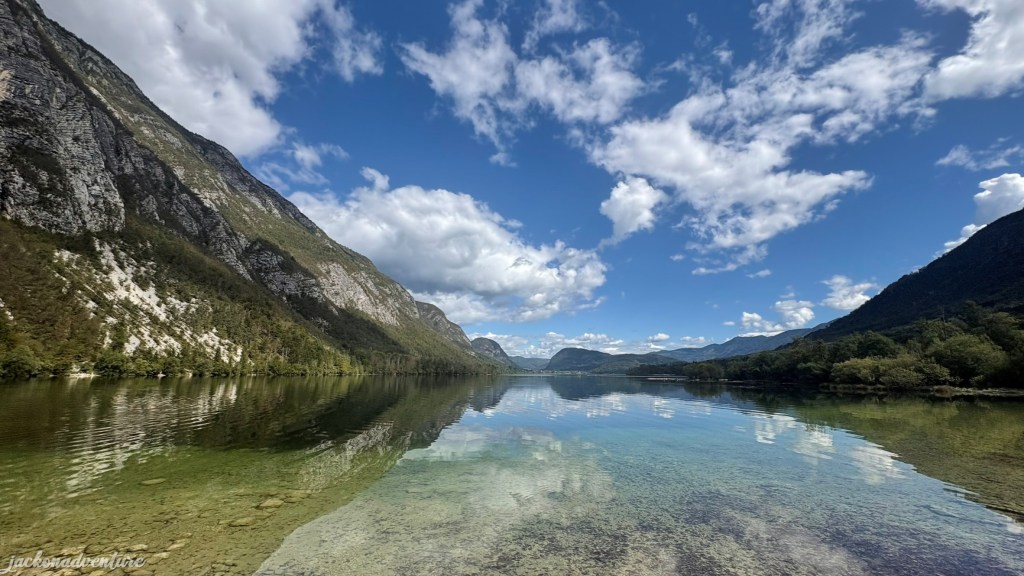
Lake Bohinj has plenty of incredible swimming spots where you can enjoy the spectacular views of the Julian Alps, surrounding limestone mountains and alpine trees. The water looks so inviting to swim in, especially on a hot sunny day. Some of the best spots for a swim in the shallower waters can be found around Ribčev Laz, Stara Fužina and Ukanc.
Fed by mountain streams and underground springs, Lake Bohinj is replenished with fresh water throughout the year, keeping it remarkably clean and clear. You can’t help but feel refreshed after taking a dip in the lake.
The best time of the year for swimming is between June and September, although the water tends to be a little colder in June and September. During the peak summer months, water temperatures can rise above 20°C, making the lake pleasantly warm for swimming.
Hike the Mostnica Gorge
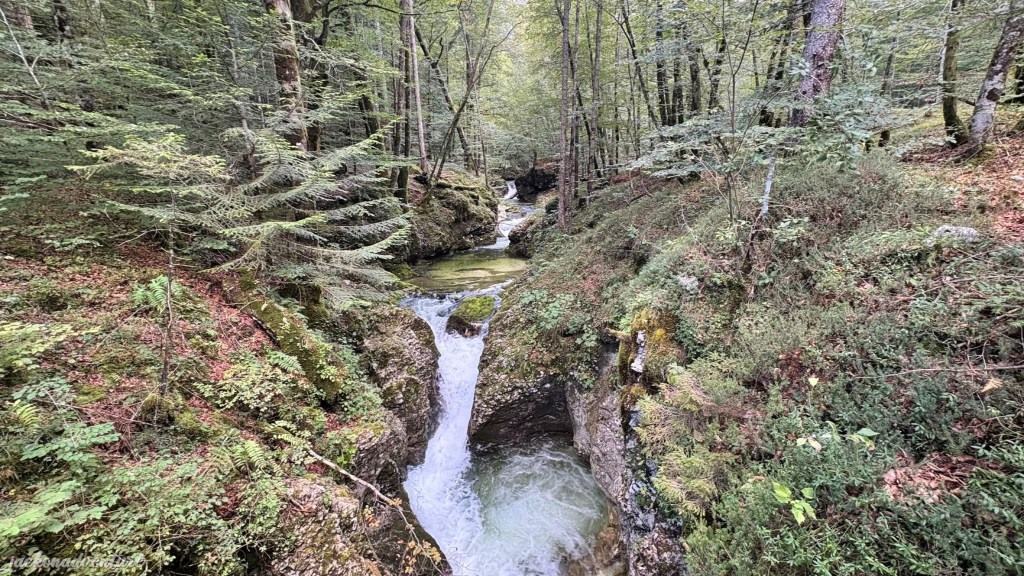
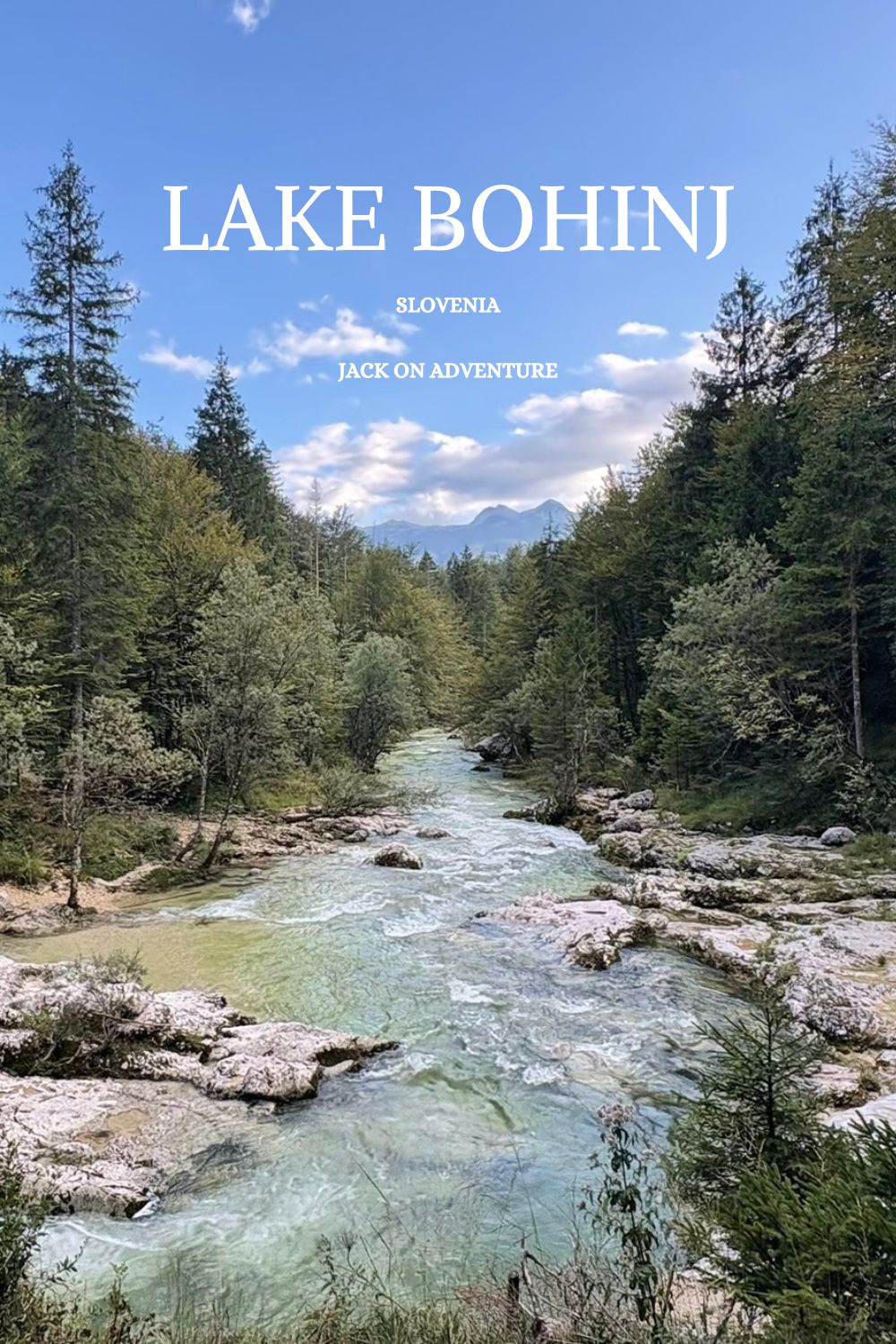
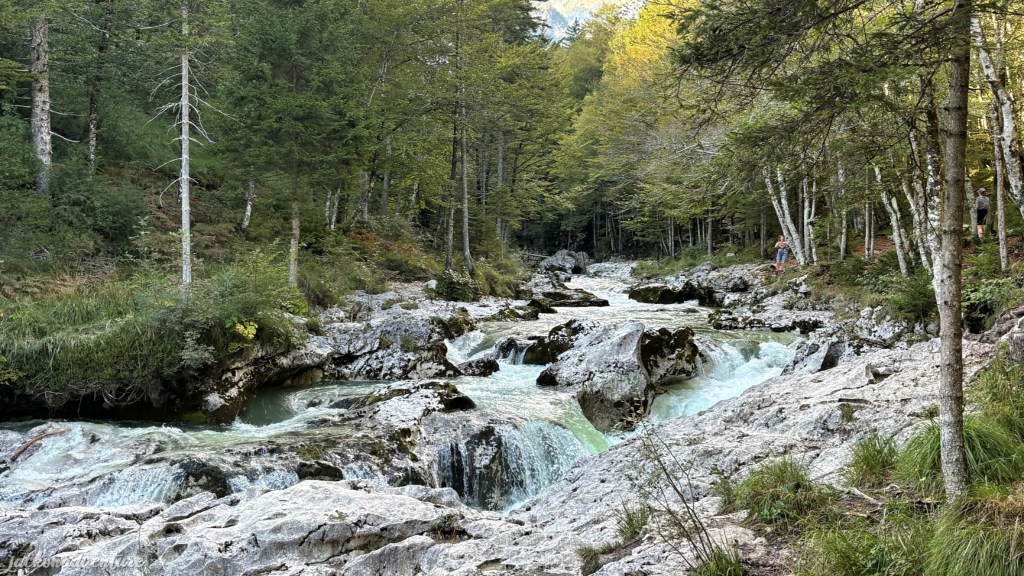
Just a stone’s throw from the village of Stara Fužina, Mostnica Gorge is a 2-kilometre-long gorge in the beautiful Voje Valley. There is a small cabin at the entrance where you can get ready for your hike. The trail winds through cool, shady woodland, following the river as it flows past a series of pools filled with striking turquoise-blue water.
Take your time strolling along the gorge, with plenty of stops to capture photos of the stunning scenery, from the lush forest to the crystal-clear river. Elephant Rock, a fascinating natural formation, looks like an elephant lowering its trunk to drink from the river.
You can either hike to the end of Mostnica Gorge, which takes around two hours for a round trip, or continue further into Voje Valley to reach Voje Waterfall, which takes approximately four hours in total. The trail from Mostnica Gorge is relatively flat, with beautiful stretches of wildflowers and magnificent mountain views.
Location: Korita Mostnica, Stara Fužina
Opening Hours: April to October: Daily from 8 am to 6 pm/ November to March: Closed
Entrance Fee: Adults: €4/ Adults aged 65+ and Visitors with Disabilities: €2.50/ Children aged 6-14: €2/ Children below 6: Free (Free with Julian Alps Pass)
The Love of Slovenia’s Beauty
Are you ready to soak up the stunning beauty of Slovenia? Discover the country’s breathtaking natural landscapes, charming towns and spectacular scenery. You’ll soon fall in love with everything Slovenia has to offer.
Like It? Pin This Article.