Situated on the shores of the Adriatic Sea, Split is the second-largest city in Croatia, set against a backdrop of rugged mountains. It is a wonderful place to experience Dalmatian life, with an incredible mix of history, culture and natural beauty.
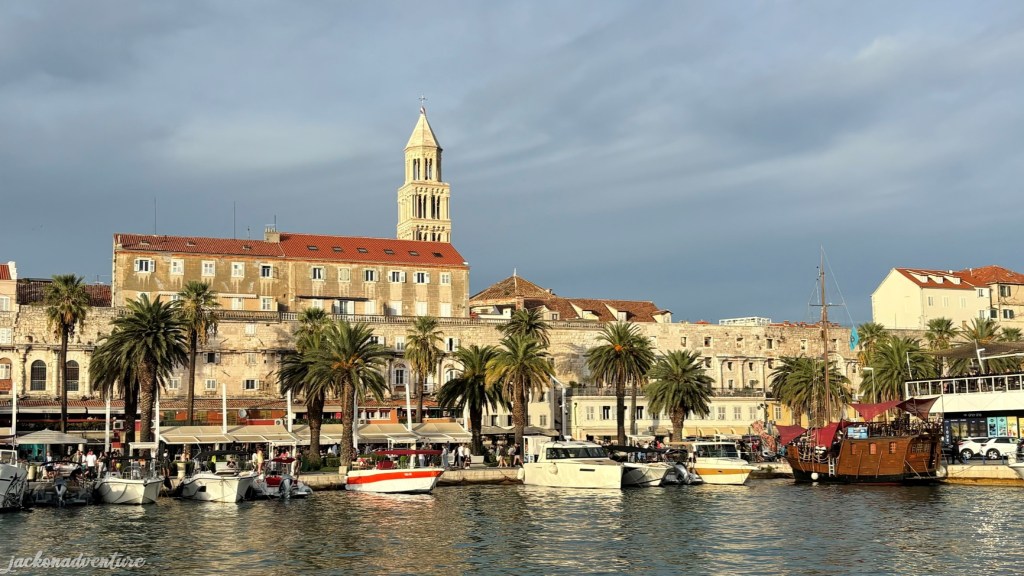
Split’s Old Town is steeped in history, with roots dating back to the Roman Empire. Diocletian’s Palace is the beating heart of the ancient city and is often described as a ‘living museum’. It is woven into the fabric of the city, with ancient buildings, narrow alleyways and historic squares waiting to be explored within its walls.
Best Time to Visit
Like the rest of Croatia, Split enjoys a Mediterranean climate, making it a pleasant destination year-round. However, if you want to enjoy the best weather while avoiding the big crowds, the shoulder seasons are ideal. These fall between May and June, and September and October.
Split is best known as a summer destination, attracting tourists with its many outdoor activities. With plenty of sunshine and clear skies, the city is perfect for swimming, sailing and alfresco dining. Taking a day trip to the five islands is also one of the most popular activities.
The winter months, on the other hand, bring colder temperatures and plenty of rain. While you may have the place almost entirely to yourself, the cold weather will hinder you from many outdoor activities.
Getting There
By Plane
Split International Airport (Airport Code: SPU) is located about 20 kilometres from the city centre and serves numerous international destinations across Europe. However, many airlines operate seasonal routes, with flights available only during the summer months.
Located just 30 minutes from the Old Town, the airport shuttle bus runs every 30 minutes between 8 am and 8 pm from June to September. During the rest of the year, buses depart 30 minutes after each flight arrives. A one-way ticket costs €9, and the journey to the Old Town takes approximately 30 minutes.
Public buses also connect the airport with Split city centre. Promet Bus Line 37 departs from the airport every 20 minutes on weekdays and every 30 minutes on weekends and public holidays. The bus terminates at the Sukoišan Bus Terminal, from where you can take a 10-minute walk to reach the Old Town.
Uber is another alternative for getting to the Old Town. If you’re travelling in a group or carrying lots of luggage, an Uber is a convenient option to get directly to your accommodation.
By Bus
If you’re already in Croatia, travelling by bus is one of the most convenient ways to reach Split from other cities. FlixBus is one of the most reputable bus operators, with frequent services connecting Split to major Croatian cities such as Zagreb, Zadar and Dubrovnik, as well as destinations in several neighbouring countries.
Getting Around
The best way to explore the ancient city of Split is on foot, as most of its historic sights are concentrated within the walls of Diocletian’s Palace. You can easily spend a few hours wandering along charming cobblestone streets, admiring historic monuments and stumbling upon hidden gems. If you want to venture further to the popular Klis Fortress, there are daily tours from Split and public buses that can take you right there.
Split is also renowned for its stunning islands and pristine beaches along the Adriatic coast. You can explore the surrounding islands by regular ferry services, speedboats or organised daily boat tours departing from the pier near the Riva promenade.
The Best Activities for 3 Days in Split
Thanks to its central location and beautiful coastal setting, it is best to spend one or two days exploring the stunning city of Split. This gives you enough time to get a feel for the city and discover its Old Town. Diocletian’s Palace dominates the historic centre, with a maze of cobbled streets, impressive churches, pedestrianised squares and lively markets waiting to be explored.
If you plan to take day trips to the Dalmatian islands or the nearby town of Trogir, it is worth spending another one or two days in Split. The city makes a convenient base for exploring the surrounding area.
Make an entrance through the Golden Gate
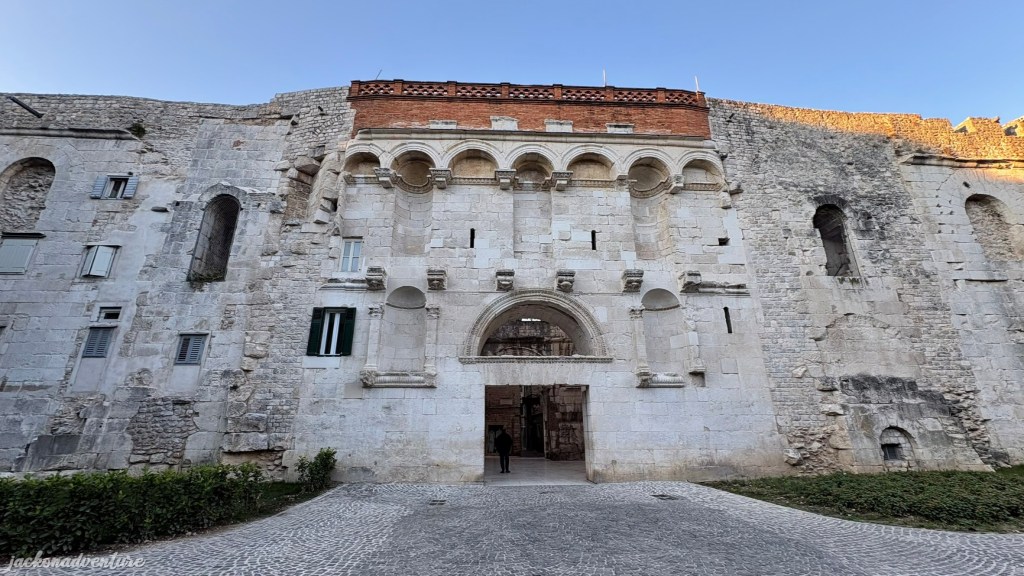
The Golden Gate awaits your arrival as you step into the magnificent Diocletian’s Palace.
Located on the northern side of Diocletian’s Palace, the Golden Gate is one of the four entrances to the ancient complex. Back in 305 AD, it served as the emperor’s monumental entrance, only to be reserved exclusively for him and his family.
As you walk through the Golden Gate, take a moment to admire its impressive defensive architecture. The entrance was flanked by two octagonal towers, while the outer gate featured a portcullis that guards could raise and lower from the upper corridor of the wall. A second gate was built as an additional defensive structure, creating a small enclosed space where invading enemies could be trapped and attacked with arrows or boiling oil.
The gate was also adorned with four statues of Roman gods or emperors, with a relief of the Roman god Jupiter standing at the centre. The arches, supported by consoles, were further embellished with decorative astragals.
The other three gates surrounding the ancient palace are the Silver Gate, Bronze Gate and Iron Gate. Among the four entrances, the Golden Gate is undoubtedly the grandest and most imposing entrance to the palace.
Location: Dioklecijanova 7, 21000, Split
Spot the statue of Gregory of Nin
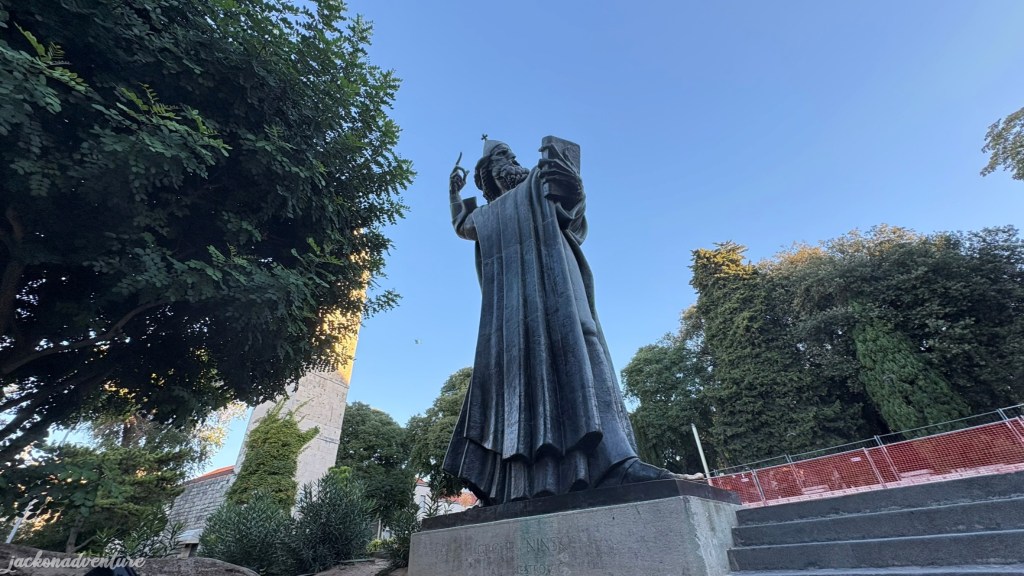
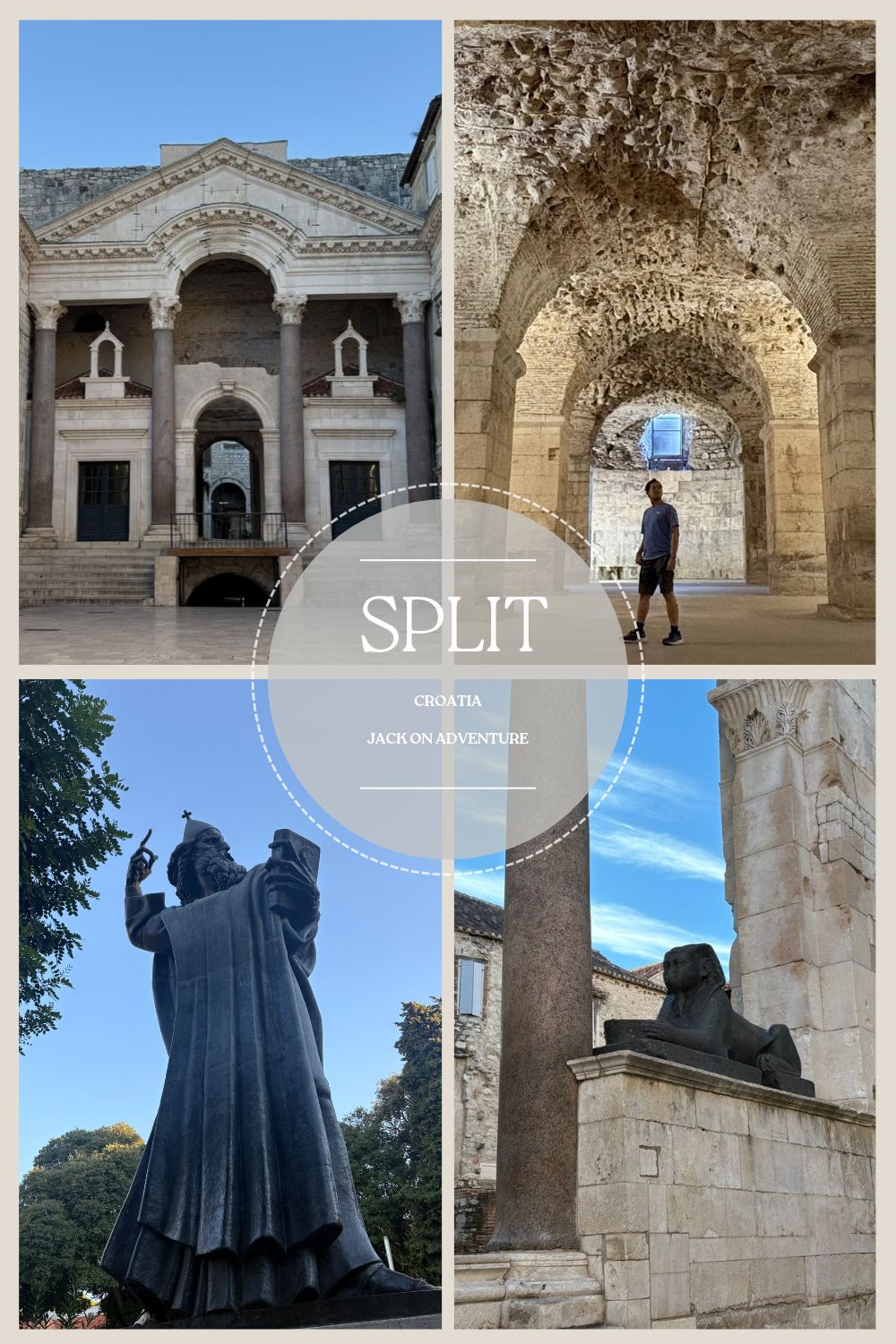
Before entering Diocletian’s Palace from the Golden Gate, you will come across a massive statue that might initially remind you of Gandalf the Grey from Lord of the Rings. Standing 8.5 metres tall, the imposing figure depicts Gregory of Nin, a Croatian bishop who lived during the medieval period. The statue was sculpted by the renowned Croatian artist Ivan Meštrović.
Gregory of Nin famously challenged the authority of the Pope by advocating the use of the Croatian language instead of Latin in church services, making religious worship more accessible to the local population.
You will notice that one of his big toes is remarkably shiny from being rubbed by countless visitors over the years. According to local tradition, rubbing his big toe is believed to bring good luck and ensure that you will return to Split one day.
Location: Ul. kralja Tomislava 12, 21000, Splitska
Marvel at the grand Diocletian’s Palace
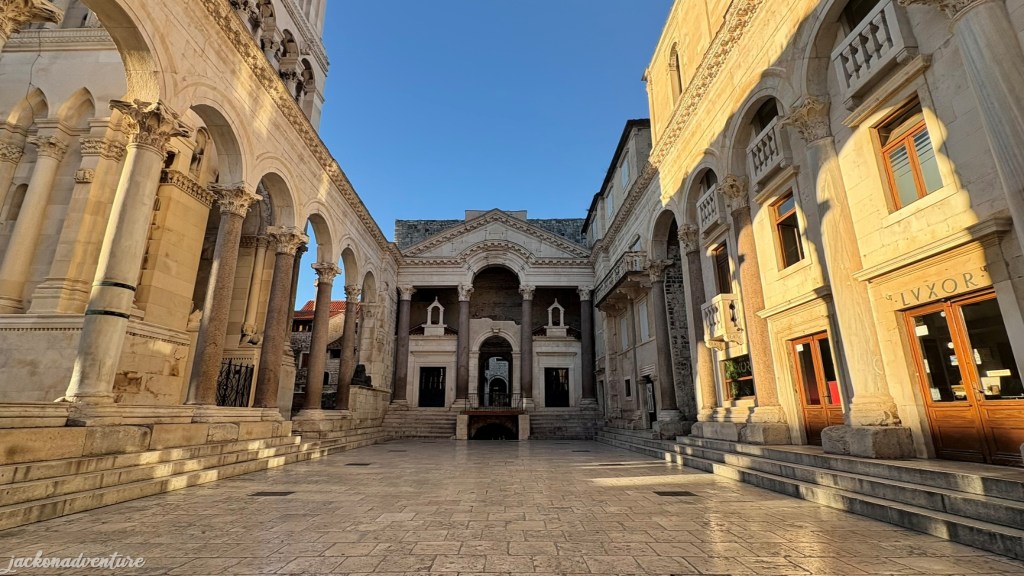
Diocletian’s Palace is one of the most awe-inspiring and best-preserved Roman ruins in Europe. It was designated as one of Croatia’s ten UNESCO World Heritage Sites in 1979.
The palace was originally intended to be Diocletian’s luxury summer residence. He began planning it 10 years before his retirement and started constructing this city-sized masterpiece in 295 AD. Spanning over 1,000 square metres, the entire complex was built using white limestone from Brač Island, along with marble imported from Italy and Greece.
Its architecture was more fortress-like than that of a traditional palace, with four massive walls and heavily fortified gates. The emperor’s private quarters occupied the southern section of the palace, where religious and official ceremonies were held. Meanwhile, the northern section served as living quarters for soldiers, guards and servants.
In 305 AD, Diocletian fell ill and abdicated his throne, making him the first and only Roman emperor to ever do so. He spent his remaining years here until his death in 311 AD at the age of 66, after which he was laid to rest in the mausoleum.
Around 150 years after his death, the Western Roman Empire fell and the palace was left in ruin. It remained largely abandoned until the 7th century, when local Dalmatians sought refuge within its walls to escape Slavic invasions. They occupied the former imperial residences with homes and businesses and transformed the palace into a thriving settlement. Over the centuries, many of its structures were adapted and restored, with Gothic and Renaissance elements added along the way.
Today, Diocletian’s Palace is much more than a palace or a museum; it has become the living, breathing heart of Split. Around 3,000 people live in its 220 buildings, within a maze of narrow streets lined with ancient ruins, restaurants, boutique shops, and apartments.
The Treasury inside the ticket office offers insight into the palace’s history, as well as showcasing paintings and artefacts excavated from the palace grounds.
Entrance Fee: €6 for the Treasury
Admire the stunning Cathedral of Saint Domnius
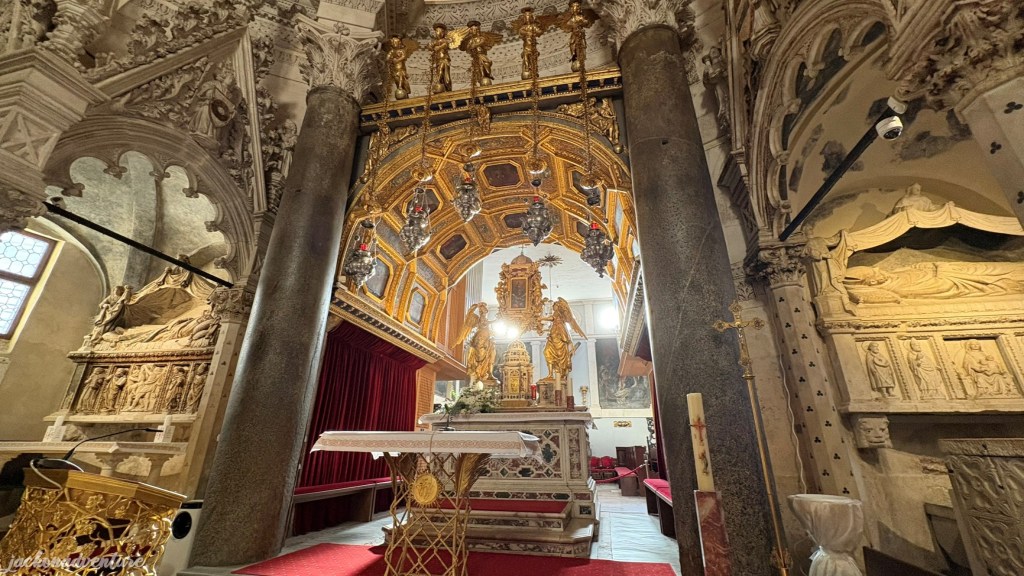
Originally built as Diocletian’s Mausoleum, the Cathedral of Saint Domnius is a fascinating blend of an ancient Roman mausoleum and a Catholic church. Dating back to 305 AD, it is considered one of the oldest Catholic cathedral buildings still in use in the world. Locally, it is known as Sveti Duje (Saint Domnius).
Diocletian was laid to rest here after he died in 311 AD. However, Christians later destroyed the emperor’s sarcophagus and converted his mausoleum into a cathedral in the 5th century. The cathedral was dedicated to Saint Domnius, one of the victims of Diocletian’s persecution of Christians. I guess the Christians got the last laugh!
Inside the cathedral, you will find a choir, a beautifully gilded and carved altar, an octagonal pulpit and murals. The well-preserved dome is another architectural highlight, spanning approximately 13.5 metres in diameter and ranking among the largest surviving Roman domes.
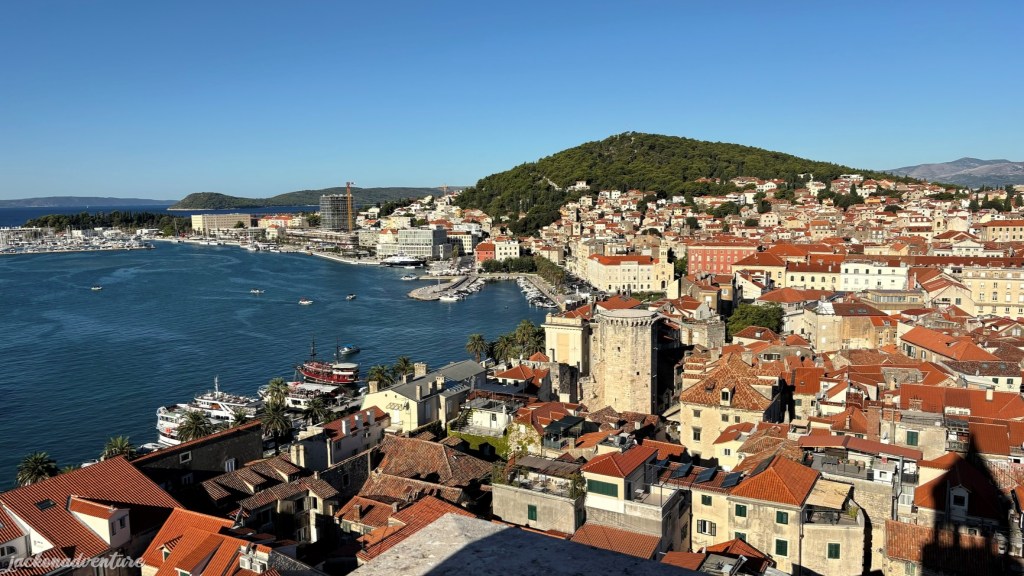
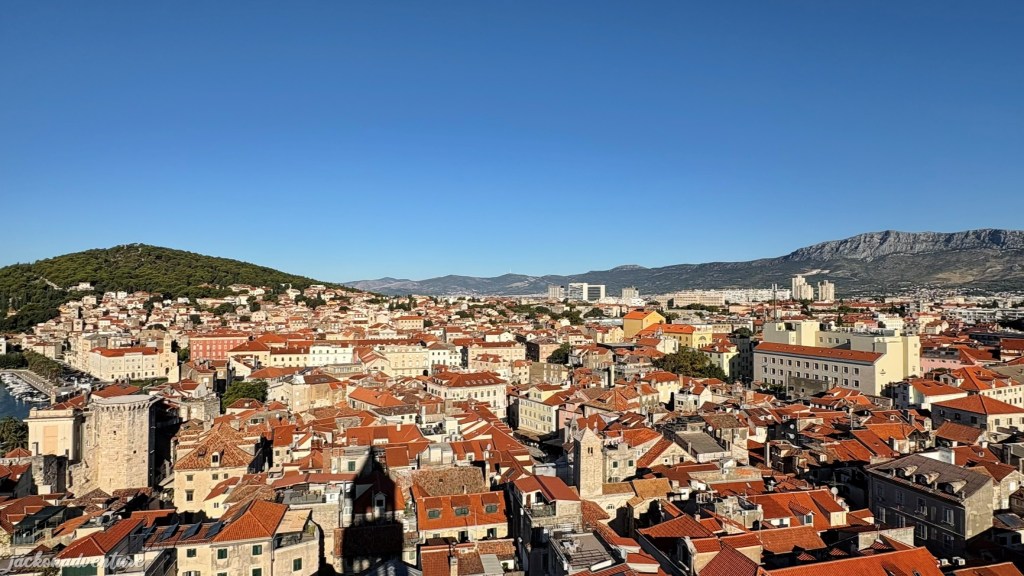
After exploring the cathedral, climb the steps to the top of the 13th-century Romanesque bell tower. On a bright, sunny day, you will be rewarded with stunning panoramic views across the city, the magnificent palace, the waterfront and all the way to Marjan Hill.
Opening Hours: July to October: Monday to Saturday from 8 am to 8 pm and Sunday from 12 pm to 6 pm/ November to May: Monday to Saturday from 9 am to 5 pm nd Sunday from 12 pm to 6 pm
Entrance Fee: €6 for Cathedral and €8 for bell tower
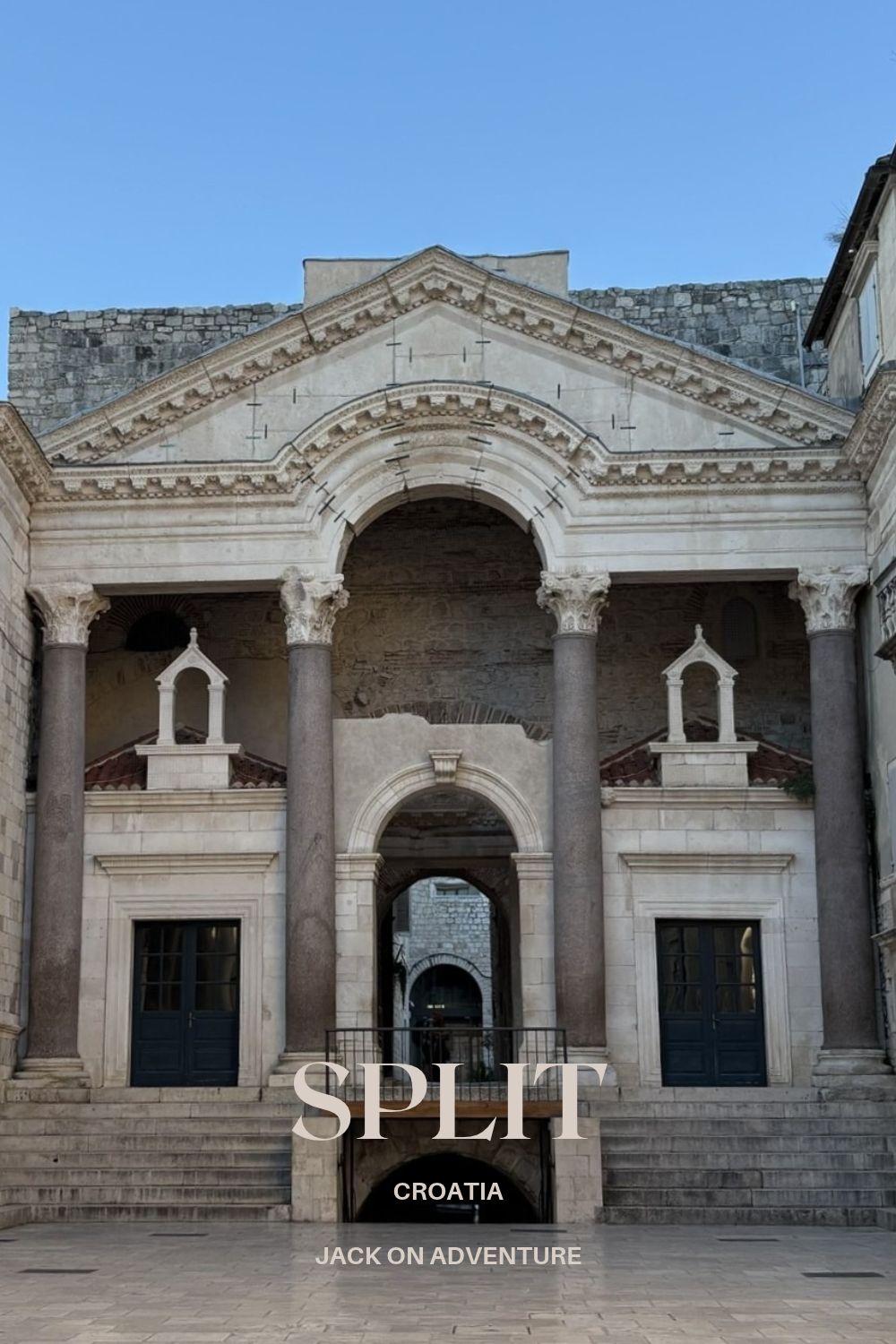
Wander around the Peristyle
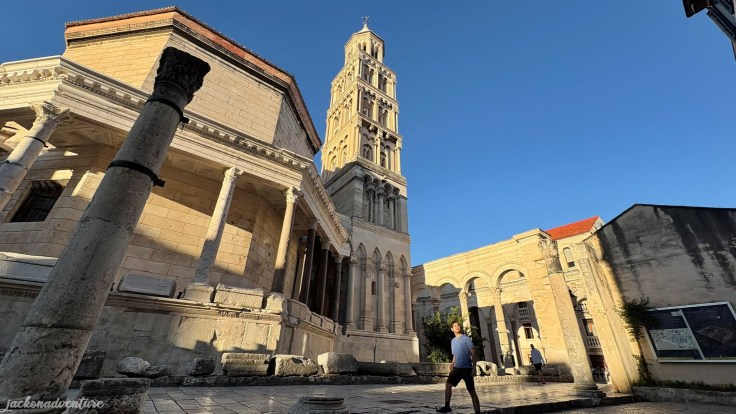
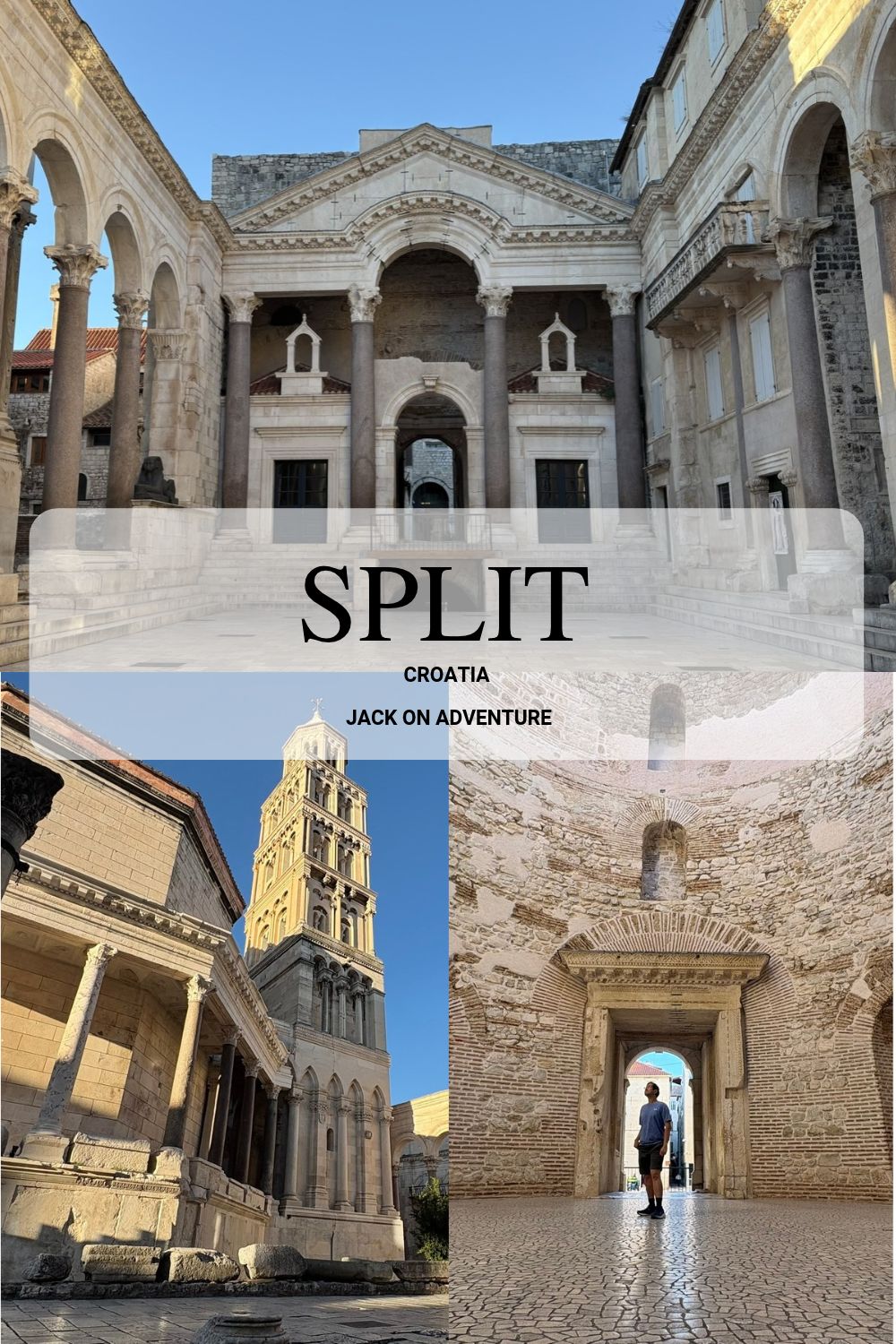
Peristyle, sometimes known as Peristil, is an ancient Roman courtyard surrounded by columns and stone steps within the palace grounds. This open rectangular square was once where Roman dignitaries gathered and religious ceremonies were held in honour of Emperor Diocletian. Today, it remains a remarkable testament to centuries of history and architectural grandeur.
As you wander around the courtyard, take a moment to picture what life was like during the Roman era. The massive columns, topped with beautifully carved Corinthian capitals, have stood the test of time, bearing witness to the days when emperors and their servants walked these very same stones.
Look out for the pair of ancient sphinxes, which date back approximately 3,500 years to the reign of Pharaoh Thutmose III. Carved from African black granite, these ancient beauties have stood guard over the palace for centuries.
Today, the Peristyle is also a favourite gathering spot for locals and tourists alike. It is a lively meeting place where visitors come to socialise and enjoy the entertainment. During the summer months, the square transforms into an open-air venue for concerts, theatrical performances and art exhibitions.
If you want to appreciate its timeless architecture without the crowds, head here early in the morning or later in the evening. You’ll have a better chance of enjoying the picturesque surroundings at your own pace and capturing some beautiful photographs. You won’t regret it.
Visit the underground Crypt of St Lucy
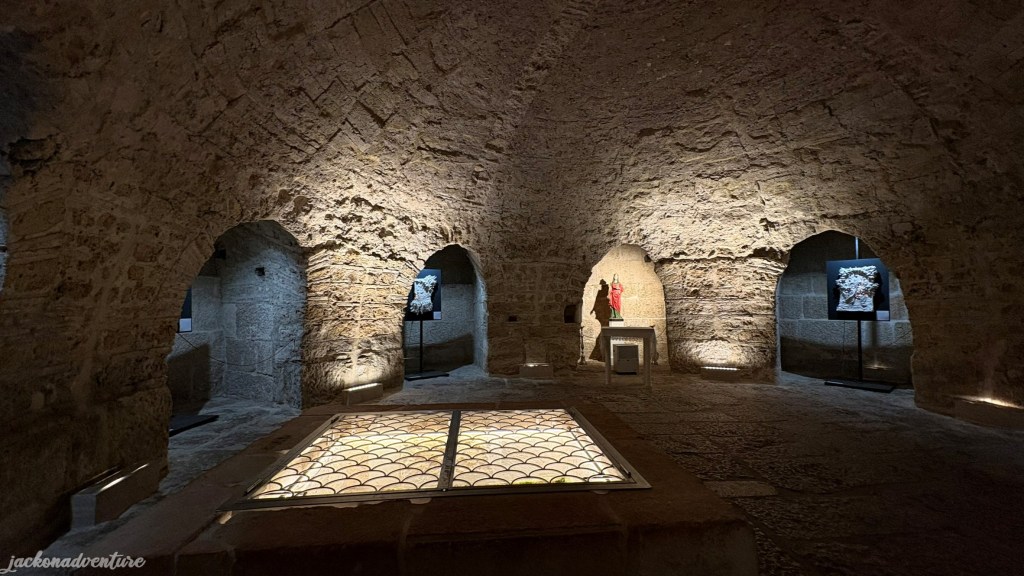
Formerly the mausoleum of Emperor Diocletian, the chapel is now dedicated to St. Lucy, a Christian martyr from Syracuse. She is traditionally regarded as the patron saint of people suffering from eye ailments and the protection of children.
A mass is held in the crypt on 13 December, the feast day of St. Lucy. Worshippers light candles in front of the crypt and collect holy water from the spring, which is believed to protect their eyesight. According to Croatian tradition, St. Lucy’s feast day also marks the final day for sowing Christmas wheat, a festive custom symbolising new life and prosperity.
Entrance Fee: €4
Get fascinated by the Vestibule
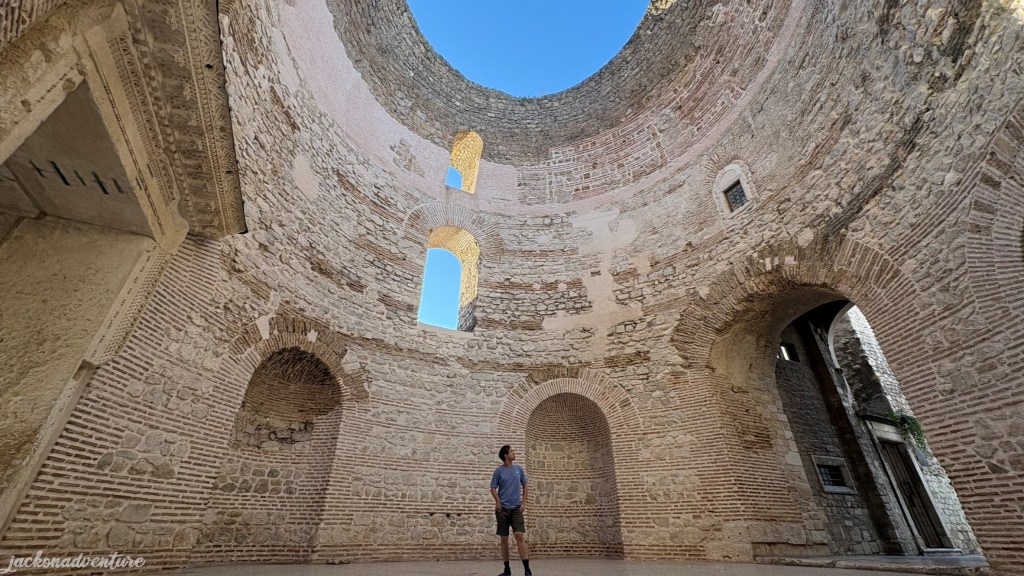
Standing at 16 metres tall, the Vestibule was built in the 4th century as the grand entrance to the emperor’s private living quarters. Diocletian would welcome distinguished guests here, making it an important reception hall within the palace.
The impressive open dome was designed to symbolise a window between heaven and earth, allowing the gods to look down upon the emperor. The grand entrance is adorned with intricate relief decorations, while the semicircular niches were once filled with statues of deities, although their identities remain unknown.
During the summer months, you may be lucky enough to catch a klapa group performing a cappella, filling the space with beautiful traditional Dalmatian folk songs.
Discover the Temple of Jupiter
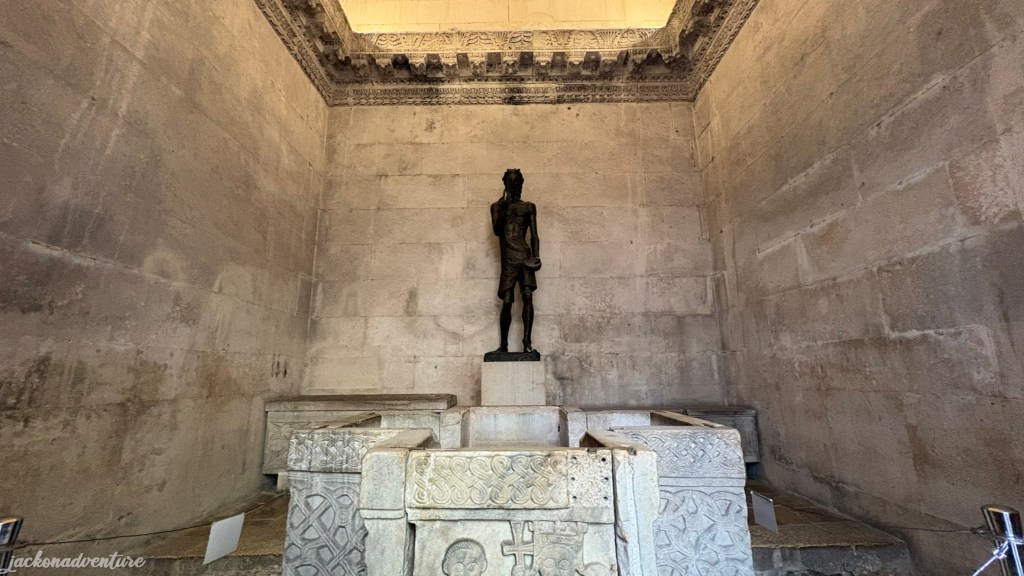
The Temple of Jupiter was built between 295 and 305 AD in honour of Jupiter, the supreme god of ancient Rome. During the Roman era, Jupiter was regarded as the highest-ranking deity and the father of the gods. Diocletian also associated himself with Jupiter, believing that he was his earthly representative. The emperor built this temple as a place to worship the mighty god.
After the fall of Roman rule, the temple was converted into a baptistery dedicated to Saint John the Baptist in the 7th century. Inside, you will find a bronze statue of Saint John, created by Croatian sculptor Ivan Meštrović, along with the sarcophagi of two of Split’s archbishops. Meanwhile, the headless Egyptian sphinx guarding the temple entrance is a reminder of its ancient past. Its head was removed by Christians due to a pagan symbol.
The Temple of Jupiter is one of the best-preserved Roman temples of its time. Its spectacular high vaulted ceiling consists of 64 intricately carved stone panels. Each panel features a face or mask depicting different expressions. These are believed to have been inspired by religious rituals or perhaps served as artistic representations of the emperor’s moods.
Opening Hours: Daily from 8 am to 7 pm
Entrance Fee: €4
Explore Diocletian’s Cellars
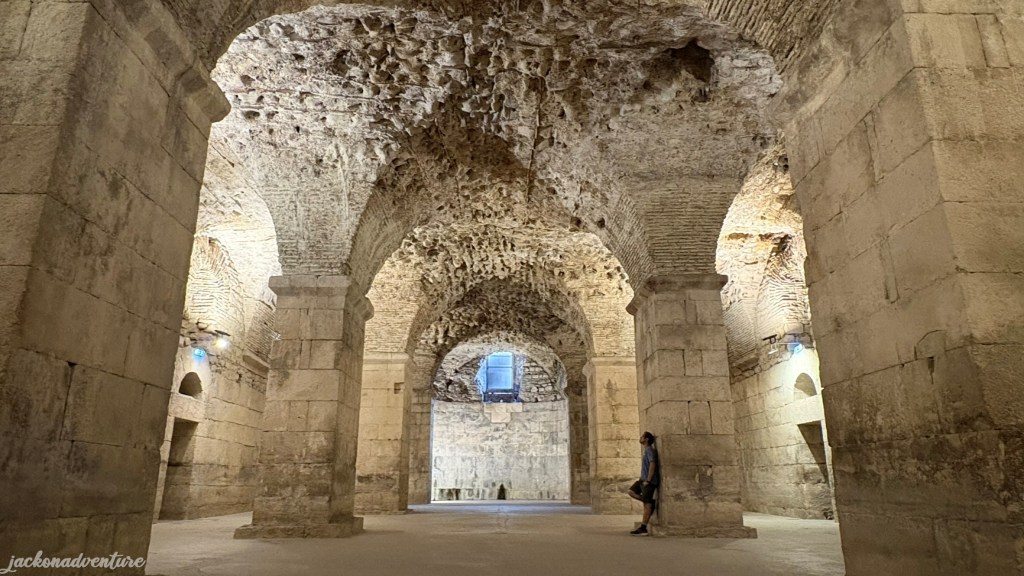
Make your way into the maze-like Palace Cellars, which lie beneath Diocletian’s Palace. During Roman times, these underground chambers were primarily used to support the emperor’s living quarters above while providing storage space for wine and food below. In the early Middle Ages, refugees sought shelter within the safety of the palace walls, making homes even within this extensive underground complex.
Over time, the cellars were neglected and gradually filled with waste and debris from the upper floors. It was not until restoration work began that the underground chambers were drained and cleared. The restoration took seven years to complete, longer than the Romans took to build the mighty palace itself!
For Game of Thrones fans, one of the cellars may look familiar. It was used as the setting for Daenerys’ throne room in Meereen. Two of her dragons, Viserion and Rhaegal, were chained here for months as Daenerys feared their growing wildness and aggression.
Opening Hours: Daily from 9 am to 5 pm
Entrance Fee: €10 (Free entry for Visitors with Disabilities)
Visit the narrowest church in Croatia
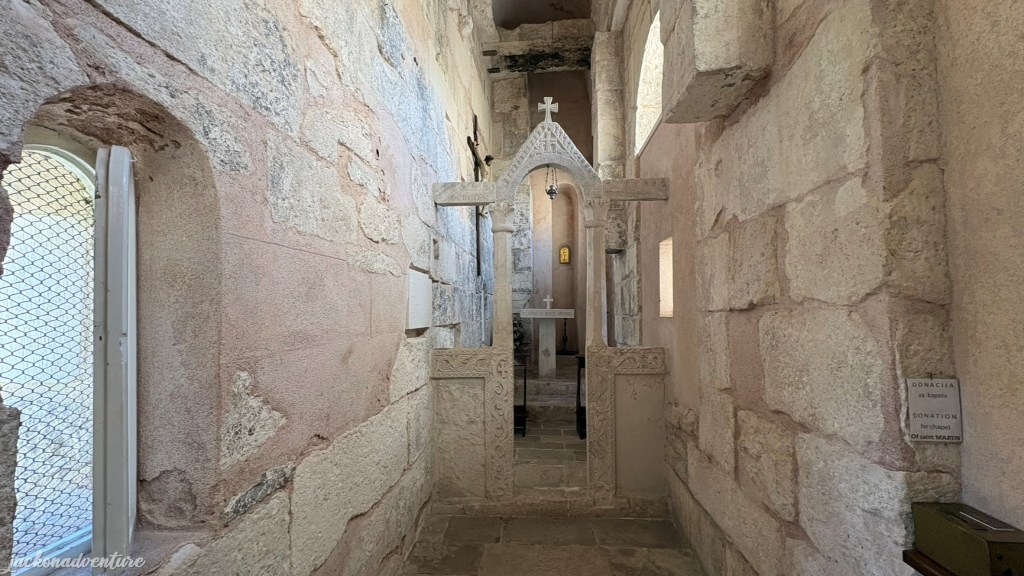
Tucked within the walls of the Golden Gate, the Church of St. Martin (Crkva sv. Martin) is one of the earliest churches in Diocletian’s Palace. It is also one of the smallest churches in Croatia, measuring just 1.64 metres wide and 10 metres long. The tiny sanctuary occupies what was once a Roman guard corridor.
Originally used as a passageway for Roman guards, the space was converted into a church in the 6th century, when an influx of refugees from surrounding communities settled within the palace complex. On the altar wall, you can still see an inscription dedicating the church to the Virgin Mary, Pope St. Gregory and Blessed Martin. It is particularly significant as the only altar-wall inscription of its kind preserved in situ in Dalmatia.
Location: Dioklecijanova ul. 10, 21000, Split
Opening Hours: Daily from 9 am to 12 pm and 3 pm to 5 pm
Entrance Fee: Free
Stroll around People’s Square
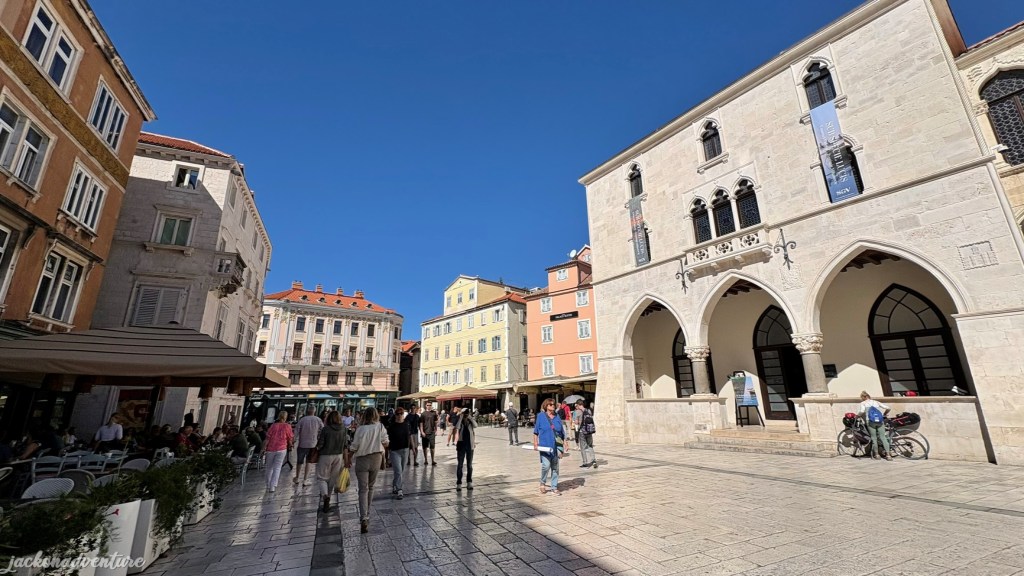
People’s Square (Narodni Trg) is lined with restaurants, cafés and bars, making it a lovely spot to relax and admire the surrounding Renaissance, Venetian and Gothic architecture. Serving as the town’s main meeting point since the 14th century, the square is surrounded by several historically significant buildings.
When the town hall was established, the square was named after St. Lawrence (Sveti Lovre), where a pre-Romanesque church once stood. One of the square’s oldest landmarks is the Renaissance clock tower, which features a beautifully restored sundial. Its intricate design is truly a sight to behold.
Take a glance at Cindro Palace
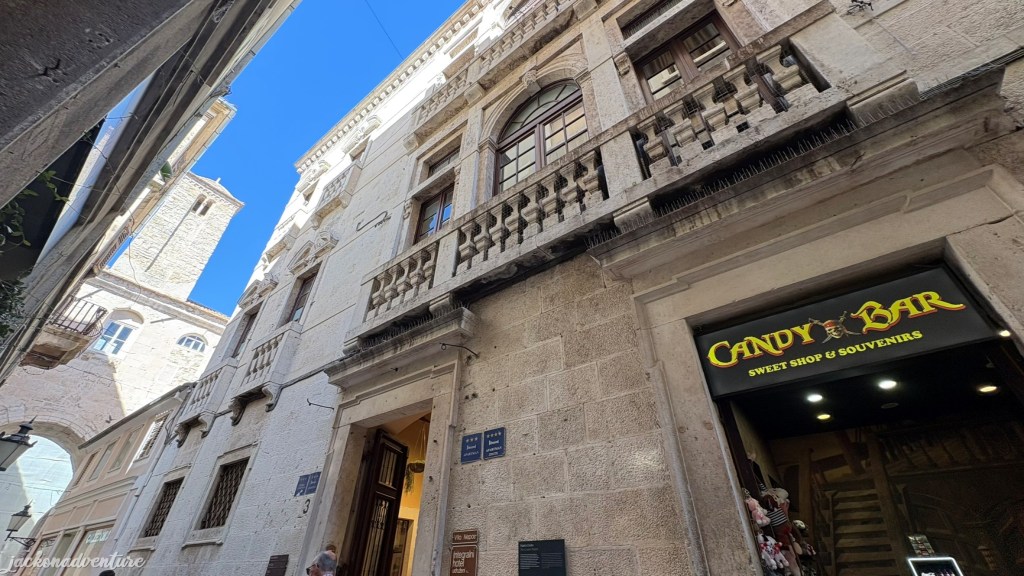
Cindro Palace is a fine example of Baroque architecture, dating back to the 17th century. It was once the residence of the Cindro family, one of the prominent patrician families of old Split. The palace also served as the residence of Marshal Marmont, who was appointed governor of Dalmatia under Napoleon in the early 19th century.
Location: Ul. kralja Petra Krešimira IV 5A, 21000, Split
Drop by at UNESCO-protected supermarket
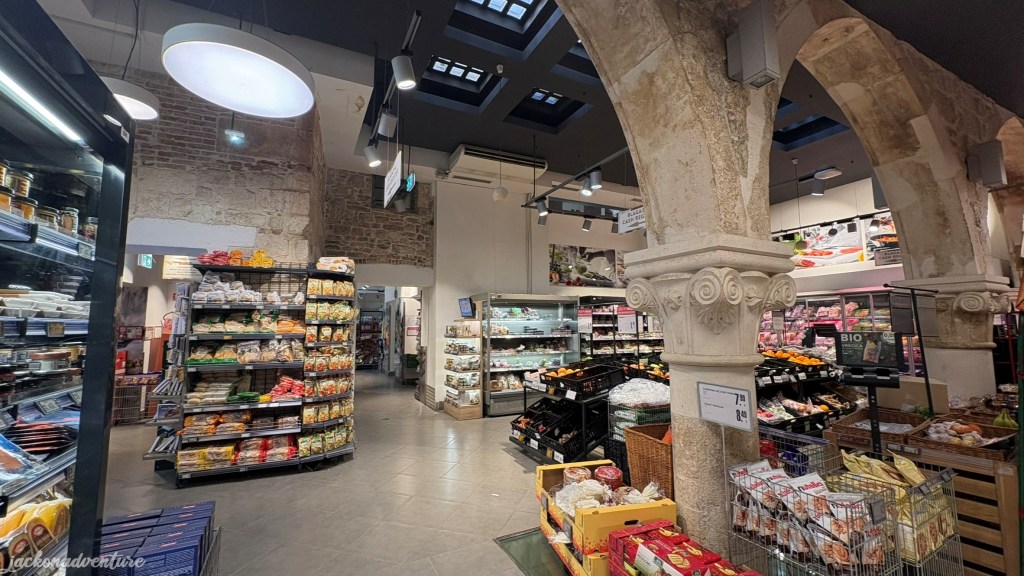
The SPAR supermarket is far from an ordinary grocery store. Instead, it occupies what was once the ground floor of the 13th-century Mala Papalićeva Palace. This historic building forms part of the larger Diocletian’s Palace complex, which was designated a UNESCO World Heritage Site in 1979.
You can make a quick pit stop here to pick up some groceries while admiring the surrounding Corinthian columns and the fascinating blend of history and everyday life within the palace walls.
Location: Šubićeva 5 7, 21000, Split
Opening Hours: Daily from 7 am to 9 pm
Walk down the Riva
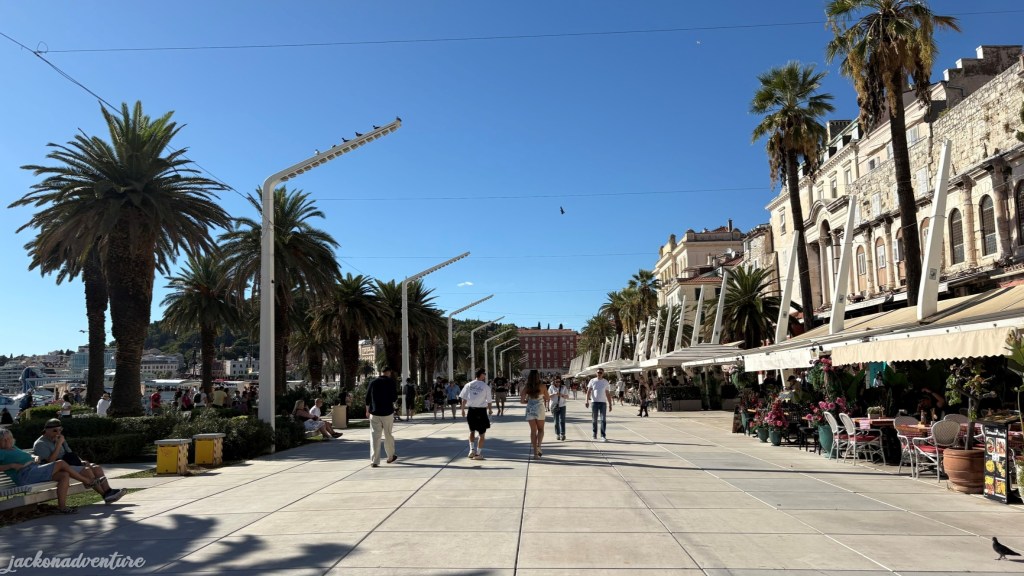
Lined with tall palm trees, the waterfront stretches along the entire length of the Old Town, overlooking the Adriatic Sea. Split’s palm-fringed seafront promenade offers a taste of the idyllic Mediterranean lifestyle, with bustling restaurants, bars, cafés and luxury hotels.
Picture yourself walking through the past as the promenade took on its current shape roughly two centuries ago. Split came under the rule of Marshal Marmont during the French occupation. The southern side of Diocletian’s Palace once marked the edge of the palace itself, with the sea reaching much closer to its ancient walls. The French transformed the waterfront into a public promenade, following the concept of Napoleonic urban planning of the era.
The promenade is a perfect spot for people-watching and letting the evening unfold. Watching the sun dip below the horizon over the Adriatic Sea is simply magical.
Nevertheless, this is probably not the best place to dine unless you are prepared to pay double or even triple the usual price. The restaurants here tend to be rather touristy, with inflated prices that don’t always reflect the quality of the food.
Enjoy the scenes of the Republic Square
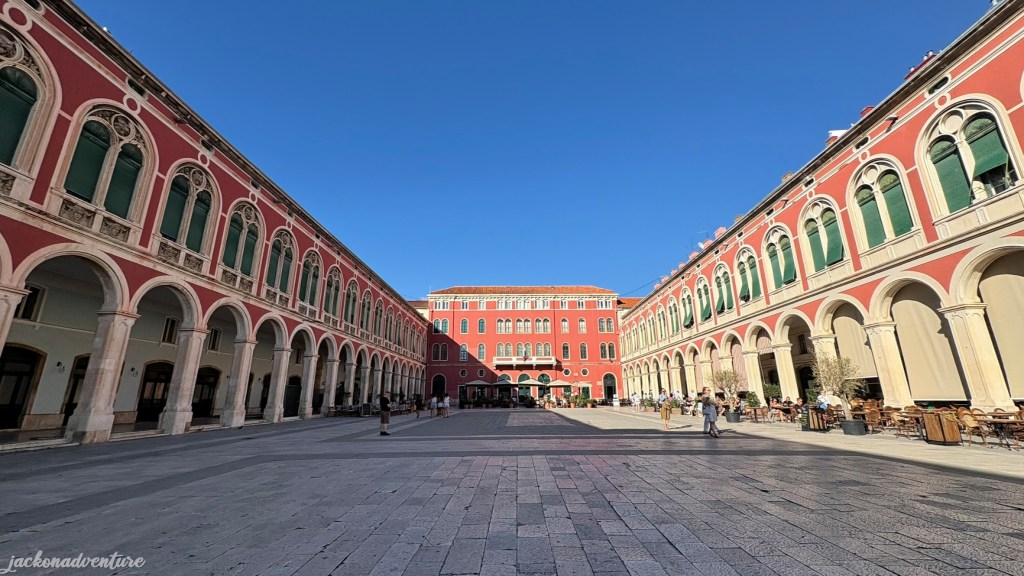
Republic Square, locally known as Prokurative, is a beautiful example of Split’s rich history and vibrant culture. Surrounded by impressive architecture with a distinctly Mediterranean character, this elegant square serves as an important cultural gathering place. Throughout the year, it hosts numerous events and festivals that bring life and energy to the historic city.
The story of Republic Square began with the vision of Mayor Antonio Bajamonti, who embarked on an ambitious project to revitalise Split. One of his most significant contributions was the establishment of the Dalmatian Association, a society dedicated to promoting the city’s development and cultural life.
Inspired by the famous Procuratie buildings in Venice, the grand Teatro Bajamonti was inaugurated on 27 December 1859. The theatre became an important part of Bajamonti’s vision for transforming Split into a thriving cultural centre.
Location: Prokurative, 21000, Split
Visit the Church of St. Francis
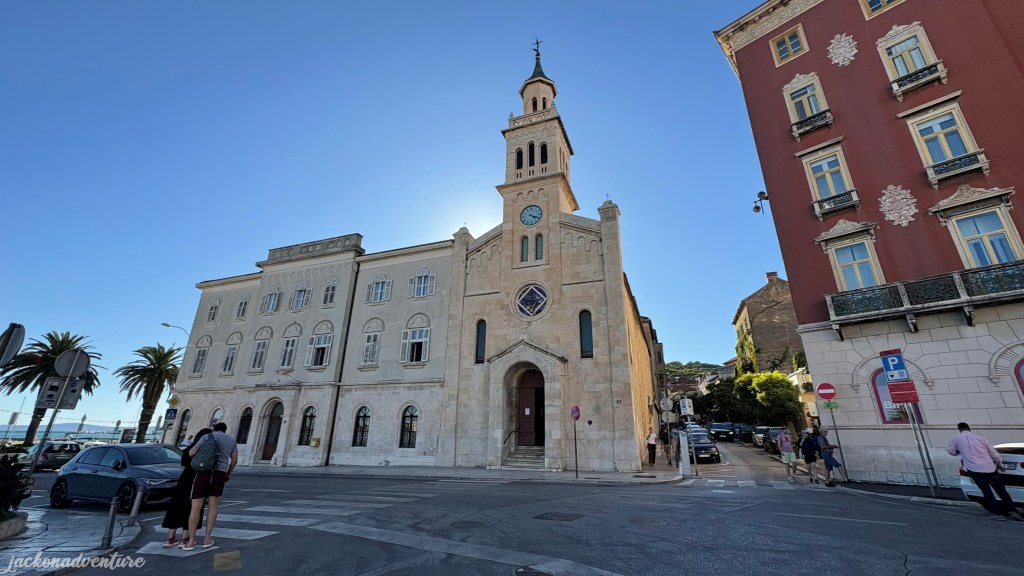
The Church of St. Francis was built by Franciscan friars who arrived in Split in the 13th century. It stands on the site of St. Felix’s grave, a martyr who was executed during the persecution under Emperor Diocletian. His remains are preserved beneath the church’s main altar. A small Romanesque-style cloister was also added to the complex in the 13th century.
In the 15th century, the monastery was demolished so that its building materials could be reused in the construction of defensive walls against the Ottoman Turks. The Franciscans later rebuilt the church on its original foundations.
Unfortunately, the church was almost completely destroyed towards the end of the 19th century. It was subsequently reconstructed, giving it the appearance we see today.
Location: Trg Franje Tuđmana 1, 21000, Split
Opening Hours: Monday to Saturday from 8 am to 5 pm
Entrance Fee: Free
Hike up Marjan Hill
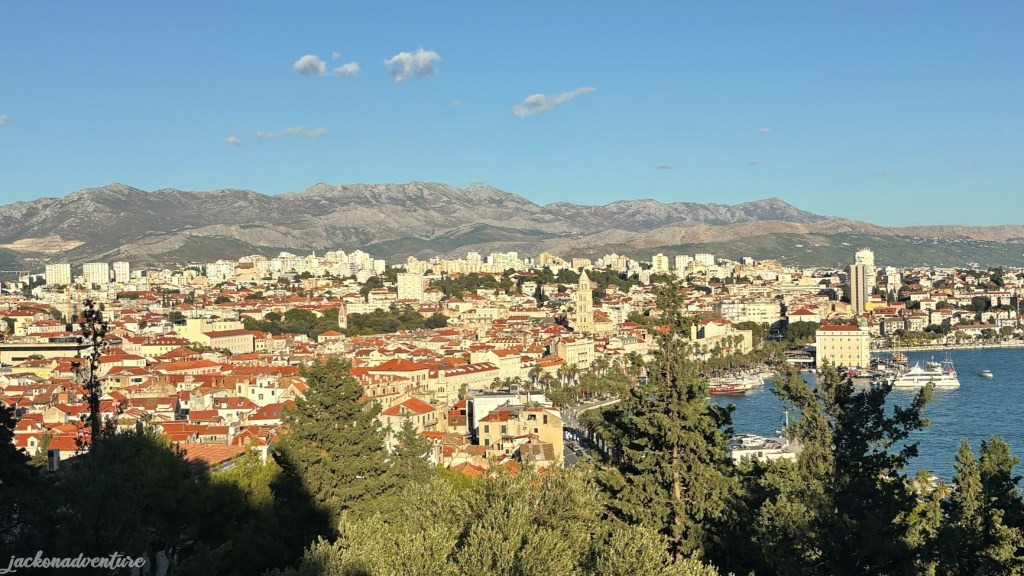
Marjan Hill is a green oasis overlooking Split’s city centre, offering panoramic views of the city and the Adriatic coastline. It is a wonderful place to escape the hustle and bustle, enjoy a peaceful walk and immerse yourself in nature. To get there, head towards Šperun Street at the end of the Riva promenade and climb the steps leading to the Prva Vidilica na Marjanu viewpoint.
The shaded pathways wind through the hillside, passing medieval churches and former hermit settlements. Along the way, you will come across the small Church of St. Nicholas, commissioned in 1219 by Rako and his wife, Elisabeth. It was later donated to St. Stephen’s Abbey on Sustipan. A Romanesque-Gothic bell tower was subsequently added to the church’s south-eastern wall. A traditional Mass is held here every year on 6 December during the feast day of St. Nicholas.
Ascend to the highest peak of Marjan
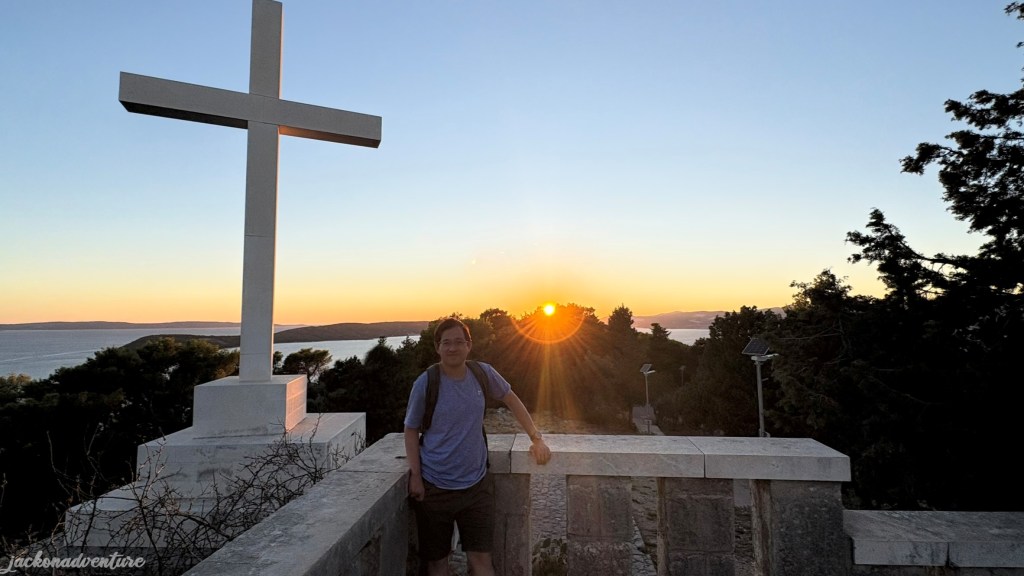
Continue climbing another 314 steps to reach Marjan’s highest peak at 178 meters above sea level. The large stone millennium cross stands on the summit of Telegrin Peak, replacing the older one that was erected in 1900. The original cross was removed by the Austrian army towards the end of the First World War to prevent it from being used as a target by enemy forces.
It is believed that the peak takes its name from a hackberry tree that once marked the boundary between Upper and Lower Varoš, at the junction of Križeva and Milićeva Streets. The tree still stands today and serves as a local landmark.
Telegrin Peak is a wonderful spot to watch the magnificent sunset over the Adriatic Sea. Locals and visitors gather along the mountain’s edge to admire the spectacular views of Split’s Old Town and the Riva promenade below. The hike to the summit is truly rewarding and simply takes your breath away.
Discover Klis Fortress
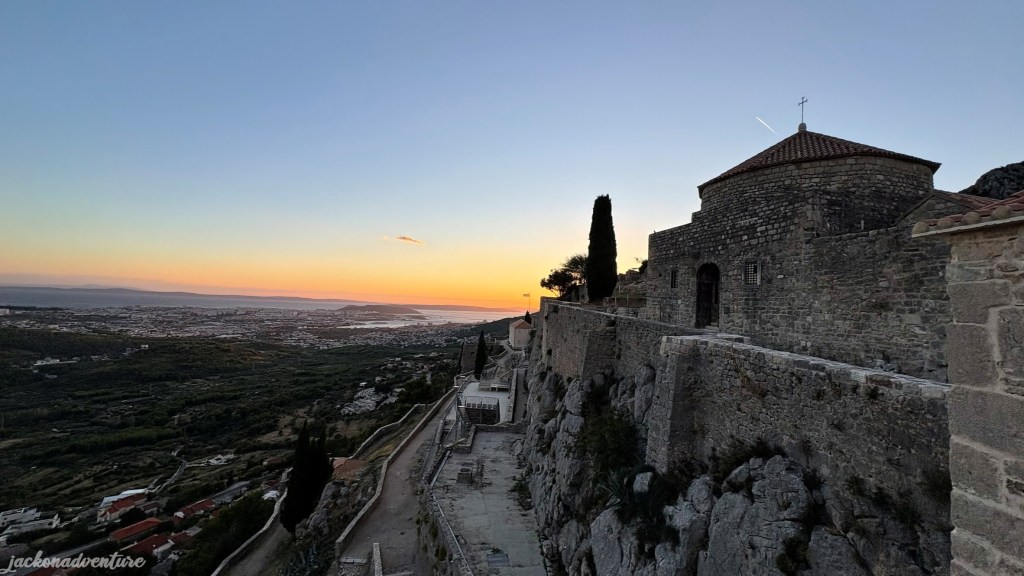
Perched high on a mountain ridge, the Kliss Fortress overlooks the breathtaking views of the valley, the city of Split and the Dalmatian coast. From the top, you can enjoy spectacular panoramic views of the surrounding landscape.
This medieval fortress was originally established by the ancient Illyrian tribe of the Dalmatae as a small stronghold. Over the centuries, it evolved into a royal castle for several Croatian kings and later served as a strategic defensive fortress against various invaders, including the Knights Templar, the Ottoman Turks and the Mongols.
To my surprise, Klis Fortress does not attract as many visitors like many other historic sites in Croatia. It is a wonderful place to escape the crowds, take a breather and admire the beauty of its ancient ruins.
The impressive fortress also served as a filming location for Game of Thrones in Seasons 4 to 6, where it portrayed the city of Meereen, the exotic slave city on Slaver’s Bay in Essos. It was here that Daenerys Targaryen executed the slave masters and liberated the people of Meereen, foreshadowing the darker side of her character and her eventual descent into madness.
Location: Trg Mejdan 10, 21231, Klis
Getting There: Take Bus Line 22 from Split’s National Theatre, or join a 2.5-hours evening tour or Game of Thrones tour
Opening Hours: Daily from 9 am to 5 pm
Entrance Fee: €10
Take an island-hopping tour around Split coast
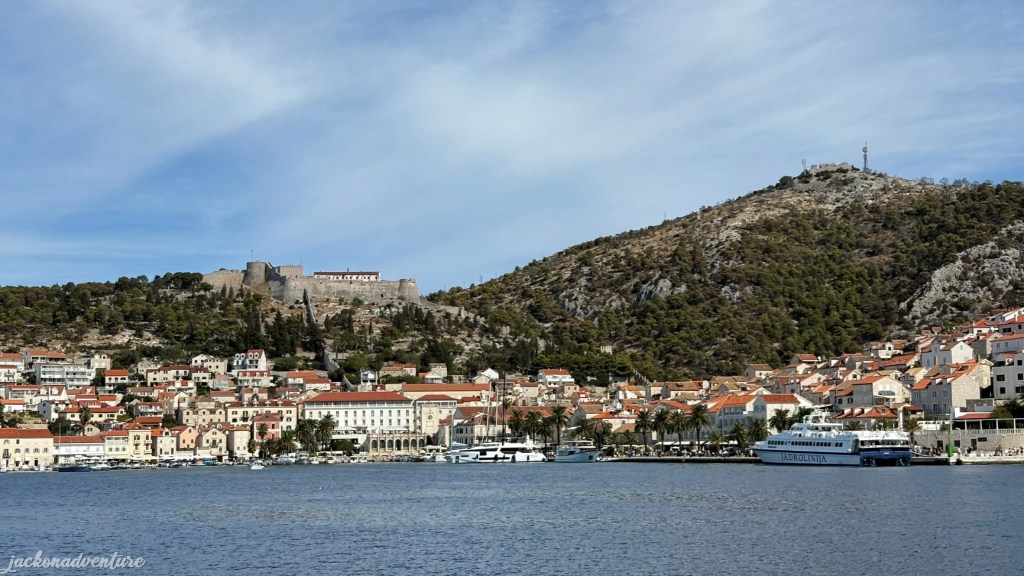
Split is blessed with stunning islands, pristine beaches and crystal-clear waters. One of the best ways to explore several islands in a single day is to take a speedboat or join an organised boat tour departing from the pier next to the Riva promenade. Popular options include a five-island tour covering Hvar, Biševo, Vis, Ravnik and Budikovac, as well as a Catamaran Cruise Tour to Hvar, Pakleni and Brač.
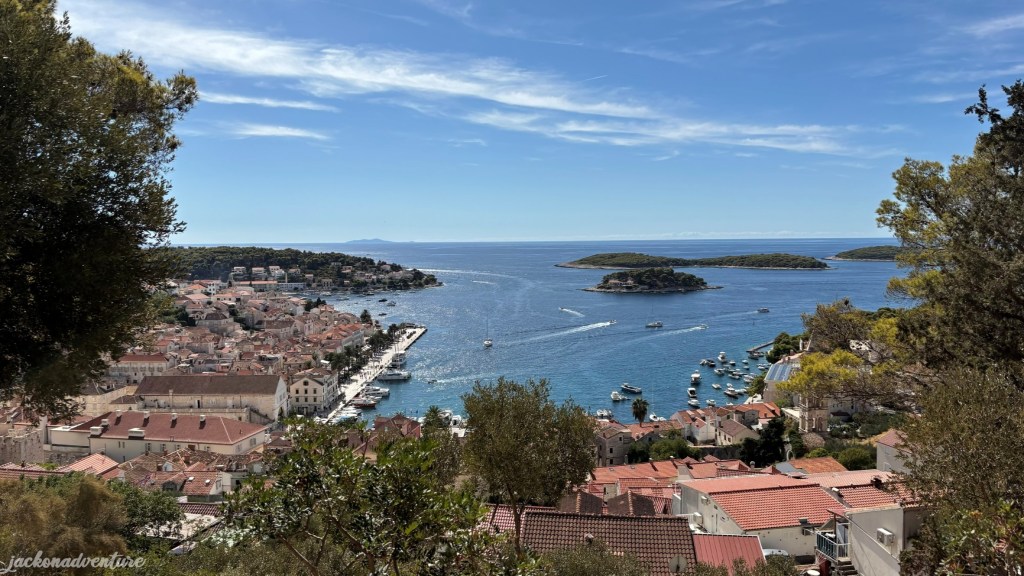
Hvar is one of Croatia’s largest and most popular island destinations. Among its main attractions are the historic fortress and the Cathedral of St. Stephen. Make your way up to Španjola Fortress to admire the impressive panoramic views of Hvar town and the Adriatic Sea.
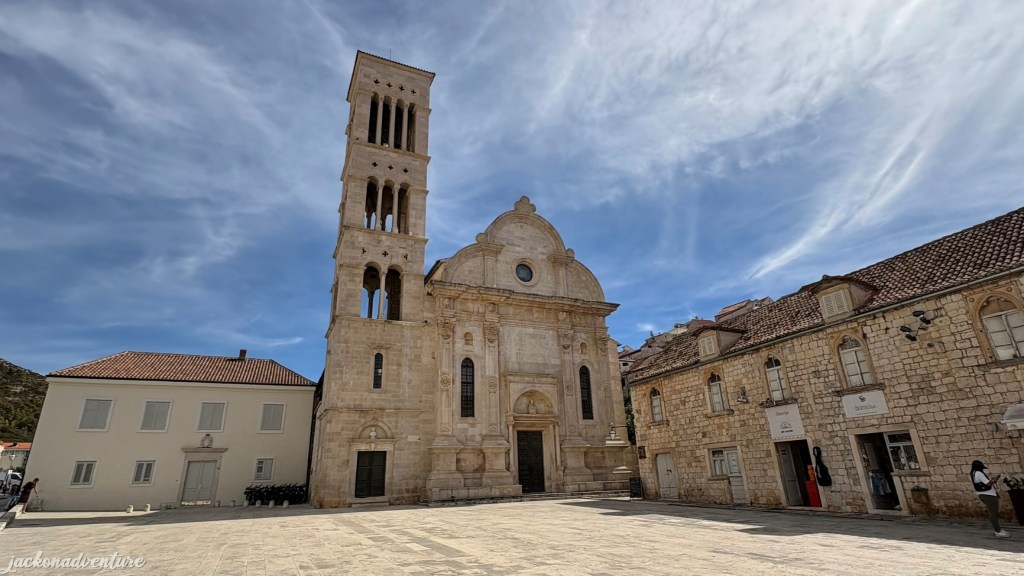
In St. Stephen’s Square, you will find the Cathedral of St. Stephen, dedicated to the patron saint of the Diocese and the city of Hvar. St. Stephen was a pope and martyr whose name is closely associated with the cathedral.
Travel Tips
- Purchase the Gold Ticket from the Ticketing Office for €19, which allows you to visit the Cathedral, the Bell Tower, the Treasury, the Crypt and the Baptistery.
- Entry to Diocletian’s Palace requires a separate ticket that can be bought at the Cellars’ entrance for €10.
Discover the fascinating Croatia
Stretching along the stunning Dalmatian Coast, Croatia is one of Europe’s most captivating travel destinations. From idyllic beaches and rich cultural heritage to charming old towns, urban adventures and mouthwatering cuisine, this beautiful country has something to delight every traveller. Embark on an unforgettable journey beyond the capital city of Zagreb and discover the many enchanting cities and coastal towns dotted along the Adriatic Sea. There are plenty of reasons to fall in love with these cities.
Like It? Pin This Article.